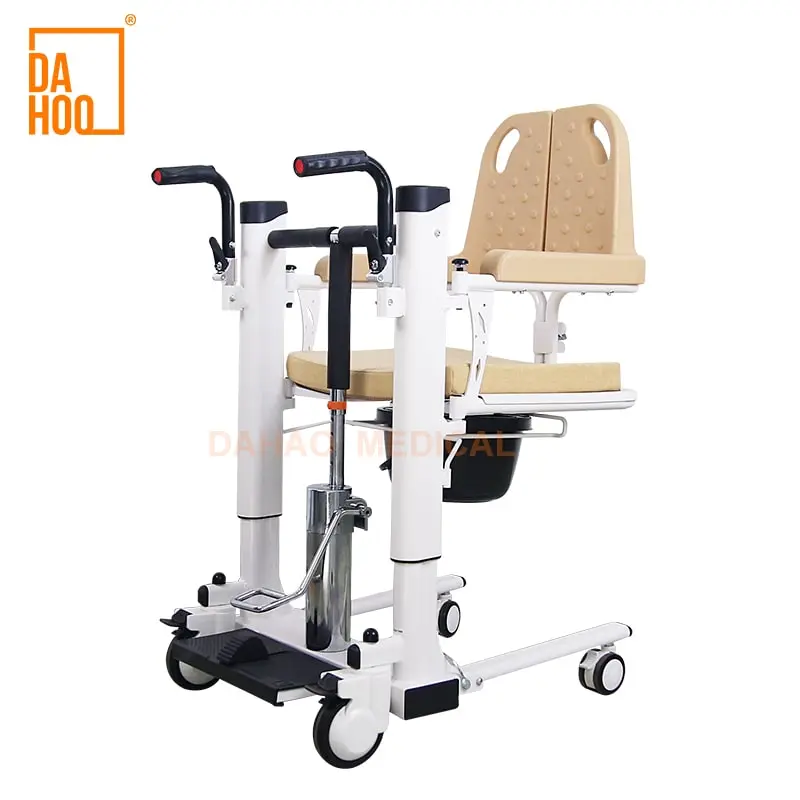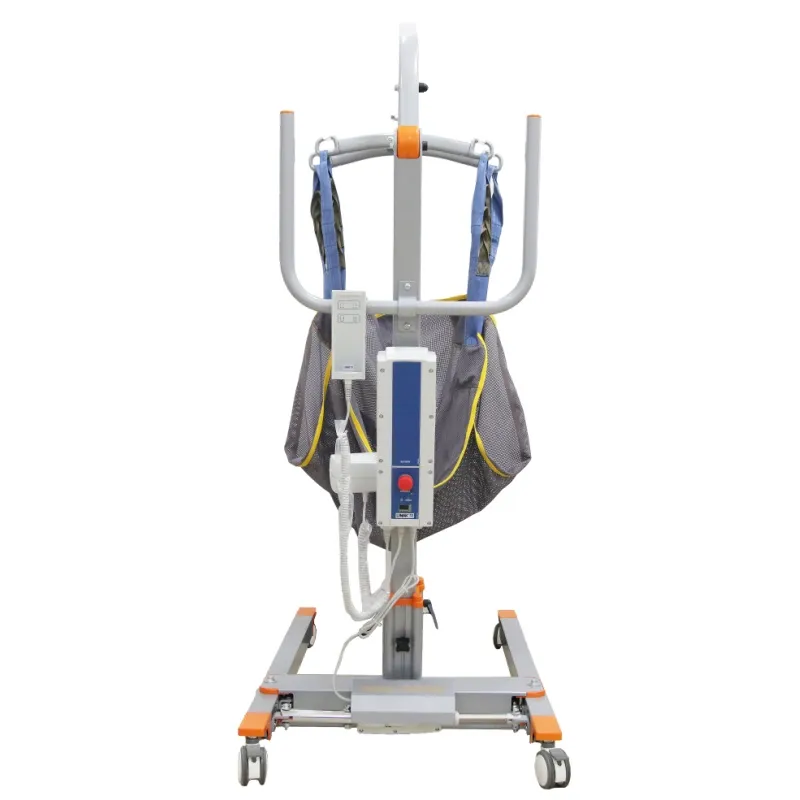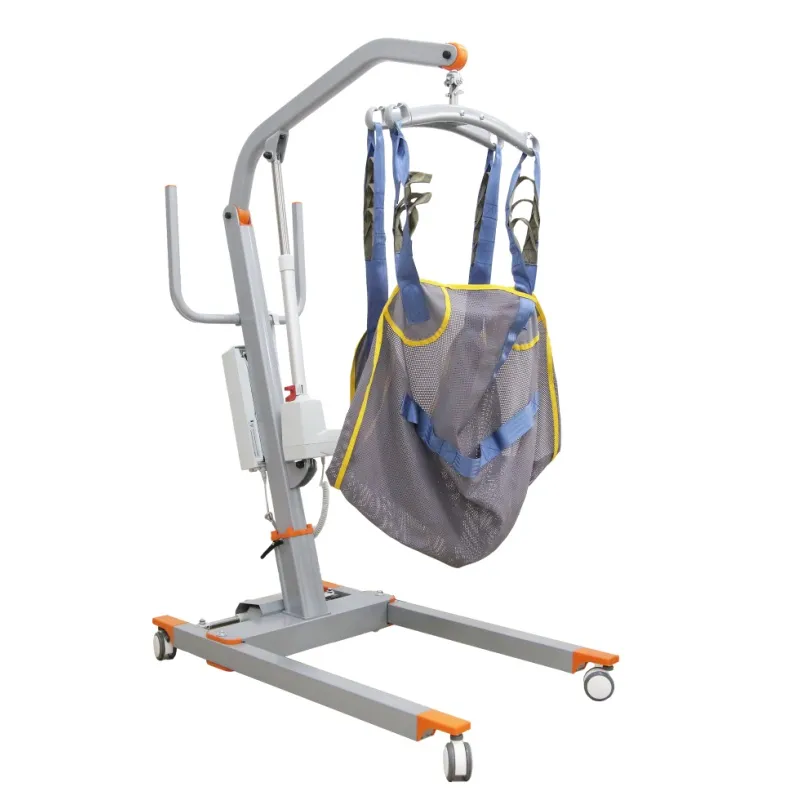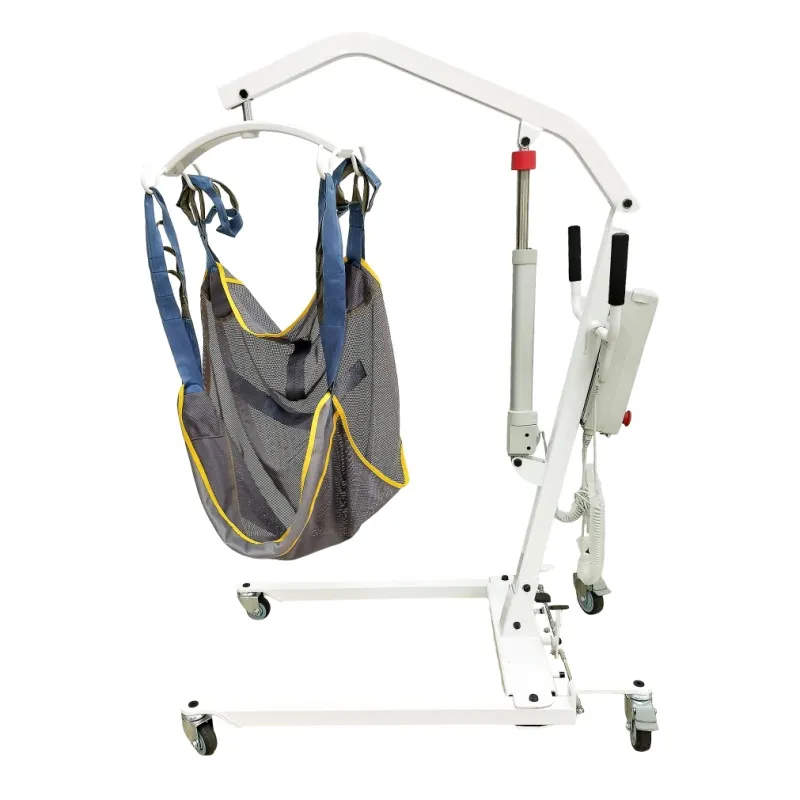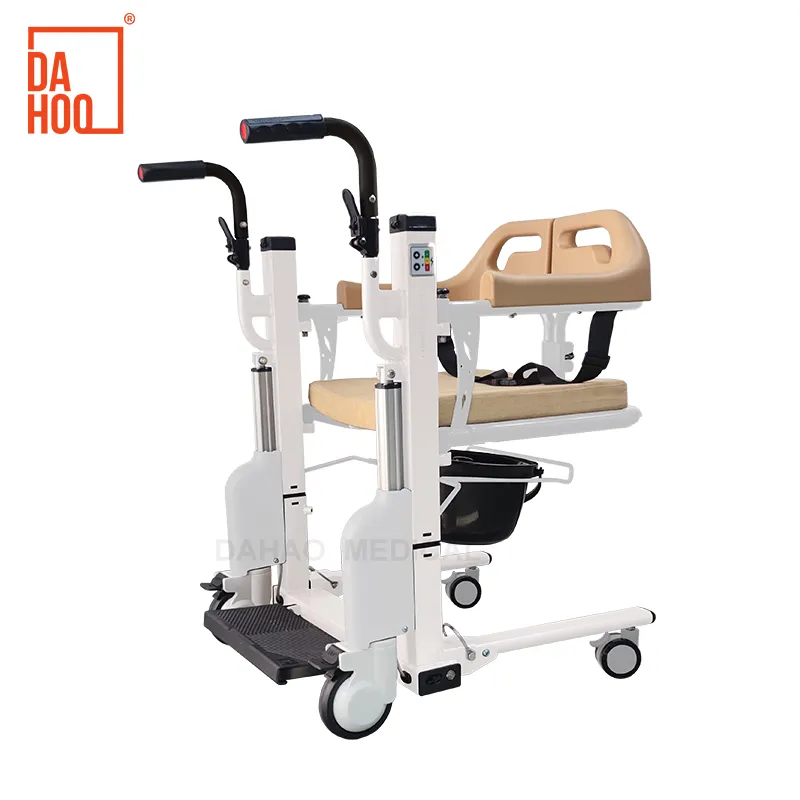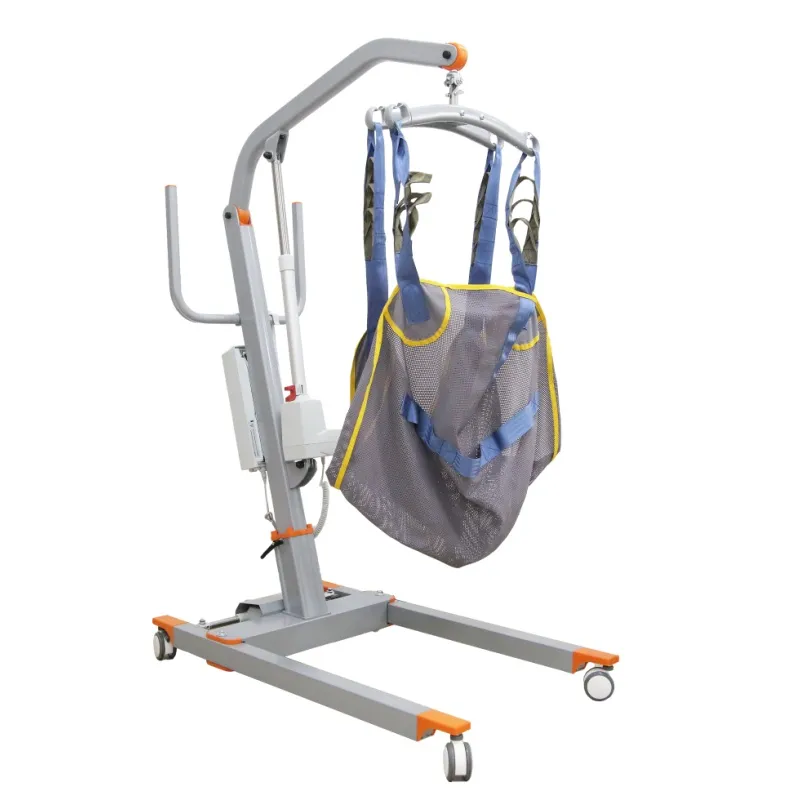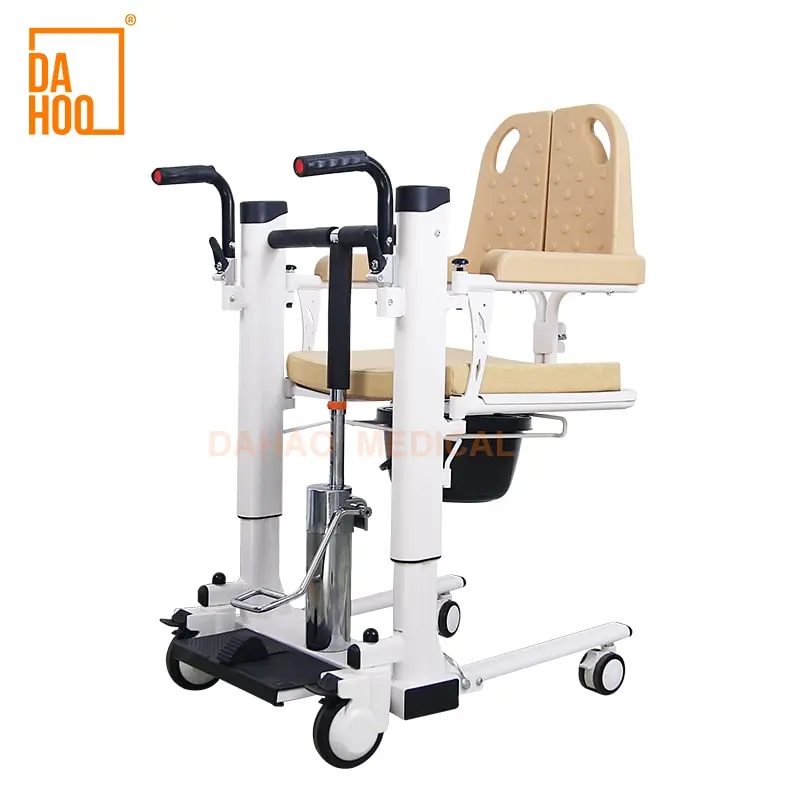

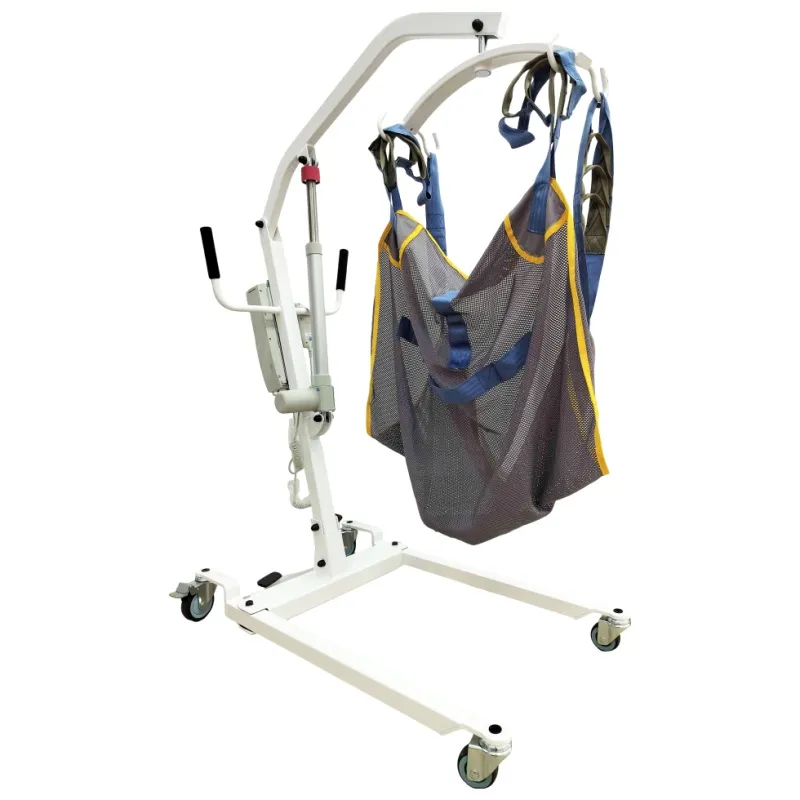
If a patient lifter is not operated correctly, instability may occur when moving a person on a sling-type patient lift, potentially causing the patient to collide with surrounding objects.
One of the uses of patient lifters is to:
Transform "physical labor-intensive care" into "operational care."
By having the equipment bear the main weight, caregivers only need to operate and guide, significantly reducing their physical burden.
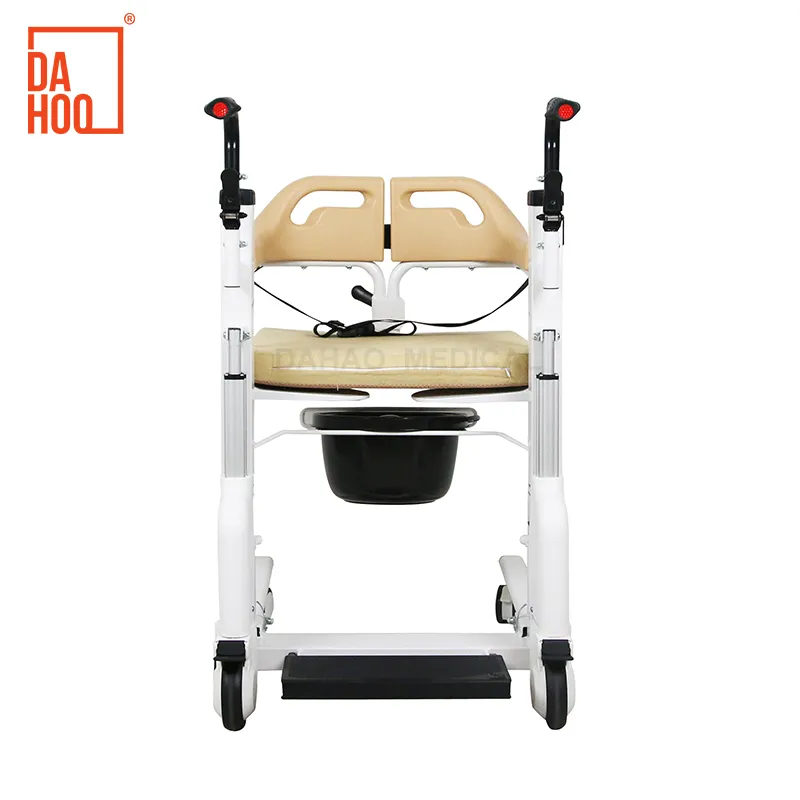
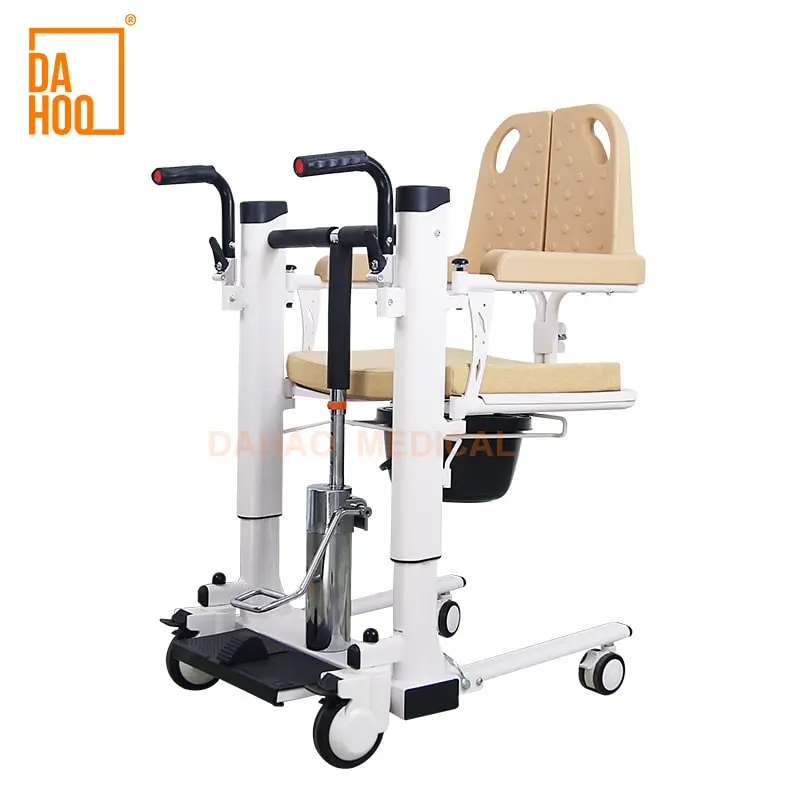
In a lift transfer chair, the hydraulic system is a mechanical system that uses fluid pressure to achieve smooth lifting.
If the lift transfer chair cannot adjust its height, it cannot achieve "barrier-free, low-risk" transfers.
Most lift transfer chairs on the market have a nominal load-bearing capacity of:
✔ 100KG
or
✔ 120KG
or
✔ 150KG
They typically won't be lower than 100KG or higher than 150KG.
Lift transfer chairs are not suitable for long-term use as wheelchairs.
Reasons:
• Not suitable for prolonged sitting
• Wheels not suitable for long-distance movement
• Insufficient stability
• No self-propelled function
• Insufficient comfort
A patient lifter is not a device that can be used safely simply by pressing a button. It involves multiple aspects, including human support, center of gravity shifts, equipment structure, and operational procedures. Using it without necessary training can directly impact the safety of both the person being transferred and the operator.
No.
From a structural, safety, design purpose, and ergonomic perspective, sleeping in a lift transfer chair is neither recommended nor permitted.
The correct uses of a lift transfer chair are:
✔ Safe transfer
✔ Short-term sitting
✔ Assisted movement
✔ Improved care efficiency
Yes, improper use of a patient lifter can indeed lead to it tipping over.
The core reasons include:
• Overloading
• Improper sling or connection methods
• Unsuitable ground conditions
• Incorrect operating procedures
In most cases, an electric lift transfer chair is very suitable for the elderly.
It not only significantly reduces the risks of movement for the elderly but also makes it easier and safer for caregivers to complete transfers.