

In both professional nursing settings and home care environments, a very practical question often arises: Can a patient lifter be operated by just one person?
From the perspective of theory and equipment functionality, the answer is not a simple "yes" or "no." Instead, it requires a comprehensive assessment based on the specific type of patient lifter, the physical condition of the person being transferred, the operating environment, and the operator's own level of experience.
A more rigorous and professional answer would be:
While technically feasible, operating a sling-style patient lifter alone is not the optimal choice. Safety must always be the top priority.
In the following sections, this article will build upon this conclusion to provide a systematic and in-depth analysis of the feasibility of—and key considerations for—operating a patient lifter with a single person.
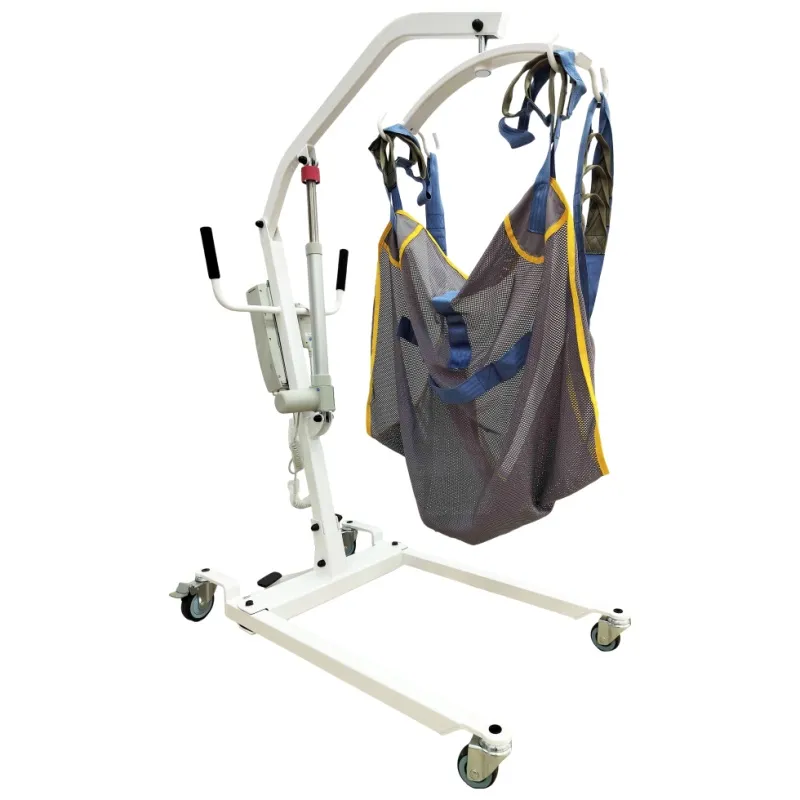
What Are the Main Functions of a Patient Lifter?
A patient lifter is an assistive device designed to help caregivers perform patient transfers. Its primary functions include:
•Transferring a patient between a bed and a wheelchair
•Transferring a patient between a bed and a standard chair
•Changing a patient's position from lying down to sitting up (and vice versa)
•Reducing the physical exertion required for manual lifting
The core value of a patient lifter lies in:
Reducing the physical strain on caregivers while simultaneously enhancing the safety and stability of the transfer process.
Are Patient Lifters Designed for Single-Person Operation?
Most patient lifters are designed with the following factors in mind:
•Structural stability
•Simplified operating procedures
•Intuitive control mechanisms
From a structural design standpoint, some patient lifters—particularly the sling-style models—are indeed capable of being operated by a single person. The core operations typically involve:
•Adjusting the base/legs of the lifter
•Attaching or securing the sling
•Operating the lifting mechanism
•Pushing or positioning the device
Theoretically, these operations can all be performed by a single individual.
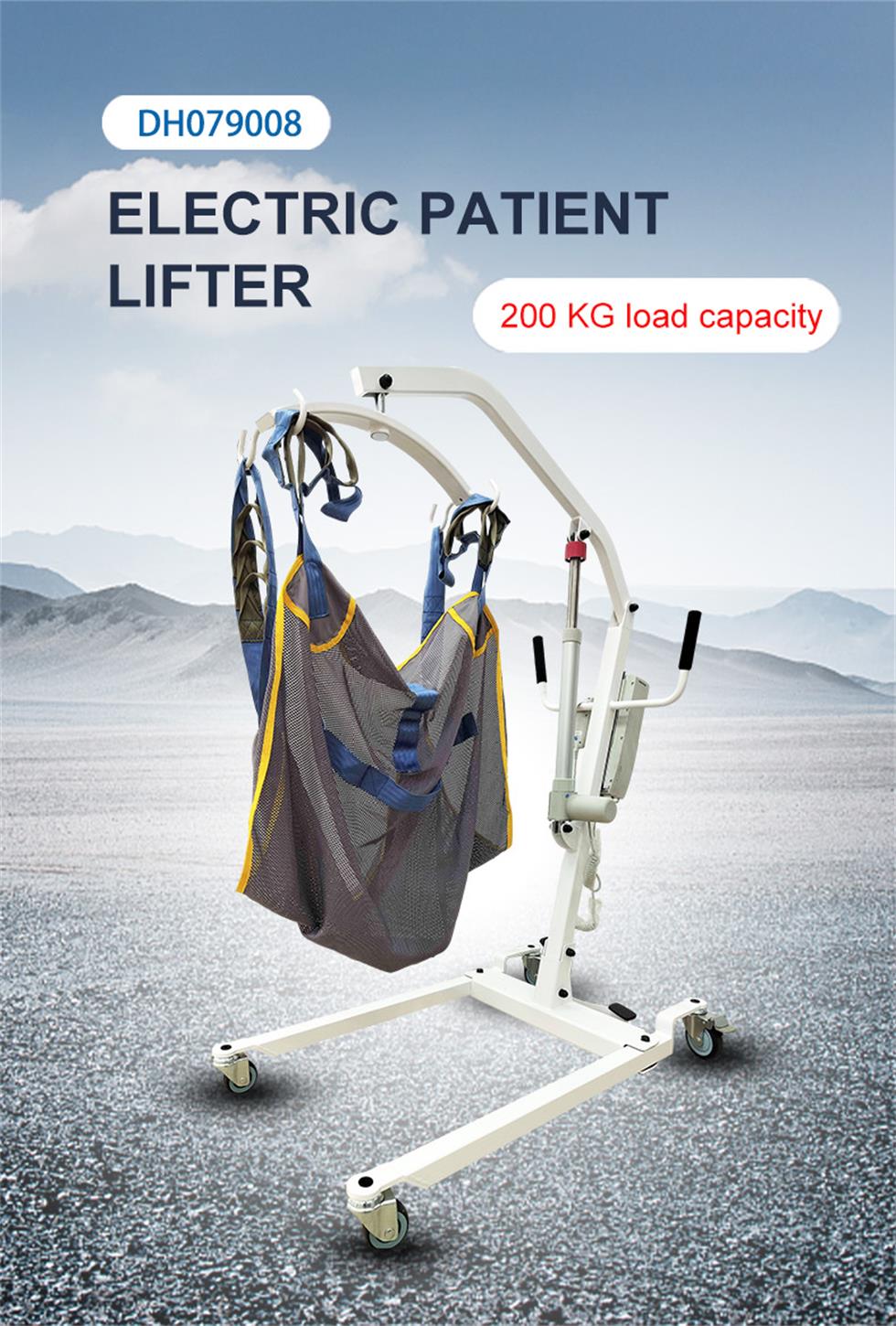
Do Sling-Style Patient Lifters Support Single-Person Operation?
From the perspective of equipment functionality, the answer is:
Yes, sling-style patient lifters are technically capable of being operated by a single person.
The primary reasons for this include:
•The device itself provides mechanical lifting assistance
•The sling bears the weight of the person being transferred
•Caregivers are not required to manually lift the patient directly
Under ideal conditions, a skilled and experienced operator can successfully complete the entire patient lifter operation process alone.
What Are the Potential Risks Associated with Operating a Patient Lifter Alone?
Even though a patient lifter may technically allow for single-person operation, the following risk factors still persist in actual practice:
•Changes in the patient's posture while suspended in mid-air
•Improper attachment of the sling
•The operator's inability to simultaneously monitor both the equipment and the patient's condition
•Insufficient reaction time to handle emergency situations
The presence of a patient lifter does not completely eliminate these risks.
Does the patient's mobility affect the feasibility of single-person operation?
Yes, it does.
When determining whether a patient lifter can be operated by a single person, the patient's mobility is one of the primary factors to consider.
Generally speaking, a patient may fall into one of the following categories:
•Completely unable to move independently
•Able to offer partial cooperation but possesses limited physical strength
•Able to understand instructions but possesses weak physical control
The lower the patient's mobility, the greater the need for vigilant monitoring and assistance during the patient lifting process.
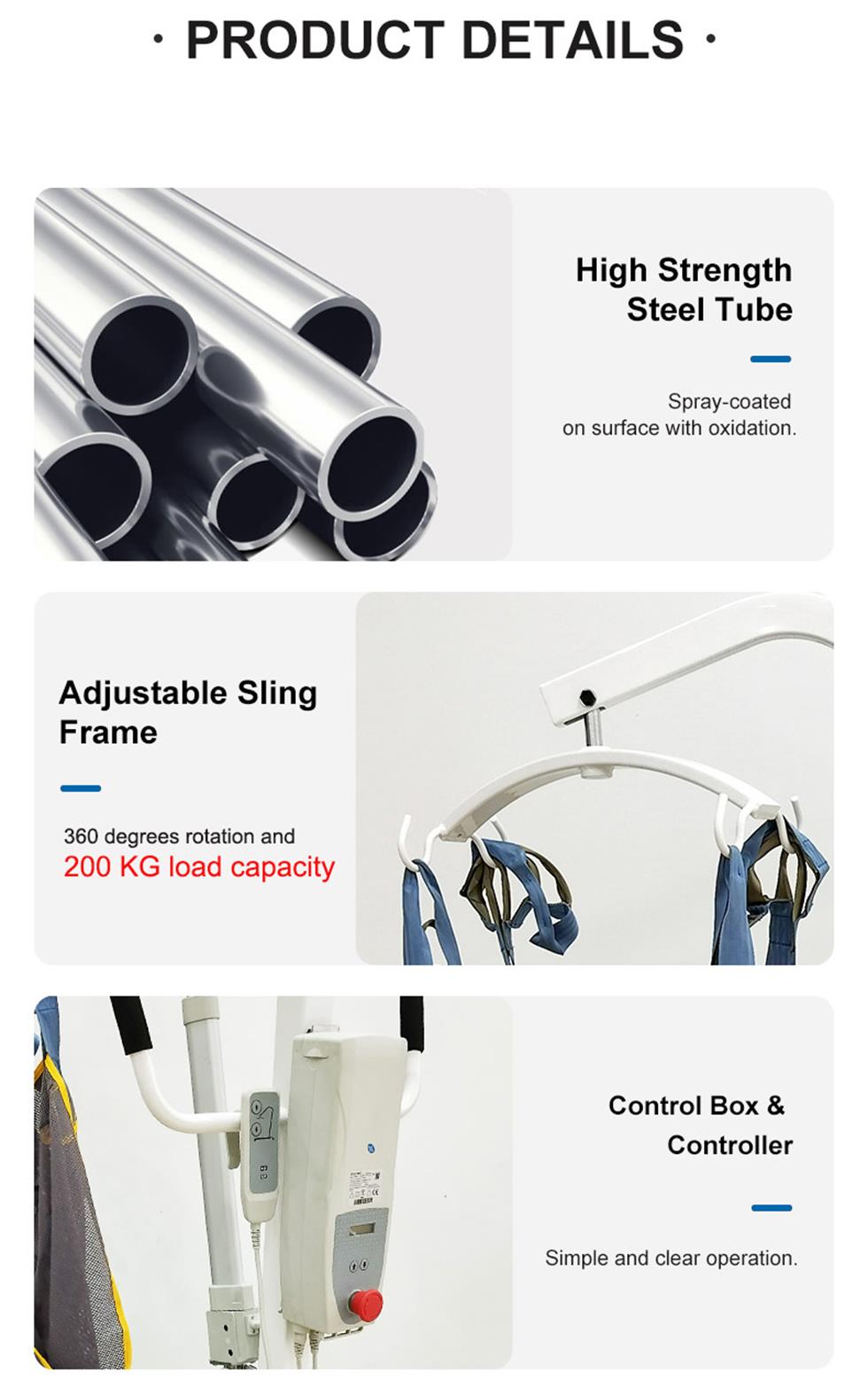
What qualifications are required for an operator performing a single-person lift?
Single-person operation of a patient lifter typically requires the operator to possess the following:
•Familiarity with the structure and components of the patient lifter
•A clear understanding of every step in the operating procedure
•The ability to quickly identify and assess abnormal situations
•A fundamental awareness of patient care safety protocols
For inexperienced operators—even if the equipment itself permits single-person use—attempting to do so is strongly discouraged.
Does the operating environment affect the feasibility of a single-person lift?
Operating a patient lifter involves more than just the equipment and the personnel; the surrounding environment is equally critical.
Environmental factors requiring particular attention include:
•Whether the floor surface is level and even
•Whether there is sufficient space for maneuvering
•Whether any obstacles are present
•Whether the lighting is adequate
In cramped or complex environments, the difficulty and inherent risks associated with single-person operation of a patient lifter increase significantly.
What issues are most easily overlooked during single-person operation?
When a patient lifter is operated by two people, it is typically possible to:
•Have one person focus exclusively on the equipment
•Have the other person focus exclusively on the patient's condition
However, during single-person operation, the operator must simultaneously monitor:
•The functioning of the equipment
•The patient's posture and positioning
•The tension and load distribution on the sling
This places significantly higher demands on the operator's concentration and attention span.
Does the type of patient lifter affect the feasibility of single-person operation?
Yes; different types of patient lifters exhibit distinct differences regarding the feasibility and safety of single-person operation. For example:
•Sling-style patient lifters: Feature relatively mature designs, making single-person operation highly feasible.
•Standing-style transfer aids: Require a higher degree of cooperation from the person being transferred.
•Specialized-structure transfer devices: Generally not recommended for single-person operation.
Therefore, when discussing whether "one person can operate a patient lifter," one must consider the specific type involved rather than making blanket generalizations.
How should safety be prioritized when a single person operates a patient lifter?
Whether in a professional care setting or a home care environment, the use of a patient lifter involves two aspects of safety:
•The safety of the person being transferred.
•The safety of the operator.
Any operational method that compromises safety should not be considered an ideal choice.
Are there situations where single-person operation is "technically possible, but not recommended"?
The answer is yes.
This is precisely the most common conclusion reached regarding sling-style patient lifters:
•Technically feasible.
•Operationally risky.
•Not the optimal choice.
When resources permit, having two people work together to operate a patient lifter typically helps to:
•Enhance overall safety.
•Reduce the probability of accidents.
•Alleviate psychological stress on the operator.
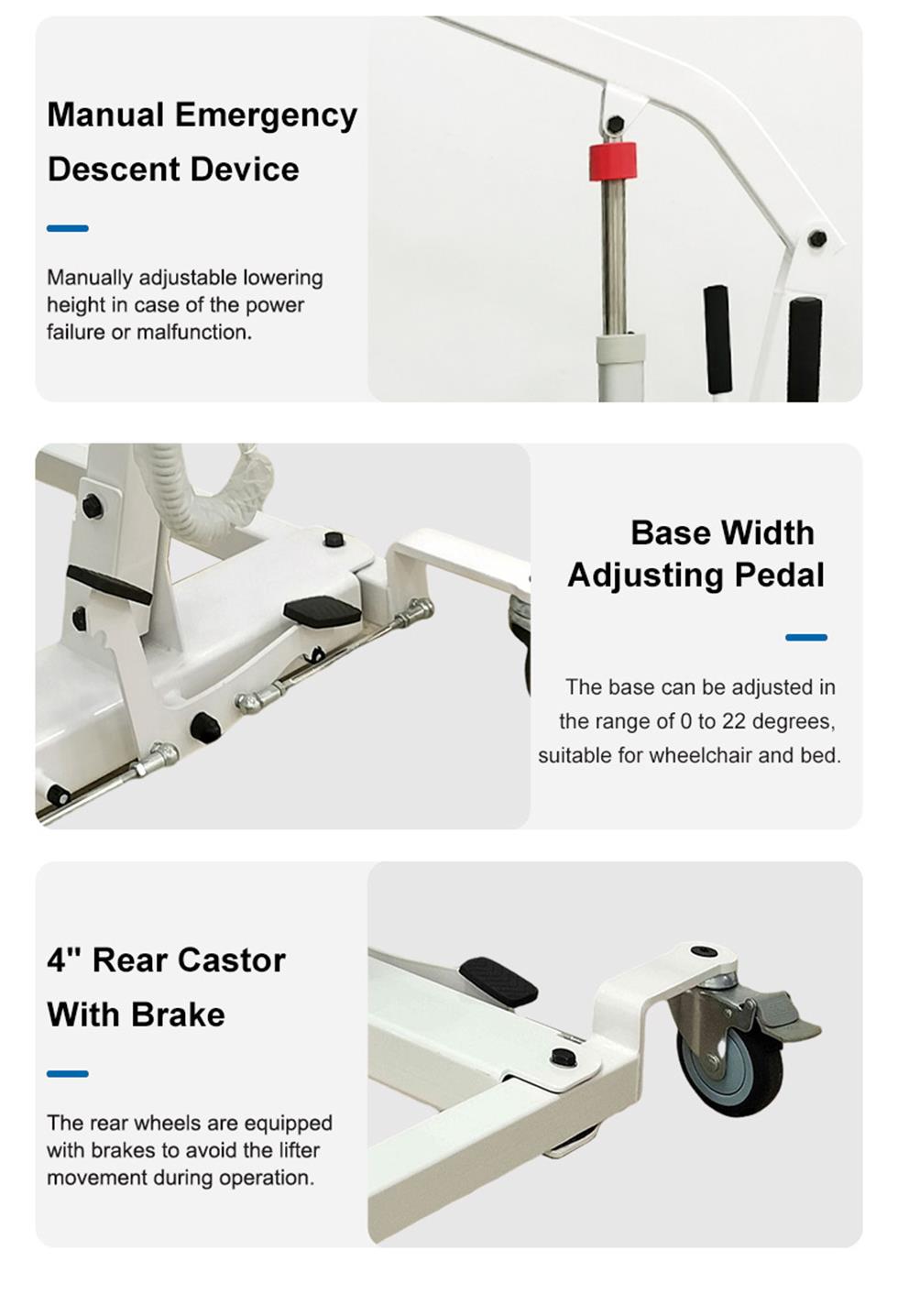
Why do care standards often emphasize multi-person collaboration when using patient lifters?
Compared to single-person operation, having two or more people operate a patient lifter offers the following advantages:
•Clear division of labor.
•Mutual supervision.
•Faster emergency response times.
•More comprehensive monitoring of the person being transferred.
This is why most care protocols recommend multi-person collaboration to complete transfer procedures.
What key questions should be considered before a single person operates a patient lifter?
Before deciding whether to operate a patient lifter alone, it is advisable to carefully evaluate the following questions:
1.Does the person being transferred possess a certain level of ability to cooperate?
2.Is the operator familiar with all the operational steps for the patient lifter?
3.Is the operating environment safe and spacious?
4.Have the potential risks been fully understood?
Only when these conditions are relatively ideal does single-person operation of a patient lifter become a reasonably feasible option.
Does the design of a patient lifter imply that it can completely replace human physical effort?
The answer is no. A patient lifter serves as an assistive tool, not a complete substitute.
The intended purpose of a patient lifter is to:
•Assist caregivers;
•Reduce physical strain; and
•Enhance safety during patient transfers.
It is not intended to allow the caregiving process to proceed entirely without human judgment and intervention.
Therefore, even if a patient lifter is fully featured and highly functional, this does not imply that it is suitable for single-person operation in every situation.