

In the fields of nursing, rehabilitation, and long-term care, lift transfer chairs are essential daily mobility and transport devices. Whether for home caregivers, professional caregivers, or rehabilitation facilities and nursing homes, lift transfer chairs are relied upon to help people with limited mobility move between beds, wheelchairs, sofas, and bathrooms.
One of the most frequently asked questions when purchasing a lift transfer chair is, "How much weight can a Patient Lift Transfer Chair support?"
The answer is typically: approximately 100KG – 150KG, or about 220 – 330 pounds.
But why is the weight capacity set within this range?
What factors affect the weight capacity?
Can all lift transfer chairs support the same weight?
How can you choose the right lift transfer chair for different weights?
This article will provide an in-depth analysis from multiple perspectives, including structural design, stress principles, usage scenarios, and safety regulations, to comprehensively answer all the core questions about the weight capacity of a lift transfer chair.
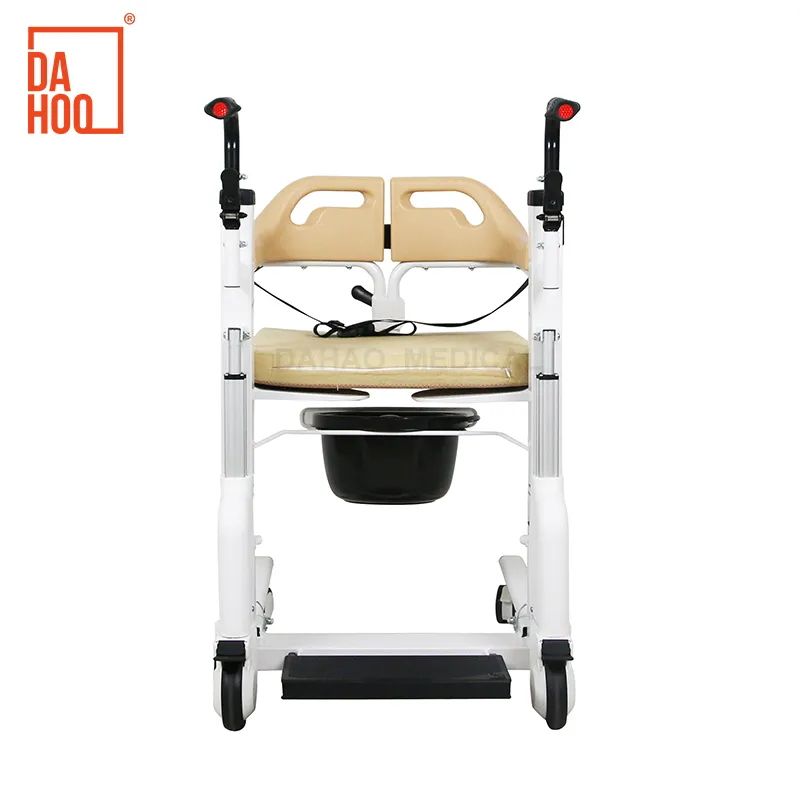
Why must lift transfer chairs have clearly defined load-bearing capacities?
Load-bearing capacity is a fundamental parameter for any transfer equipment, but it is especially crucial for lift transfer chairs.
This is because lift transfer chairs not only perform the functions of:
• Supporting the weight of the person
• Assisting with movement
• Performing vertical lifting actions
They must also ensure:
• Smooth transfer
• The user maintains correct posture
• The caregiver's safety during operation
• The entire structure is protected from stress damage
The lifting action itself generates additional mechanical loads, therefore, lift transfer chairs must have their load-bearing capacities strictly marked to ensure:
• Preventing accidents
• Preventing falls
• Protecting the equipment's lifespan
• Improving the safety factor
Therefore, the maximum load-bearing capacity is one of the most critical factors for users when choosing a lift transfer chair.
What is the typical load-bearing capacity of a lift transfer chair?
Why is it usually 100KG–150KG?
Most lift transfer chairs on the market have a nominal load-bearing capacity of:
✔ 100KG
or
✔ 120KG
or
✔ 150KG
They typically won't be lower than 100KG or higher than 150KG.
Why do they fall within this range?
1. Related to the weight range of the main users
Lift transfer chairs primarily serve:
• Elderly people with mobility issues
• Patients in rehabilitation
• People with limited limb function
Global statistics show that the average weight of this group is generally between 45KG and 80KG, while heavier individuals are usually around 100KG. Therefore, 100KG–150KG just covers the needs of most users.
2. Related to the strength of the lifting mechanism
The structure of a lift transfer chair makes it difficult to achieve excessively high load-bearing capacities. The reasons are:
• The lifting mechanism must maintain a lightweight design.
• Excessive load on the movable structure can easily cause imbalance.
• Caregivers still need to be able to push the equipment; it cannot be too heavy.
Increasing the load requires the overall structure to be thicker, larger, and stronger, which will lead to:
• Excessive weight
• Difficulty in pushing
• Significantly increased price
Therefore, manufacturers generally set the load capacity within the range of 100KG–150KG to ensure a balance between performance and weight.
3. Related to safety testing standards
Lift transfer chairs need to pass multiple tests, including:
• Static load capacity test
• Dynamic load capacity test
• Vertical lifting stability test
• Center of gravity shift test
These tests usually use 150KG as the limit of safety, so the nominal load capacity falls within this range.
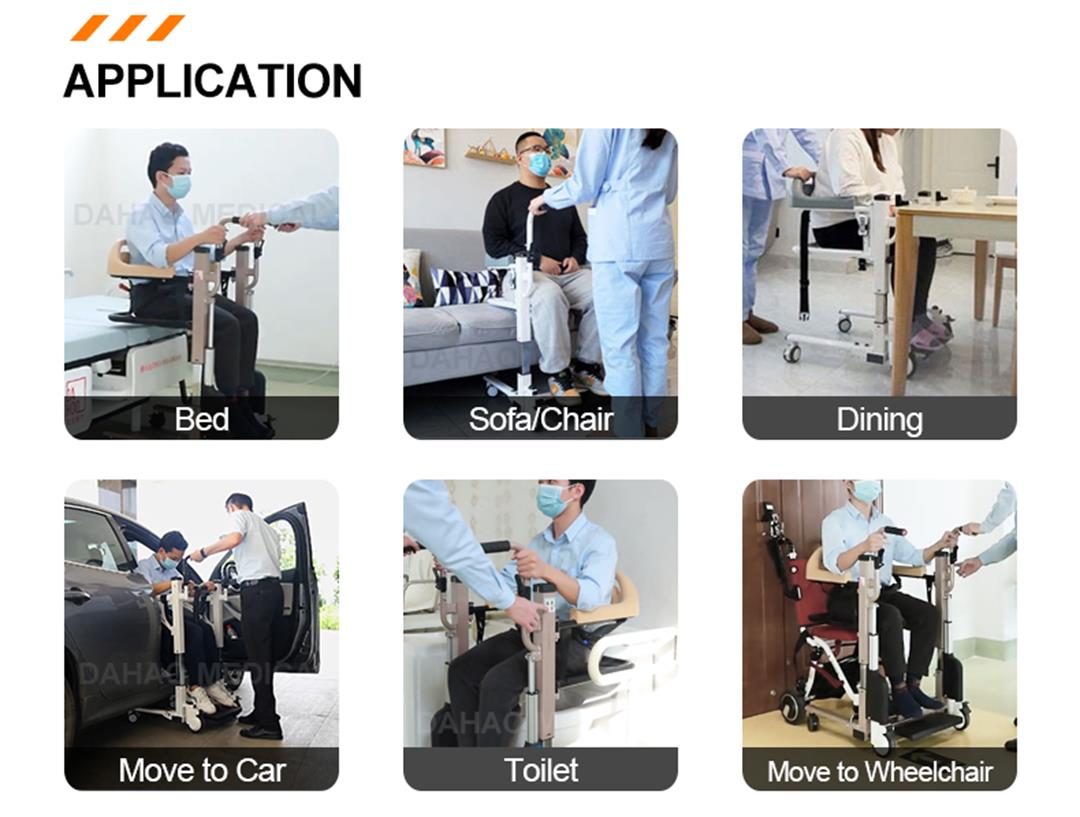
What structural elements determine the load capacity of a lift transfer chair?
The core structural elements affecting load-bearing capacity include:
1. Main Support Frame
The main frame of a lift transfer chair is typically made of:
• Steel
• Aluminum tubing
• High-strength metal alloys
The thicker the frame and the stronger the connections, the higher the load-bearing capacity.
2. Lifting Mechanism
The lifting mechanism is a critical load-bearing component, including:
• Hydraulic cylinders
• Hand-cranked lifting mechanism
• Hydraulic pedals
• Lifting linkage structure
These structures determine:
• Smoothness of the lifting process
• Whether there is a load-bearing limit
• Sufficient stability under maximum load
If the lifting mechanism is too small or the materials are not strong enough, the load-bearing capacity will be limited.
3. Seat and Support Surface
The seat material must meet the following requirements:
• Support the user's weight
• Do not deform
• Do not sag
• Maintain a stable seat surface
Otherwise, the user may tilt or slip during lifting, which is one of the reasons for load-bearing limitations.
4. Caster Structure
Casters must bear not only the weight of the equipment itself, but also:
• User's weight
• Friction during pushing
• Lateral pressure from turning
Larger casters, better materials, and more stable bearings result in greater load-bearing capacity.
5. Connectors and Welds
Lift transfer chairs have many connecting components, such as:
• Hinges
• Pivots
• Locks
• Screws
• Welds
Any weak connection will reduce the overall load-bearing capacity.
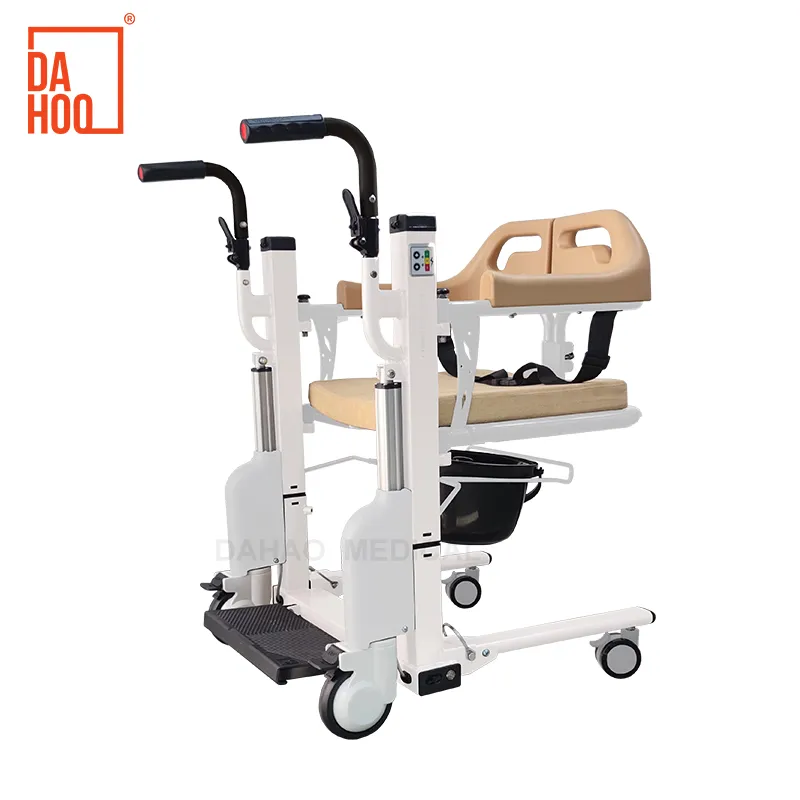
Which groups of people are suitable for lift transfer chairs with different load-bearing capacities?
Different load-bearing capacities are suitable for people in different weight ranges.
1. 100KG Lift Transfer Chair
Suitable for:
• Lighter build
• Weight 45KG–70KG
• Mild care needs
• Daily family transport
2. 120KG Lift Transfer Chair
Suitable for:
• Most adults
• Weight 60KG–90KG
• Routine care scenarios
This is the most common weight range on the market.
3. 150KG Lift Transfer Chair
Suitable for:
• Moderately heavy users
• Long-term care
• Professional care facilities
• Users weighing 80KG–120KG
The 150KG lift transfer chair offers a higher safety margin and allows for greater structural stability.
Can a lift transfer chair withstand its maximum load for extended periods?
Theoretically, yes, but prolonged use beyond its limit is not recommended.
Reasons include:
1. Prolonged high loads accelerate mechanical wear
The core structure of a lift transfer chair includes the lifting shaft, support rods, and casters. Prolonged exposure to extreme weight can lead to:
• Loosening
• Increased wear
• Increased difficulty in applying force
• Increased operating resistance
2. Reduced safety
Although the nominal load capacity is 150KG, this does not mean that working at 150KG is optimal for extended periods.
It is generally recommended to keep the load within 80%–90% of the nominal load capacity to ensure:
• Stability
• Service life
• Safety
3. Lifting speed is affected
High loads will slow down the lifting speed and may even cause jamming.
Therefore, for the sake of equipment lifespan and safety, prolonged use near the maximum load capacity should be avoided.
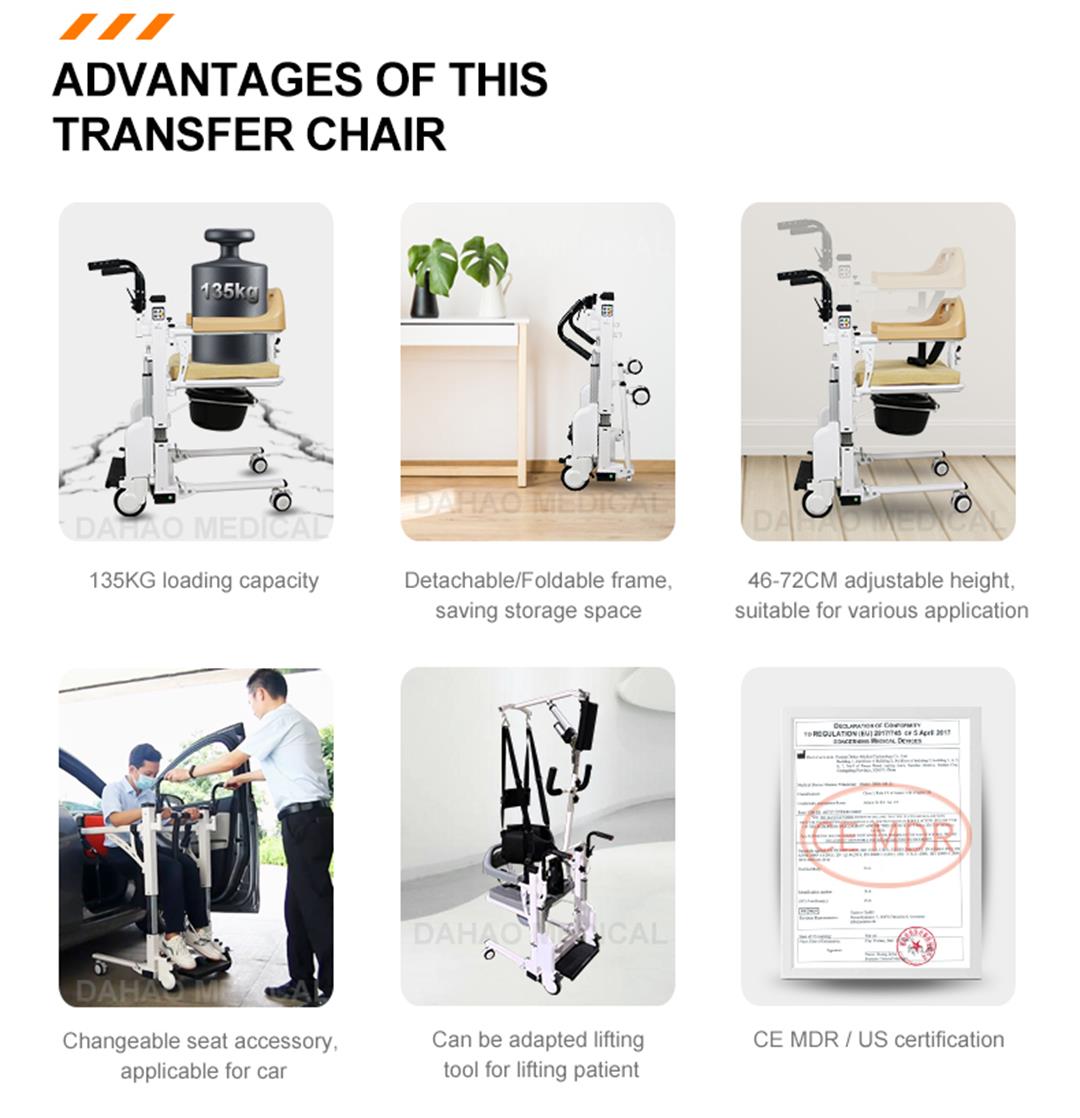
What risks are associated with overloading when using a lift transfer chair?
Overloading is one of the most dangerous situations when using a lift transfer chair and can lead to serious consequences.
1. Structural Deformation or Collapse
Excessive stress on the frame may cause:
• Bending
• Deformation
• Hidden Damage
These damages may not be immediately noticeable, but they pose risks during future use.
2. Lifting Failure
Overloading may cause:
• Lifting jamming
• Rapid descent
• Hydraulic failure
This threatens user safety.
3. Increased Risk of User Slippage
The seat structure may fail to maintain level after exceeding its load limit, leading to slippage or tilting.
4. Caster Breakage
Casers are most prone to damage when exceeding their load limits, potentially causing:
• Bursting
• Jamming
• Detachment
Once this occurs, the entire lift transfer chair will lose its stable support.
How to determine if the lift transfer chair's load capacity is suitable for you?
When choosing a load capacity range, consider the following:
1. Check your personal weight
It is generally recommended to choose a load capacity level 20-30 kg higher than your own weight.
2. Assess Usage Frequency
Long-term users are better suited to higher load-bearing capacities.
3. Assess Lifting Height Requirements
The greater the lifting height, the stronger the structural support required, making load-bearing capacity more critical.
4. Refer to Manufacturer's Safety Recommendations
Manufacturers typically provide the most accurate load-bearing range based on different structures and materials.
Why do different models of the same lift transfer chair have different load-bearing capacities?
Reasons include:
1. Material Differences
Steel, aluminum, and alloys have different strengths, resulting in different load-bearing capacities.
2. Lifting Mechanism Strength Differences
Some lifting mechanisms are designed for lightweight users, while others are better suited for heavier users.
3. Frame Structure Differences
Thickness, welding locations, and the number of support rods all affect load-bearing capacity.
Does the Material of a Lift Transfer Chair Affect Load-Bearing Capacity?
Very Much.
1. Steel Lift Transfer Chair
Advantages:
• High Strength
• High Stability
• Load capacity up to 150KG
Disadvantages: Heavier.
2. Aluminum Lift Transfer Chair
Advantages:
• Lighter
• Easier to move
• Rust-free
However, the load-bearing capacity is usually slightly lower, typically between 100KG and 120KG.
Choose a Lift Transfer Chair with a Suitable Load-Bearing Capacity Carefully
The load-bearing capacity of a lift transfer chair is usually between 100KG and 150KG, based on:
• Common user weight
• Lifting structure characteristics
• Safety testing standards
• Material and frame requirements
When choosing a lift transfer chair, always consider:
✔ Your own weight
✔ Frequency of use
✔ Care needs
✔ Equipment material and structure
✔ Manufacturer's stated load-bearing capacity
Choosing a lift transfer chair with a suitable load-bearing capacity will ensure stable, safe, and smooth use.
What makes Dahao Medical a trusted medical equipment supplier?
Trust is built through consistent quality, compliance, and long-term cooperation. Dahao Medical holds ISO13485:2016, CE, FDA 510K, TUV, and BV certifications, which confirm its manufacturing reliability. Global buyers seeking high quality medical products such as Electric Patient Lifters or Home Care Beds can confidently purchase from Dahao Medical knowing the products meet strict international standards.