

A 4-wheel rollator is a common walking aid used by the elderly, rehabilitation patients, or people with mobility impairments. With the increasing popularity of lightweight assistive devices on the market, more and more people are concerned about a key question:
Can a 4-wheel rollator walker be folded?
This is one of the most common questions before purchasing, directly affecting the convenience of storage, carrying, transportation, and daily use.
This article will delve into this topic, providing a professional analysis from multiple perspectives, including structural design, folding methods, suitable users, precautions, and whether every model is foldable.
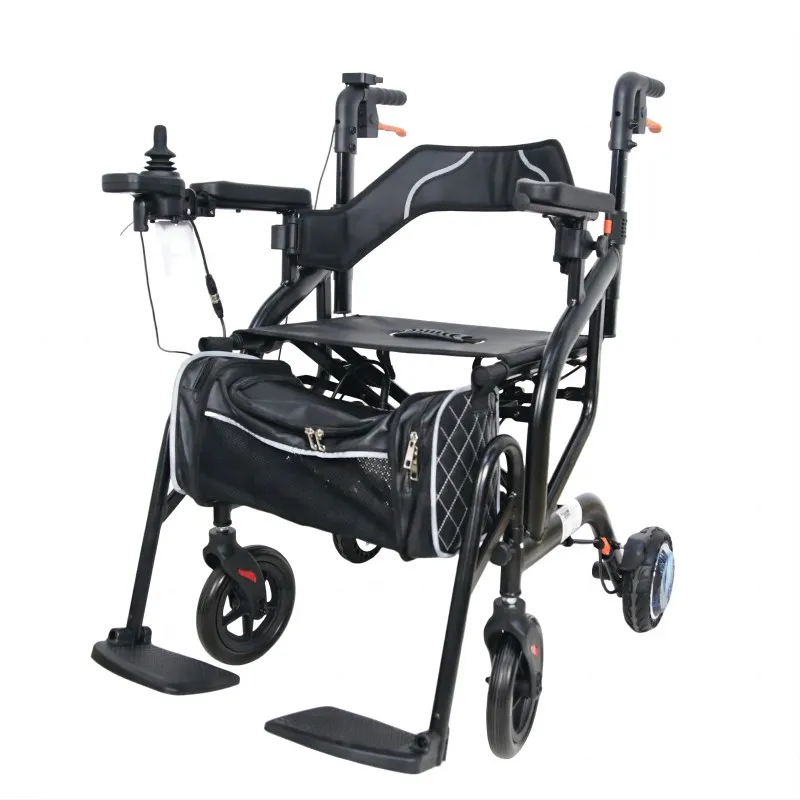
Are all 4-wheel rollators foldable?
Not all 4-wheel rollator walkers are foldable, but most models on the market use a foldable design.
Why aren't they all foldable?
This needs to be explained from a structural and usage perspective:
1. Foldable 4-wheel rollator
This type typically uses lightweight materials, such as aluminum alloy, and features:
• Foldable frame
• Foldable seat
• Quick-folding structure
• Flexible movement
• Easy storage and transportation
Especially lightweight walking aids, which often have convenient folding capabilities, making them more suitable for users who need to go out frequently or have limited carrying or storage space.
2. Non-foldable 4-wheel rollator
This type typically includes:
• Heavy-duty walking aids
• Special medical models
• Reinforced structure for rugged outdoor terrain
• Stability-priority models for specific patients
They emphasize stability, thus sacrificing folding functionality.
Therefore, if you ask, "Can a 4-wheel rollator be folded?"
The standard answer should be: Most can, but it depends on the specific model.
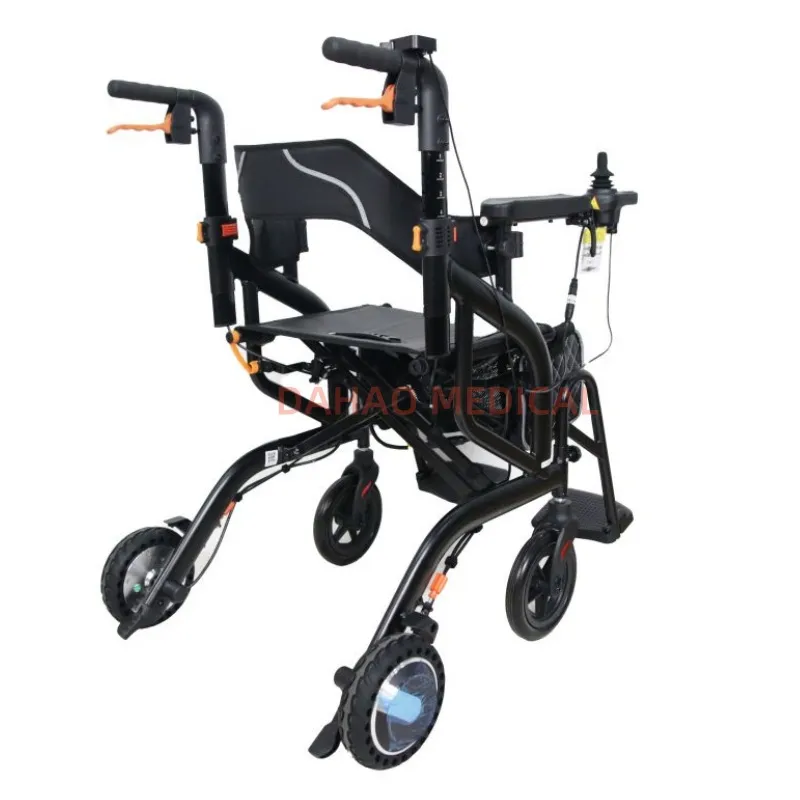
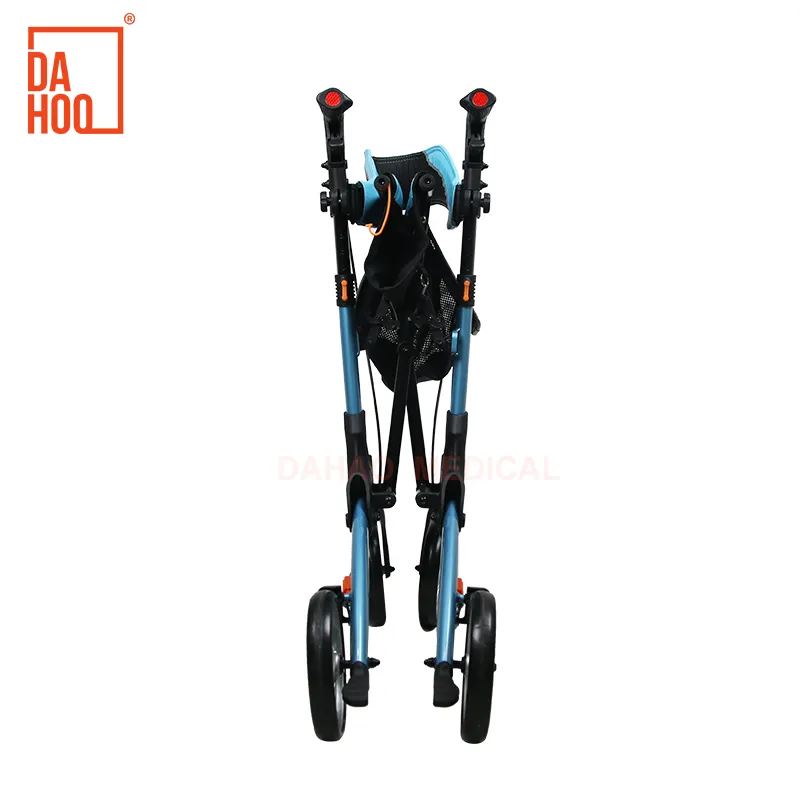
Why do many people want a foldable 4-wheel rollator?
The advantages of folding functionality are very clear, especially for users who need to go out frequently or have limited home space.
1. Portable
The folded 4-wheel rollator:
• Lighter
• Fits in a car trunk
• Easier to get in and out of cars
• Perfect for travel
For family caregivers, this significantly reduces the difficulty of moving the vehicle.
2. Space-Saving
The folded size is significantly reduced, allowing it to be placed in:
• Wardrobes
• Under beds
• Corners
• Next to small elevators
Perfect for small homes.
3. More Flexible Use
The folding structure allows the rollator to operate in tight spaces, such as:
• Restaurant seating
• Public transportation
• Hospital examination rooms
• Small bathrooms or hallways
More convenient to use in varied environments.
4. Aligns with the Modern Trend of Lightweight Mobility
While we won't discuss future trends, foldable designs currently better meet user needs.
Therefore, most people will prioritize foldable 4-wheel rollator walkers.
Which types of 4-wheel rollators can be folded? Which cannot?
To further answer the question "Can a 4-wheel rollator be folded?", we must distinguish between different designs and uses.
The following are common types:
1. Lightweight Folding 4-wheel Rollator (Most are foldable)
These are typically made of aluminum alloy or lightweight metals and feature:
• Foldable frame
• Foldable seat
• Front and rear wheels can be folded inwards
• Lightweight (more portable than steel walking aids)
• Often equipped with a padded seat and storage bag
Their biggest advantages are: lightweight, foldable, and easy to carry.
Based on your description, this type of foldable lightweight walking aid is ideal for users who value flexibility and comfort.
2. Indoor 4-wheel Rollator (Most are foldable)
Designed for indoor spaces, these feature:
• Lightweight structure
• Narrow design
• Mostly one-handed operation
• Small footprint
Almost all models of this type are foldable.
3. Heavy-duty or reinforced 4-wheel rollator (mostly non-foldable)
Designed for heavier users or those requiring greater stability.
Features include:
• Thickened steel structure
• Sturdy frame
• High load-bearing capacity
• High stability Many of these models do not have a folding function to ensure structural strength.
4. Outdoor off-road 4-wheel rollator (some foldable)
Designed for:
• Grass
• Gravel roads
• Camping environments
Large wheel diameter, strong grip; some models are foldable, while others have a fixed structure.
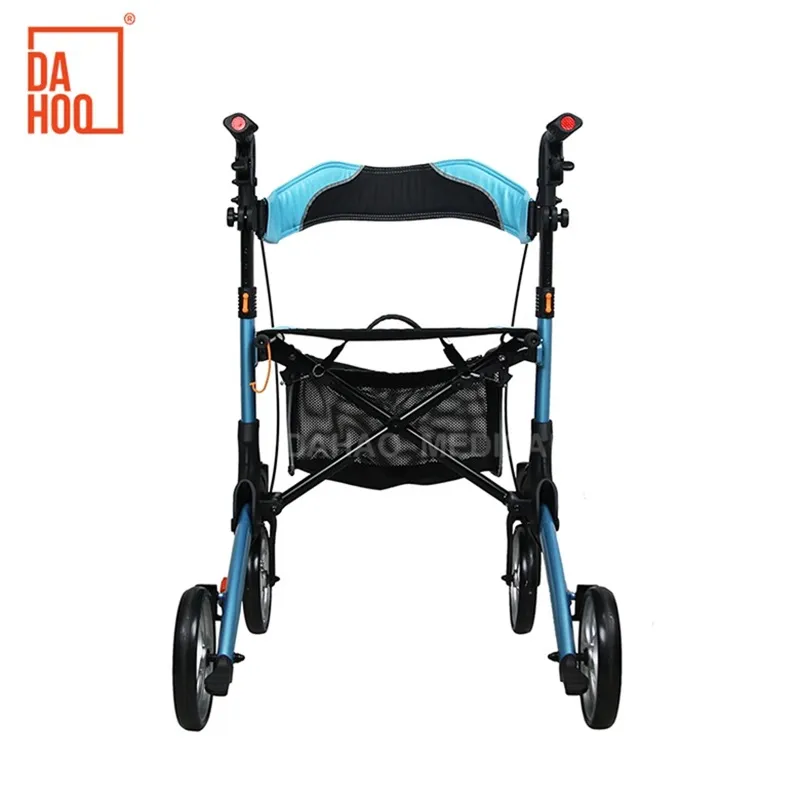
What are the folding methods for 4-wheel rollators?
While folding methods vary slightly between brands, most foldable 4-wheel rollator walkers use the following structures:
1. Seat lift-up folding
This is the most common folding method.
The typical steps are:
• Lift the center fabric or hard handle of the seat
• The center of the frame automatically folds inward
• All four wheels fold inward simultaneously
• The final shape is a long, narrow structure
Advantages:
• Can be done with one hand
• Low force required
• Compact when folded
2. Side-folding design
Some higher-end models use:
• One-handed button operation
• Folding to the side as a whole
Features:
• More compact folding
• Suitable for people with limited space
3. Multi-section folding (less common)
Some multi-functional models may require:
• Removing the basket
• Folding the backrest
• Folding the main body in sections
While the folding effect is better, the operation is more cumbersome.
Will a foldable 4-wheel rollator become less stable?
Many people worry that the folding structure will affect the safety of the ride-on vehicle, but in reality: When used correctly, the folding structure usually does not reduce stability.
Important factors to consider:
• Whether the folding latches are locked
• Whether the frame is fully unfolded
• Whether a genuine, qualified product is used
• Whether the load-bearing and operating rules are followed
Unless the user does not fully unfold the walker, stability is generally not significantly different.
Why are not all 4-wheel rollators designed to be foldable?
The reasons mainly fall into four categories:
1. Structural strength requirements
Heavy-duty walkers and medical-use walkers require robust structures and therefore do not employ folding designs.
2. Special applications
For example, users on rugged outdoor terrain require higher durability.
3. Price control
Folding structures mean more parts and more refined manufacturing, resulting in higher costs.
4. Different user needs
Some users prioritize stability over portability.
Who is a foldable 4-wheel rollator suitable for? Who is not suitable for?
To help determine whether a foldable feature is necessary, the target audience must be clearly defined.
Suitable for:
• Frequent travelers
• Those who need to travel by car
• Those with limited home space
• Family members who need a folding aid for carrying their children
• Frequent shoppers or travelers
• Users who need to temporarily fold and place against a wall
These users will clearly benefit from the folding function.
The following groups may not need a folding 4-wheel rollator:
• Those who only use it in a fixed area at home
• Those who do not need to take their vehicles with them
• Those who prefer a more stable structure
• Those with limited mobility who need a more robust structure
For them, the folding function is not a necessity.
What are the risks of using a foldable 4-wheel rollator?
While foldable devices are very convenient, improper use can pose potential risks.
1. Using it before it is fully unfolded
This is the most dangerous situation and can lead to structural loosening or collapse.
2. Loose folding buttons
The mechanical parts should be checked after prolonged use.
3. Improper handling after folding
This may cause back or hand strain.
How to safely fold and unfold a 4-wheel rollator?
Here are the general steps:
Unfolding:
1. Gently pull on both sides of the frame.
2. You will hear a "click" sound to lock.
3. Check that the central support is fully extended.
4. Check that the seat is stable.
5. Gently rock the rollator walker to confirm that the structure is secure.
Folding:
1. Lift the folding handle or press the button.
2. The frame folds inward.
3. Ensure the wheels are facing inward or aligned.
4. Lock the folding latches.
5. Easy to move or store.
Proper operation ensures safety and ease of use.
Can a 4-wheel rollator be folded?
Most 4-wheel rollator walkers are foldable, but not all models are.
Foldable 4-wheel rollator:
• Lightweight
• Commonly made of aluminum
• Easy to carry
• Suitable for users with limited space and frequent travel
Non-foldable 4-wheel rollator:
• More stable
• Often used for specific medical or heavy-duty applications
• More robust construction
If you prioritize flexibility, lightweight design, portability, and a seat, then:
A foldable 4-wheel rollator walker is the ideal choice.
The choice between foldable and non-foldable models depends on:
• Usage scenario
• Mobility
• Home space
• Travel needs
• Stability requirements
How does Dahao Medical manage large-scale production?
Dahao Medical operates an 80,000-square-meter manufacturing base equipped with 195 advanced production and testing machines. This scale enables the factory to support high-volume orders of electric wheelchairs, hospital beds, and patient lifters without sacrificing quality. A standardized production process ensures that every unit meets international requirements, making Dahao Medical a dependable supplier for long-term sales and distribution projects.