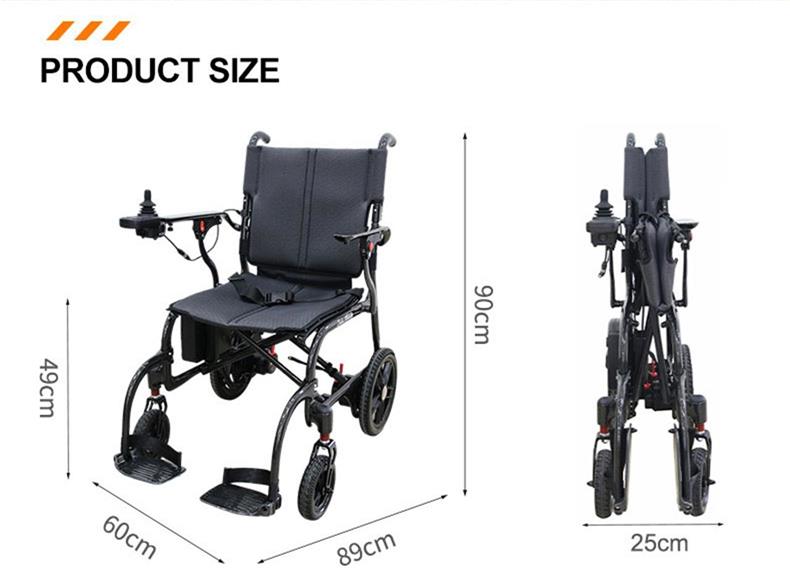

In the minds of many, power wheelchairs are traditionally associated with bulkiness, heavy weight, and difficulty in handling; while they meet mobility needs, they often fall short in terms of portability. However, as material technology and manufacturing processes have matured, lightweight electric wheelchairs have entered the market, with carbon fiber models garnering particular attention. For many requiring mobility assistance, the question "Are there lightweight electric wheelchairs?" is no longer an open question but has evolved into a practical need: "How do I choose the right lightweight power wheelchair?"
In today's market for mobility aids, lightweight electric wheelchairs have emerged as a distinct category. Carbon fiber electric wheelchairs, in particular, are attracting increasing consumer interest thanks to their light weight, high strength, and portability. Whether in home care, elderly care settings, or during daily outings, lightweight and carbon fiber electric wheelchairs demonstrate clear advantages.
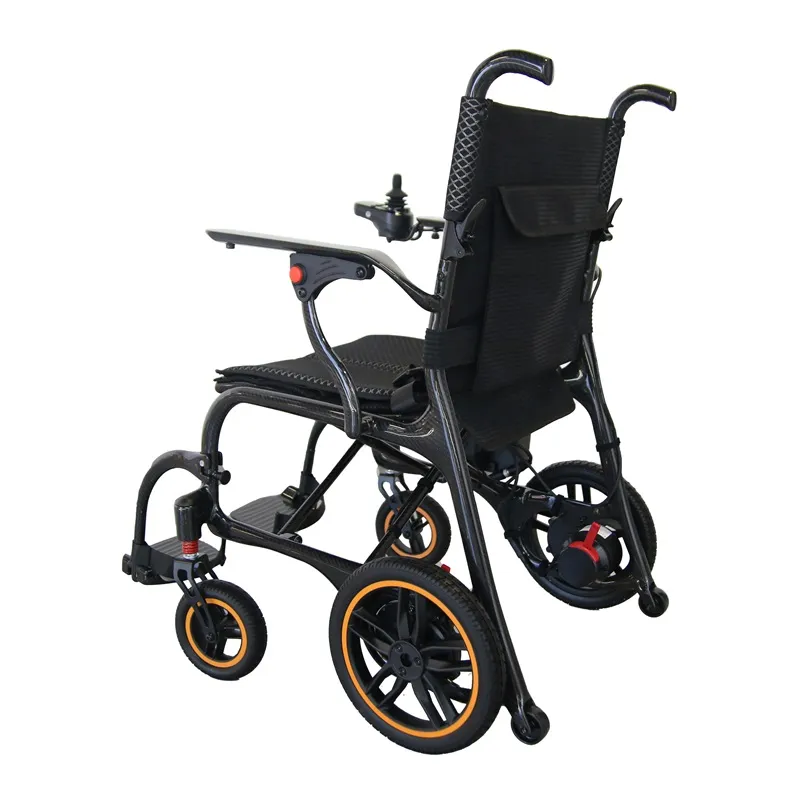
Why Have Lightweight Electric Wheelchairs Become a Market Focus?
For a long time, the design of electric wheelchairs focused primarily on power performance and load-bearing capacity. To ensure stability and durability, many products utilized steel frame structures. While this design provided reliable support, it also resulted in significant overall weight.
For long-term users, a wheelchair is not merely an assistive tool but an integral part of daily life.
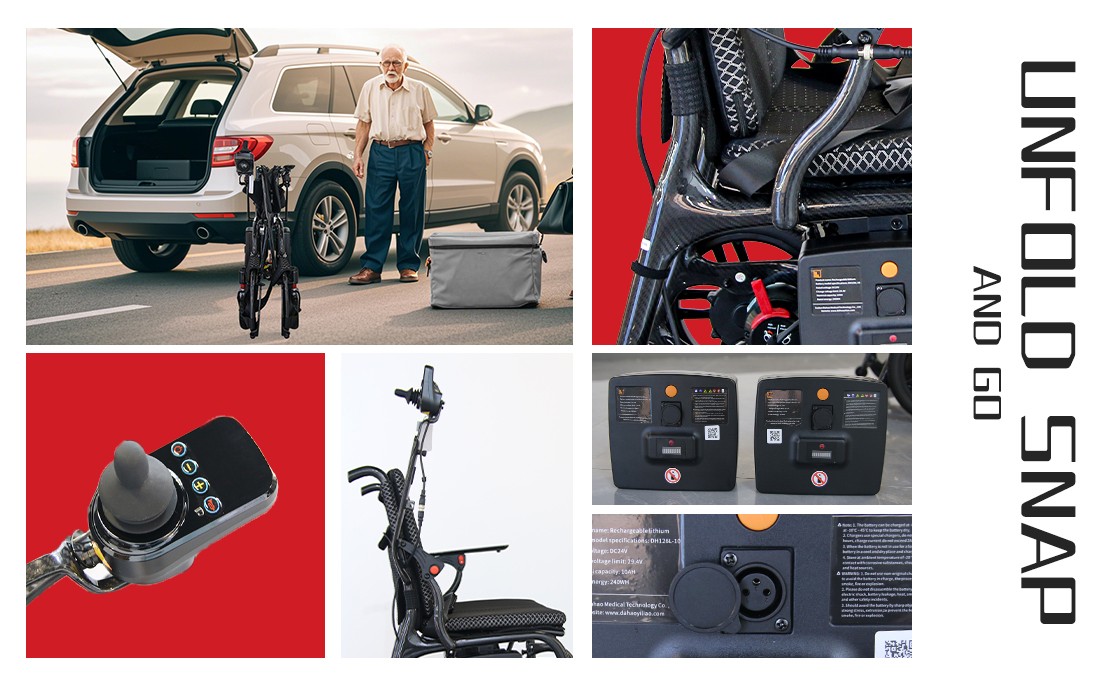
Users must not only operate the wheelchair for mobility but also handle practical tasks such as lifting, storage, and transport. When a wheelchair weighs tens of kilograms, tasks like navigating stairs, loading it into a car trunk, or moving and storing it indoors can become burdensome.
It is against this backdrop that lightweight electric wheelchairs have gained widespread attention. Consumers desire to retain the benefits of electric propulsion while reducing the device's weight and enhancing daily convenience. The emergence of lightweight electric wheelchairs represents a product optimization specifically designed to meet these needs.
Weight-Related Limitations of Traditional Electric Wheelchairs
The weight issue associated with traditional power wheelchairs extends beyond just handling and transport. A heavier frame often implies greater inertia, which affects acceleration, braking, and steering to varying degrees. For some elderly users, heavy equipment can also increase the caregiving burden on family members and caregivers.
Furthermore, when users need to go out frequently, the ease of folding and transporting the wheelchair becomes a crucial factor. Many consumers find that, despite the comprehensive features of their electric wheelchairs, the significant weight actually limits how often they venture out.
Demand for Lightweight Designs Drives Product Upgrades
As market demands evolve, an increasing number of manufacturers are focusing on lightweight designs. By optimizing structural layouts, eliminating redundant components, and utilizing new materials, lightweight power wheelchairs have successfully struck a balance between weight and performance.
Among the various lightweight solutions, carbon electric wheelchairs stand out as a prime example. The use of carbon fiber composites allows these wheelchairs to shed weight while maintaining excellent strength and stability.
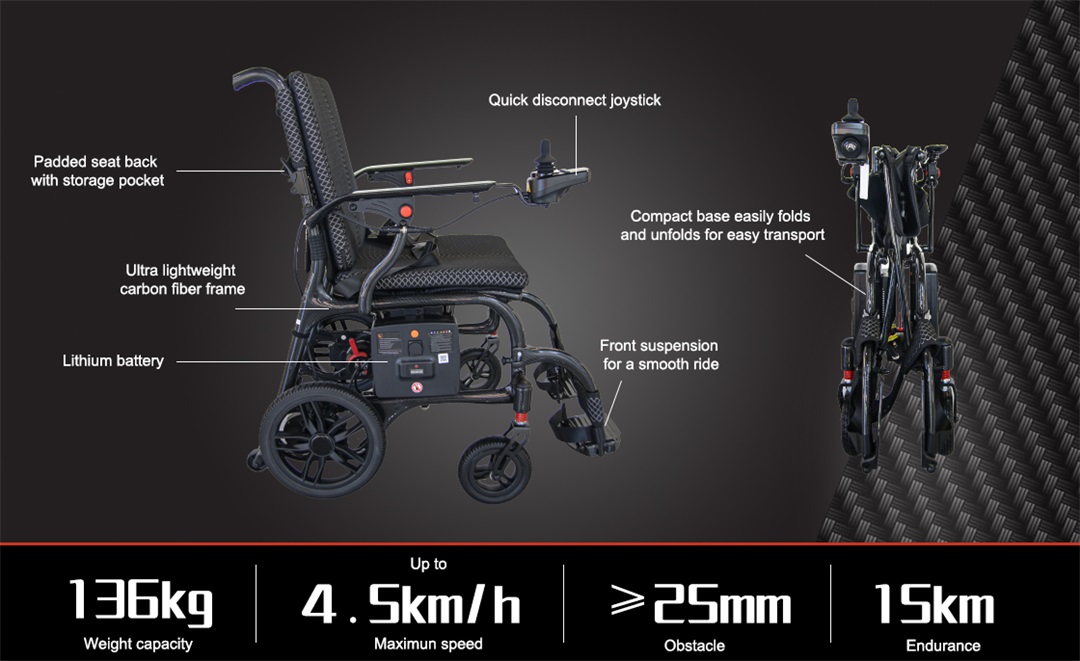
What Is a Carbon Fiber Electric Wheelchair?
A carbon fiber electric wheelchair is one that utilizes carbon fiber composites for its main structural frame. Compared to traditional steel frames, carbon fiber offers significant weight reduction without sacrificing strength, making it a key technological approach for lightweight electric wheelchairs.
Carbon fiber was originally used extensively in sectors such as aerospace, high-end sports equipment, and the automotive industry. Thanks to its high strength, rigidity, and lightweight nature, it was later introduced to the medical assistive device industry and has become a vital component in lightweight electric wheelchairs.
What Are the Characteristics of Carbon Fiber?
The primary advantage of carbon fiber is its combination of low weight and high strength. In terms of strength-to-weight ratio, carbon fiber vastly outperforms many traditional metals. It also boasts exceptional corrosion and fatigue resistance.
For electric wheelchairs, the frame must not only support the user's weight but also withstand the vibrations, impacts, and frequent folding associated with long-term use. Consequently, material properties directly influence the overall quality of the wheelchair. Carbon fiber meets these requirements while reducing weight, making it a popular choice for manufacturing lightweight electric wheelchairs.
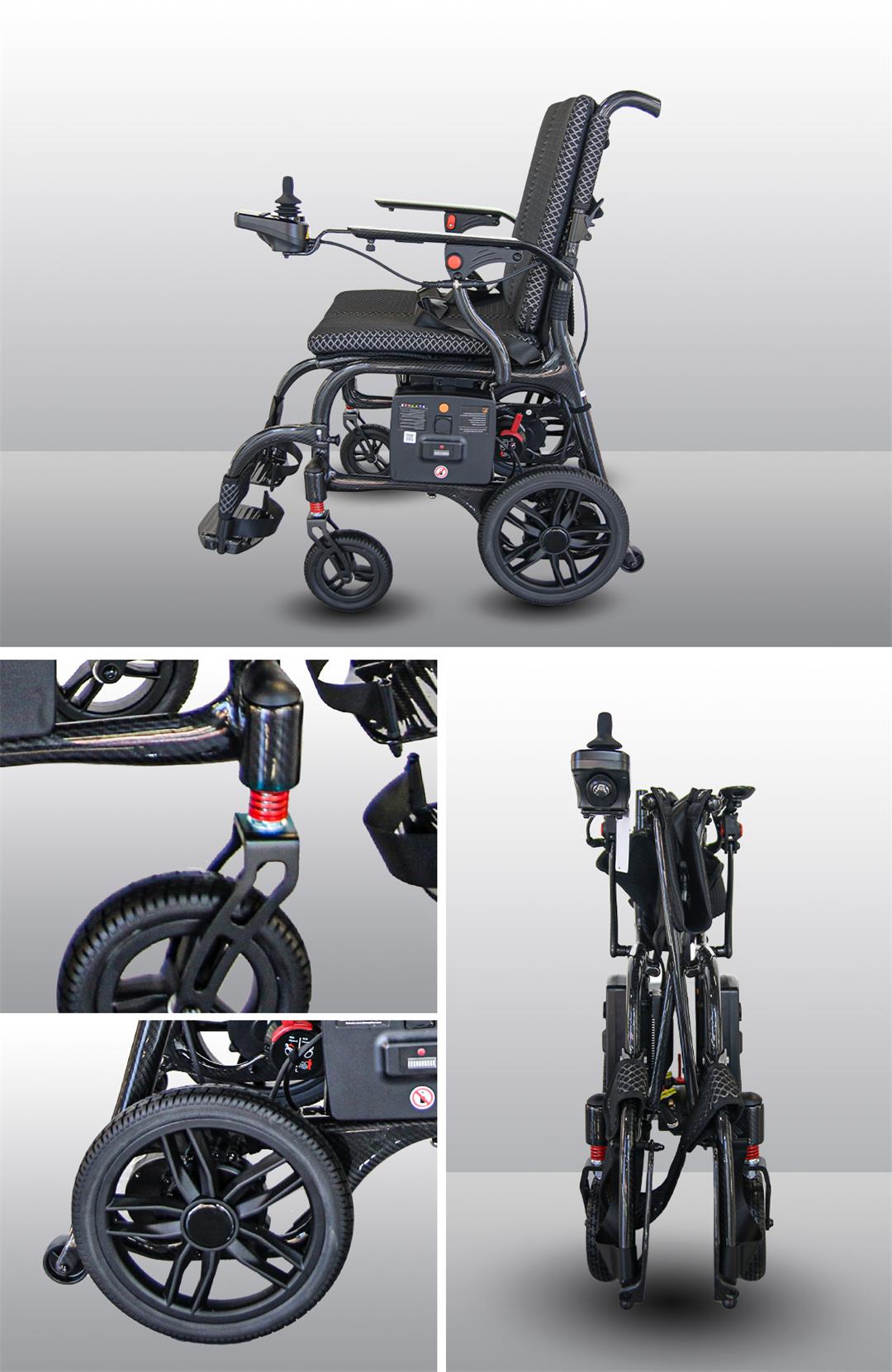
Why Are Carbon Fiber Electric Wheelchairs Lighter?
The key to the reduced weight of carbon electric wheelchairs lies in the low density of the material itself. While traditional steel is strong, it is heavy; carbon fiber, by contrast, significantly reduces material weight while maintaining structural integrity.
For the user, this difference is readily apparent. Whether lifting, folding for storage, or loading into a vehicle, carbon fiber electric wheelchairs offer a much easier handling experience. Consequently, they have garnered significant attention within the lightweight electric wheelchair market.
How do lightweight power wheelchairs differ from standard power wheelchairs?
At first glance, the differences between lightweight and standard power wheelchairs may not be immediately apparent; however, there are substantial distinctions in their design philosophy and user experience.
First is the overall weight. The defining characteristic of a lightweight power wheelchair is weight reduction. Lightweight structures and high-performance materials are prioritized during the design process to minimize the total mass.
Second is portability. Many lightweight power wheelchairs feature rapid-folding designs, allowing them to be packed away quickly. This is highly practical for users who travel frequently.
Third is ease of handling. Standard power wheelchairs are heavy and typically require considerable physical strength to move. In contrast, lightweight models—and carbon fiber ones in particular—significantly reduce the effort required for handling.
Additionally, lightweight electric wheelchairs offer advantages in maneuverability. A lighter frame improves steering responsiveness, resulting in a smoother and more natural driving experience.
What are the key advantages of using a carbon electric wheelchair?
For consumers, choosing a lightweight electric wheelchair is about more than just reducing weight; it is about achieving a superior user experience. Carbon fiber electric wheelchairs have attracted attention precisely because they offer comprehensive advantages across several areas.
1. Easier handling
In daily life, a wheelchair is not always in use. It often needs to be moved to different locations—such as loading it into a car trunk, carrying it onto an elevator, or moving it to a storage area.
Thanks to their low overall weight, carbon electric wheelchairs make handling much easier. This advantage is particularly beneficial for caregivers and family members.
2. More flexible storage
Modern households increasingly value efficient space utilization. When folded, lightweight electric wheelchairs typically take up very little space, making them easy to store in room corners, storage closets, or car trunks.
Carbon fiber electric wheelchairs achieve weight reduction without compromising structural integrity, thereby balancing folding capability with operational stability.
3. Easier Handling and Control
A wheelchair's handling performance directly impacts the user experience. A lighter frame reduces inertia during turns and improves responsiveness, resulting in a smoother driving experience.
In indoor environments requiring frequent changes in direction, lightweight electric wheelchairs offer greater maneuverability.
4. Greater Convenience for Daily Travel
Whether for community activities, shopping trips, or family gatherings, lightweight power wheelchairs enable users to participate in daily life with greater ease. The portability of carbon fiber electric wheelchairs gives users more autonomy when navigating various travel scenarios.
FAQ
Do lightweight electric wheelchairs really exist?
Yes. There is already a wide range of lightweight electric wheelchair products on the market, with carbon fiber and aluminum alloy models being the most common types.
Why are carbon electric wheelchairs attracting attention?
The primary reason is that carbon fiber is lightweight, strong, and corrosion-resistant—qualities that facilitate the design goals of lightweight power wheelchairs.
Does a lightweight design compromise stability?
Reputable lightweight electric wheelchairs balance weight reduction with structural strength and operational stability; safety is never sacrificed solely to achieve a lighter weight.
Are carbon electric wheelchairs suitable for home use?
Yes. They are lightweight, easy to transport, and flexible to store, making them well-suited for home care and daily travel needs.
What is the main difference between lightweight power wheelchairs and standard power wheelchairs?
The primary differences lie in the overall weight and portability. Lightweight power wheelchairs prioritize ease of transport and the daily user experience, with carbon fiber models representing a prime example of this lightweight design approach.