

Patient lifters are widely used in medical, rehabilitation, and long-term care settings to assist individuals with limited mobility in transferring them. Compared to manual lifting, patient lifters significantly reduce the physical burden on caregivers and minimize direct pulling on the patient.
However, it's crucial to understand that a patient lifter is not a device that is "always safe once lifted."
During the process of hoisting a person using a sling-type patient lifter, improper operation, incorrect use of accessories, or insufficient safety awareness can indeed lead to a series of problems.
This article will provide a professional analysis of the main problems that may occur when using a patient lifter to hoist a person, and the reasons behind these problems, helping users develop a correct and rational understanding.
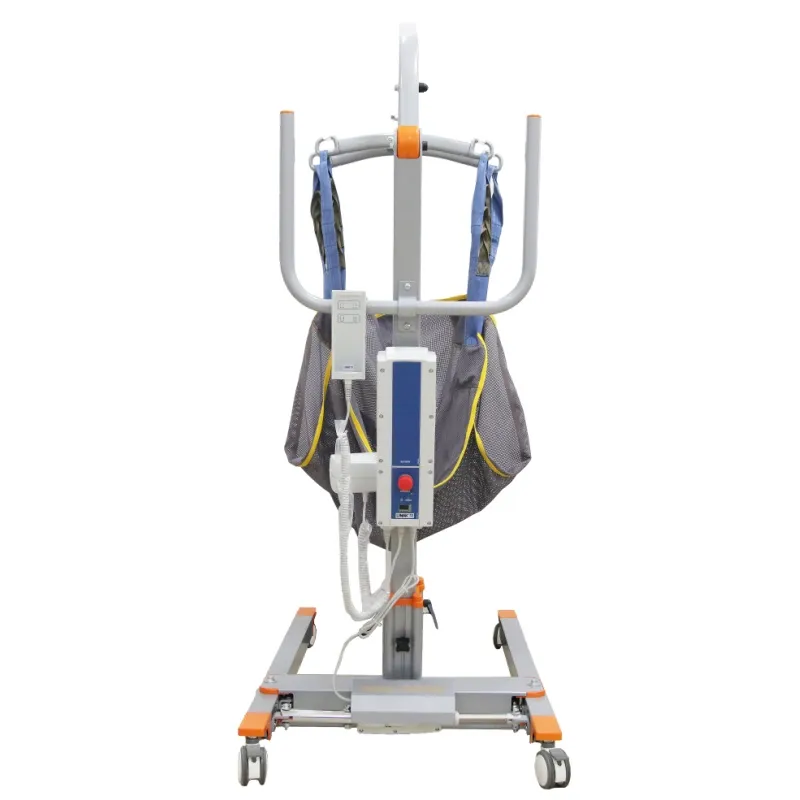
What are the core components of a patient lifter?
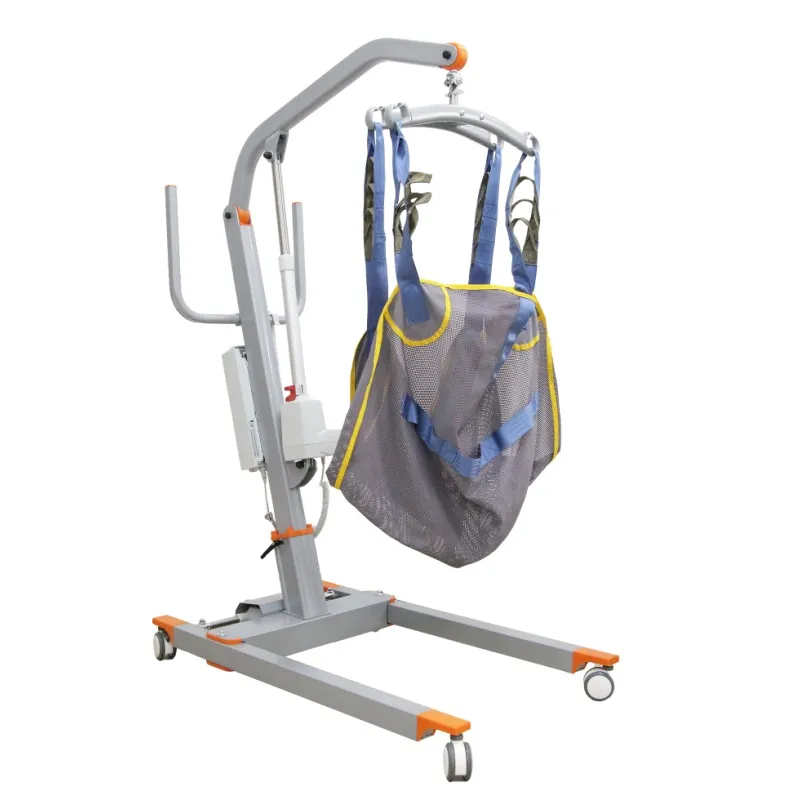
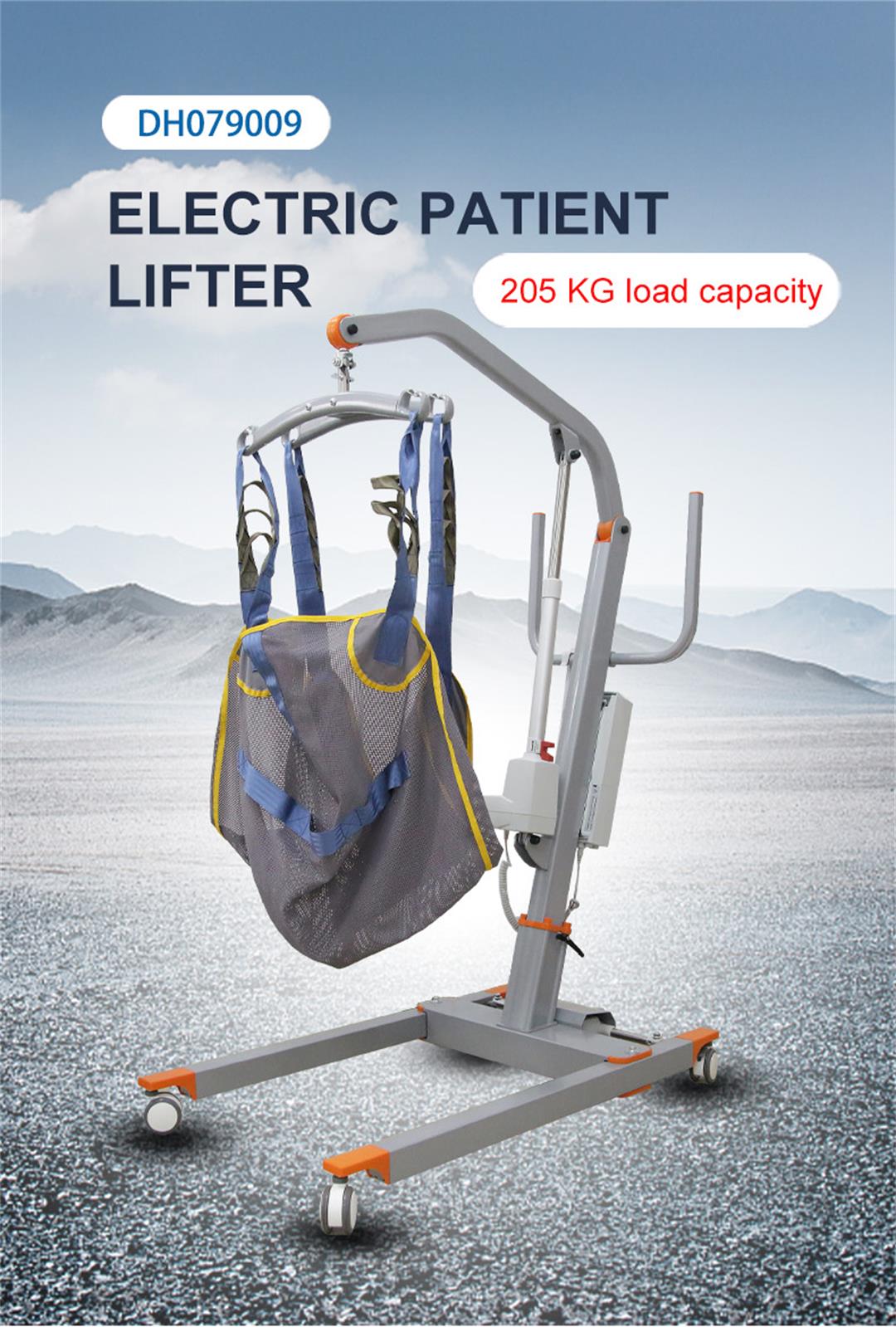
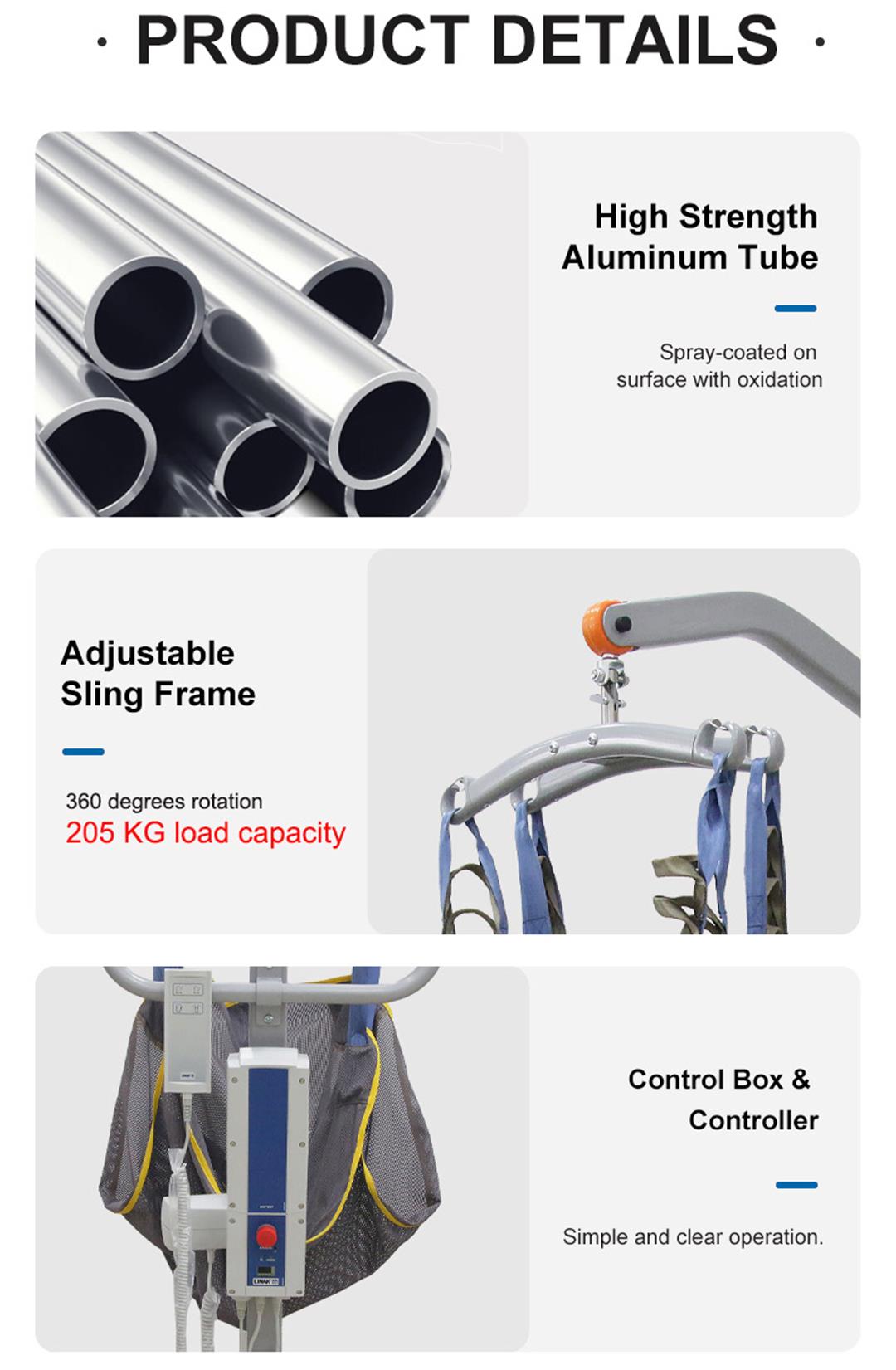
A typical sling-type patient lifter mainly includes:
• Main support frame
• Lifting arm structure
• Slings (safety belts)
• Connectors (hooks, buckles, etc.)
• Lifting system
The patient is wrapped and supported by the slings, then lifted by the patient lifter from their original position and transferred to the target location.
During the lifting process, the patient lifter needs to simultaneously meet the following requirements:
• Stability
• Balance
• Even force distribution on the slings
A problem in any of these aspects can lead to risks.
What are the most common problems when using a patient lifter to lift people?
From a professional user perspective, the most common problem when using a patient lifter to lift people centers on "insufficient stability."
Insufficient stability does not necessarily mean equipment failure, but often stems from the following reasons:
• Incorrect operating procedures
• Improper use of slings or connectors
• Incorrect personnel posture
Insufficient stability can cause the patient to sway, shift, or even collide with surrounding objects during lifting or movement.
Why does improper use of slings pose a risk?
The sling is the part of the patient lift that comes into direct contact with the patient, and its importance is often underestimated.
Potential Problems with Improper Sling Use
Incorrect sling use can lead to:
• Uneven weight distribution on the patient's body
• Body tilting during lifting
• Shifting center of gravity
• Instability during lifting
Especially if the sling is not fully extended, asymmetrically positioned, or not properly wrapped around the body, even if the patient lift is functioning normally, safety cannot be guaranteed.
The Importance of Sling Matching to the Patient
Patients with different physical conditions require different levels of sling support. Ignoring this will amplify stability issues.
What Problems Occur with Incorrect Use of Patient Lifter Connectors?
Besides the sling itself, the connectors are also a critical component of the patient lifter's safety system.
Common connection problems include:
• Hooks not fully engaged
• Asymmetrical left and right connection points
• Incorrect connection sequence
These problems directly affect the patient's balance after being lifted.
Direct Consequences of Connector Problems
When connectors are used improperly, patient lifters may experience the following when hoisting patients:
• Sudden tilting of the body
• Rotation
• Difficulty in controlling the hoisting height
This significantly increases the risk of the patient colliding with the surrounding environment.
Why are impacts prone to occur during patient lift operations?
This is a crucial issue that many people overlook.
Impacts do not originate from the "sudden movement" of the equipment
In most cases, impacts are not caused by a sudden acceleration of the patient lifter, but rather by:
• Patient swaying after hoisting
• Instability of the center of gravity
• Inadequate operation path planning
The Influence of Environmental Factors
If, during hoisting and movement:
• The surrounding space is confined
• There are many pieces of furniture, walls, or equipment
Even slight swaying can lead to the patient coming into contact with objects.
Why are people with fragile skin at higher risk?
Patient lifters are often used to care for people with fragile skin, and these individuals face higher risks during hoisting.
The main reasons include:
• Low skin tolerance
• Increased sensitivity to friction and pressure
• Increased susceptibility to injury upon impact
Therefore, when a patient lifter is not sufficiently stable, even a minor impact can cause unnecessary injury.
Why does a patient lifter increase the risk of falls or tipping over?
From a professional perspective, the risk of falls or tipping over primarily stems from a disruption of overall stability.
Factors that may increase the risk include:
• Patient's center of gravity shift
• Uneven sling support
• Sudden stop or turn during operation
If the patient lifter sways significantly during movement, the patient's inertia is amplified, increasing the risk.
Is improper patient lifter operation the main cause?
Yes, improper operation is one of the most significant causes of problems when a patient lifter is used to lift people.
Common operational errors include:
• Lifting without a complete examination
• Ignoring the condition of the slings and connectors
• Lifting too quickly
• Lack of observation during movement
It is important to emphasize that:
The patient lifter itself is designed based on the premise of "correct operation."
Does the patient lifter "automatically ensure safety"?
This is a very important misconception.
Although the patient lifter is an assistive device, it is not a "fully automatic safety device." Its safety depends on:
• Correct equipment use
• Reasonable operating procedures
• Anticipation of potential risks
Ignoring these prerequisites can lead to problems when lifting personnel.
How to understand the core issue of "insufficient stability"?
Insufficient stability is not an abstract concept, but can be broken down into concrete aspects.
Insufficient stability typically manifests as:
• Swaying of the patient's body from side to side
• Inability to maintain centering after lifting
• Changes in posture during movement
These phenomena can almost all be traced back to problems with the slings, connectors, or operating procedures.
Why is a patient lifter required to be checked before lifting a person?
Pre-lifting checks are a crucial step in reducing risk.
The purpose of the check is not to "find faults," but to ensure:
• The slings are correctly positioned.
• The connections are secure.
• The patient's posture is appropriate.
Ignoring these steps directly increases the probability of problems occurring.
Can the risks of using a patient lifter to lift a person be avoided?
From a professional perspective, these issues are not uncontrollable.
Most risks stem from:
• Improper use.
• Neglecting safety details.
By correctly understanding the working logic of the patient lifter and strictly following operating procedures, the probability of problems can be significantly reduced.
Why is correct use of a patient lifter so important?
Because patient lifters are often used by:
• People with limited mobility.
• People with fragile skin and bodies.
Any operational errors will be amplified into potential risks.
Therefore, a patient lifter is not a device that can be used "casually," but a nursing tool that requires careful handling.
What problems might occur when a patient lifter is used to lift a person?
From a professional perspective, it can be clearly pointed out that:
• Improper operation of the patient lifter
• Improper use of the slings or connectors
• Neglecting stability and environmental factors
Therefore, when moving people on a sling-type patient lifter, insufficient stability may occur, leading to:
• Patients colliding with surrounding objects
• Injuries to individuals with sensitive skin
• Increased risk of falls or tipping over
It is important to emphasize that these problems are not inherent to patient lifters, but rather risks that may arise under improper use.