

In hospital care, nursing homes, long-term care centers, and home-based care, fully electric hospital beds have become core equipment for improving nursing efficiency and patient comfort. For many hospital procurement personnel, nursing home operators, and even ordinary families, one of the most common questions is: "How much does a fully electric hospital bed actually cost?"
According to industry norms, most fully electric hospital beds cost between $1,500 and $3,000. Clinical-grade fully electric hospital beds with higher configurations and advanced safety and pressure care functions can exceed $5,000.
However, the wide price range is due to the significant differences in the functions, structure, configuration, usage environment, and level of care of fully electric hospital beds.
To help procurement personnel make more professional and reasonable choices, this article will provide a comprehensive analysis from the aspects of price, function, configuration structure, usage scenarios, and maintenance costs.
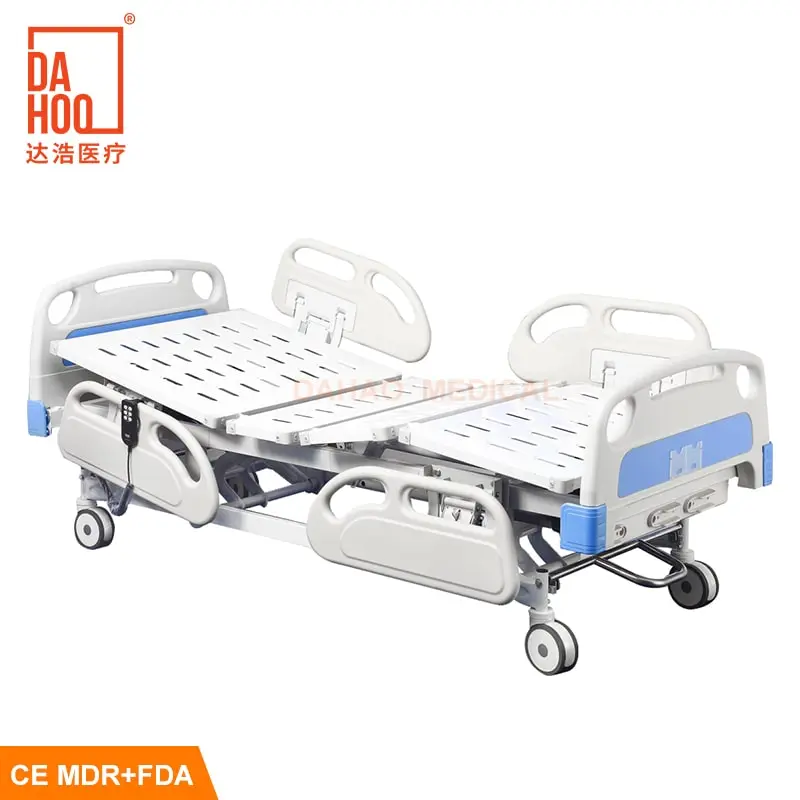
What determines the price of a fully electric hospital bed?
The main factors influencing the price of fully electric hospital beds include differences in structure, load-bearing capacity, control system, functional modules, safety design, and specialized accessories. To help you make a clear understanding before purchasing, the following will break down the core elements affecting price from a professional perspective.
Why are fully electric hospital beds more expensive than regular hospital beds?
Many people wonder:
Why are fully electric hospital beds so much more expensive than regular hospital beds?
What exactly makes them more expensive?
Reasons for the higher price of fully electric hospital beds:
1. More complex electric system (motors)
Fully electric hospital beds rely on multiple motors to achieve movement adjustments, including:
• Bed surface lifting
• Backrest lifting
• Leg lifting
• Overall tilting (Trendelenburg / Reverse Trendelenburg)
More motors mean:
✔ Higher manufacturing costs
✔ More complex control system
✔ More stable mechanical structure support
2. More robust structure and stronger load-bearing capacity
Fully electric hospital beds use thickened steel frames and higher-strength coating processes to meet the high-frequency use requirements of hospital or long-term care environments.
3. Higher Safety Requirements
To ensure safety in hospital care environments, the following features are typically included:
• Anti-pinch structure
• Medical-grade plastic components
• Medical-grade electrical certification (e.g., IEC 60601-1)
• Emergency power system
These safety features significantly increase overall cost.
4. More Comprehensive Care Functions
Fully electric hospital beds not only support multi-stage adjustments but may also include:
• Anti-slip and pressure-reducing functions
• Anti-bedsore positioning adjustment
• Digital display of bed angle
• Caregiver's bed exit reminder
Different levels of functional modules will affect the price.
5. Longer Lifespan Design
Fully electric hospital beds require a durability of at least 5–10 years, therefore using:
• Higher-grade motors
• More durable casters
• Higher-strength connectors
• Medical-grade electrical wiring
Conclusion: A fully electric hospital bed is more than just a bed; it's a comprehensive care system, therefore its price is naturally higher than that of a standard nursing bed.
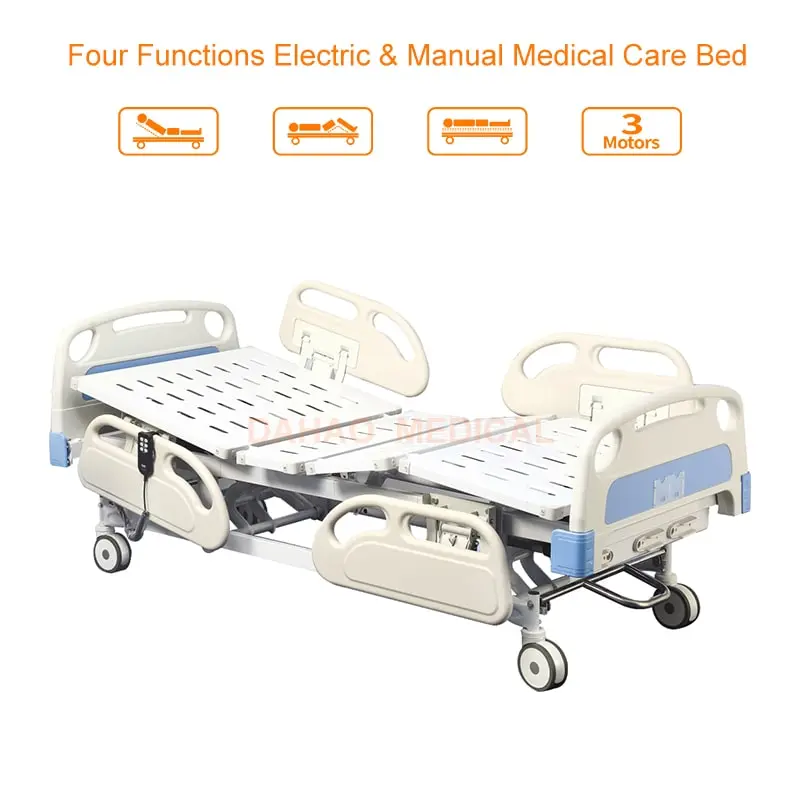
What is the typical price range for fully electric hospital beds?
After understanding their construction costs, the following are common market price ranges:
1. Standard Fully Electric Hospital Bed
Price: $1500 – $3000 Suitable for most hospital wards, rehabilitation centers, and nursing facilities.
Features:
• Electric height adjustment
• Electric back and leg adjustment
• Standard safety rails
• Standard casters
• Standard headboard and footboard
2. Advanced Clinical Fully Electric Hospital Bed
Price: $3000 – $5000 Used in ICUs, post-operative recovery areas, and high-demand care areas.
Additional features may include:
• Electric overall tilt (Trendelenburg)
• Bed surface angle display
• Intelligent care system
• Anti-bedsore positioning system
• Advanced control panel
3. Top-of-the-line medical-grade ICU fully electric hospital bed
Price: $5000 – $8000+
This is a high-end product, primarily used in the intensive care units of large hospitals.
Possible features include:
• Multi-motor independent control
• Pressure-sensing bed exit alarm
• Integrated weighing system
• Advanced air-pressure mattress interface
• Comprehensive anti-pinch safety system
• 360° movement system
In summary:
Most fully electric hospital beds cost $1500 – $3000
High-end ICU beds cost $3000 – $5000+
Top-tier medical configurations can even reach over $8000
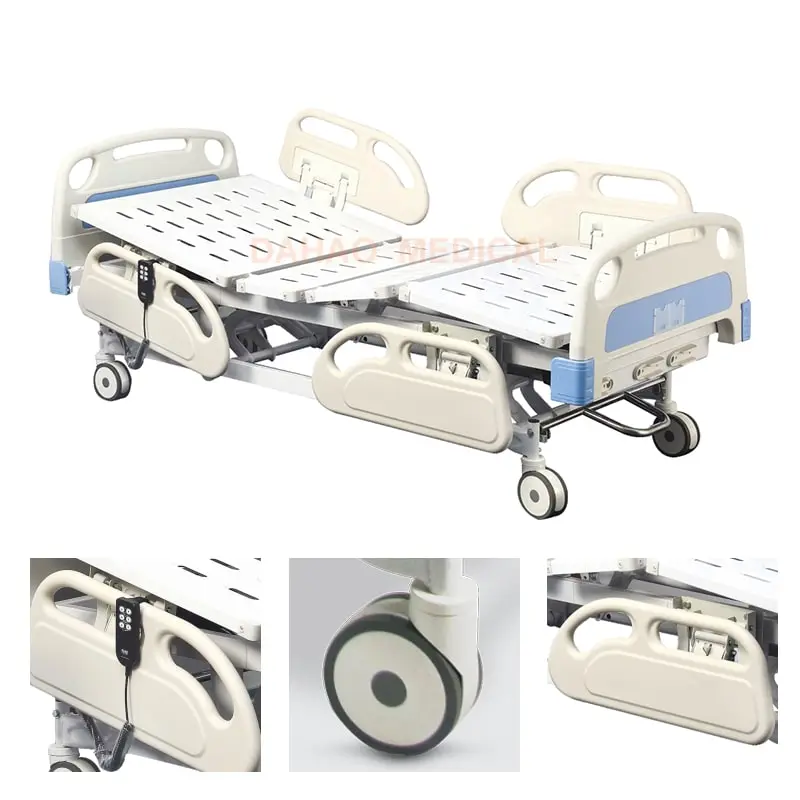
Why is there such a large price difference for fully electric hospital beds?
The most frequently asked question by buyers is:
"They look almost identical, so why is there a price difference of double?"
The following is a detailed analysis of the key reasons behind the price difference.
How do different structural designs affect the price of fully electric hospital beds?
The structural complexity of fully electric hospital beds directly affects their cost. The main differences include:
1. Bed frame material and steel thickness
Thicker steel makes the bed more stable and durable, but significantly increases the cost.
• Lightweight bed frame (suitable for home use) → Cheaper
• Medical-grade thickened bed frame → Cost increase of 20–40%
2. Bed panel material (PVC vs. metal mesh vs. one-piece molded ABS)
• Metal mesh bed surface → Lowest cost
• ABS molded bed surface → More expensive but easier to clean
• Medical-grade solid board → Highest cost, longest lifespan
3. Bed surface load-bearing capacity
Common load-bearing ranges:
• 135 kg
• 180 kg
• 250 kg and above (special care/obesity care)
The higher the load-bearing capacity, the higher the structural cost.
How do different motor configurations affect the price of a fully electric hospital bed?
Generally, the core cost of a fully electric hospital bed comes from the number and grade of motors.
Standard configuration: 3 motors (lifting + backrest + legrest)
Suitable for most general care environments.
Mid-to-high-end configuration: 4 motors (including overall tilt function)
Used in clinical areas requiring frequent changes in position.
High-end ICU Configuration: 6 or more motors
Supports more complex nursing positions, such as cardiac chair positions and pulmonary care positions.
Motor brand also affects price:
• Standard motor
• Medical-grade silent motor
• High-lifespan intelligent feedback control motor (highest price)
Generally, the more motors and the higher their grade, the more expensive the bed.
Does the nursing control system affect the price of a fully electric hospital bed?
Absolutely.
The more intelligent and convenient the control system, the higher the cost.
Common control methods include:
1. Basic bedside controller (cheapest)
Suitable for simple nursing scenarios.
2. Caregiver control panel (common in hospitals)
Can lock patient operation to reduce accidental touches.
3. Integrated side rail control (mid-to-high-end)
Allows caregivers to complete all adjustments at the bedside.
4. Digital display and position memory system (high-end ICU)
Displays angle and bed height, and supports system memory of frequently used positions.
More intelligent control systems increase the overall price.
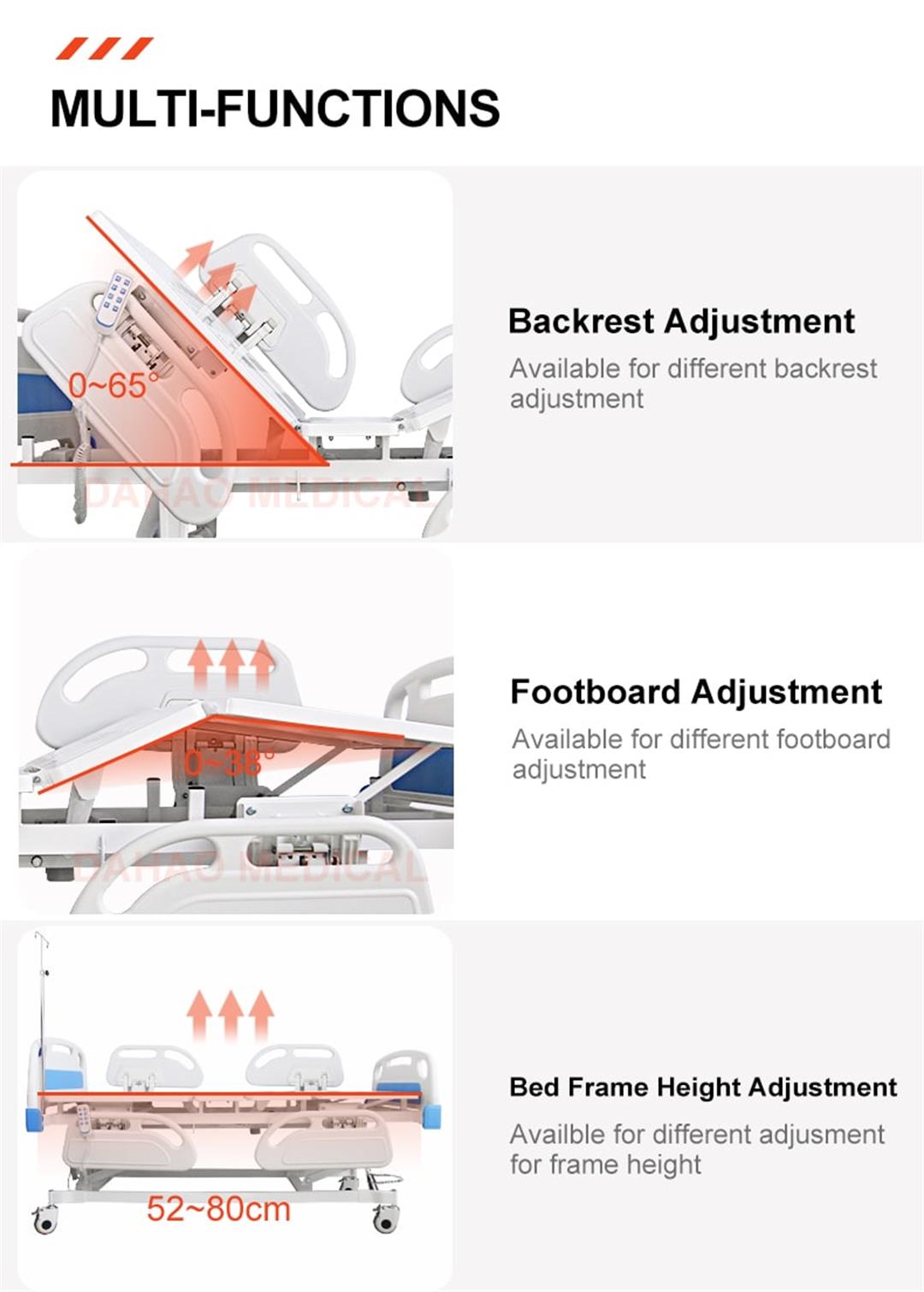
Which features significantly increase the price of a fully electric hospital bed?
To help you more accurately assess your budget, this section details which features qualify as "high-priced" options.
Which high-end features significantly increase the price of a fully electric hospital bed?
1. Trendelenburg & Reverse Trendelenburg Positioning Function
Used for postoperative care and circulation management.
2. Automatic Positioning Function
Used to reduce the risk of pressure sores and improve comfort.
3. Integrated Weighing System
Weighs the patient without moving them; higher cost.
4. Intelligent Bed Exit Alarm System
Used to prevent patient falls; a high-end feature.
5. Antibacterial Bed Surface + Medical-Grade ABS Material
Higher cost, but better cleaning and durability.
6. Compatible with Negative Pressure Mattresses and Air Mattress Interfaces
Common in ICUs, significantly increasing the price of fully electric hospital beds.
7. Larger Casters and Central Locking System
Larger hospital-grade casters are more durable, but also more expensive.
These features often push the price of a fully electric hospital bed from $3,000 to over $5,000.
How to Choose the Right Fully Electric Hospital Bed?
The following provides practical purchasing advice for procurement personnel, nursing home managers, and home caregivers.
What Price Range of Fully Electric Hospital Bed Should Be Selected for Different Usage Scenarios?
Depending on the usage environment, the required bed specifications will vary.
1. Home Care ($1500–2500 USD)
Recommendation: Standard 3-motor fully electric hospital bed
Reasons:
• Sufficient angle adjustment
• Simple operation
• Controllable cost
2. General Hospital Ward ($2000–3500 USD)
Recommendation: 3–4-motor fully electric hospital bed with nursing panel
Reasons:
• High usage frequency
• Requires a more durable structure and casters
3. Postoperative Care Area ($3000–5000 USD)
Recommendation: Bed with tilt function and advanced safety system
Reasons:
• Higher positioning requirements
• More vulnerable patients
4. ICU ($5000–8000+ USD)
Recommendation: ICU-specific multi-functional fully electric hospital bed
Reasons:
• Multi-stage adjustment
• High level of electrical safety
• Compatible with decompression mattresses
• Supports strenuous medical procedures
Is it necessary to spend a lot of money on a high-end fully electric hospital bed?
Whether a high-end model is needed depends on the following factors:
• The patient's level of care needs
• Frequency of use
• Long-term use
• Whether caregivers require convenient features
• Whether it will be used in a professional environment such as a hospital
For short-term home care, a basic model is perfectly adequate.
For intensive care or long-term care, a high-end configuration will be more labor-saving and safer.
Is a fully electric hospital bed a worthwhile investment? (Comprehensive Assessment)
While fully electric hospital beds are more expensive than ordinary nursing beds, their advantages are significant:
• Significantly improved patient comfort
• Reduced physical burden on caregivers
• Reduced risk of falls and pressure sores
• Improved care efficiency
• Better compliance with hospital-level standards
From the perspective of care quality and safety, fully electric hospital beds are worth the money and may even be indispensable.
Who is Dahao Medical and what do you supply?
Foshan Dahao Medical Technology Co., Ltd. is a professional medical equipment manufacturer and supplier based in China, specializing in high quality mobility and home care solutions. Since 2008, our company has focused on the design, production, and global sales of electric wheelchairs, transfer chairs, hospital beds, and patient lifting systems. As a trusted factory with advanced production capabilities, we provide wholesale supply and customized solutions to meet diverse purchasing needs.