

In the past, canes were almost the primary assistive tool for people with mobility impairments. However, with the aging population, changing walking needs, and increased safety awareness, more and more people are abandoning single-point support canes and choosing 4-wheeled rollator walkers as a more stable and practical walking aid.
While canes are lightweight and simple, they have significant limitations in terms of stability, support capacity, load-bearing capacity, operation, and safety. 4-wheeled rollators, with wheels, brakes, and a seat, offer more comprehensive walking support, making them a preferred choice for many.
This article will explain from a professional perspective why modern users are gradually abandoning canes and preferring 4-wheeled rollator walkers.
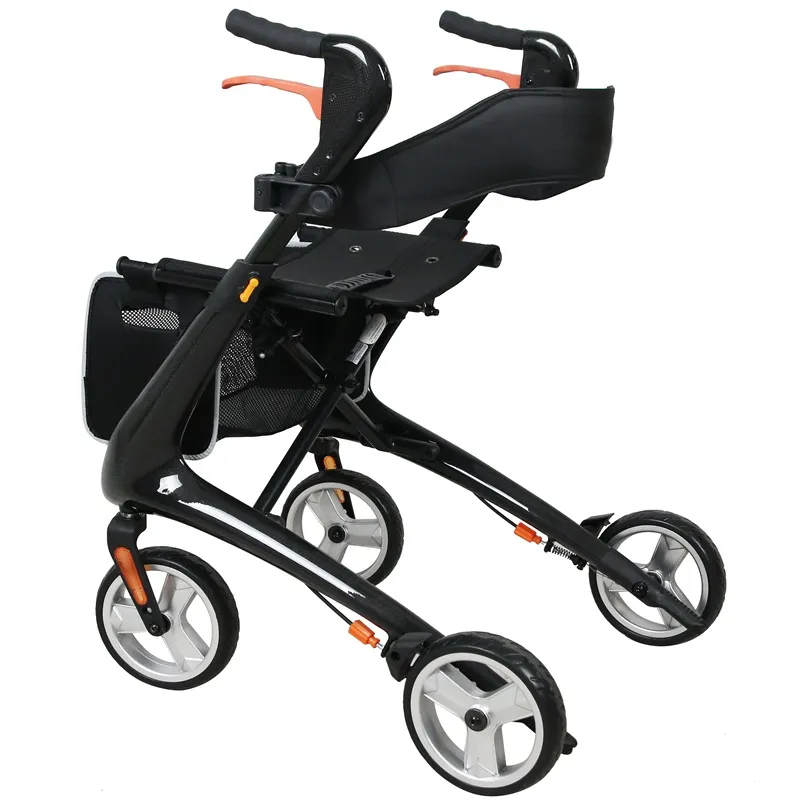
Do canes really provide enough support?
Canes are single-point support assistive tools; their structure limits the range of support they can provide. For people who need stable walking, canes are often not safe enough.
1. Insufficient Support Points in Canes
A cane has only one point of contact, failing to provide the user with:
• Lateral stability
• Forward support
• Rear support
• Multi-directional weight-bearing
When the user's center of gravity is unstable, a cane cannot form a "support frame" like a 4-wheeled rollator walker. For common age-related issues such as:
• Insufficient lower limb strength
• Decreased balance
• Unsteady gait
• Upper limb weakness
Canes clearly do not provide sufficient safety.
2. Lack of Fall Prevention Structure
Canes cannot prevent the body from falling forward, nor can they provide multi-point support when the user loses balance. Therefore, for those who truly need stability assistance, canes are often "insufficiently helpful."
Is a 4-wheeled rollator more stable than a cane?
The answer is very clear: Yes, a 4-wheeled rollator provides far greater stability than a cane.
Why?
1. 4-wheeled rollator has a multi-point support structure
A 4-wheeled rollator features:
• Four wheels that contact the ground
• Handrails for gripping
• Height-adjustable frame
• Central support structure
This means:
• Smoother weight transfer
• Natural gait
• Balanced lateral support
• Less prone to loss of control when turning
In contrast:
A cane only provides assistance when the user's center of gravity shifts, but cannot serve as the primary support system.
2. 4-wheeled rollator reduces body burden
When using a cane, body weight must be partially transferred to one arm, while a 4-wheeled rollator walker can support more weight through its frame, significantly reducing:
• Arm stress
• Wrist strain
• Shoulder strain
For older adults with weakened muscles, this makes walking much easier.
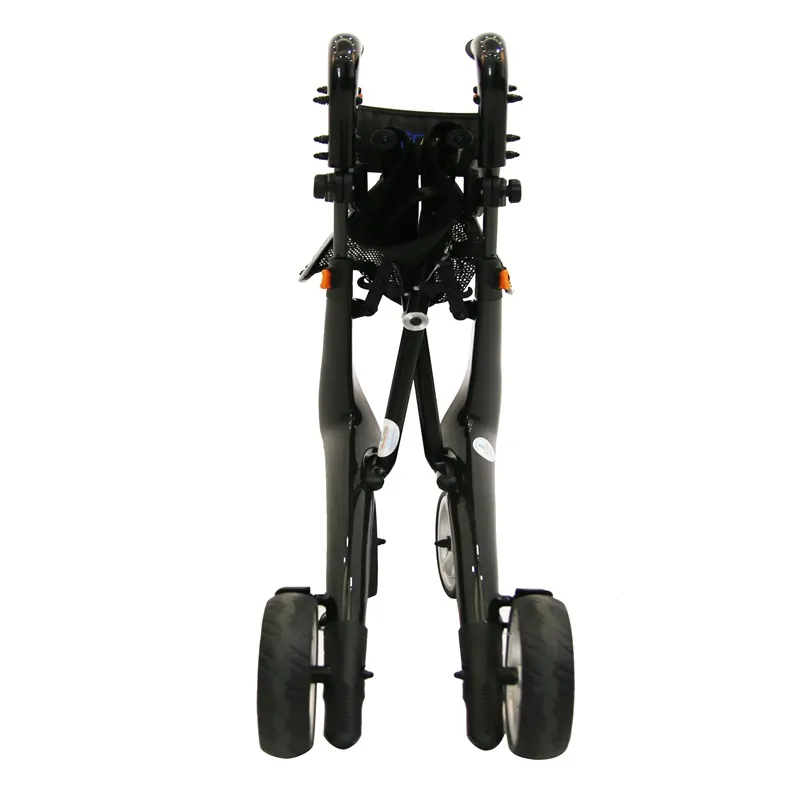
Are canes suitable for people with poor balance?
The answer is: No.
Older adults or patients with poor balance often require a more comprehensive stability structure, which canes cannot provide. Canes are only suitable for:
• Mild balance problems
• Stronger muscle strength
• Users with generally normal gait
• Users with mild pain
If the following occur:
• Unsteady gait
• Unsteady steps
• Forward lean
• Unilateral weakness
• Slowed reaction time
Canes are no longer sufficient.
A 4-wheeled rollator provides users with weight-bearing handrails and multi-point support, significantly reducing the risk of falls. This is a key reason why more and more people are switching to 4-wheeled rollators.
Why canes fail to meet the mobility needs of modern seniors?
With changes in living environment, physical condition, and safety needs, modern seniors generally require a more functional assistive tool.
The following reasons explain why canes are no longer sufficient for many people's needs:
1. The need for long-distance travel
Canes cannot support:
• Supermarket shopping
• Neighborhood walks
• Park activities
• Hospital rounds
• Leisurely walking
However, a 4-wheeled rollator, with its handbrake and seat, allows users to stop and rest at any time.
2. The need to carry items
Canes cannot carry any items and occupy one hand.
A 4-wheeled rollator typically comes with:
• Storage bags
• Baskets
• Trays
• Under-seat storage space
Perfect for everyday use.
3. The need for a more stable gait
Canes only allow users to rely on one hand, while a 4-wheeled rollator walker allows users to hold onto the handrails with both hands, resulting in a more natural and stable gait.
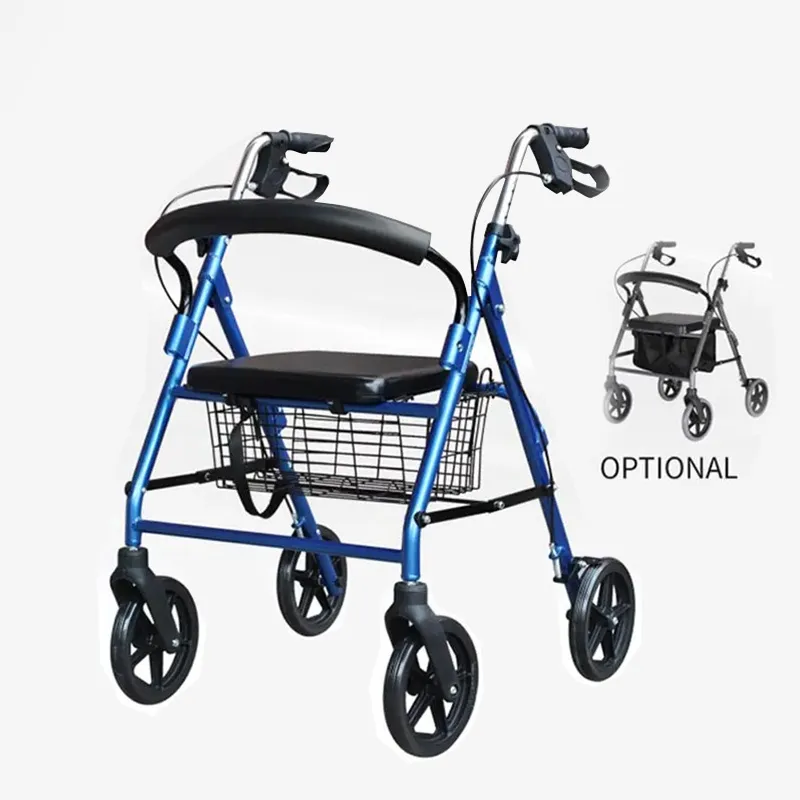
Is a 4-wheeled rollator safer than canes?
Yes, a 4-wheeled rollator has a clear advantage in terms of safety.
1. Multi-point support significantly reduces the risk of falls
The four-wheeled structure is more stable than a single-point cane, making it less prone to tipping over.
2. Handbrake and parking brake functions
Users can control the speed and stop the assistive device at any time, which is especially important for:
• Downhill
• Uneven ground
• Sudden stops
3. Seat for resting at any time
When elderly people feel tired, they can sit down and rest, preventing falls due to fatigue.
Canes cannot provide these functions at all.
Why is a 4-wheeled rollator more suitable for people with insufficient muscle strength than a cane?
Canes place far higher demands on the user's body than people imagine; they require:
• Sufficient upper body strength
• Sufficient grip strength
• Stable stride
• Sufficient lower body strength to maintain gait
If physical strength is insufficient, canes can become unstable and even dangerous.
A 4-wheeled rollator walker can:
• Support most of the body weight
• Distribute pressure to the hands
• Improve gait stability
• Reduce muscle fatigue
For users with weak leg muscles, a 4-wheeled rollator can significantly improve safety and endurance.
Does a cane limit a user's ability to walk long distances?
Yes. Prolonged use of canes can lead to the following problems:
• Consistently emphasizing one side of the body
• Causing body asymmetry
• Leading to excessive strain on the shoulders, elbows, and wrists
• Inability to support long walks
• Increased rate of fatigue
Conversely, a 4-wheeled rollator walker helps users maintain a more natural posture and gait, facilitating more sustained and safer daily activities.
Why is a 4-wheeled rollator more practical than a cane in everyday situations?
Modern life demands more from mobility aids, and canes are often insufficient in these situations:
1. Supermarket shopping: A 4-wheeled rollator can carry items, while a cane cannot.
2. Hospital Visits: Walking aids can serve as temporary seating, while canes cannot provide a resting function.
3. Park Walks: Walking aids offer stable walking and a place to sit and rest, advantages that canes lack.
4. Indoor Home Use: The stable structure of walking aids is better suited for slippery surfaces or sparsely furnished environments.
In these common scenarios, canes are far less effective than a 4-wheeled rollator walker.
Why has the 4-wheeled rollator become the preferred choice for many?
In summary, the reason people are using 4-wheeled rollator walkers less and less, and instead turning to them, is because they offer functions that can't be replaced by canes:
• Greater stability
• Stronger support
• Safer braking system
• More natural walking style
• Less physical strain
• Better suited for long-distance travel
• Can carry items
• Seat design for rest
• Better suited for those with insufficient muscle strength
• Better suited for those with poor balance
In modern life, these features make 4-wheeled rollators significantly superior to canes, making them a more comprehensive, safer, and more user-friendly walking aid.
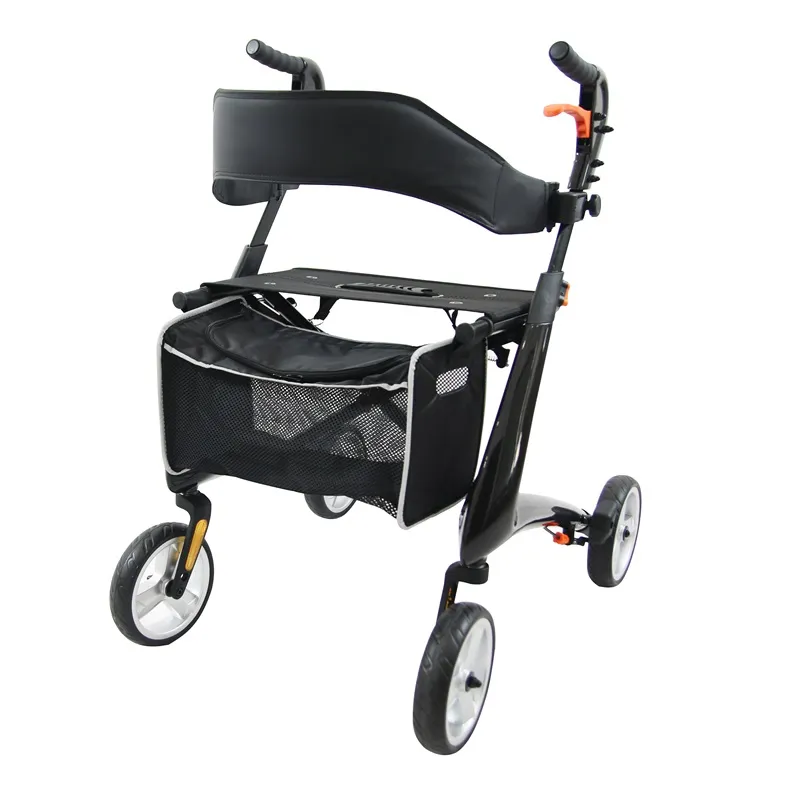
Why are people no longer using canes and choosing 4-wheeled rollators instead?
In summary:
❌ Limitations of Canes
• Few points of support
• Poor balance
• Not suitable for long distances
• Cannot carry heavy items
• Cannot provide a seat
• Requires strong arm strength
• Cannot prevent falls
✅ Advantages of a 4-wheeled rollator walker
• Stable support structure
• Provides two-handed grip
• Has a handbrake system
• Built-in seat for rest
• Can carry heavy items
• Suitable for long-distance walking
• Reduces physical strain
• More suitable for people with poor muscle strength and balance
Therefore, modern users are gradually abandoning canes and choosing 4-wheeled rollator walkers in favor of a combination of stability, safety, and functionality.
Why is Dahao Medical a reliable long-term supplier?
With over 15 years of manufacturing experience, strong certifications, large production capacity, and a dedicated R&D team, Dahao Medical has established itself as a reliable medical equipment supplier. For buyers seeking high quality products, stable supply, and professional service from China, Dahao Medical is a dependable manufacturing partner.