

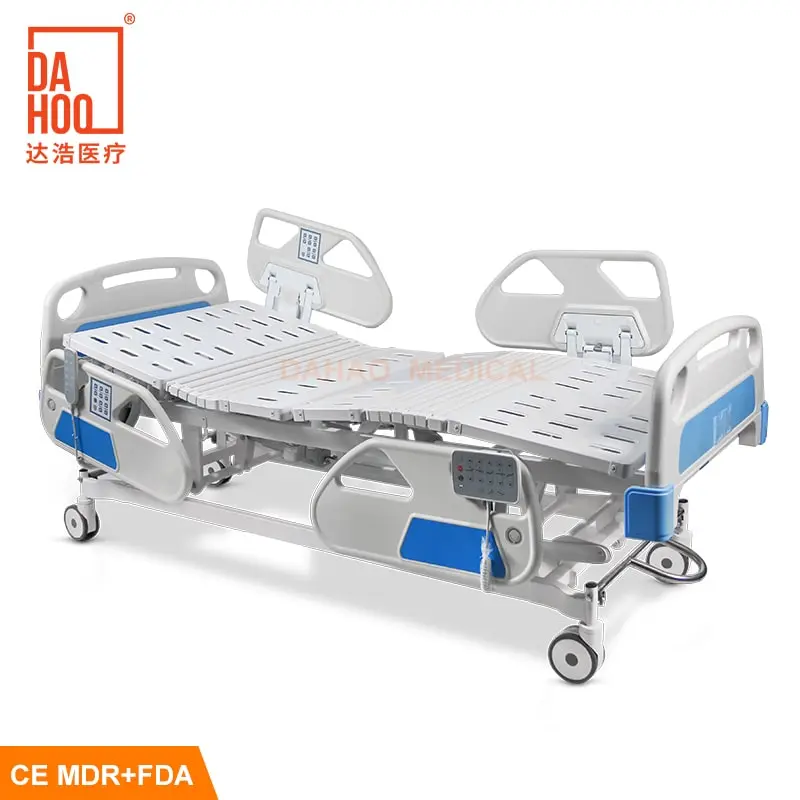
In a modern hospital environment, a medical bed is not only a place for patients to rest, but also a crucial piece of equipment affecting nursing efficiency, patient comfort, and treatment quality. Among various types of medical beds, the five-function electric medical bed has become one of the mainstream configurations in professional medical institutions due to its high flexibility and ability to meet various clinical posture requirements.
Broadly speaking, a five-function electric medical bed is a nursing medical bed that provides five independent electric adjustment functions, including:
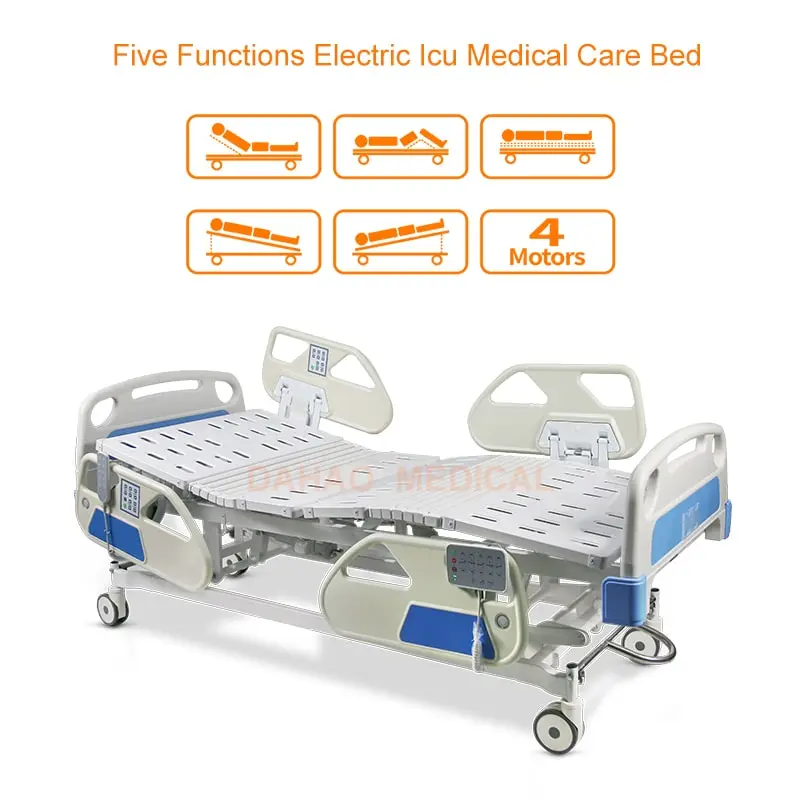
1. Height adjustment (lifting adjustment)
2. Backrest adjustment
3. Knee support adjustment
4. Head-down/foot-up adjustment (Trendelenburg)
5. Head-up/foot-down adjustment (Reverse Trendelenburg)
These functions allow the five-function electric medical bed to be positioned individually according to the patient's condition and nursing needs, improving patient comfort and significantly reducing the workload of nursing staff.
Below, we will delve into the definition, functions, structural design, applicable scenarios, and differences from other medical beds to analyze what a "five-function electric medical bed" truly is.
What are the five main functions of a five-function electric medical bed?
The core advantage of a five-function electric medical bed stems from its ability to perform five key actions through an electric control system. What are the clinical implications of these five functions?
1. What is the function of height adjustment?
Height adjustment is one of the most basic and important functions of a medical bed.
Through the electric lifting system, the medical bed can:
• Adjust to a suitable height according to the patient's height and nursing needs
• Prevent patients from falling when getting in and out of bed
• Allow nursing staff to maintain a comfortable working posture during procedures
• Quickly adjust the bed height during emergency treatments or procedures
Height adjustment is a prerequisite for achieving humanized care with a medical bed.
2. How does the backrest adjustment function improve patient comfort?
Backrest adjustment is one of the most frequently used functions of a five-function electric medical bed.
Through an electromechanical structure, the backrest of the bed can be raised or lowered at a set angle. This function helps patients:
• Adjust upper body angle to improve breathing
• Perform daily activities such as eating, communicating, and reading
• Reduce discomfort from prolonged bed rest
• Achieve a more stable and safer resting posture
Especially for postoperative patients and those with breathing difficulties, the need for backrest adjustment is more urgent.
3. What is the significance of knee support adjustment?
Knee adjustment is a feature not found in many ordinary medical beds, yet it is very practical in clinical care.
Electric knee height adjustment can:
• Prevent patients from sliding to the foot of the bed
• Reduce lower limb edema
• Improve body position stability
• Combine with backrest adjustment to create a semi-reclining position
This function is particularly important for patients who need to be bedridden for extended periods.
4. What is the use of the head-down, feet-up position (Trendelenburg)?
The head-down, feet-up position is a professional position frequently used in medical care.
The five-function electric medical bed can electrically tilt the entire bed, lowering the patient's head below their feet.
This position is suitable for:
• Certain nursing procedures requiring improved circulation
• Treatment needs in specific departments
• Facilitating smoother procedures for healthcare personnel
The head-down, feet-up position is a key differentiator between standard and specialized medical beds.
5. Why is the Reverse Trendelenburg position important?
The head-up, feet-up position is another commonly used position on a five-function electric medical bed, in contrast to the Trendelenburg position.
The bed is tilted in the opposite direction, raising the patient's head higher than their feet.
Advantages include:
• Improved breathing
• Facilitating gastrointestinal treatments
• Reducing discomfort for certain patients
• Facilitating safe nursing procedures for healthcare personnel
The combination of head-down and feet-up positions allows medical beds to meet a wider range of clinical positioning needs.
What are the differences between five-function electric medical beds and standard medical beds?
There are many types of medical beds, including standard ward beds, three-function medical beds, five-function medical beds, and high-end medical beds used in ICUs. So, what exactly is the difference between a five-function electric medical bed and a regular medical bed?
The core differences include:
1. Completely different number of functions
• Regular medical beds typically only offer backrest adjustment or basic height adjustment.
• A five-function electric medical bed can perform five independent electric movements.
This functional difference directly determines the applicable scenarios and level of care.
2. Difference in electric control system
Regular beds may use a hand-crank mechanism, while a five-function electric medical bed uses:
• An electric motor
• An electronic control system
• Bedside buttons
• A remote control panel
This is faster, more stable, and safer.
3. Different patient positioning capabilities
Regular medical beds offer limited positional options, while a five-function electric medical bed provides multiple angle combinations, allowing patients to receive treatment or rest in a more natural and comfortable posture.
4. Different Levels of Clinical Application
Five-function electric medical beds are commonly used in:
• Internal Medicine
• Surgery
• Rehabilitation Medicine
• Geriatrics
• Intensive Care Environments
Ordinary medical beds have a more basic range of applications.
What are the professional features of the structural design of a five-function electric medical bed?
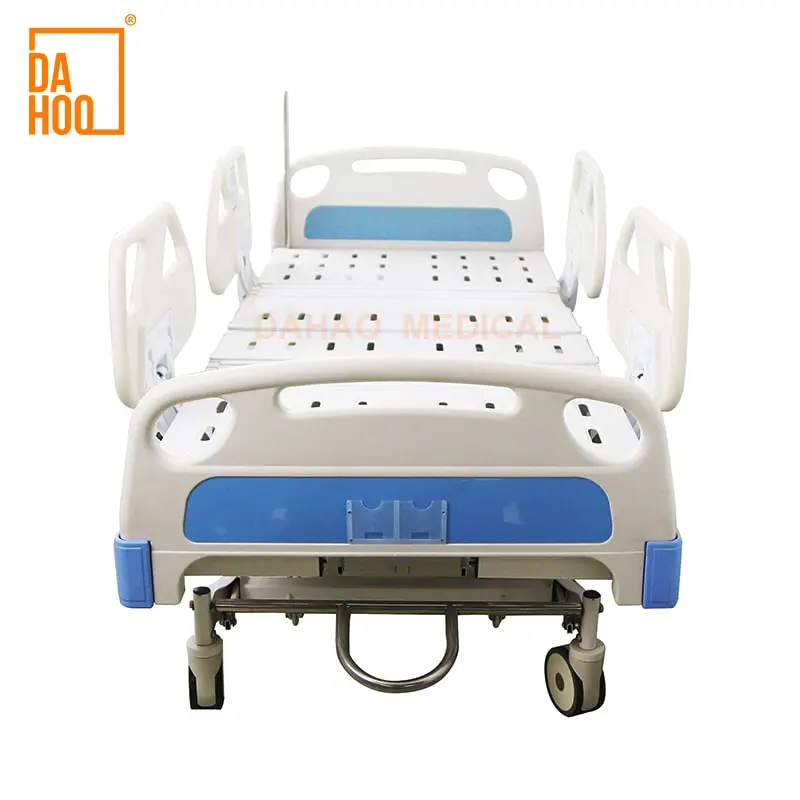
To support five electric functions, the medical bed must have a professional mechanical design and electronic system. Its structure typically has the following characteristics:
1. Multi-segment bed surface structure
Most five-function electric medical beds use a four- or five-segment bed surface structure, including:
• Head section
• Back section
• Hip section
• Thigh section
• Lower leg section
This segmented design allows for precise angle adjustments to the bed for different body parts.
2. Electric motor system
Generally, 3 to 5 independent electric motors are used to complete the five movements.
Each motor is responsible for one or more designated adjustment points, ensuring smooth operation and low noise.
3. Stable Lifting Mechanism
To ensure safety, the five-function electric medical bed typically uses:
• Scissor lift mechanism
• Guide device
• Reinforced steel structure
Smooth lifting and high load-bearing capacity during operation.
4. Safety Guardrail Design
As a professional medical bed, the guardrails must:
• Meet bedside fall prevention requirements
• Use impact-resistant materials
• Foldable and retractable
• Equipped with buttons or control panel
Safety is always a design priority.
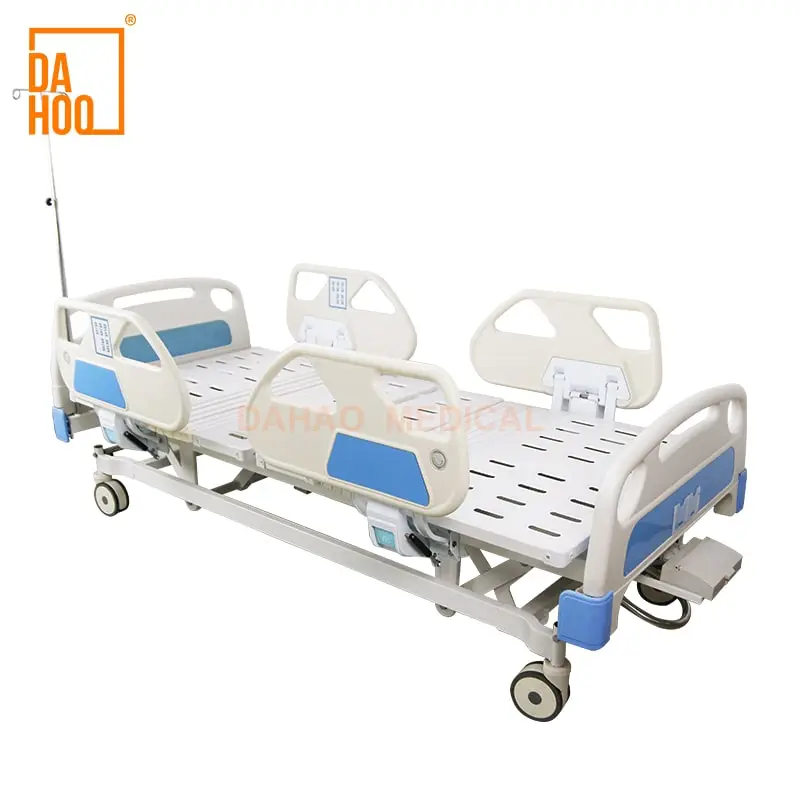
5. Abundant Accessory Interfaces
The five-function electric medical bed typically includes:
• Infusion stand interface
• Urine bag hook
• External medical equipment mounting location
• Identification sign bracket at the foot of the bed
Facilitating daily operation by the medical team.
What is the significance of the five functions of the five-function electric medical bed in clinical nursing?
Some readers may ask: Are all these functions really necessary?
The answer is yes. Each function of the five-function electric medical bed is directly related to patient comfort, nursing efficiency, or safety.
1. The Significance of the Combined Backrest and Knee Adjustment Functions
The combined advantages of these two functions are significant:
• Creates a stable semi-reclining position
• Prevents patient slippage
• Improves the eating and swallowing experience
• Assists patients with breathing abnormalities in maintaining an ideal posture
This is also a key reason for the widespread adoption of five-function electric medical beds in hospitals.
2. The Significance of Height Adjustment in Nursing Ergonomics
Whether it's intravenous infusion, blood drawing, dressing changes, or routine care, an improperly positioned workbench can easily lead to back injuries for nurses.
The height adjustment function of the medical bed significantly improves this problem.
What Scenarios are Five-Function Electric Medical Beds Suitable For?
Five-function electric medical beds have wide applicability, especially in environments requiring frequent adjustments to patient position.
Including but not limited to:
• General hospital wards
• Rehabilitation centers
• Elderly care facilities
• Long-term care homes
• Post-operative surgical wards
• Inpatient wards in internal medicine departments
• Nursing homes for patients with respiratory diseases
Because five-function electric medical beds are not only professional but also flexible enough to meet multi-level nursing needs.
Is a 5-function electric medical bed suitable for home use?
Many people consider whether it's necessary to purchase a 5-function electric medical bed when caring for a bedridden family member.
Generally speaking:
• If the patient requires multi-position care
• If caregivers need ease of operation
• If the goal is to minimize care risks
Then a 5-function electric medical bed is perfectly suitable for home care.
However, it is more specialized than a regular medical bed, so space and care needs should be considered comprehensively before choosing one.
What is Dahao Medical’s approach to quality improvement?
Dahao Medical continuously upgrades materials, production processes, and testing standards to improve product performance. Feedback from global customers helps refine Electric Wheelchairs, Transfer Chairs, and Hospital Beds, ensuring the products meet real market needs.