

In recent years, as wheelchair products continue to evolve toward greater lightweighting, an increasing number of users have begun to take an interest in carbon fiber wheel chairs. Whether in the market for medical assistive devices, the field of rehabilitation care, or everyday home and travel scenarios, carbon wheelchairs have garnered widespread attention for their "light weight, ease of handling, and streamlined structure."
Compared to traditional steel wheelchairs and certain aluminum alloy models, the most distinctive feature of carbon fiber wheel chairs lies in their material composition. Precisely because of this difference in materials, consumers encountering carbon wheelchairs often harbor a natural question: Since carbon fiber wheel chairs appear lighter and thinner, is their frame more susceptible to breaking?
This is a very common question.
When many people first see a carbon fiber wheelchair, their immediate instincts suggest:
•It is lighter.
•Its tubing is thinner.
•Its structure is more minimalist.
Consequently, they easily make the mental leap that "lightweight" equates to "fragile."
In reality, however, whether or not a carbon fiber wheelchair is prone to breaking cannot be determined simply by its appearance.
Discussing the structural integrity of a carbon fiber wheelchair frame fundamentally requires an understanding of material properties, structural design, load management, and operational limits.
In particular, one crucial fact is often overlooked:
As long as the applied load does not exceed the specific load-bearing threshold of its components, a carbon wheelchair is generally not prone to breaking.
Many standard carbon fiber wheel chairs feature a rated load capacity of approximately 300 pounds—or about 136 kilograms.
This demonstrates that carbon fiber wheel chairs are not nearly as fragile as many people imagine them to be.
Therefore, to truly understand whether a carbon fiber wheelchair is prone to breaking, one must turn to engineering logic rather than relying on intuitive visual impressions.
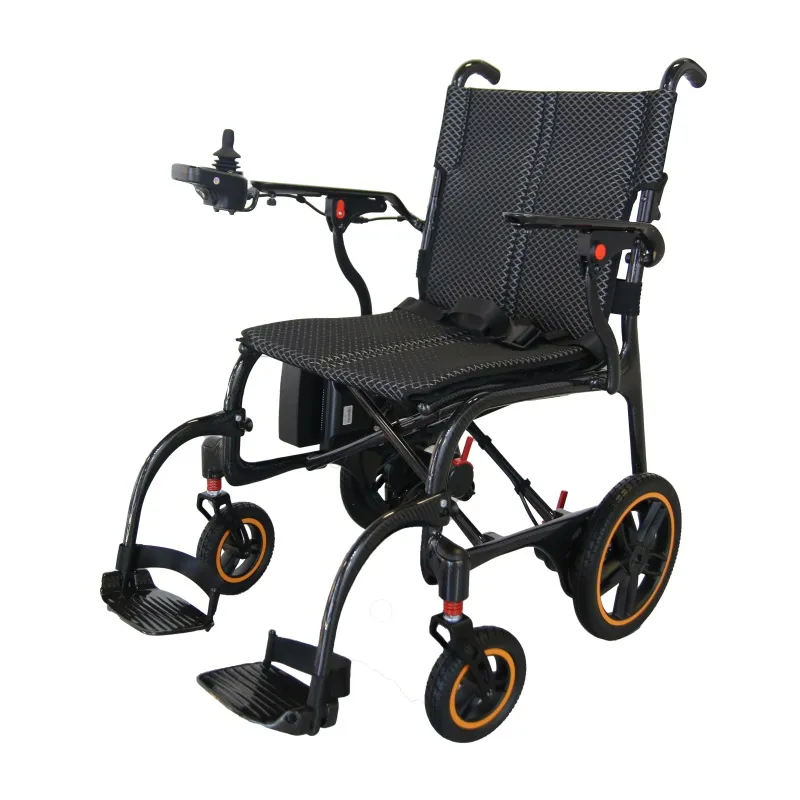
Why Do Many People Feel That Carbon Wheelchairs Are Prone to Breaking?
The reason carbon fiber wheelchairs so often trigger concerns about being "fragile" stems largely from visual perception.
Traditional, standard wheelchairs typically utilize:
•Steel materials
•Thick-walled metal structures
This conveys a general impression of:
•Heaviness/bulk
•Robustness/solidity
•Reliability
In contrast, carbon fiber wheelchairs typically present with:
•A more slender structure
•Significantly lighter weight
•A cleaner, more minimalist aesthetic
For example:
•Standard steel wheelchairs: 18 kg – 22 kg
•Carbon fiber wheelchairs: 7 kg – 11 kg
The difference in weight is starkly apparent. For those unfamiliar with material properties, a common logical assumption often arises: "Since it is so much lighter, does that mean its strength has decreased?"
This understanding is inaccurate. The logic behind weight reduction in carbon fiber wheel chairs does not simply involve using less material; rather, it involves a fundamental shift in the material system itself. Consequently, the lightness of a carbon wheelchair does not automatically imply fragility.
What Exactly Is the Carbon Fiber Used in Wheelchairs?
Carbon fiber is not ordinary plastic, nor is it merely a simple composite panel. Fundamentally, carbon fiber is a high-strength fibrous material.
The key characteristics of carbon fiber include:
•High strength
•High rigidity (stiffness)
•Low density
In the field of engineering, carbon fiber has long been utilized in high-performance structural applications.
Examples include:
•Aerospace components
•Bicycle frames
•Racing car parts
•Sports equipment
The greatest advantage of carbon fiber lies in its exceptionally high strength-to-weight ratio. In other words, for a given weight, carbon fiber typically delivers superior structural performance. As a result, carbon fiber wheel chairs are able to maintain a high level of rigidity while keeping their overall weight low.
This constitutes the core logic behind the lightweight design of carbon fiber wheel chairs.
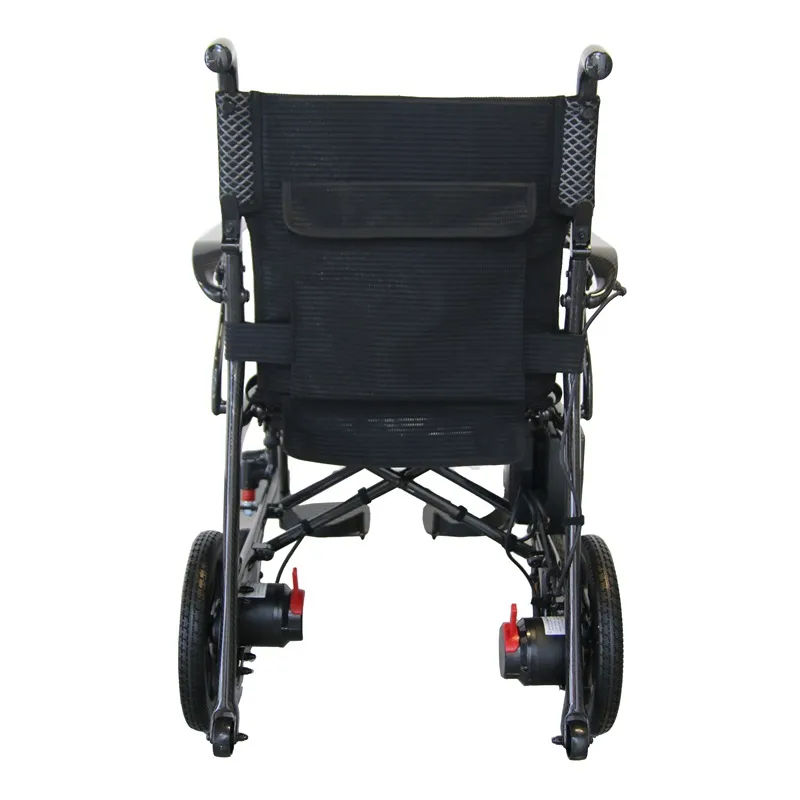
Whether a Carbon Wheelchair Breaks Depends Not on the Material's Name, But on Load Management
Many misconceptions regarding carbon wheelchairs stem from an oversight of the concept of "load." Every material has an upper limit to the weight it can bear.
Whether the wheelchair is made of:
•Steel
•Aluminum alloy
•Carbon fiber
—each possesses a specific design threshold.
Therefore, the pertinent question should not be: "Will a carbon fiber wheelchair break?" Instead, it should be: "Is the carbon wheelchair being used within its specified design load limits?"
This is the critical point.
Provided that the applied load does not exceed the design threshold, a carbon wheelchair will typically not break easily.
For instance, many carbon fiber wheelchairs specify a rated load capacity of:
•250 pounds
•300 pounds
A capacity of 300 pounds is approximately equivalent to:
•136 kilograms
This capacity is sufficient to meet the needs of the vast majority of everyday users. Consequently, for standard usage scenarios, carbon fiber wheel chairs generally possess ample load-bearing capacity.
What Does a 300-Pound Load Capacity Mean for a Carbon Fiber Wheelchair?
Many consumers lack a concrete frame of reference when they encounter the "300 pounds" specification. In reality, this parameter is of critical importance. A 300-pound rating signifies that, following structural engineering design, a carbon wheelchair is capable of withstanding a static load of approximately 136 kilograms under rated conditions.
This load includes:
•The user's body weight
•Pressure exerted while seated
•Loads associated with routine movement
For example:
•User weight: 80 kg
•Carried items: 5 kg
The total load in this scenario is well below the 300-pound limit.
Under such conditions, the carbon fiber wheelchair typically operates within its safe zone. Consequently, provided it is used normally, the frame of a carbon wheelchair is generally not prone to breakage.
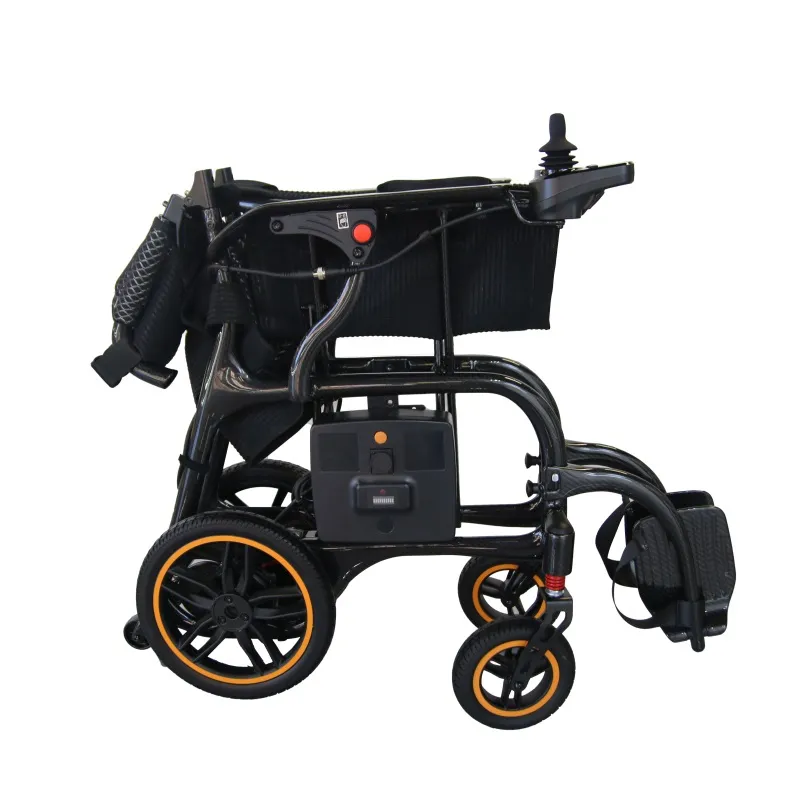
Why isn't a "lighter" carbon wheelchair necessarily "more dangerous"?
Some users assume that the lighter a carbon fiber wheelchair is, the more susceptible it is to breakage. This logic does not always hold true.
High-quality carbon fiber wheelchairs typically achieve a balance between lightweight design and structural strength through the following methods:
•Strategic design of fiber layer counts
•Precise fiber layup orientation aligned with load paths
•Localized structural reinforcements
•Strengthening of connection joints
For example:
Areas subject to high stress typically include:
•Front fork connection points
•Rear wheel mounting areas
•Folding mechanism joints
•Seat frame support zones
These specific locations are usually reinforced with additional material. Therefore, a carbon fiber wheelchair is not simply "made thinner"; rather, weight reduction is achieved through engineering optimization. This is precisely how carbon fiber wheel chairs manage to be both lightweight and strong.
The Factors That Truly Compromise the Lifespan of a Carbon Wheelchair Are Overloading and Abnormal Impact Forces
Although carbon fiber wheel chairs are generally resistant to breakage under normal loads, this does not imply they possess infinite durability.
The factors most likely to compromise the structural integrity of a carbon wheelchair are typically found in the following scenarios:
1. Overloading
For example:
•Exceeding the rated load capacity of 300 pounds.
Prolonged overloading increases the risk of structural fatigue.
2. High-Impact Loads
For example:
•Impacts from high steps or curbs
•Severe drops or falls
•Rough handling during transport
While carbon fiber possesses high tensile strength, its sensitivity to abnormal impact forces differs from that of metals.
3. Abnormal Localized Stress
For example:
•A violent impact concentrated on a single point.
All of these scenarios can compromise the structural integrity of a carbon fiber wheelchair. Therefore, the concern regarding carbon fiber wheel chairs is not about normal, everyday use; rather, it is about the necessity of strictly adhering to the established operational limits.
Carbon Wheelchairs Are Typically Stable Enough for Normal Home Use
Most home-use scenarios include:
•Indoor mobility
•Outings on flat surfaces
•Loading into and out of a car
•Routine folding and storage
These scenarios typically do not exceed the capabilities of a carbon fiber wheelchair.
This is particularly true for:
•Users who travel frequently
•Users receiving home care
•Users who are independently mobile
Carbon fiber wheel chairs tend to perform stably in these contexts.
Therefore, concerns that carbon fiber wheel chairs are "fragile because they are lightweight" usually stem from a lack of understanding regarding the material itself.
Structural Design Is More Important Than the Material Itself for Carbon Wheelchairs
It is important to emphasize that not all carbon fiber wheel chairs are of identical quality.
Strength is determined by more than just the name of the material.
More importantly, it depends on:
•Structural design
•Lamination processes
•Connection methods
•Joint reinforcement design
High-quality carbon fiber wheel chairs typically adhere to stricter standards in these areas.
Therefore, when assessing the reliability of a carbon fiber wheelchair, one should not focus solely on whether it is "made of carbon fiber," but rather on its overall design.
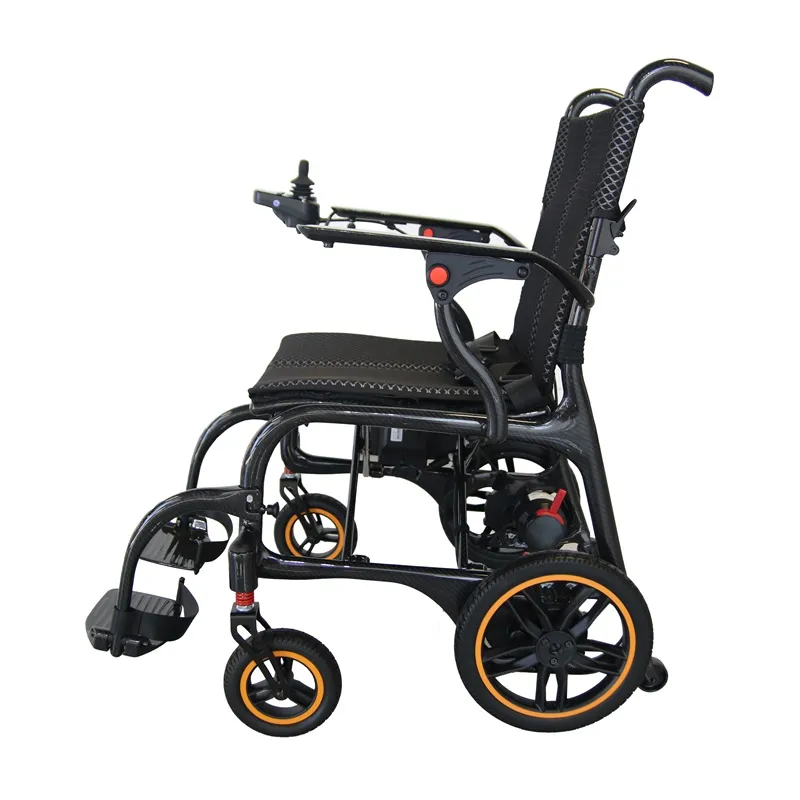
Carbon Fiber and Metal Wheelchairs Have Different Fracture Characteristics
Another common misconception is that many people interpret the behavior of carbon fiber wheel chairs through the lens of their experience with metal wheelchairs.
For example:
Steel may bend gradually before failing under an overload, whereas carbon fiber structures typically behave differently.
Consequently, some users mistakenly believe that carbon fiber carries a "higher risk of sudden, catastrophic failure."
In reality, the difference lies simply in the distinct response mechanisms of the two materials. As long as a carbon fiber wheelchair is operated within its designed limits, such issues typically do not occur.
Therefore, the key factors remain:
•Avoid overloading
•Avoid abnormal impact
•Perform regular maintenance
Why Are More People Embracing Carbon Fiber Wheelchairs?
Despite concerns regarding potential fragility, carbon wheelchairs continue to grow in popularity.
The core reason is simple: they strike an excellent balance between lightweight design and structural performance.
Carbon fiber wheelchairs typically offer a combination of:
•Low weight
•High rigidity
•High portability
•Sufficient load-bearing capacity
For instance:
•A weight range of 7 kg to 11 kg
•A load capacity of approximately 300 lbs
This combination is inherently appealing. Consequently, it is no surprise that carbon fiber wheel chairs are attracting significant attention.
Is the Frame of a Carbon Fiber Wheelchair Prone to Breaking?
From an engineering and practical standpoint, under normal operating conditions, carbon fiber wheelchairs are not prone to breakage.
The key factors are:
•Adhering to the rated weight capacity;
•Avoiding abnormal impacts;
•Using the wheelchair in appropriate, standard environments.
Many standard carbon fiber wheelchairs feature a weight capacity of:
•Approximately 300 pounds (about 136 kilograms).
This demonstrates that carbon fiber wheel chairs are by no means "light and fragile." On the contrary, the core advantage of carbon fiber wheel chairs lies precisely in their ability to deliver superior structural performance while maintaining a significantly lower weight.