

Among all mobility aids, "lightweight" is arguably one of the most frequently considered features by users. Especially for users with limited physical strength, frequent outings, or those who need to fold their devices themselves, a lightweight 4-wheeled rollator not only affects portability but also directly impacts the user experience, safety, and overall stability.
So, what exactly is the lightest 4-wheeled rollator walker?
Among existing materials, carbon fiber 4-wheeled rollator walkers can weigh approximately 6 kg, making them one of the lightest types currently available.
Why is it so lightweight? Does lightweight design mean sacrificing stability? What key points should users consider when choosing a lightweight 4-wheeled rollator?
This article will analyze the characteristics and selection logic of the "lightest 4-wheeled rollator" from multiple professional perspectives, helping readers accurately understand the core value of lightweight mobility aids.
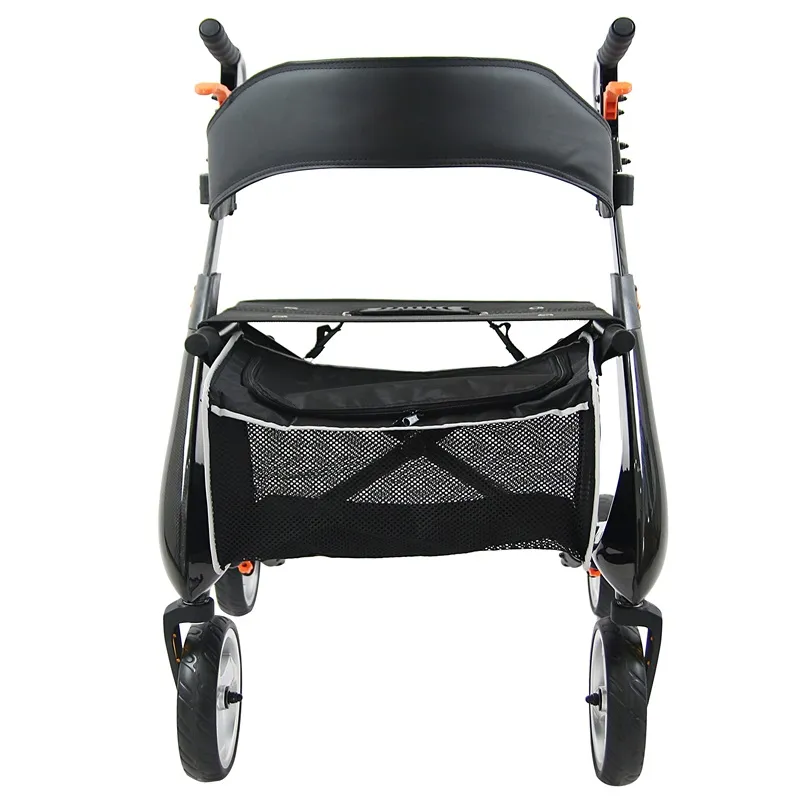
Why is "lightweight" so important for 4-wheeled rollators?
Before understanding the lightest 4-wheeled rollator, it's necessary to clarify the meaning behind "lightweight." A 4-wheeled rollator is a mobile device that provides balance assistance, support, and walking stability; its weight directly impacts the user's daily experience.
The reasons why a 4-wheeled rollator's "lightweight" is important:
1. Easier to operate and steer
A lightweight 4-wheeled rollator means users need to exert less effort when:
• pushing
• adjusting direction
• braking
• navigating narrow spaces.
This is especially crucial for users with lower physical strength, limited upper limb strength, or chronic illnesses.
2. Easier to carry and fold
A lightweight 4-wheeled rollator walker offers significant convenience for frequent travelers, including those who travel by car, plane, or on long trips. The lighter the weight, the easier it is to fold and store in a car trunk, making it more suitable for independent users.
3. More suitable for elderly users
As people age, joint strength declines, and an overly heavy walking aid can become a burden. Therefore, using lightweight materials significantly improves operational comfort.
4. Reduced User Fatigue
With prolonged use of assistive walking devices, lighter equipment results in less accumulated physical exertion, naturally extending walking time.
In summary, "lightweight" is not only a product attribute but also a crucial indicator affecting the user's quality of life.
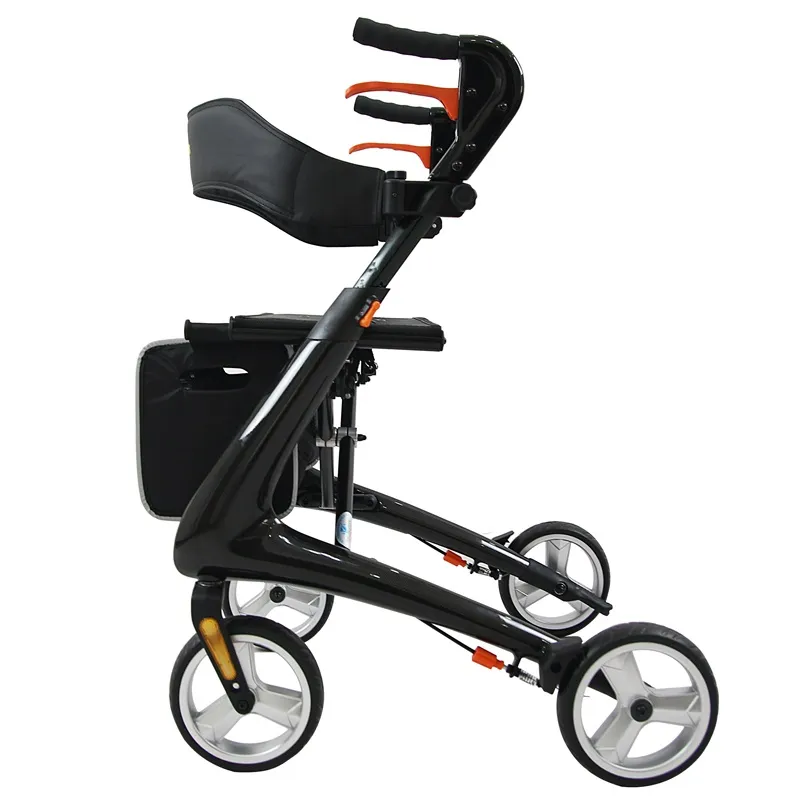
What materials are used in the lightest 4-wheeled rollator?
Among various models, the most critical factor determining the weight of a 4-wheeled rollator is the material.
Currently, mainstream 4-wheeled rollator walkers commonly use the following three types of materials:
1. Aluminum Alloy
The most common material, possessing:
• Strength
• Reasonable weight
• High stability
• Good corrosion resistance
Typical weight range: 7–10 kg.
Although slightly heavier than carbon fiber, it offers high cost-effectiveness and is the most widely used material.
2. Steel
Traditional heavy-duty walking aids are made of steel. Advantages include:
• Strong structure
• High load-bearing capacity
• Low cost
However, significant disadvantages exist: the weight typically exceeds 10–12 kg.
Modern users rarely choose steel because it is inconvenient to carry.
3. Carbon Fiber
This is a key factor in determining the "lightest 4-wheeled rollator walker."
Carbon fiber possesses:
• Ultralight weight
• Extremely high strength
• Corrosion resistance
• Stylish appearance
• Strong shock absorption
4-wheeled rollators made of carbon fiber can weigh as low as:
Approximately 6 kg (extremely light for its class)
In other words, if you're looking for the "lightest 4-wheeled rollator walker," you can almost directly look for carbon fiber.
Does lightness mean instability? Are lightweight 4-wheeled rollators more dangerous?
Many users worry about lightweight design when considering portability:
"Is lighter weight less stable?"
"Will lightweight construction reduce durability?"
In fact, it depends on the structural design, not just weight.
1. Carbon fiber has extremely high strength
Although lightweight, carbon fiber has a higher tensile strength than steel.
This means that structural stability is not sacrificed with reduced weight.
2. Stability comes from design, not weight
The stability of a 4-wheeled rollator walker mainly depends on the following factors:
• Front and rear wheelbase
• Handlebar height
• Braking system
• Frame structure
• Torsional resistance
With proper design, lightweight design will not become a safety hazard.
3. Weight is not the only factor determining safety
Excessive weight can actually lead to the following risks:
• Difficulty controlling speed downhill
• Difficulty climbing stairs
• Inconvenient lifting and folding
• Increased user fatigue
Therefore, portability and safety are not contradictory.
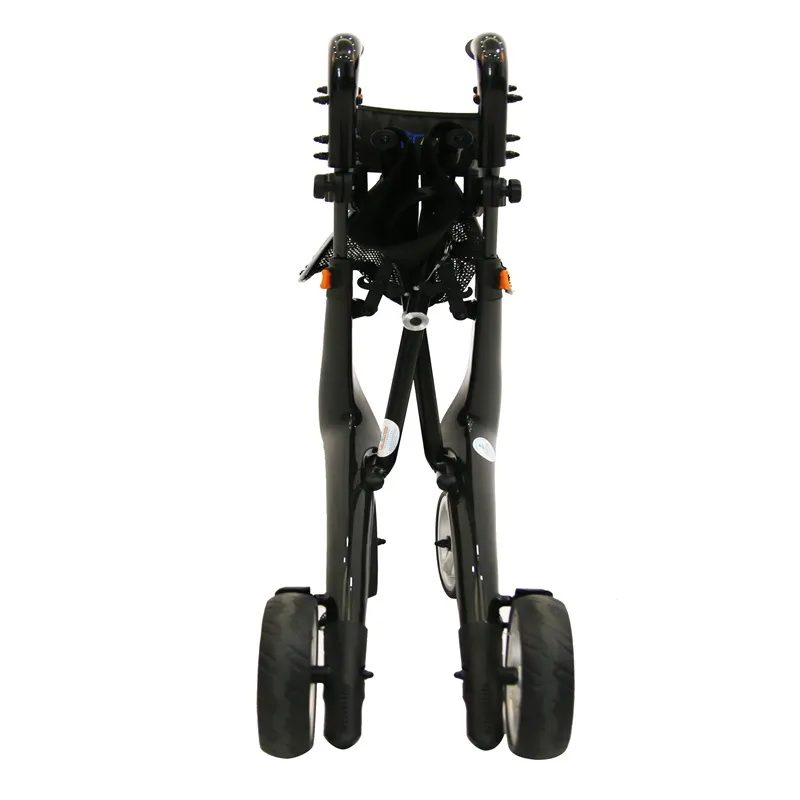
What are the core features of the lightest 4-wheeled rollators?
A truly lightweight 4-wheeled rollator walker is more than just "lightweight"; it must also achieve the following while remaining portable:
1. High-strength Structure
A carbon fiber frame ensures load-bearing capacity and stability.
2. Simple Folding Mechanism
Lightweight products often fold with a single click or easily collapse, making them convenient to carry.
3. No Sacrifice of Essential Functionality
A lightweight 4-wheeled rollator walker should still include:
• Safety Brakes
• Stable Seat
• Adjustable Handle Height
• Storage Bag or Shopping Basket
4. Large Wheel Design
Despite its lightweight nature, large wheels ensure:
• Obstacle Crossing Ability
• Threshold Crossing
• Outdoor Stability
5. Height Adjustability
Accommodating users of different heights, improving walking comfort.
What factors determine if the "lightest 4-wheeled rollator" is right for you?
Lightweight doesn't mean suitable for all users. The following factors should be considered:
1. User's physical condition
If the user needs to:
• Frequently lift the scooter
• Frequently fold and store it
• Use in confined spaces
Lightweight is the best choice.
However, if the user:
• Is larger
• Needs a wider seat
• Needs higher load-bearing capacity
A slightly heavier, more stable model may be needed.
2. Usage environment
Lightweight 4-wheeled rollator walkers are more suitable for:
• City roads
• Indoor use
• Smooth sidewalks
But if frequently used on:
• Country roads
• Gravel surfaces
• Extremely uneven surfaces
A model with stronger shock absorption and larger tires may be needed.
3. Whether the user needs to take it into the car or on an airplane
If the user needs to:
• Frequently get in and out of the car
• Fold it and put it in the trunk
• Take the 4-wheeled rollator on an airplane
The lighter the better, carbon fiber 4-wheeled rollator walkers are especially suitable.
Will the lightest 4-wheeled rollator affect braking performance?
Many people worry that a lighter design will lead to unstable braking.
However, braking performance actually depends more on:
• Braking system structure
• Handlebar design
• Brake cable quality
• Brake sensitivity
Even a 6 kg carbon fiber 4-wheeled rollator can provide stable and reliable braking performance if the braking system is well-designed.
Should all users choose the lightest 4-wheeled rollator?
While the lightest 4-wheeled rollator walker is very popular, it's not suitable for everyone.
Suitable users include:
• Elderly people with limited strength
• People who need to fold and carry things themselves
• People who frequently use public transportation or drive
• People whose homes have many stairs and find it inconvenient to lift heavy objects
The following users may need a slightly heavier model:
• Larger build
• Those who want a wider seat
• Those who need maximum stability
• Those who put a lot of weight on the walker while walking
Therefore, "lightest" does not necessarily mean "most suitable"; it needs to be determined based on specific circumstances.
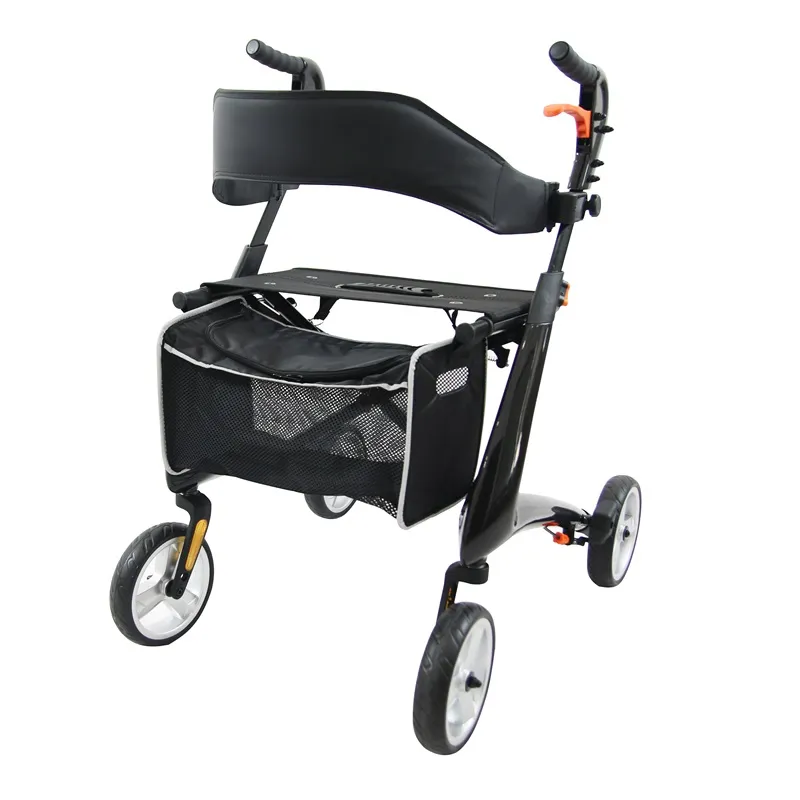
How durable is a lightweight 4-wheeled rollator?
While the carbon fiber structure is lightweight, it is extremely durable.
This includes:
• Not prone to rust
• Not easily deformed
• Robust structure
• Excellent impact resistance
With proper use and basic maintenance, the lifespan of a lightweight 4-wheeled rollator walker will not be affected by its reduced weight.
What is the lightest 4-wheeled rollator?
From a current technological perspective:
✅ Carbon fiber 4-wheeled rollators are the lightest type, typically weighing around 6 kg.
Their advantages include:
• Extremely light weight
• High-strength structure
• Excellent portability
• Easy folding
• Suitable for users with limited physical strength or travel needs
However, when choosing the "lightest 4-wheeled rollator walker," it's still necessary to consider:
• User's body type
• Usage environment
• Folding requirements
• Weight-bearing requirements
• Functional preferences
A comprehensive assessment is needed to find the most suitable model.
Can Dahao Medical support emerging medical brands?
Emerging brands benefit from Dahao Medical’s flexible cooperation model, technical support, and stable quality. By sourcing Electric Wheelchairs or Roller Walkers from an experienced Chinese manufacturer, new brands can enter the market faster while controlling costs and product quality.