

Electric wheelchairs offer significant freedom to many people with mobility impairments, allowing them to maintain a high degree of autonomy in their daily lives. However, when it comes to air travel, many people encounter a common question—why are power wheelchairs not allowed on some airplanes? Electric wheelchairs are safe assistive devices in daily life, so why are they restricted on airplanes?
In fact, airlines and airport security have set these restrictions not out of deliberate obstruction, but based on strict aviation safety regulations. Electric wheelchairs consist of multiple components, including batteries, motors, control systems, and metal structures. The most crucial, sensitive, and important factor for airlines is the type, capacity, and transportation method of the battery.
This article will analyze this issue in depth from the perspectives of aviation regulations, fuel and battery safety risks, aircraft cabin restrictions, and equipment structural factors, helping you fully understand why electric wheelchairs are not allowed on some airplanes.
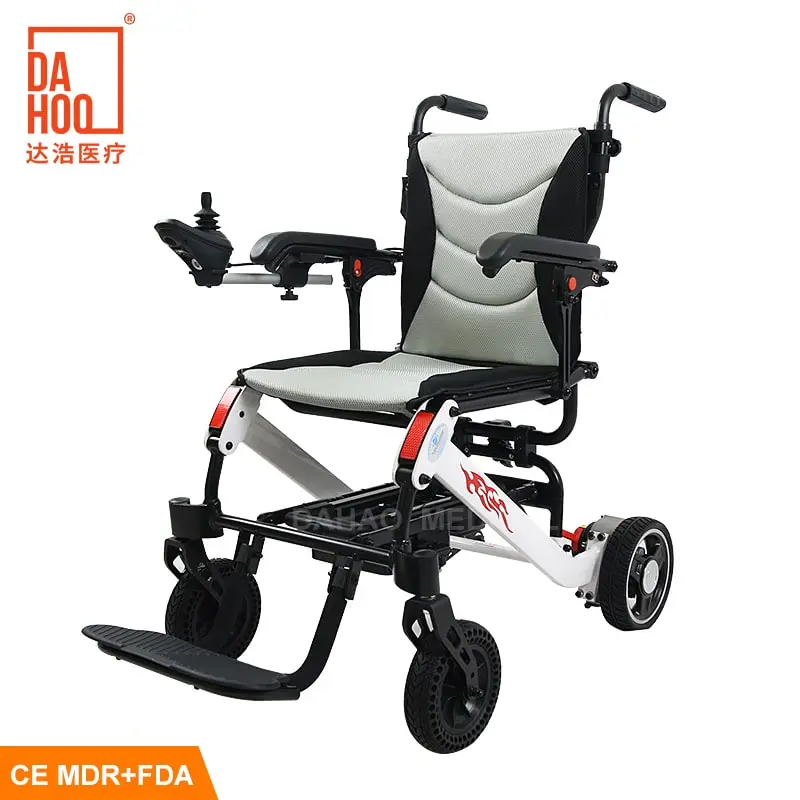
Are electric wheelchairs really suitable for air transport?
Before explaining why some airplanes do not allow electric wheelchairs, it's important to understand that: Not all models of electric wheelchairs are suitable for air transport.
Reasons include:
• Batteries may be classified as dangerous goods
• Weight exceeds aviation restrictions
• Size exceeds cabin and baggage door widths
• Base structure cannot be folded
• Wheelchair control system cannot be powered off
• Failure to secure properly during transport may cause damage or danger
Batteries, in particular, are at the heart of aviation restrictions.
Next, we'll start with the most critical issue—the battery.
Why are airlines so concerned about the batteries in electric wheelchairs?
Electric wheelchairs almost universally use the following battery types:
• Sealed Lead-Acid (SLA) batteries
• Gel batteries
• AGM batteries
• Lithium-ion batteries
In air transport, lithium batteries, especially, are classified as potentially dangerous goods.
Therefore, whether a power wheelchair is allowed on board depends primarily on whether its battery complies with aviation regulations.
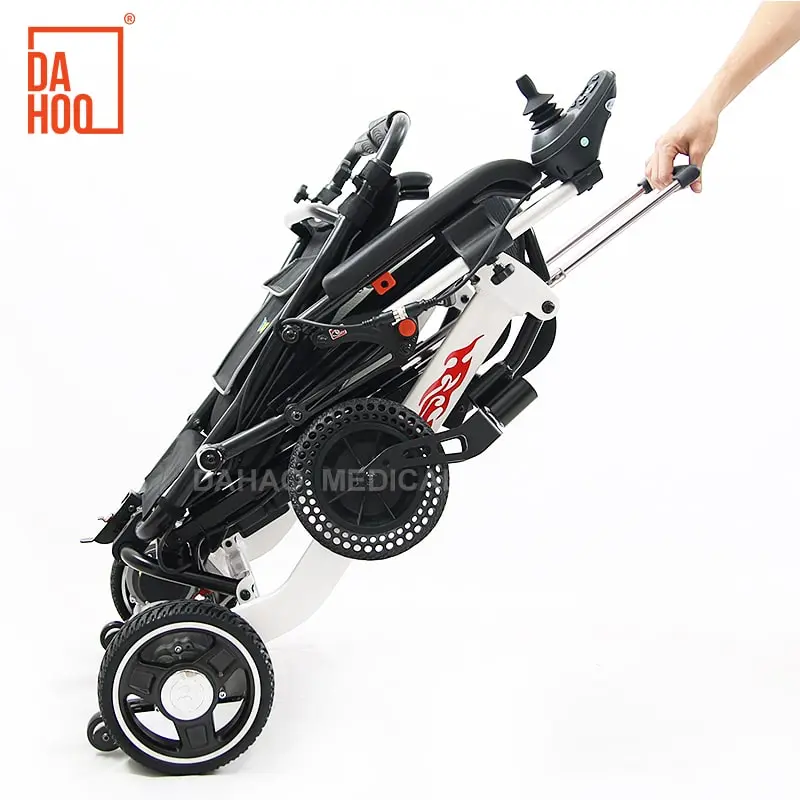
Why are airlines hesitant to allow power wheelchairs on board due to lithium batteries?
Do lithium batteries pose a fire risk? Why are aircraft particularly wary?
The answer is: Yes, lithium batteries pose a fire risk under certain conditions and are therefore strictly regulated.
Reasons include:
• Lithium batteries may spontaneously combust during a short circuit.
• High temperatures can cause thermal runaway.
• Pressure or damage can cause a fire.
• Once burning, they are extremely difficult to extinguish.
• Airplanes are enclosed spaces, and fires cannot be handled like on the ground.
Therefore, airlines must ensure that the lithium batteries in power wheelchairs:
• Meet safe capacity requirements.
• Can be disconnected from the device.
• Will not be damaged by impacts or transportation methods.
• Are they structurally protected.
• Can be removed and carried on board if necessary.
If the battery in a power wheelchair does not meet these conditions, it will be prohibited from being transported.
Are the battery capacities of power wheelchairs too large?
Are there restrictions on aircraft?
Yes, aircraft do have restrictions on battery capacity.
General aviation regulations (based on ICAO and most airline standards):
• Below 100Wh: Usually allowed in carry-on baggage
• 100Wh–160Wh: Requires approval
• Over 160Wh: Usually not allowed in check-in or carry-on baggage
Many electric wheelchairs use lithium batteries with capacities far exceeding 160Wh, and therefore may not be permitted by airlines.
If the power wheelchair battery is not removable, will it prevent it from being carried on board?
Yes. If the power wheelchair battery is not removable, cannot be disconnected, or lacks a battery protection device, airlines cannot ensure safe transport and will often refuse it.
The following types are considered high-risk:
• Non-removable lithium-ion batteries
• No independent power-off switch
• No battery protective case
• No external electrical disconnect device
Therefore, some electric wheelchairs are "naturally" unsuitable for air transport.
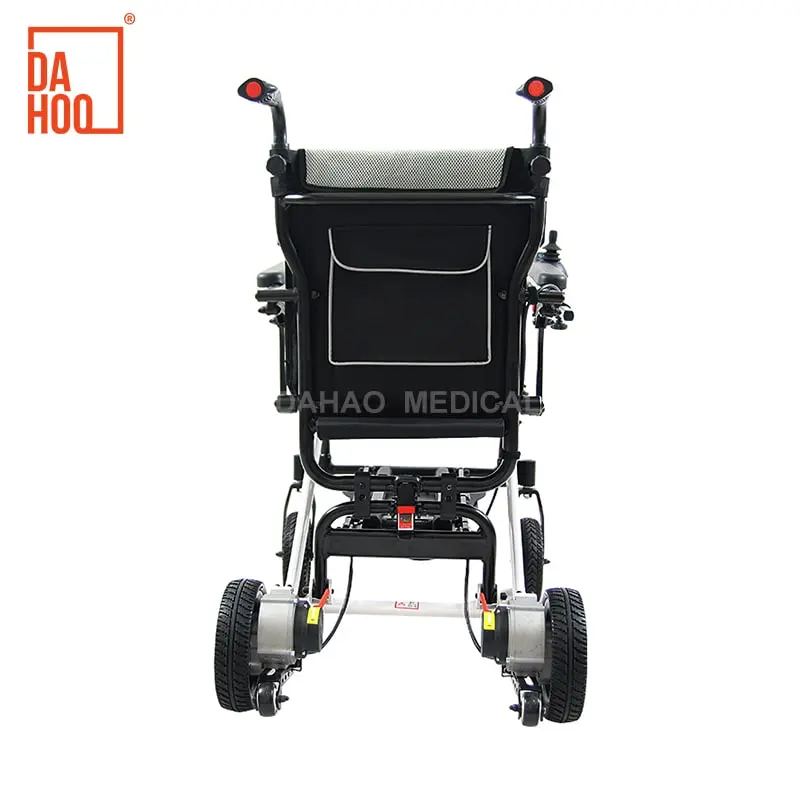
Why do airport ground staff refuse to transport certain power wheelchairs?
Even if the battery meets regulations, airport ground staff sometimes still refuse to transport certain power wheelchairs. Common reasons include:
• Weight exceeding the safe handling capacity of staff
• Wheelchair cannot be folded, too bulky
• Wheelchair cannot be securely secured on the conveyor belt
• Inability to lock the drive system, posing a risk of movement
• Complex structure, staff cannot find the power-off procedure
• Unclear labeling or unknown battery specifications
Electric wheelchairs are often large and weigh 50–150 kg. Airlines must ensure:
• Safe handling
• Secured in the cargo hold
• No collision with other luggage
• No self-starting
If these requirements cannot be met, they will refuse transport.
Does the aircraft type affect whether a power wheelchair can be transported?
Yes, different aircraft types have vastly different acceptance rates for power wheelchairs.
Why might small aircraft not allow electric wheelchairs?
Problems with small aircraft include:
• Smaller cargo door size
• Limited cargo hold height
• Limited cargo hold floor load-bearing capacity
• Lack of securing devices for electric wheelchairs in the cargo hold
Therefore, on some short-haul regional flights or smaller aircraft (such as the ATR and CRJ series), electric wheelchairs may not be able to fit in the cargo hold at all, even if the batteries fully comply with regulations.
Are larger aircraft more likely to accept electric wheelchairs?
While larger aircraft (such as the A350, B787, B777, and A330) technically have more space to transport electric wheelchairs, they must still meet battery safety regulations, weight limits, and securing requirements; otherwise, they may still be rejected.
Why does the structure of power wheelchairs concern airlines?
Besides the battery, the structure of the power wheelchair itself can also cause transportation difficulties.
What is the weight of a power wheelchair? What problems does weight cause?
Many electric wheelchairs weigh:
• 60–80 kg (lightweight)
• 100–150 kg (medium-weight)
• Over 150 kg (heavyweight)
Excessive weight can lead to:
• Difficulty for ground staff to handle
• Potential damage to aircraft cargo hold floor
• Inability to secure properly
• Increased risk of collision with baggage
At airports without suitable equipment, transport may be refused outright.
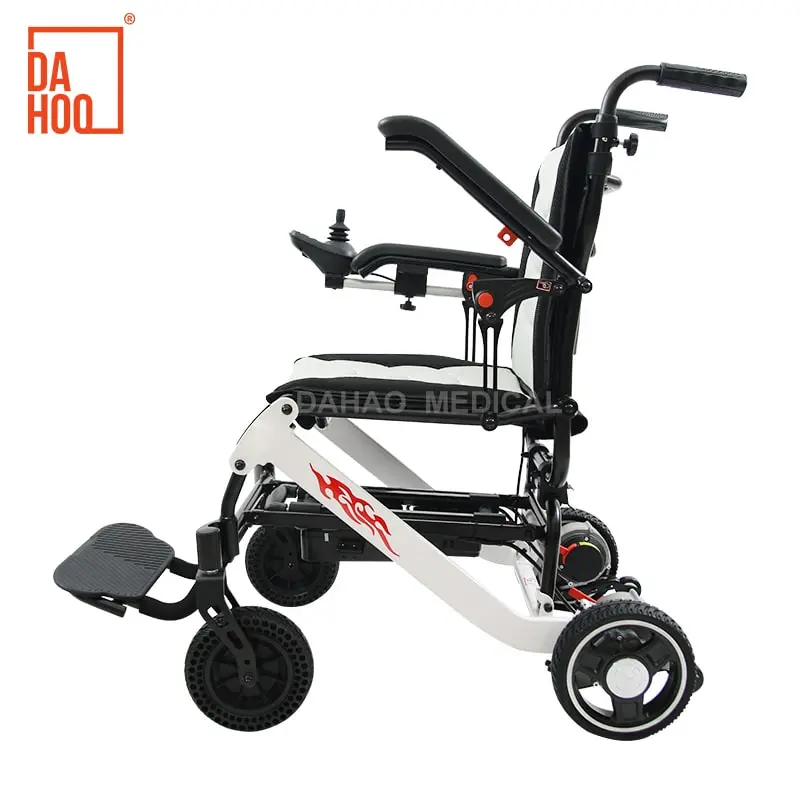
Is the power wheelchair too large? Are there size restrictions?
If the power wheelchair cannot be folded, it may result in:
• Inability to pass through aircraft doors
• Inability to fit in the cargo hold
• Inability to transport upright or inverted
• Exceeding the maximum baggage size allowed by airlines
Therefore, some airlines may not accept power wheelchairs due to aircraft type or size restrictions.
Does the power wheelchair's drive system activate automatically?
If:
• The drive system cannot be completely de-energized
• The controller is easily triggered
• The wheels cannot lock
Airlines will refuse transport because automatic activation can cause:
• Impact on other baggage
• Danger by pushing itself
• Electricity that generates current and causes battery problems
Why do airlines need to review electric wheelchairs in advance?
In many countries, airlines must confirm the safety of electric wheelchairs before passengers travel, therefore they will require:
• Battery type
• Battery capacity
• Whether it is removable
• Whether it can be de-energized
• Whether there is a transport mode
• Weight and dimensions
• Transport instructions in the user manual
If passengers cannot provide this information, airlines may refuse transport to ensure aviation safety.
Why do some airplanes not allow electric wheelchairs?
The core reasons are summarized as follows:
1. Battery does not comply with aviation regulations
Including:
• Lithium battery capacity exceeds the permissible range
• Non-removable lithium battery
• Cannot be disconnected from power
• Battery lacks a protection mode
2. The electric wheelchair is too heavy or too large
Causing:
• Inability to pass through the cabin door
• Inability to fit into the cargo hold
• Ground staff cannot handle it
• Inability to secure it
3. Aircraft type restrictions
Especially:
• Small aircraft
• Regional flights
• Aircraft with limited cargo holds
4. High difficulty in safe operation
For example:
• Lack of knowledge on how to disconnect the power
• Inability to lock the wheelchair
• Inability to provide battery information
5. Airlines lack the necessary conditions to handle this type of wheelchair
For example:
• Lack of tools for disassembly
• Lack of personnel training
• Inability to secure the device stably
Whether a power wheelchair can be brought on an aircraft depends not on whether it is "permitted," but on whether it "meets safety requirements." When the battery specifications, weight, size, structure, or aircraft model do not meet aviation safety standards, airlines have no choice but to refuse the shipment to ensure the safety of everyone on board.