

In modern healthcare and home care environments, electric adjustable hospital beds have become essential equipment for enhancing nursing efficiency and patient comfort. Since they rely on motor-driven mechanisms, many people worry about their operating costs—specifically electricity bills, maintenance fees, and potential consumable expenses—before purchasing or using them. So, are electric adjustable hospital beds expensive to operate?
The answer is: generally speaking, the operating costs of electric adjustable hospital beds are not high.
Whether for home users or medical institutions, the actual daily electricity consumption of an electric adjustable bed is very limited. Furthermore, maintenance costs remain relatively stable and are far outweighed by the convenience and improvements in care efficiency that the bed provides.
This article will comprehensively analyze the components of an electric adjustable bed's operating costs—covering energy consumption, maintenance, service life, safety system costs, and more—to help you understand the true cost structure of this equipment from a professional perspective, thereby enabling you to make informed decisions regarding their usage and procurement.
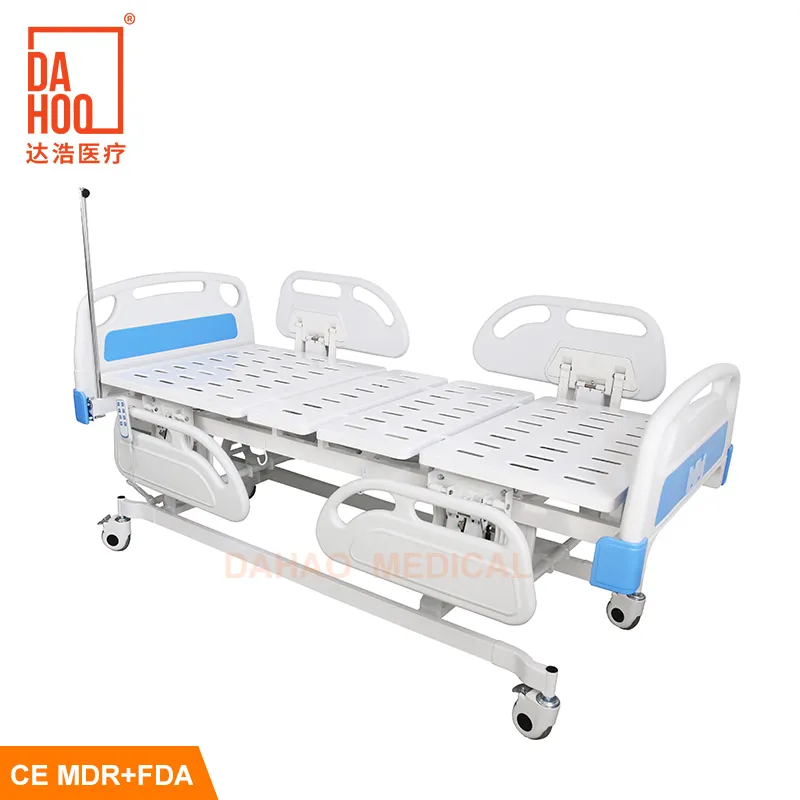
Is the Energy Consumption of Electric Adjustable Hospital Beds High?
To answer the question, "Are electric adjustable hospital beds expensive to operate?", the most critical factor to consider is their daily electricity consumption.
In practical application, the energy consumption of electric adjustable hospital beds is extremely low. The primary reasons for this include the following points:
1. The Motors Are Active for Very Brief Periods
Many people mistakenly assume that electric adjustable hospital beds are constantly drawing power. In reality:
•The motors only activate when an adjustment is being made.
•When in a stationary state, the bed consumes almost no electricity.
•Each adjustment typically lasts only a few seconds to a few tens of seconds.
This means that even if the bed is adjusted 10 to 20 times a day, the actual total motor run time still amounts to less than a few minutes.
For example:
•Raising/Lowering the Bed Surface: A common operation takes approximately 10–30 seconds.
•Raising the Backrest: 15–60 seconds.
•Adjusting the Leg Section: 10–40 seconds.
Consequently, because the active operating time of an electric adjustable hospital bed is so short, its electricity consumption is naturally low.
2. Semi-Electric Adjustable Beds Have Even Lower Energy Consumption
Semi-electric adjustable hospital beds consume even less energy because some of their functions require manual operation, and they utilize fewer motors. Typically, the motors in these beds are responsible only for back elevation or leg adjustment, while height adjustment must be performed manually using a hand crank.
This makes semi-electric adjustable beds the most energy-efficient option among nursing beds.
3. Peak Power Consumption Occurs at the Moment of Startup
For fully electric adjustable beds, the highest power consumption occurs under the following conditions:
•When multiple functions are operating simultaneously
•At the precise moment the motors start up
•When the motors start up while under a heavy load
However, even in these instances, the duration of such instantaneous power spikes is extremely brief, meaning the overall power consumption remains very limited.
4. Energy Efficiency Becomes Apparent When Compared to Household Appliances
For example:
•Water Heater: 1500–3000 W
•Induction Cooker: 1000–2000 W
•Air Conditioner: 800–2000 W
•Electric Adjustable Bed Motors: 100–350 W (and consume power only while operating)
As this data comparison clearly demonstrates, the operating costs associated with electric adjustable beds are virtually negligible.
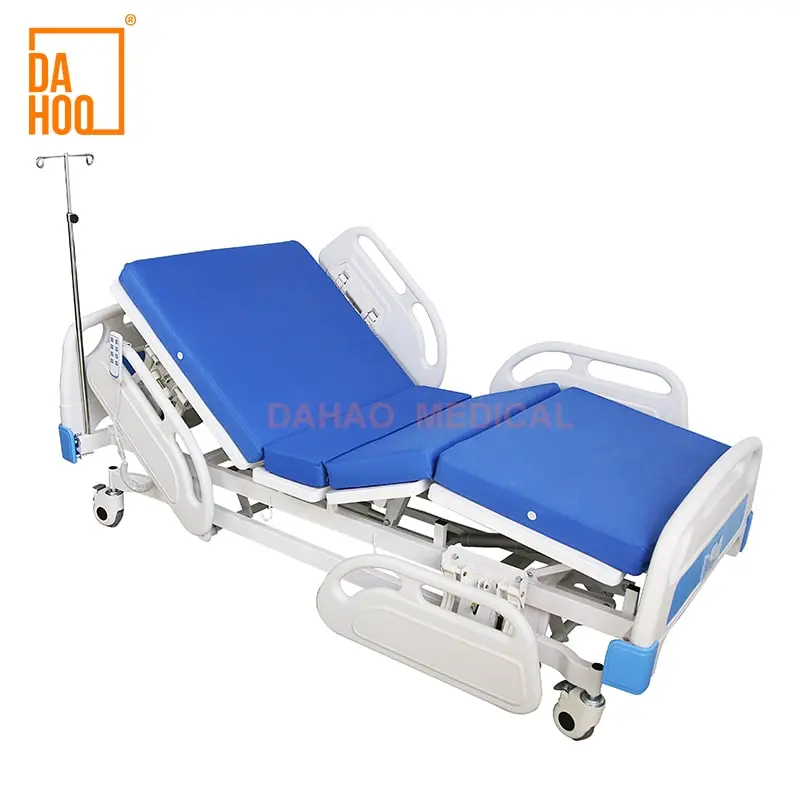
Are the Maintenance Costs for Electric Adjustable Beds High?
Aside from electricity bills, the other primary operating cost is maintenance. Many users worry that maintaining electric equipment is complex and expensive; however, the reality is quite the opposite:
1. Simple Structure, Low Failure Rate
The motor systems in electric adjustable beds typically utilize medical-grade, low-noise linear actuators. These actuators feature:
•A sealed, enclosed structure
•No requirement for additional lubrication
•A long service life
•An extremely low maintenance frequency
With proper usage, these beds typically require no additional maintenance for several years.
2. Routine Inspection Costs Are Virtually Negligible
Routine maintenance largely consists of simple visual checks, such as:
•Verifying that the side rails are secure
•Ensuring the casters lock properly
•Checking that the power cords are intact
•Confirming that the controller buttons are responsive
These checks require no additional expense and can be easily performed by caregivers.
3. Linear Actuators Have a Long Lifespan and Require Infrequent Replacement
Linear actuators typically have a service life of tens of thousands of adjustment cycles—or even more—and do not break easily.
Even under frequent use, the rate of wear and tear is very slow, making them a component with a notably long operational lifespan.
4. Electric Hospital Beds Commonly Used in Medical Facilities Are Designed for Greater Durability
Electric adjustable hospital beds are classified as medical-grade equipment; consequently, their durability standards far exceed those of ordinary furniture. As such, they feature:
•High resistance to wear and tear
•High load-bearing capacity
•Exceptional stability during prolonged use
Consequently, under normal operating conditions, maintenance costs remain very low.
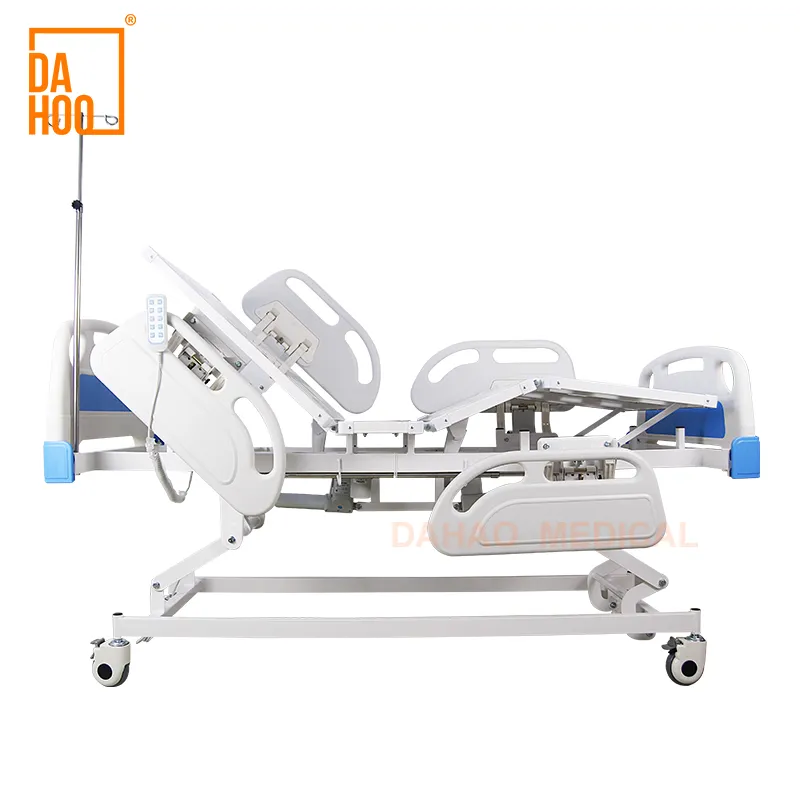
How Does the Service Life of an Electric Adjustable Bed Impact Costs?
Durability is a critical factor when evaluating operating costs.
Theoretically, the more durable a piece of equipment is, the lower its average cost of ownership becomes.
1. Medical-Grade Motors Offer Extended Lifespans
The linear actuators (electric push rods) in fully electric adjustable hospital beds typically utilize medical-grade motors, characterized by:
•Long service life
•Low noise levels
•High operational stability
•Robust load-bearing support
These attributes make them significantly more reliable than standard motors.
2. Bed Frame Structure Determines Long-Term Value
Electric adjustable hospital beds typically incorporate:
•Reinforced steel frames
•Medical-grade steel materials
•Antimicrobial ABS headboards and footboards
•Bed deck structures designed for superior load-bearing capacity
Their durability is generally far superior to that of standard manual hospital beds or residential beds, thereby reducing long-term operating costs.
Does the Energy Consumption of an Electric Adjustable Bed Increase with the Number of Features?
Many people assume that the more features a device possesses, the higher its electricity consumption will be.
In reality, the number of features does not have a direct correlation with actual energy consumption.
The reasons are as follows:
1. An Increased Number of Features Does Not Equate to Longer Operating Times
Even if an electric adjustable bed supports multiple functions—such as:
•Backrest elevation
•Leg elevation
•Whole-bed height adjustment
•One-touch reset
•Tilting functions
—these features consume electricity only when actively being operated; they do not consume energy during idle periods.
2. Varying Motor Counts Do Not Significantly Affect Long-Term Energy Consumption
Fully electric adjustable beds are typically equipped with 2 to 4 motors, whereas semi-electric beds may have only one.
However, the total motor operating time does not increase proportionally simply because there are more motors.
3. The User—Not the Features Themselves—Determines Energy Consumption
Actual energy consumption is more closely tied to the following factors:
•How frequently the user adjusts their position
•The intensity or frequency of nursing care required
•Whether frequent adjustment of the bed surface height is necessary
Therefore, a high number of features does not equate to high energy consumption.
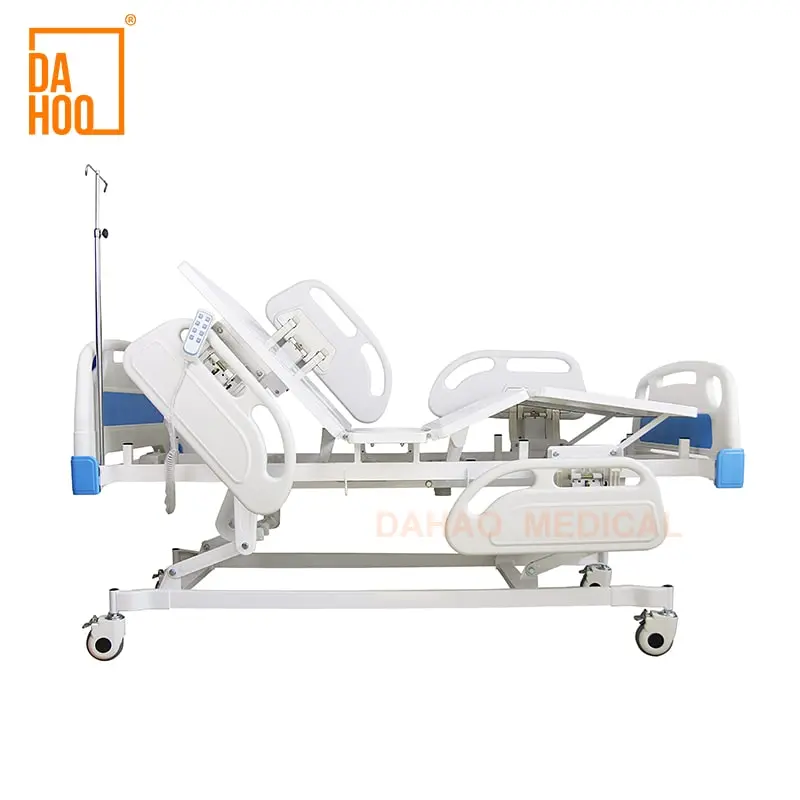
Is the Operation of Electric Adjustable Bed Motors Energy-Efficient?
Electric adjustable hospital beds commonly utilize linear actuators. These motors offer the following advantages:
1. Intermittent Operation Design: Extremely Low Energy Consumption
Linear actuators consume virtually no power when at rest.
2. High-Efficiency Drive: No Wasted Energy
Energy is expended only when lifting or adjusting is required, ensuring high efficiency and zero waste.
3. Medical-Grade Motors with Energy-Saving Features
Many medical actuator designs feature:
• Rapid cooling capabilities
• Low sustained power draw
• Brief, momentary power surges during startup
This makes them not only reliable but also highly energy-efficient.
Estimated Daily Electricity Costs: How Much Does an Electric Adjustable Bed Cost to Run Annually?
Based on the energy consumption profile, we can conclude:
• The motor typically operates for less than 5 minutes per day.
• Its average power consumption is significantly lower than that of common household appliances.
• The cumulative electricity cost over the long term is very minimal.
In other words, the electricity cost of an electric adjustable bed poses virtually no financial burden on one's daily life.
Do the Benefits of an Electric Adjustable Bed Outweigh Its Operating Costs?
Undoubtedly—yes.
Although electric adjustable beds require electricity to operate, the benefits they provide far outweigh these negligible costs:
1. Enhanced Patient Comfort
It becomes easier to find the optimal position for sleeping, eating, reading, or breathing.
2. Reduced Caregiving Strain
Eliminates the need for manual cranking, significantly reducing the physical burden on caregivers.
3. Improved Caregiving Efficiency
Offers rapid operation speeds and precise adjustments.
4. Facilitated Patient Health Management
Easier position changes aid in respiration, circulation, and the prevention of pressure ulcers.
Compared to these substantial benefits, the operating costs are extremely minimal—to the point of being almost negligible.