

In a hospital's Intensive Care Unit (ICU), medical staff need to constantly monitor patients' vital signs, provide high-frequency care, and perform emergency procedures. In this high-intensity, high-risk environment, the ICU bed is one of the most crucial pieces of equipment.
It is not only a place for patients to rest, but also a platform integrating multiple medical and nursing functions, a vital infrastructure for the efficient operation of the ICU.
So, what is an intensive care hospital bed? What are the differences between an ICU hospital bed and a regular hospital bed? What functions are essential for an ICU ward?
This article will systematically explain these key questions.
What is an Intensive Care Hospital Bed?
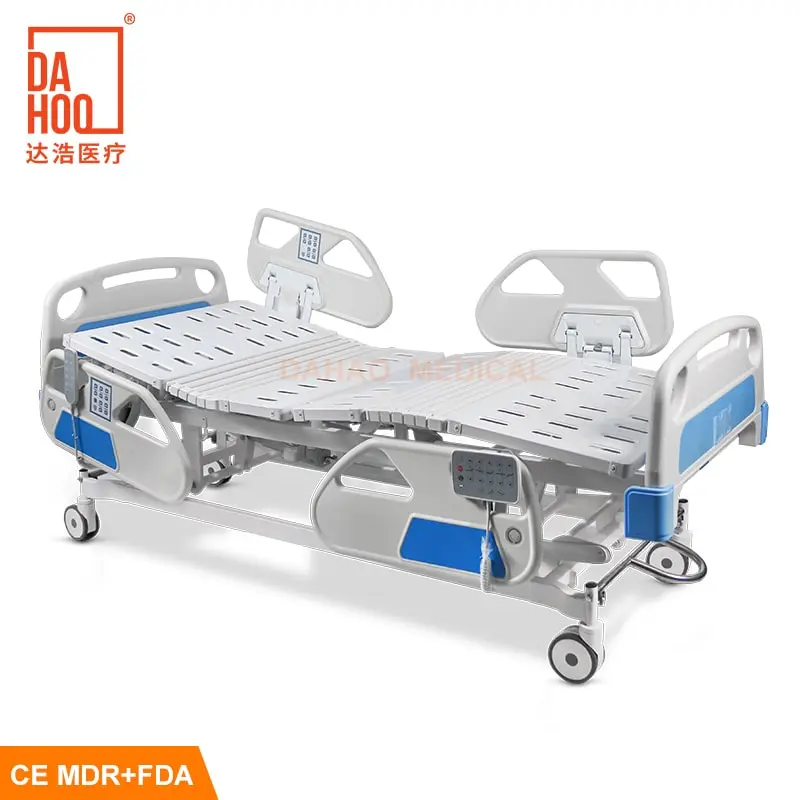
An intensive care hospital bed, also known as an ICU bed, is a specialized medical bed designed specifically for patients in the intensive care unit. Compared to regular nursing beds, this type of bed has a stronger load-bearing capacity, more precise posture adjustment, a more comprehensive safety protection system, and can be used in conjunction with various medical equipment.
In short, ICU beds possess the following core features:
• Fully electrically adjustable, allowing for various posture adjustments including backrest, leg support, bed height, and tilt.
• Equipped with advanced medical functions, such as foot tilt, Trendelenburg (head-down, feet-up) mode, and a rapid supine position for CPR.
• Facilitates monitoring, resuscitation, and nursing procedures, such as rapid height adjustment, side-turning, anti-slip, and fall-prevention designs.
• Compatible with various life support equipment, such as ventilators, infusion pumps, and monitors.
ICU beds are indispensable equipment in the treatment and monitoring of critically ill patients, and are crucial tools for improving nursing efficiency and safety.
Why must ICU wards use specialized ICU beds?
In the ICU, patients are often in a state of unstable vital signs, frequently requiring ventilators, blood purification equipment, intravenous pumps, and other equipment, and the frequency of care is extremely high. Ordinary hospital beds cannot meet these requirements, and ICU beds are designed specifically to address these needs.
The irreplaceable nature of ICU hospital beds stems primarily from the following aspects:
1. Rapid Adjustment, Suitable for Emergency Scenarios
During resuscitation, the bed needs to be quickly leveled, raised, or its angle adjusted. Fully electric control is far more efficient than manual methods.
2. High Load-Bearing Capacity
ICU beds typically have a higher load-bearing capacity, supporting procedures such as patient transfer and cardiopulmonary resuscitation.
3. Higher Nursing Efficiency
Medical staff in the ICU provide care far more frequently than in general wards. Height-adjustable beds reduce the physical exertion of nurses.
4. Enhanced Safety Protection
ICU beds integrate safety designs such as anti-pinch features, anti-fall devices, and alarm systems.
5. Compatible with Multiple Medical Equipment
Including IV stands, monitors, suction equipment, ventilators, etc., with higher platform stability.
Therefore, ICU hospital beds are an irreplaceable standard configuration for intensive care.
What are the structural characteristics of ICU beds? What are their core components?
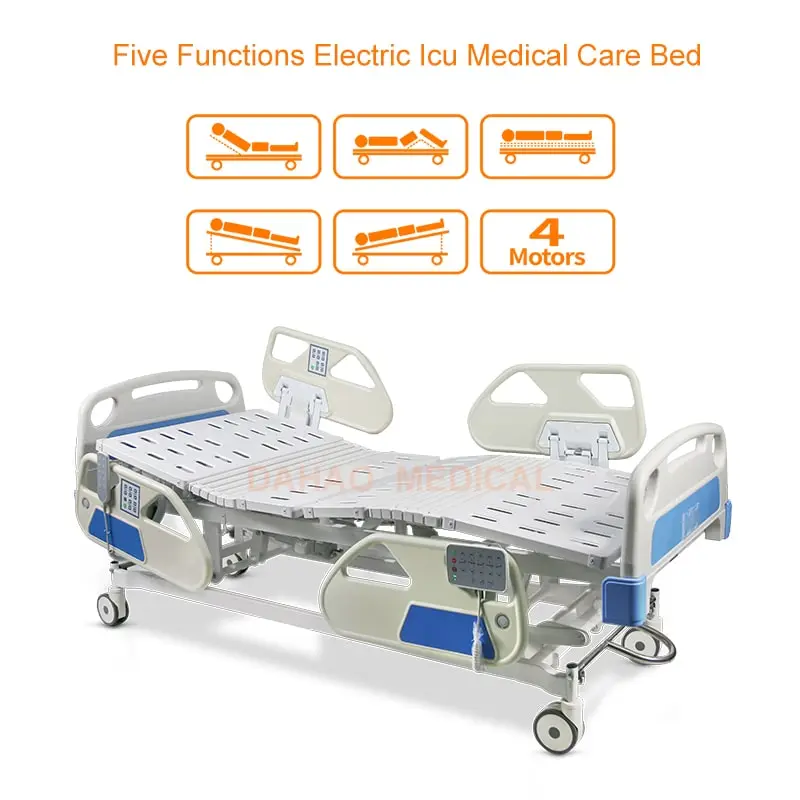
ICU beds are more complex in construction than regular hospital beds, often employing high-strength steel, electro-hydraulic systems, multi-jointed bed boards, and equipped with numerous accessories and safety devices.
The following are the main structural components of an ICU bed:
What are the components of an ICU bed frame?
An ICU hospital bed typically consists of the following core structures:
1. High-strength bed frame
Its load-bearing capacity is far greater than that of a regular hospital bed, its structure is more stable, and it facilitates procedures such as cardiopulmonary resuscitation.
2. Multi-section bed board
Generally divided into:
• Headboard (back support board)
• Hip board
• Leg board
• Footboard
Multi-section bed boards are independently adjustable, allowing nursing staff to easily set different patient positions according to their needs.
3. Fully Electric Control System
ICU hospital beds are equipped with multiple motors that control:
• Backrest lifting
• Legrest lifting
• Overall lifting
• Bed tilt (left and right)
• Forward and backward tilt angles
• One-button CPR mode
4. Height Adjustment System
A wider lifting range allows medical staff to provide optimal care and operation.
5. Safety System
Includes anti-pinch bed rails, reinforced side rails, and emergency locking devices.
What essential accessories are typically included in an ICU bed?
A rich array of accessories is a key feature of ICU beds, such as:
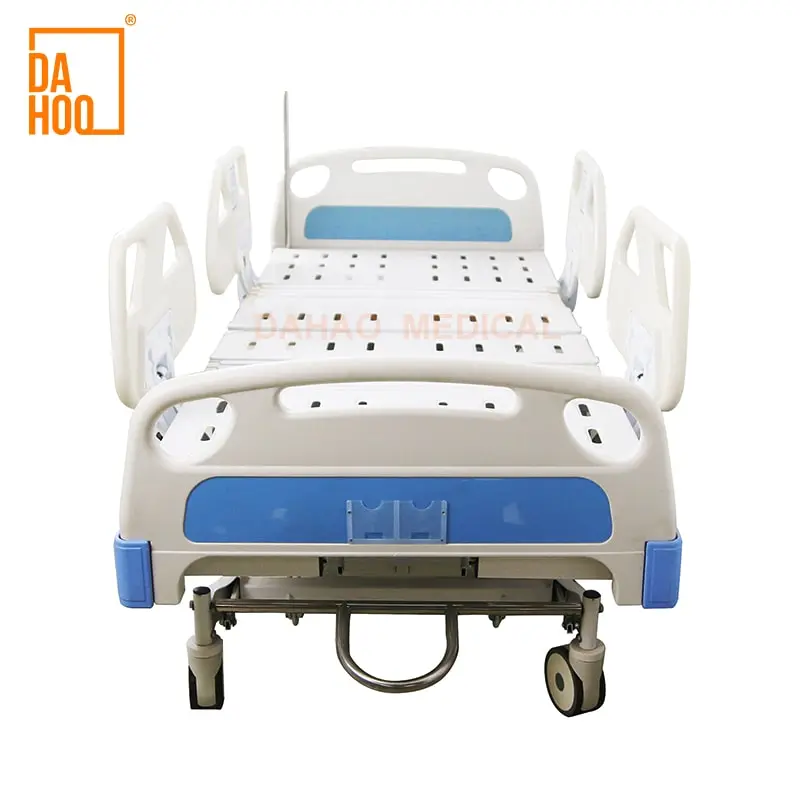
• IV stands and IV stand ports
• Suctioning device brackets
• Monitor arms
• Detachable headboard structure
• Footboard identification panel
• Drainage hooks
• Central braking system
• Bed angle display
These accessories allow ICU beds to be compatible with more medical equipment, enabling doctors and nurses to operate more efficiently.
What are the key functions of an ICU bed? Why are these functions essential?
ICU beds offer far more functions than regular hospital beds. Their core purposes include:
• Enhancing the safety of critically ill patients
• Facilitating medical resuscitation
• Improving nursing efficiency
• Promoting patient recovery
The main functions of an ICU bed are explained below.
What important electrically adjustable functions does an ICU bed support?
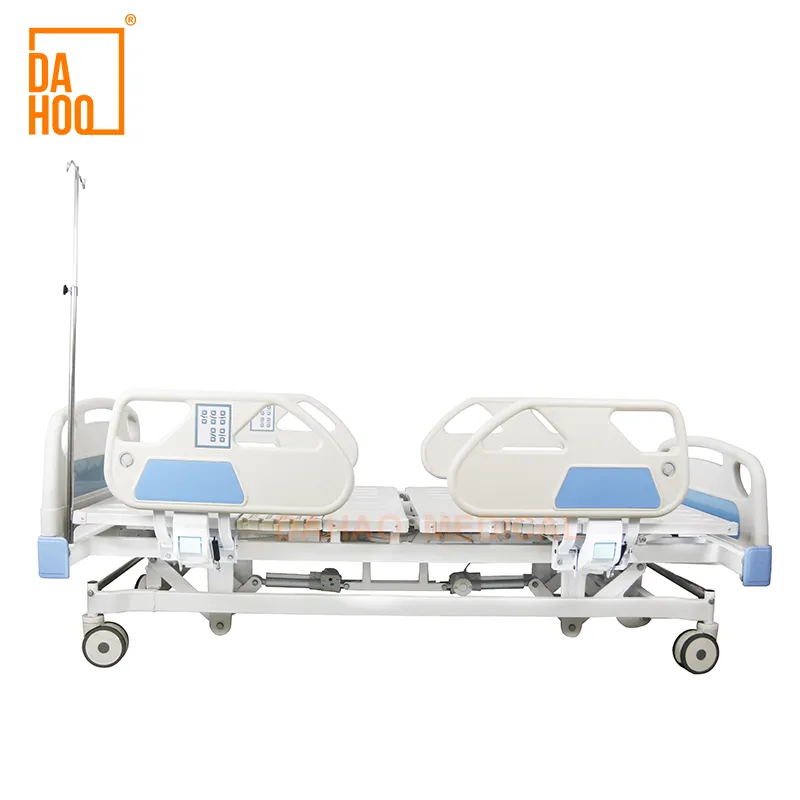
The most crucial feature of an ICU hospital bed is its fully electrically controlled operation.
Common electrically adjustable functions include:
1. Backrest adjustment: Used for feeding, breathing exercises, and relieving pressure on the lungs.
2. Legrest adjustment: Adjusts blood circulation and relieves pressure on the lower limbs.
3. Overall height adjustment: Facilitates procedures such as injections, suctioning, and dressing changes.
4. Forward/backward tilt adjustment (Trendelenburg & Reverse Trendelenburg): Used for:
• Improving blood return
• Promoting sputum expectoration
• Preparing for certain procedures in different departments
5. Lateral tilt: Aids in turning over, reduces the risk of pressure sores, and facilitates nursing care.
6. One-touch CPR Supine Mode: In emergencies, quickly resets the bed to a supine position suitable for CPR.
What safety features are included in ICU beds? Why are they so important?
Critically ill patients are often unable to protect themselves, therefore ICU hospital beds must have numerous active and passive safety features.
1. Highly Secure Side Guardrails
To prevent the risk of falls and must have an anti-pinch structure.
2. Bed Exit Alarm
To prevent patients from unintentionally getting out of bed and falling.
3. Central Braking System
To ensure the bed is completely stable during operation.
4. Non-Slip Bed Surface Design
To prevent patients from slipping, especially when the bed is tilted.
5. Manual or Electric CPR Switch
To quickly reset the bed in an emergency.
6. Backup Battery System
To allow continued use of electric functions during power outages.
These safety features are key reasons why ICU beds differ from ordinary hospital beds.
What different types of ICU beds are available?
Although all ICU hospital beds belong to the intensive care unit, they can be further subdivided into several categories based on functional requirements:
What types of ICU beds can be classified by the number of functions?
1. Standard ICU Bed
• Equipped with basic fully electric functions
• Suitable for general ICU care
2. Advanced ICU Bed
• In addition to basic functions, it adds:
Weighing system
Automatic position adjustment
Real-time angle display
Advanced support for long-term bedridden patients.
• Suitable for wards with high intensive care unit severity.
3. Nursing Turning ICU Bed
• Supports automatic left and right tilting
• Reduces nurses' workload in turning patients
• Reduces the incidence of pressure ulcers
What are the structural differences between ICU beds?
• Four-section ICU bed (most common)
• Five-section ICU bed
Offers more precise adjustment capabilities, more suitable for certain postoperative patients.
What are the different electrical control methods for ICU beds?
• Dual-sided control panel
• Nurse operating controller
• Patient self-service remote control
• Integrated control system at the foot of the bed
Multiple control methods enhance operational convenience in different nursing scenarios.
What are the core roles of ICU beds in intensive care?
ICU beds are not ordinary resting platforms; they play crucial medical responsibilities in intensive care:
1. Supporting emergency procedures (rapidly lying flat, raising, and tilting)
2. Helping maintain patient position (facilitating breathing, expectoration, and circulation)
3. Reducing the workload of medical staff
4. Improving patient comfort and safety
5. Ensuring stable operation of life support equipment
6. Reducing the risk of pressure ulcers and improving the quality of care
Without ICU hospital beds, intensive care units cannot operate efficiently.
How does Dahao Medical support logistics and delivery?
Dahao Medical has extensive experience in export logistics and international shipping. The company coordinates production schedules, packaging, and delivery to support smooth purchasing for global buyers. This efficiency is especially valuable for large orders of Hospital Care Beds and Electric Patient Lifters.