

For people using assistive devices, whether they can bring a 4-wheel rollator on a plane, how to bring it, whether there are airline restrictions, and how the boarding process works are all very important questions. Whether it's a first-time flyer or someone who frequently travels with a 4-wheel rollator, everyone wants to understand the airline's regulations regarding assistive devices.
In fact, what most people don't know is that most airlines allow passengers to bring 4-wheel rollator walkers on board and offer many convenient services. However, to ensure a smooth journey, passengers need to understand the rules, including check-in methods, carry-on regulations, gate procedures, and security screening steps.
This article will answer the core question, "Can I bring a 4-wheel rollator walker on a plane?" from a professional perspective, using multiple question-style subheadings to help you quickly find all relevant information.
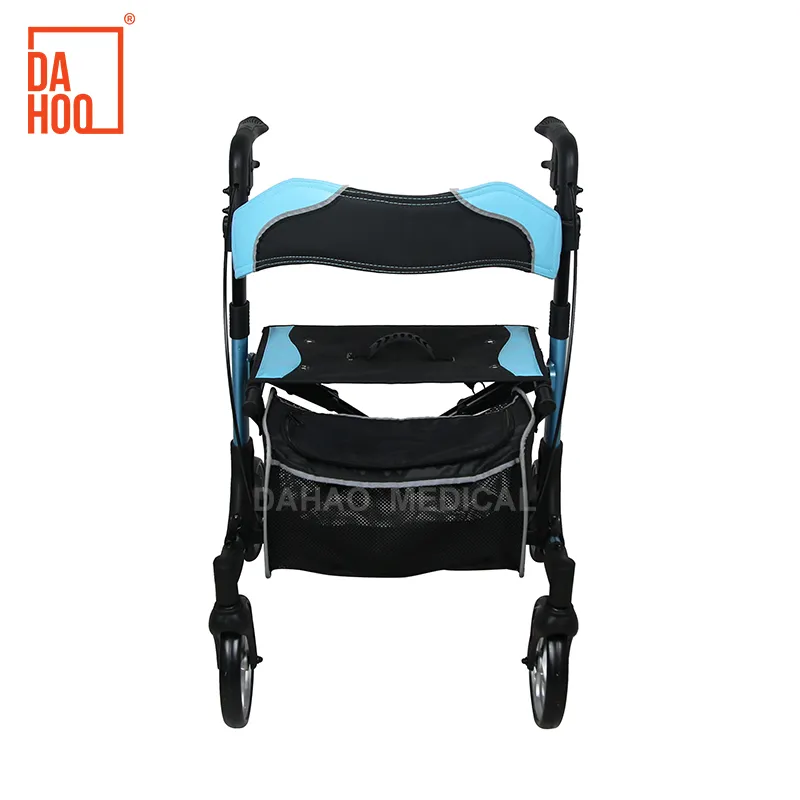
Why do most airlines allow 4-wheel rollators?
A 4-wheel rollator is a device specifically designed to provide assistance to people with mobility impairments, weak balance, or those who need stable support. Airlines generally allow 4-wheel rollators for several reasons, including:
1. 4-wheel rollators are classified as mobility aids.
International aviation regulations (such as IATA guidelines) typically classify 4-wheel rollators as "mobility aids," similar to wheelchairs, canes, and walking frames. These devices must be allowed to be transported with passengers and are not included in checked baggage allowance.
2. Airlines are required to provide assistance to passengers with mobility impairments.
Most airlines offer:
• Special assistance services
• Priority boarding
• Gate baggage check-in
• Airport wheelchair services
These services are designed to protect passenger safety and therefore naturally include assistance with carrying 4-wheel rollator walkers.
3. 4-wheel rollators are inherently safe and have a simple structure.
The frame of a 4-wheel rollator walker is usually foldable or semi-foldable, does not involve complex battery systems, and does not involve the transport of dangerous goods; therefore, it is considered a low-risk device under aviation safety regulations.
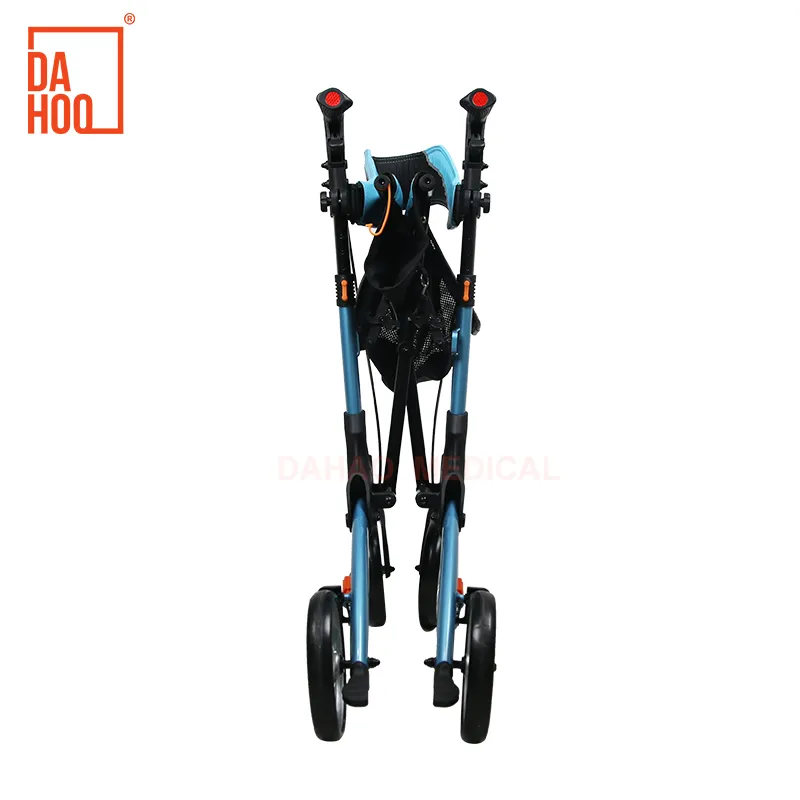
Can a 4-wheel rollator be brought on board as carry-on baggage?
This is one of the core questions that many passengers are most concerned about. The answer is: If a 4-wheel rollator is foldable, most airlines allow it as carry-on baggage to the gate, and even allow it in the cabin (depending on cabin space).
However, please note the following:
1. It must be a foldable 4-wheel rollator.
Airlines typically require:
• Foldable design
• Compact size
• Reasonable weight
• Not obstructing aisles or emergency exits
If your 4-wheel rollator folds easily and fits snugly in the overhead bins in front of your seat, then passing through security and boarding should not be a problem.
2. Full-size 4-wheel rollators usually cannot fit in the overhead bins.
While some lightweight models can fit in the overhead bins, most 4-wheel rollators:
• Are too large
• Have a seat
• Have a wide frame
Therefore, you may ultimately need to check it in at the gate (i.e., "gate check").
3. As carry-on baggage, it will not count towards your baggage allowance.
A 4-wheel rollator walker is considered a mobility aid, therefore airlines are obligated to transport it unconditionally and it will not be included in baggage weight or quantity limits.
Can I bring a non-foldable 4-wheel rollator on the plane?
Yes. Even if your 4-wheel rollator walker cannot be folded, you can still bring it on the plane.
However, the process will be slightly different:
1. Non-foldable 4-wheel rollators usually need to be checked in at the gate.
That is to say:
• You can use the 4-wheel rollator walker all the way to the gate.
• Hand it to the staff at boarding.
• Airline staff will place it in the cargo hold.
• Retrieve it at the gate or baggage carousel upon arrival.
This method will not affect your travel plans and is standard airline practice.
2. It is recommended to contact the airline in advance.
Especially for large, heavy, or non-standard 4-wheel rollator walkers, informing the airline in advance can:
• Ensure staff arrange suitable transportation methods
• Avoid delays on the day of boarding
• Allow them to reserve space or prepare assistance equipment
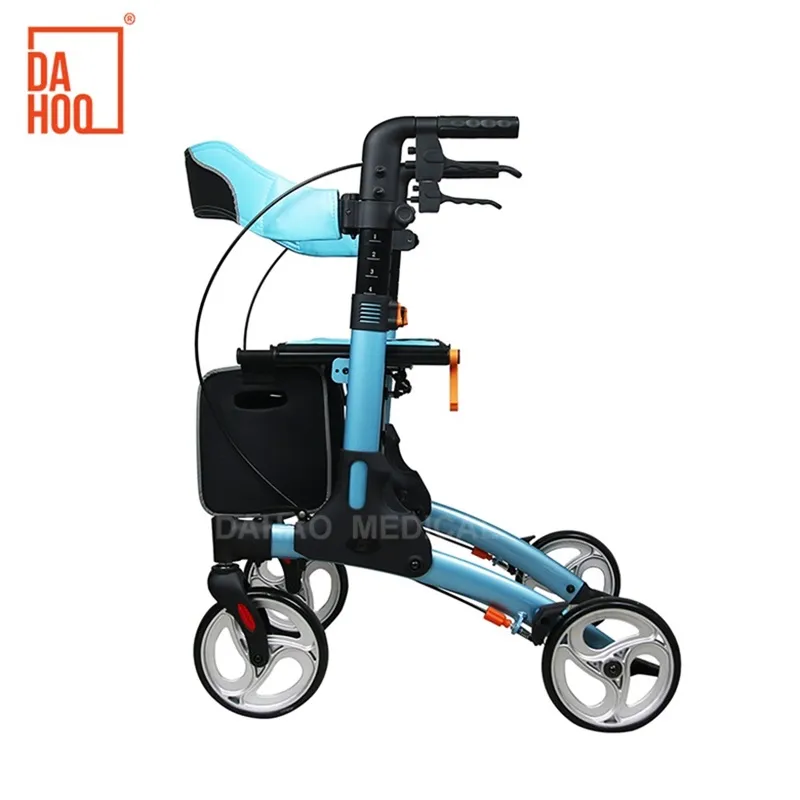
Do 4-wheel rollators need to be checked in? What are the check-in methods?
Check-in methods are generally divided into three categories: standard baggage check-in, gate check-in, and carry-on baggage. The following is a breakdown:
1. Standard Baggage Check-in
Suitable for:
• Passengers arrive at the airport early
• 4-wheel rollator walkers are bulky when folded
• Not needed for use within the airport
Features:
• Checked in at the counter
• Not included in baggage allowance
• Airline responsible for transportation
• Must be collected in the baggage claim area upon arrival
Disadvantages: After checking in as standard baggage, you will not be able to use the 4-wheel rollator walker for movement within the airport.
2. Gate Check
This is the most common method for passengers using a 4-wheel rollator.
Suitable for:
• You need to use the 4-wheel rollator walker within the airport.
• The device cannot be taken into the cabin or is too large.
Process:
1. Use the 4-wheel rollator to walk to the gate.
2. Staff collect the device before boarding.
3. The device is placed in the cargo hold.
4. It is returned to you at the cabin door or baggage claim area upon arrival.
Advantages:
• Passengers can use the 4-wheel rollator throughout the entire journey.
• Most convenient and common.
3. In-cabin
Suitable for:
• Extremely lightweight, foldable 4-wheel rollator walker.
• Size meets airline cabin baggage standards.
Advantages:
• Will not be mixed with other luggage.
• Almost no risk of damage.
Disadvantages:
• Most 4-wheel rollators are too large to accommodate this method.
• Limited cabin space may not meet the requirements.
Does a 4-wheel rollator need to go through security?
Regardless of the type of equipment, all devices entering the airport must undergo security screening.
The security screening process may involve the following steps:
• Manual inspection of the 4-wheel rollator walker
• Inspection of the structure for safety by security personnel
• Explosive residue testing at some airports
• No need to disassemble all parts, but cooperation with the inspection is required.
Passenger's security screening process:
• If unable to stand, a seated screening can be requested.
• Additional support will be provided by assistance personnel.
• Passengers will not be forced to leave the 4-wheel rollator walker.
• A privacy screening area will be provided.
Are the regulations for 4-wheel rollators the same for every airline?
While most airlines adhere to international regulations, internal policies may vary slightly.
Common differences include:
• Whether 4-wheel rollator walkers are allowed in carry-on baggage
• Whether special assistance must be requested in advance
• Maximum weight limit for the device
• Cabin space utilization
• Check-in location and process at the gate
• Location for returning the device upon arrival
It is recommended to confirm the policy with the airline as early as possible after booking your ticket.
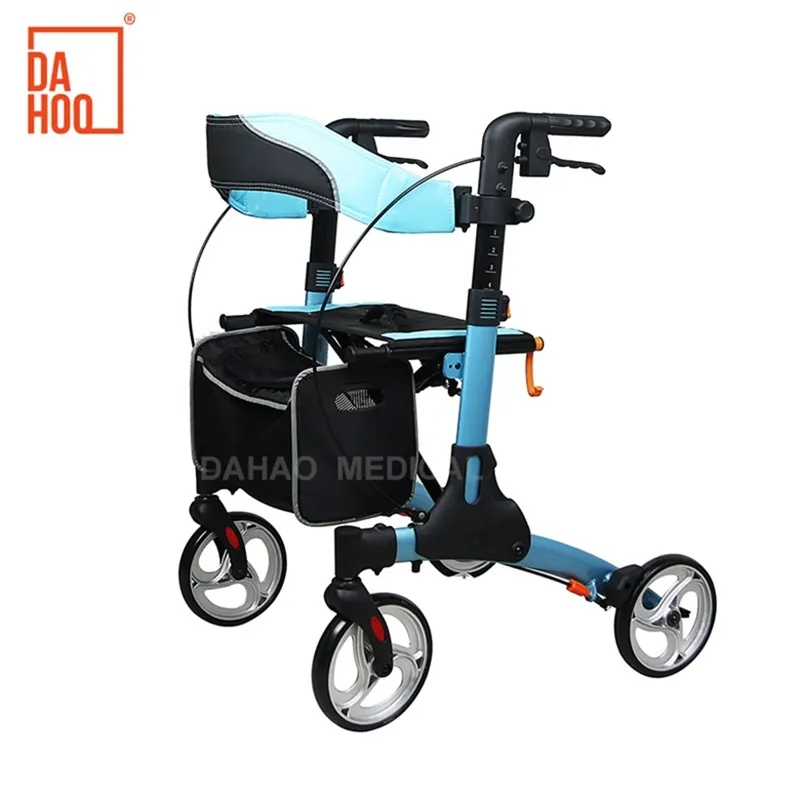
What preparations should I make before flying with a 4-wheel rollator?
To ensure a smooth boarding process, passengers can prepare the following in advance:
1. Check that the 4-wheel rollator folds properly.
Smooth folding can speed up security checks, check-in at the gate, and transport.
Check the following:
• Whether the brakes can be locked
• Whether the frame is secure
• Whether it can be folded quickly
• Whether there are any loose parts
2. Inform the airline of your needs in advance.
In particular:
• Whether you need airport wheelchair service
• Whether you need priority boarding
• Whether you need assistance pushing the vehicle
• Whether you need a specific seat (near the cabin door, aisle, etc.)
3. Attach your name and contact information to the rollator.
To avoid confusion during transport.
4. Allow more time when going to the airport.
Flying with assistive devices involves several more steps, therefore:
It is recommended to arrive at the airport at least 2-3 hours in advance.
How do I collect my 4-wheel rollator upon arrival?
Different airports and airlines have different procedures, which may result in two scenarios:
Scenario 1: Retrieve at the cabin door
This is the most common method.
Usually, staff will quickly bring the 4-wheel rollator walker to the cabin door before you disembark, allowing you to use it directly off the plane.
Scenario 2: Retrieve at the baggage carousel
If airport space is limited or the transport process is different, you may need to wait for the device in the baggage area.
What problems might you encounter when carrying a 4-wheel rollator on a plane?
Common situations are summarized as follows:
• Folding a large 4-wheel rollator may be slightly slower.
• Some airports have limited gate space.
• Some staff members may not be familiar with the folding methods of certain brands.
• Security checks may take a few extra minutes.
• Upon arrival, the device may be brought to the baggage area instead of the cabin door.
These are all normal occurrences, so don't worry.
Can I bring a 4-wheel rollator on a plane?
The answer is yes: Yes.
Regardless of whether your 4-wheel rollator walker is foldable or not, and regardless of its size or weight, as long as it is a "mobility assistive device," the airline is obligated to transport it and:
• It will not be counted towards your baggage allowance.
• You can choose to carry it on, check it in at the gate, or check it in as standard baggage.
• You can use it throughout the airport until boarding.
If your 4-wheel rollator walker is foldable, you may even be able to bring it directly into the cabin.
Most importantly:
Confirm the airline's policy with them in advance to ensure a smooth and hassle-free journey.
What makes Dahao Medical’s Electric Wheelchairs stand out?
Dahao Medical’s Electric Wheelchairs are designed with user comfort, safety, and durability in mind. Features such as stable frames, smooth control systems, and ergonomic seating make them suitable for daily use. As a manufacturer, Dahao Medical can also customize specifications to meet different market demands.