

What is a lift transfer chair?
What are the fundamental differences between it and a wheelchair?
Many people compare lift transfer chairs and wheelchairs when choosing assistive devices for the elderly or those with mobility impairments, because both allow users to sit and both have wheels. However, these two types of devices have completely different functional orientations.
A lift transfer chair is a nursing care device that assists in "transfer," while a wheelchair is a transportation aid used for "mobility."
Therefore, the key to determining whether a lift transfer chair can be used as a wheelchair is understanding the differences between the two in terms of design purpose, structural characteristics, safety requirements, and applicable scenarios.
The design purpose of a lift transfer chair: transfer, not movement.
Lift transfer chairs are mainly used for:
• Bed ↔ Chair
• Chair ↔ Toilet
• Chair ↔ Wheelchair
• Transfer in the bathing area
• Short-distance pushing
Its core function is lifting and transferring position; it is essentially a nursing care tool.
The original design purpose of wheelchairs: Continuous mobility and transportation.
Wheelchairs are used for:
• Indoor mobility
• Moving around outside
• Proximity by the user or others for extended periods.
They are "mobility tools," not primarily for transfer.
In other words:
A lift transfer chair is designed to assist a person in moving up and down; a wheelchair is designed to allow a person to travel greater distances.
Understanding this is the foundation for determining whether a chair is a substitute.
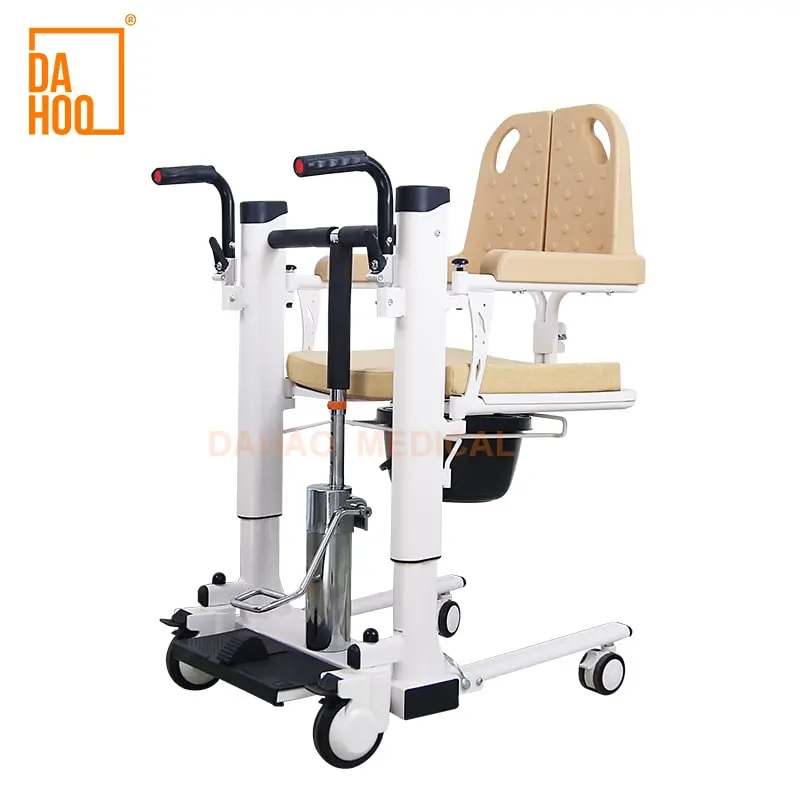
Can I use a lift transfer chair as a wheelchair?
A lift transfer chair cannot be used as a wheelchair for extended periods; it can only temporarily replace a wheelchair for short distances in specific situations.
The reasons include the following:
Why can't a lift transfer chair be used as a wheelchair for extended periods? (Core logic analysis)
The biggest difference between a lift transfer chair and a wheelchair lies in their functional positioning and structural design; therefore, it is not suitable for long-term mobility.
Here are the detailed reasons:
(1) The lifting transfer chair's seating support is insufficient for prolonged use.
Compared to wheelchairs, the seat structure of a lifting transfer chair is generally closer to a "hard seat," lacking:
• Back support
• Lateral stability structure
• Ergonomic design for prolonged sitting
• Soft seat cushion
• Seat surface capable of withstanding prolonged pressure
While wheelchairs are designed for prolonged sitting, they therefore:
• Appropriate backrest angle
• Ventilated seat cushion
• Scientifically distributed seating pressure
Lift transfer chairs lack these characteristics, making them unsuitable for prolonged sitting.
(2) The lifting transfer chair's higher center of gravity increases the risk of accidents over long distances.
To enable its lifting function, the lifting transfer chair has:
• Adjustable seat surface
• Higher center of gravity
• Different stabilization structure than a wheelchair
During movement, excessive speed, sharp turns, or uneven ground can all increase the risk of instability.
Wheelchairs are designed for mobility and feature:
• Low center of gravity design
• Large rear wheels, strong resistance to bumps
• Wide wheelbase, stable center of gravity
Therefore, they are significantly superior to lift transfer chairs for long-distance and safe movement.
(3) Lift transfer chairs lack a manual self-propelled mechanism, making them unusable for self-propelled movement.
While wheelchairs have large-diameter rear wheels, allowing users to propel themselves forward, lift transfer chairs typically:
• Have smaller rear wheels
• Lack armrests
• Rely entirely on caregivers for propulsion.
This means the elderly cannot move independently and therefore cannot serve as a mobility aid.
(4) Lift transfer chair wheels are suitable for short distances but not for outdoor or prolonged use.
Most lift transfer chairs use small medical wheels, suitable for:
• Smooth indoor surfaces
• Short-distance movement
• Short-term movement during transfers
However, they are not suitable for:
• Asphalt roads
• Stone brick floors
• Continuous movement over extended periods
• Uphill and downhill sections.
The wheel diameter and structure of wheelchairs are better suited to these scenarios.
(5) The brakes on a lift transfer chair differ from those on a wheelchair.
Wheelchair brakes are for stable parking and movement control, while lift transfer chair brakes are primarily used for:
• Locking during transfers
• Maintaining a fixed position during raising and lowering.
Their usage logics differ, therefore a lift transfer chair is insufficient to meet the daily mobility safety needs of a wheelchair.
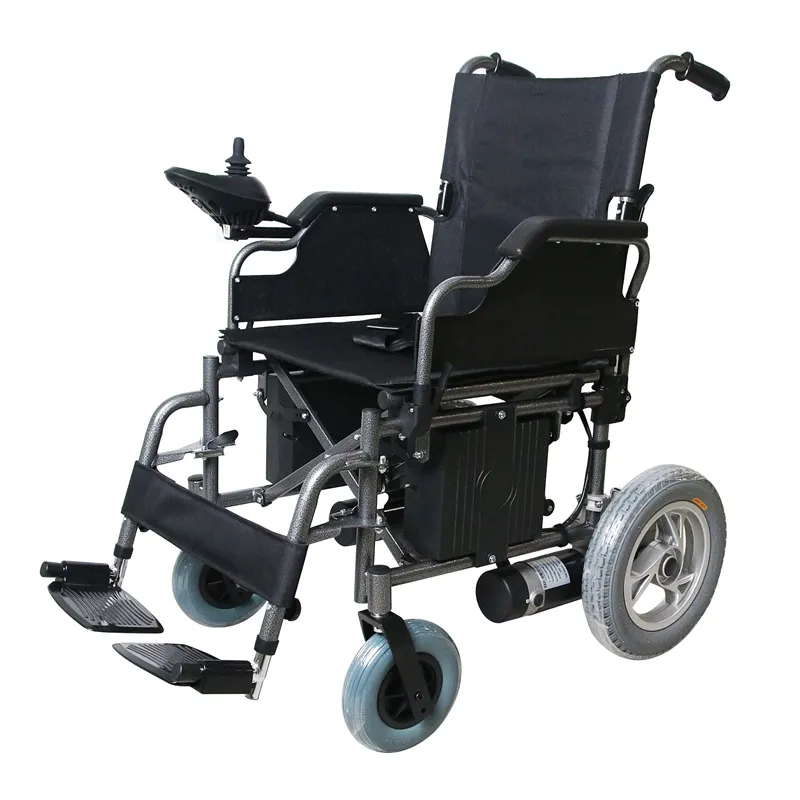
In what situations can a lift transfer chair be used temporarily as a wheelchair?
While it cannot be a long-term replacement, a lift transfer chair can temporarily serve as a mobility aid in certain situations, such as:
1. Short-distance movement within the same room
For example:
• Moving from the bedside to the desk
• Moving within the bedroom area
• From the bed to the bathroom door
If the distance is short, the surface is flat, and the speed is slow, a lift transfer chair can replace a wheelchair for short-distance movement.
2. Moving to another location during transfers
For example:
• Moving from the bed to the toilet
• Moving from the sofa to the bathroom area
• Moving from the dining table back to the bedside
These distances are very short, and lift transfer chairs are designed for these scenarios.
3. Temporary Emergency Use When a Wheelchair is Unavailable at Home
For temporary mobility needs, such as:
• An elderly person needs to move a short distance within the home
• A caregiver needs to temporarily push an elderly person within a room
A lift transfer chair can fulfill this role, but it must be used slowly and on a stable surface.
What are the fundamental differences between a lift transfer chair and a wheelchair?
To clearly determine whether they can be substituted, we conduct an in-depth comparison in terms of structure, usage time, safety, and functionality:
Item | Lift Transfer Chair | Wheelchair
Functiona | Positioning Transfer | Mobility
Is it height-adjustable? | ✔ Yes | ✘ No
Suitable for Long-Term Sitting? | ✘ No | ✔ Yes
Suitable for Outdoor Use? | ✘ No | ✔ Yes
Can it be Self-Propelled? | ✘ No | ✔ Yes
Stability Design | Primarily for height adjustment | Primarily for stable movement
Suitable for | People who need to be transferred | People who need mobility assistance
As can be seen from the table, their positioning is completely different.
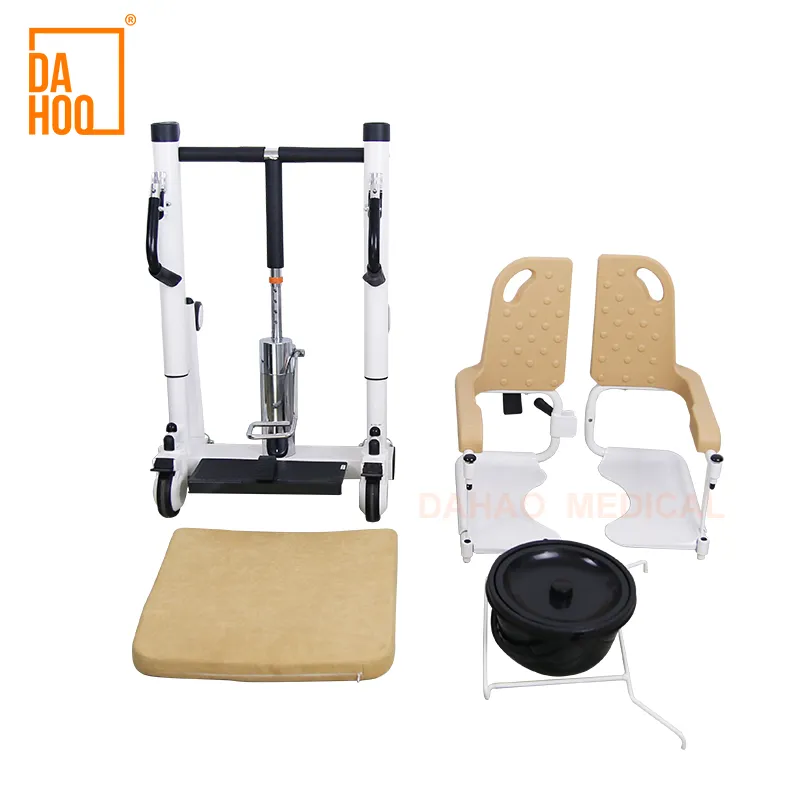
What are the safety reasons why a lift transfer chair is not recommended for use as a wheelchair?
Lift transfer chairs are not designed as mobility aids, therefore, long-term replacement of wheelchairs may pose safety hazards:
1. Discomfort and pressure during prolonged sitting
Susceptible issues:
• Localized pressure
• Sciatica
• Lower back discomfort
Wheelchairs are designed for comfort during prolonged sitting.
2. Small wheel structure leads to instability
Especially in the following situations:
• Encountering floor gaps
• Carpet edges
• Uneven floors
•Crossing thresholds
These situations may cause wheel jamming or tilting.
3. Unsuitable for ramps, prone to tipping forward or backward
Wheelchairs have better anti-tipping structures, while lift transfer chairs have a high center of gravity, making them extremely risky on ramps.
4. Increased workload for caregivers
Using a lift transfer chair as a mobility aid for extended periods increases the burden on caregivers.
Who is a better candidate for a lift transfer chair than a wheelchair?
A lift transfer chair is suitable for:
• People who have difficulty standing
• People who need frequent transfers from bed
• People who need assistance bathing or using the toilet
• People with limited mobility but who do not need to travel long distances
• Elderly people who have difficulty getting in and out of bed
If an elderly person's primary range of activity is very limited, a lift transfer chair may be very useful, but it should not be used as a primary mode of transportation.
Who needs a wheelchair and should not rely on a lift transfer chair for mobility?
The following people are better suited to use a wheelchair:
• People who need to move freely at home
• People who need to go out for activities
• People who need to sit for long periods
• People who can push their wheelchairs themselves
• People who need stable sitting support
A wheelchair is the true mode of transportation, while a lift transfer chair is a transfer device.
Can a lift transfer chair be used in conjunction with a wheelchair?
The answer is yes, and it is an ideal combination.
Many families use the following simultaneously:
• Wheelchair → for mobility
• Lift transfer chair → for transfer
For example:
• Lift the elderly person from bed using a lift transfer chair
• Transfer them to a wheelchair
• Finally, use the wheelchair to move them to another room or out.
This makes caregiving easier and safer.
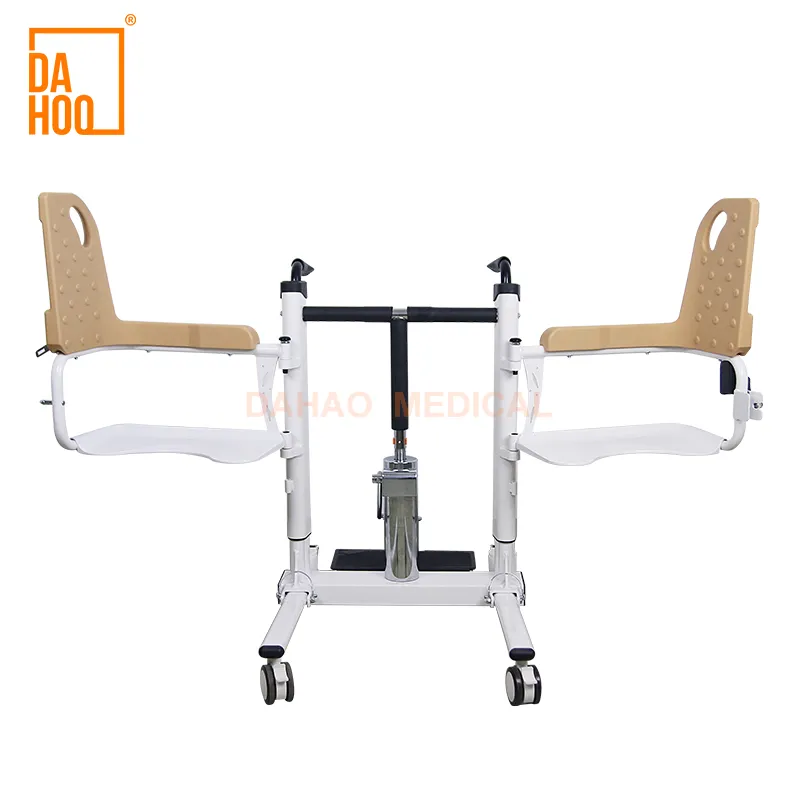
Lift Transfer Chairs are Not Suitable For Long-Term Use As Wheelchairs
✔ Lift transfer chairs are not suitable for long-term use as wheelchairs.
Reasons:
• Not suitable for prolonged sitting
• Wheels not suitable for long-distance movement
• Insufficient stability
• No self-propelled function
• Insufficient comfort
✔ Lift transfer chairs are only suitable for short-distance, temporary movement in specific scenarios.
✔ The core function of a lift transfer chair is "transfer," while the core function of a wheelchair is "movement."
✔ Using both together is the safest and most efficient way to provide care.
Are Dahao Medical products suitable for hospitals and home care markets?
Yes, Dahao Medical designs its products to serve both professional healthcare facilities and home care environments. Hospital Care Beds and Electric Patient Lifters are engineered for clinical durability and safety, while Home Care Beds, Electric Wheelchairs, and Roller Walkers focus on comfort, ease of use, and compact design. This versatility makes Dahao Medical a preferred supplier for distributors and brands covering multiple healthcare channels, from hospitals to retail home care markets.