

Among various walking aids, the 4-wheeled walking aid is a very representative product. Compared with wheelless walking aids and front-wheel walking aids, the 4-wheeled walking aid differs significantly in design concept and usage, thus bringing unique advantages and limitations.
Many people have similar questions when choosing walking aids: Is a 4-wheeled walking aid good? What are its advantages and disadvantages?
To answer this question objectively, we must start from its structural principles, usage methods, and actual needs, rather than simply summarizing it as "good" or "bad."
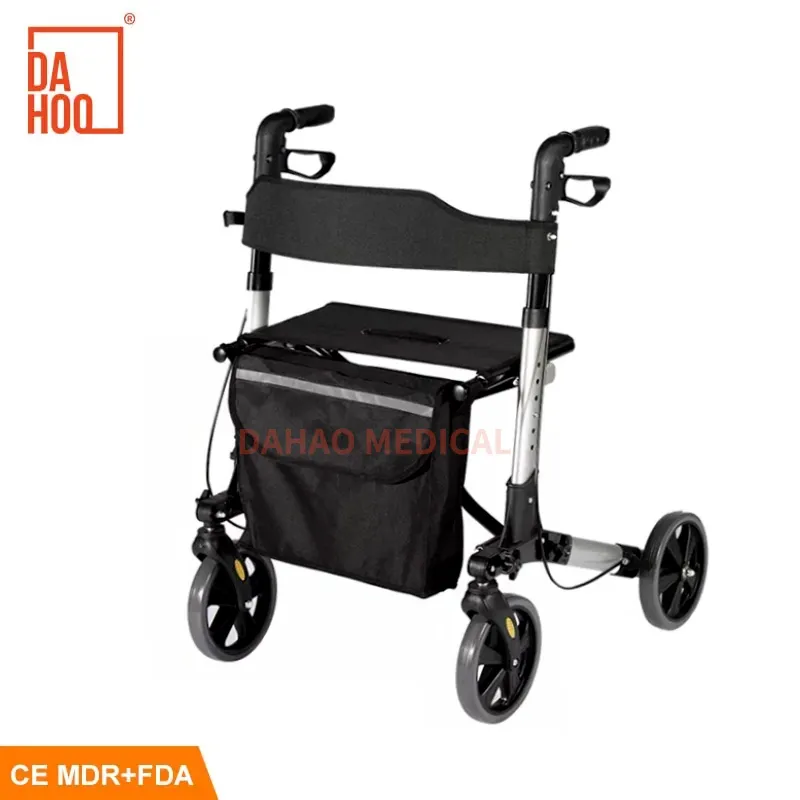
What is a 4-wheeled walking aid?
A 4-wheeled walking aid refers to a walking aid device where all four support legs are equipped with wheels. Unlike wheelless walking aids that require lifting to move, a 4-wheeled walking aid can be directly pushed forward during use, achieving continuous and stable movement.
The initial design intention of the 4-wheeled walking aid was to make walking more effortless, natural, and efficient while ensuring a certain level of stability, making it especially suitable for people who need to walk continuously.
What is the biggest advantage of a 4-wheeled walking aid?
Of all the advantages, the most crucial one is:
1. It can move without lifting the device
This structural feature directly impacts every aspect of the user experience.
Because a 4-wheeled walking aid can be pushed smoothly, users experience the following while walking:
• No need to repeatedly lift the device
• More fluid walking movements
• Less shift in body center of gravity
• A walking rhythm closer to a natural gait
This is the fundamental advantage of a 4-wheeled walking aid compared to a wheelless walking aid.
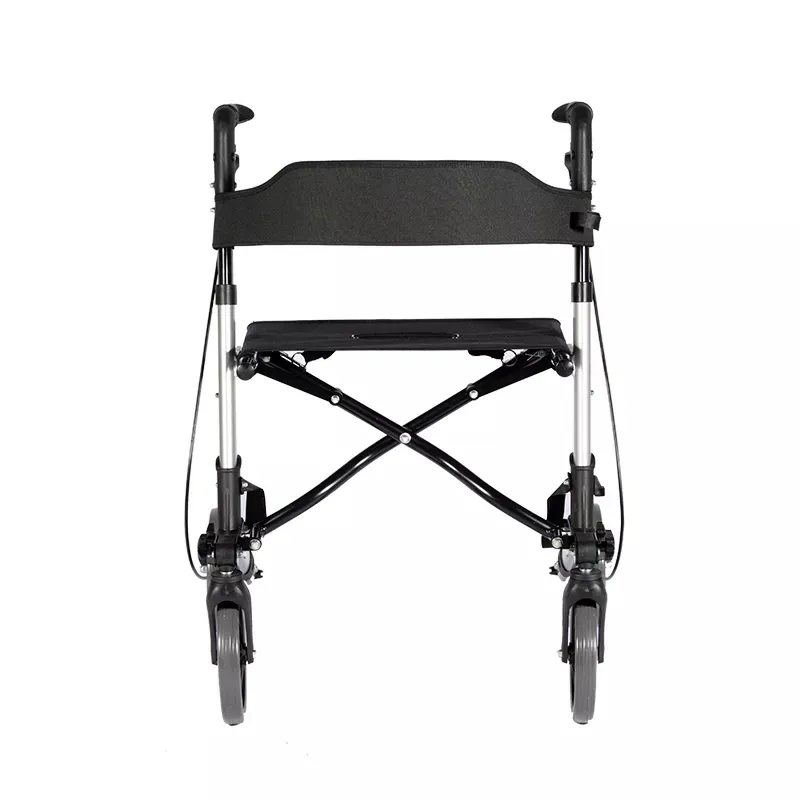
Why does a 4-wheeled walking aid make walking less strenuous?
When using a wheelless walking aid, the upper limbs need to perform the following actions:
• Lifting the device
• Controlling the landing point
• Stabilizing support before taking a step
These actions may not be noticeable in the short term, but fatigue accumulates rapidly as walking distance increases.
The 4-wheeled walking aid, through its wheel structure, transforms the strenuous action of "lifting" into "pushing," significantly reducing the burden on the upper limbs and making overall walking more effortless.
How do 4-wheeled walking aids improve walking continuity?
Walking continuity is a crucial indicator of the comfort of assistive devices.
When using a 4-wheeled walking aid, the walking pattern is typically:
• Propelling the vehicle forward
• Continuous strides with both legs
• Maintaining a forward momentum.
This continuous movement makes the gait smoother and reduces the discomfort caused by frequent stops.
Are 4-wheeled walking aids significantly more advantageous for long-distance walking?
The answer is yes.
During long-distance walking, if you need to constantly lift the walking aid:
• Energy consumption increases significantly
• Walking efficiency decreases
• Users tire more easily.
The ability to continuously push the 4-wheeled walking aid makes it more suitable for outdoor environments and longer distances, which is one of its most prominent advantages.
Why are 4-wheeled walking aids more suitable for outdoor use?
Outdoor environments often have the following characteristics:
• Longer walking distances
• More varied road surfaces
• Faster walking pace
In such environments, the flexibility and continuity of a 4-wheeled walking aid are further amplified, making walking more comfortable.
Can a 4-wheeled walking aid help maintain a more natural gait?
Compared to walking aids that require "lift-release-walk," a 4-wheeled walking aid allows users to:
• Take continuous steps
• Maintain a relatively stable stride frequency
• Reduce gait interruptions
From a movement pattern perspective, a 4-wheeled walking aid is closer to natural walking, so many people find it "smoother to walk on."
Is the stability of a 4-wheeled walking aid sufficient?
This is one of the most important questions many people have when choosing a 4-wheeled walking aid.
Structurally:
• Wheelless walking aids provide static stability
• 4-wheeled walking aids provide dynamic stability
That is, during continuous walking, a 4-wheeled walking aid, through its four-point support and rolling structure, can maintain balance while moving.
For those who don't require full load-bearing support, this stability is sufficient and effective.
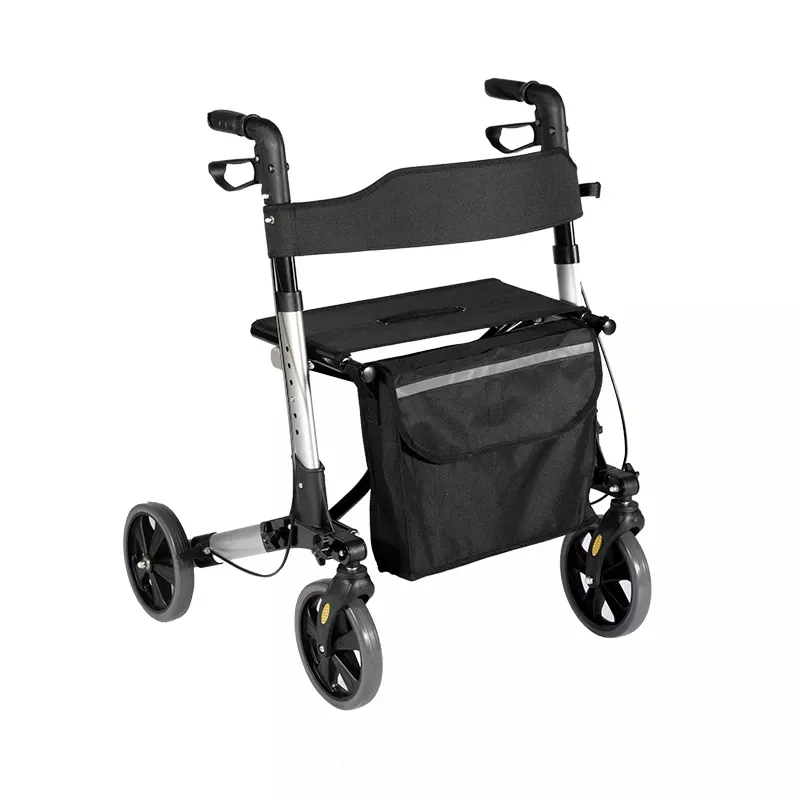
What are the disadvantages of a 4-wheeled walking bike?
No assistive device can be perfect in every way, and a 4-wheeled walking bike is no exception.
Its main disadvantages are concentrated in the following aspects.
Why is the support of a 4-wheeled walking bike not as good as a wheelless walking bike?
Because a 4-wheeled walking bike can roll, its bottom is not completely fixed to the ground.
This means:
• Less rigid support when stationary compared to a wheelless walking bike
• Requires relatively higher balance ability
Therefore, for those who need strong load-bearing support, a wheelless walking bike may still be a more reliable choice.
Does a 4-wheeled walking bike depend more on ground conditions?
Yes.
Because a 4-wheeled walking bike relies on wheels for movement, its effectiveness is affected by ground conditions:
• Smoother use on flat ground
• Uneven surfaces may affect rolling stability
In contrast, a wheelless walking bike may be easier to maintain stationary stability on extremely uneven ground.
Do 4-wheeled walking bikes require better handling?
Compared to wheelless walking bikes, 4-wheeled walking bikes require:
• Speed control
• Stability maintenance
• Coordination for turning
Therefore, users need basic handling and reaction skills to use 4-wheeled walking bikes safely and effectively.
Are 4-wheeled walking bikes agile in confined spaces?
In narrow environments, such as narrow indoor passageways:
• The turning radius of a 4-wheeled walking bike may be larger
• Operating space is relatively limited
This is one reason why 4-wheeled walking bikes are less agile than wheelless walking bikes in some indoor environments.
Are 4-wheeled walking bikes suitable for everyone?
The answer is no.
4-wheeled walking bikes are more suitable for:
• Those who can still walk independently
• Those who need extra stability and less effort
• Those who want a more natural walking experience
• Those who need outdoor activities
For those who require high load-bearing support and have very limited balance, wheelless walking bikes may be more suitable.
How to objectively view the advantages and disadvantages of four-wheeled walking aids?
Evaluating four-wheeled walking aids cannot be based on just one dimension.
They are assistive walking tools that strike a balance between stability and flexibility.
Advantages include:
• Less effort required for walking
• More natural gait
• Better suited for long distances and outdoor activities
Disadvantages include:
• Less static support than wheelless walking aids
• Requires a certain level of dexterity
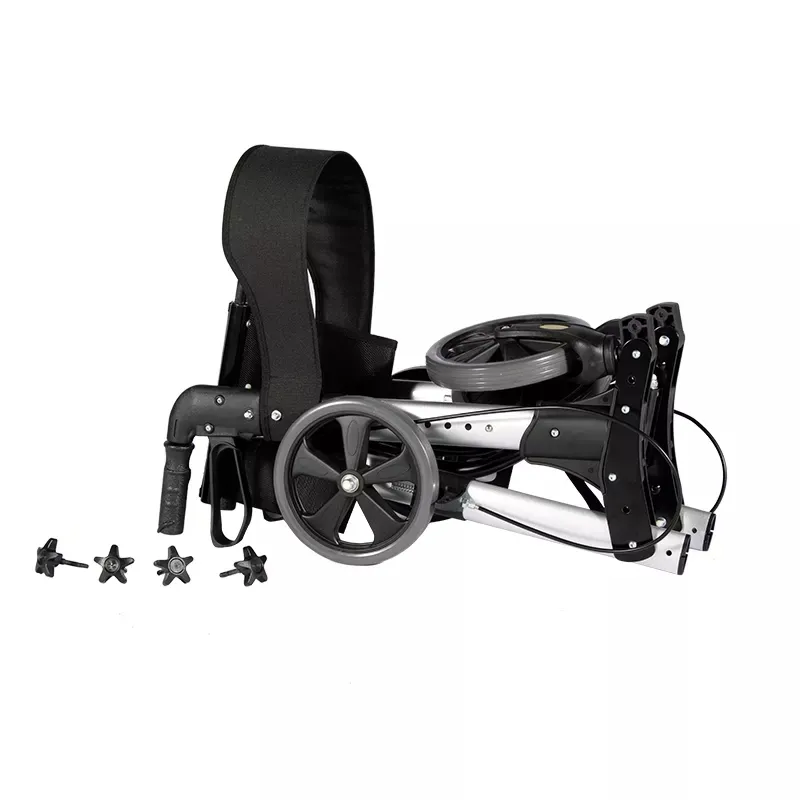
Why can't we simply say that four-wheeled walking aids are "better" or "worse"?
Whether an assistive device is suitable depends on:
• The user's physical abilities
• The walking environment
• The walking distance
• The user's comfort needs
Under suitable conditions, four-wheeled walking aids can offer significant advantages; under unsuitable conditions, their disadvantages will be magnified.
How does Dahao Medical ensure product quality?
Quality is the foundation of Dahao Medical’s manufacturing process. As a certified factory in China, we strictly follow ISO13485:2016 standards and comply with CE, FDA, TUV, and BV requirements. Every product undergoes multiple inspections during production to guarantee high quality performance and safety. Our experienced engineering team continuously improves designs and materials to meet international expectations.