

Walking aids are essential assistive devices for many elderly people, post-operative recoveries, or those with unsteady gait. The most common types can be divided into wheeled walking aids and wheelless walking aids (also known as "standard walking aids"). While they look similar, their functions, target users, walking methods, and safety requirements differ significantly.
Therefore, understanding the differences between wheeled and wheelless walking aids is crucial for improving safety, reducing the risk of falls, and increasing the user's walking efficiency.
This article will systematically analyze whether wheeled or wheelless walking aids are better, and help you make a scientific choice based on factors such as the user's physical condition and balance ability.
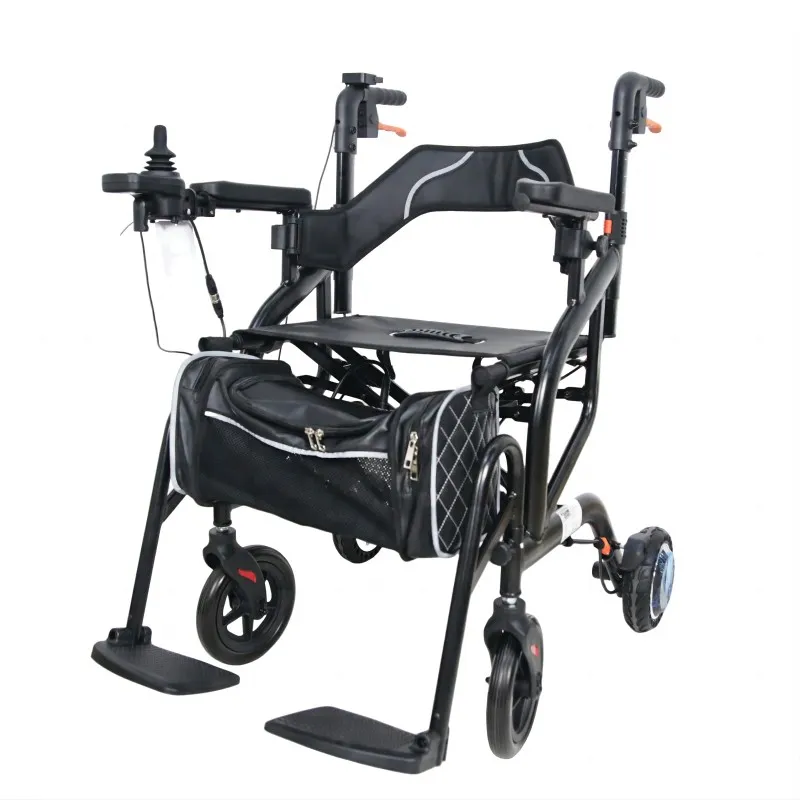
What are the fundamental differences between wheeled and wheelless walking aids?
The biggest difference between wheeled and wheelless walking aids lies in whether they rely on wheels for propulsion.
1. Wheelless Walking Aid (Standard Walking Aid)
• No wheels on any of the four legs
• Requires lifting or forward/backward movement
• Extremely high stability
• Slow walking speed
• Suitable for users with severe balance instability, weakness, or recent surgery
• Requires significant arm strength for support
2. Wheeled Walking Aid
• Two or four wheels on the front
• Does not require full lifting
• Smoother walking
• Stability varies depending on the type
• Suitable for mild to moderate mobility impairments
Some can be equipped with seats, shopping baskets, and braking systems
Whether choosing a wheeled or wheelless walking aid, ensure it meets the user's safety needs, rather than simply choosing a "lighter" or "easier to push" model.
In which situations is a wheelless walking aid better? Why is it more stable?
Many users will first ask: Is a wheelless walking aid more stable than a wheeled walking aid?
The answer is very clear: Yes, wheelless walking aids are significantly more stable.
The reasons why wheelless walking aids are more stable include:
1. No wheels, therefore no accidental rolling.
2. Gait is completely controlled by the user, with low risk.
3. Theoretically, it's impossible to "rush" forward.
4. Suitable for very weak people who rely on support to stand.
5. Suitable for people who have just undergone surgery and need to strictly limit their stride length.
Therefore, the following groups are generally advised to use wheelless walking aids instead of wheeled walking aids:
• People who have just undergone hip or knee replacement surgery.
• People with extremely poor balance and instability while standing.
• People with weak hand and foot strength who cannot control the direction of rolling.
• People with severe cognitive impairment who have difficulty understanding braking and operation.
• People with severe Parkinson's tremor who may suddenly freeze their gait.
• Rehabilitation patients who are explicitly advised by their doctors to use wheelless walking aids.
Wheelless walking aids are characterized by "slowness" and "stability," and this "slowness" is crucial for safety for some patients.
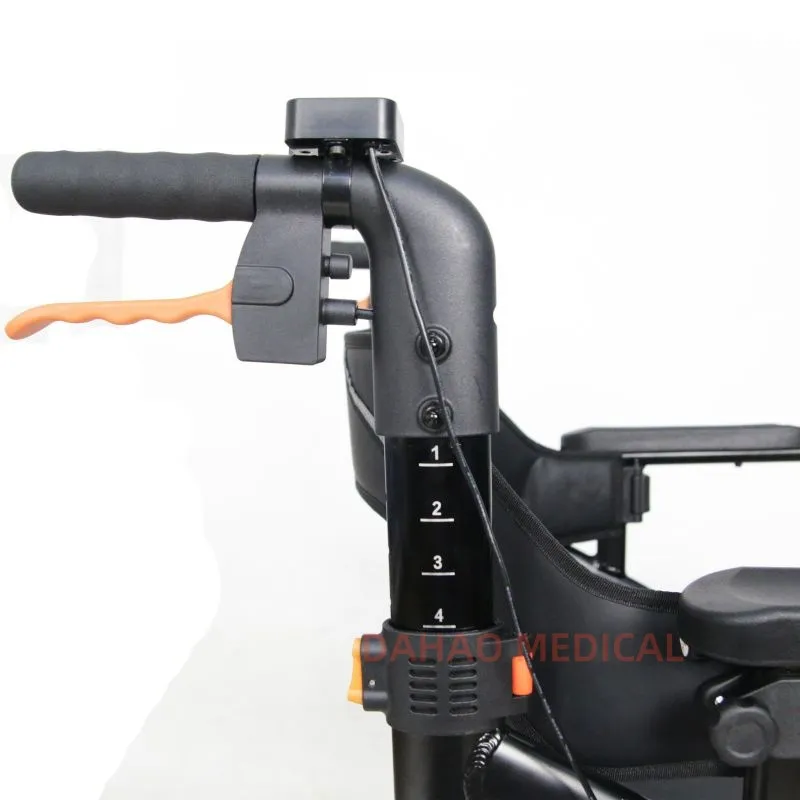
Are wheeled walking aids more suitable for daily life? Why are they more flexible?
For many users who can still maintain basic balance, wheeled walking aids are lighter and more suitable for their daily lives.
The main advantages of wheeled walking aids include:
1. Smooth walking, no need to lift the aid with each step
2. Saves energy, suitable for those who need to walk long distances
3. Many wheeled walking aids are foldable and easy to carry
4. Four-wheeled walking aids are equipped with brakes for added safety
5. Often have a seat, allowing for rest at any time
6. Includes everyday functions such as shopping bags and tables
Therefore, wheeled walking aids are more suitable for the following groups:
• Elderly people with relatively good muscle strength but unstable gait
• People with chronic diseases leading to insufficient endurance
• People who need to go out for walks or shopping
• People who need slight support while walking but do not need complete stability
• Elderly people who have used walking aids long-term and want to improve their daily convenience
Wheeled walking aids make movement more natural and closer to a natural gait, therefore they are very common among people with mild to moderate instability.
Are wheeled walking aids more dangerous? What situations increase the risk of falls?
This is a frequently asked question: Are wheeled walking aids more likely to slip and roll off, leading to falls?
The answer is: possibly, but it depends on the user's ability and the type of walking aid.
Potential risks of wheeled walking aids, especially four-wheeled walking aids, include:
• Slow user reaction time and delayed braking
• Difficulty controlling speed uphill or downhill
• Leaning forward can cause the walking aid to accelerate suddenly
• Slippery surfaces or carpet edges can cause the wheels to suddenly get stuck
• Insufficient hand strength to grip the brakes
Therefore, if the user cannot control the rolling speed, wheelless walking aids are safer.
What are the advantages of wheeled walking aids? What are the advantages of wheelless walking aids?
To help readers understand systematically, we compare the two types of walking aids from multiple perspectives:
1. Stability Comparison
• Wheelless Walking Aid: ★★★★★ (Most Stable)
• Wheeled Walking Aid: ★★★☆☆—★★★★☆ (depending on the number of wheels)
2. Difficulty of Operation Comparison
• Wheelless Walking Aid: Simple, no brakes required
• Wheeled Walking Aid: Requires learning pushing and braking techniques
3. Strength Requirements
• Wheelless Walking Aid: Requires lifting the arms, putting a heavy burden on the arms
• Wheeled Walking Aid: No need to lift the arms, reducing physical exertion
4. Convenience of Daily Use
• Wheeled Walking Aid is significantly more convenient
5. Outdoor Adaptability
• Wheeled Walking Aid is far superior
6. Rehabilitation Requirements
• Doctors prefer to use wheelless walking aids for patients in the early postoperative period
• Transition to wheeled walking aids after stabilization
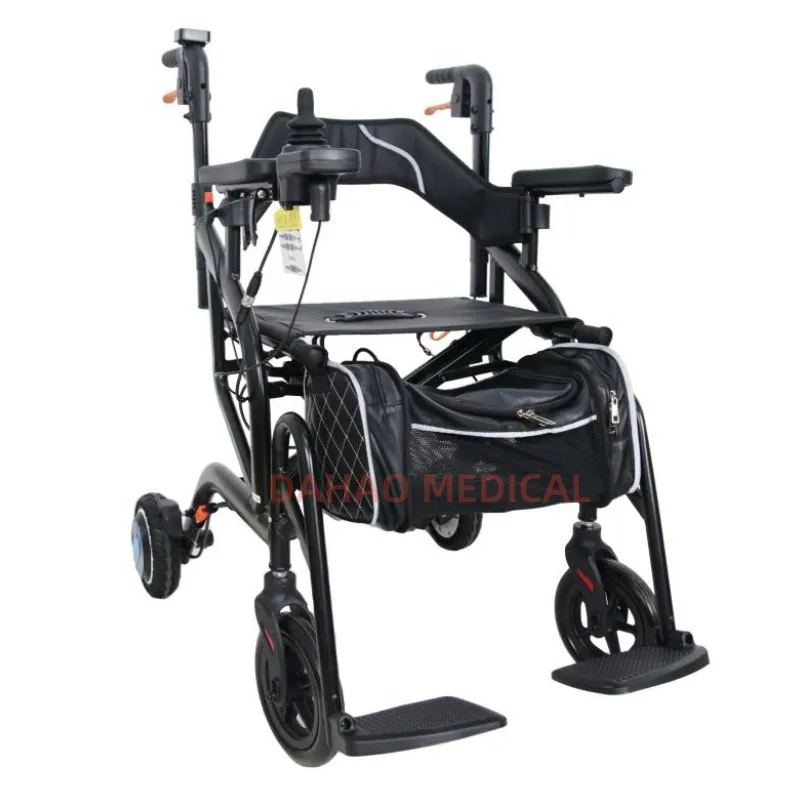
Are wheeled walking aids always better than wheelless walking aids?
Who is not suitable for using wheeled walking aids?
People unsuitable for wheeled walking aids include:
• Extremely frail individuals
• Individuals who are unsteady on their feet and prone to falling forward
• Individuals unable to control their speed
• Individuals unable to understand braking or operation
• Impulsive individuals or those with severe cognitive impairment
• Post-operative patients who require strict control over their stride length and speed
For these individuals, wheeled walking aids are not only ineffective but may even be unsafe.
The more unstable a person is, the more they should use a wheelless walking aid.
Which is more suitable for older adults: wheeled or wheelless walking aids?
The answer is not absolute; it depends on the individual's physical capabilities.
Suitable for seniors without wheeled walking aids:
• Weak legs
• Prone to falls
• Extremely poor balance
• Unable to stand even in windy conditions
• Prone to leaning forward
• Arm strength sufficient to lift the walking aid
Suitable for seniors with wheeled walking aids:
• Unstable gait requiring support
• Need to go out for walks or shopping
• Weak arm strength, unwilling to lift the walking aid
• Can understand braking operation
• Desire a more natural and smoother gait
How to choose between wheeled and wheelless walking aids for different scenarios?
In confined indoor spaces:
• Wheelless walkers are more stable but bulkier.
• Wheeled walkers, if too large, may be difficult to turn.
→ Choose according to room size.
Outdoor walking:
• Wheeled walkers are significantly more practical.
• Wheels can traverse uneven surfaces.
Hospital rehabilitation training:
• Wheelless walkers are commonly used.
• Better stride control and stability.
Shopping, walking, and outings:
• Wheeled walkers are more suitable.
• Can be equipped with seats, baskets, and braking systems.
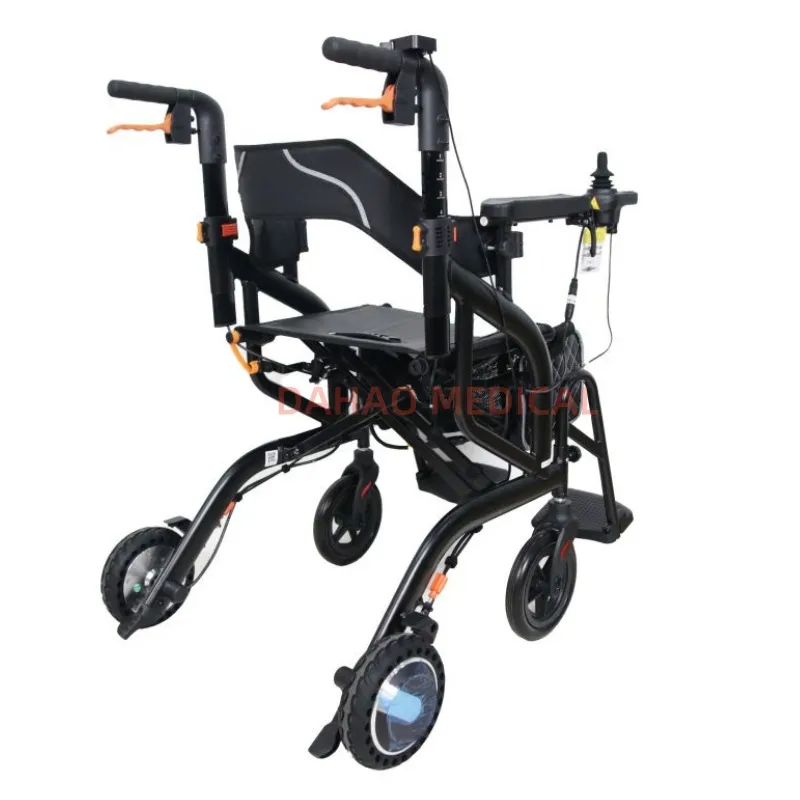
Which is safer, a wheeled walker or a wheelless walker?
There is no absolute safety.
The safest approach is: user ability + matching the correct type of equipment.
If the user is too weak, a wheeled walker is unsafe; if the user is too weak to lift a wheelless walker, then a wheelless walker is unsafe.
Safety comes from:
• Correct selection
• Correct use
• Ability matching
• Suitable ground conditions
Therefore, the choice should be based on assessment, not preference.
What products can customers buy from Dahao Medical?
At Dahao Medical, customers can buy a wide range of medical mobility and care equipment, including electric wheelchairs, hospital care beds, home care beds, rollator walkers, transfer chairs, and electric patient lifters. As a leading manufacturer in China, we focus on delivering high quality products designed for comfort, durability, and safety. Our factory supports bulk wholesale purchasing as well as customized designs for different markets.