

For many people with mobility difficulties, wheelchairs have long been considered the primary means of assistive mobility. However, with the diversification of assistive mobile devices, some users inevitably ask, "What could be better than a wheelchair?" The answer to this question is not singular, as everyone's physical condition, activity level, usage scenario, and level of self-care are different.
Among the available assistive mobility tools, four-wheeled walking aids are a device that is gaining increasing attention. Compared to traditional wheelchairs, four-wheeled walking aids have unique advantages in terms of portability, flexibility, and walking assistance functions.
For those who still have some ability to walk but require stable support, it is a very worthwhile alternative.
This article will take a professional perspective to comprehensively analyze whether there are tools more suitable than wheelchairs for some users, focusing on four-wheeled walking aids.
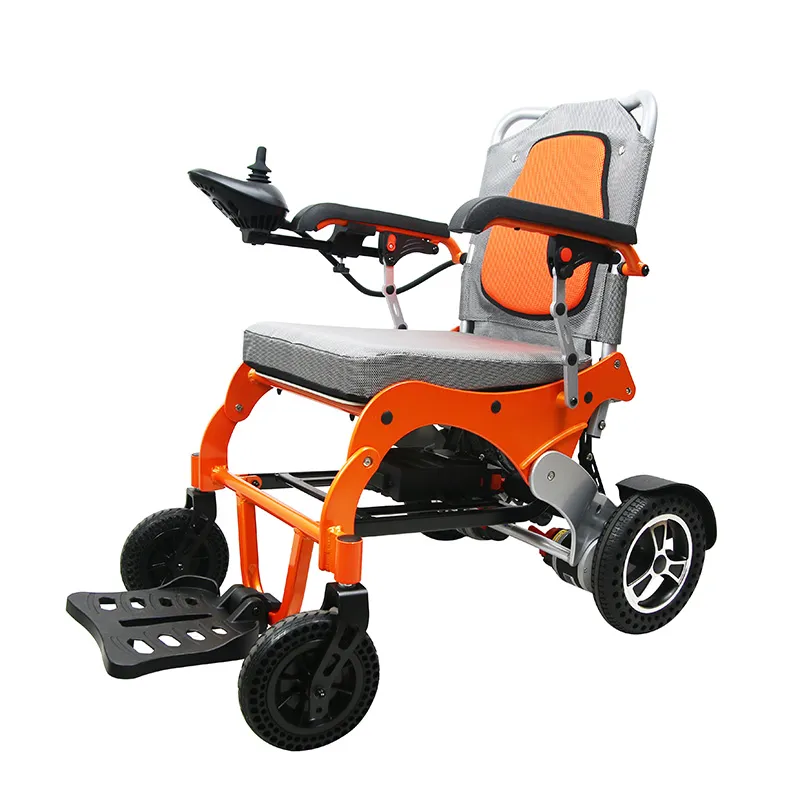
Why would someone look for a better option than a wheelchair?
The main function of a wheelchair is to help users achieve basic mobility when they are unable to stand or walk independently. However, not everyone has completely lost the ability to walk. For some individuals:
• They can walk short distances but not for extended periods.
• They need support while walking but don't need to rely entirely on a wheelchair.
• They want to maintain mobility in their lower limbs to sustain muscle activity.
• They want more flexible and lightweight assistive devices.
• They don't want to be passively confined to a wheelchair.
• They want greater mobility in narrow passages or crowded areas.
For these users, a wheelchair may not be the optimal choice.
So, what tool is more suitable for them than a traditional wheelchair?
The answer often points to a tool that assists walking while providing stable support—a four-wheeled walking aid.
Why is a four-wheeled walking aid considered a better option than a wheelchair?
The structure and function of a four-wheeled walking aid make it more suitable than a wheelchair for a segment of users who are capable of walking.
The core value of a four-wheeled walking aid lies in: Extending the user's "walking ability" as much as possible while ensuring safe support.
Four-wheeled walking aids are suitable for the following users:
• People who can walk but have an unsteady gait
• People who tire easily after walking for long periods
• People who want to maintain their active mobility
• People who want to reduce their dependence on caregivers
• People who need to be able to sit and walk when out and about
When a person can still walk but is unsteady, a four-wheeled walking aid helps them walk more safely and further, while maintaining physical function, compared to using a wheelchair directly.
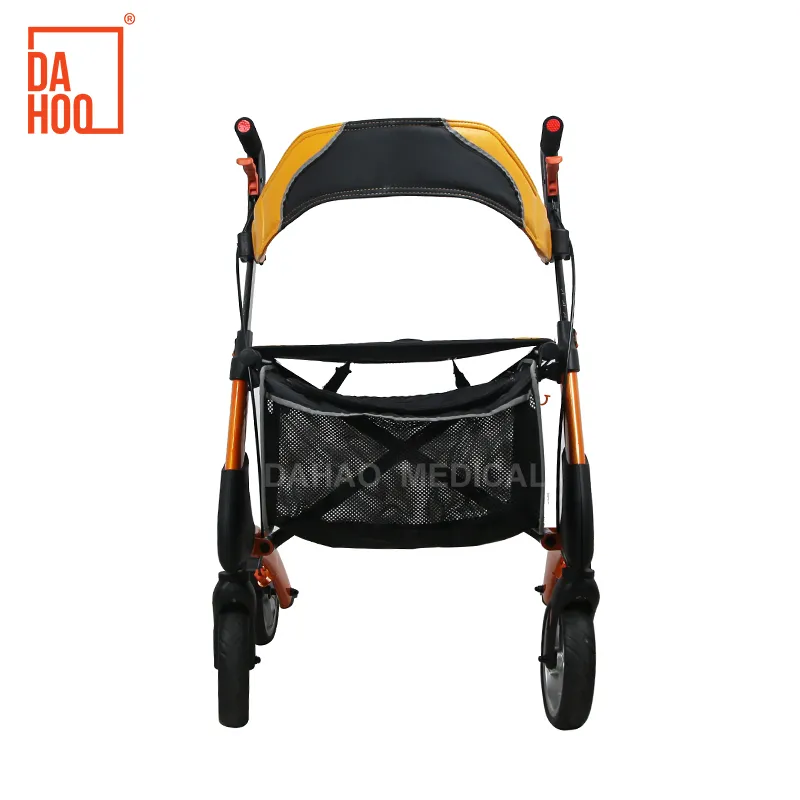
Are four-wheeled walking aids lighter than wheelchairs?
1. Why is portability important for users?
Lighter devices offer advantages including:
• Easier to push
• Easier to fold
• Easier to pack in a vehicle
• Less space required for home use
• Easier to store
Compared to wheelchairs, especially electric wheelchairs, four-wheeled walking aids have a significant advantage in portability.
2. In what ways do four-wheeled walking aids offer a weight advantage?
• Typically weighs between 6 and 10 kg
• Aluminum alloy construction makes it easier to carry
• Most models feature quick-folding functionality
• Convenient for users or their families to move easily
Wheelchairs are generally heavier:
• Manual wheelchairs typically weigh 12–20 kg
• Electric wheelchairs typically weigh 20–50 kg
Therefore, from a portability perspective, many people would consider 4-wheeled walking aids "better" than wheelchairs.
Can 4-wheeled walking aids be used both indoors and outdoors?
1. Why are many wheelchairs limited in certain situations?
Due to their larger size, larger turning radius, and fixed seat width, wheelchairs make the following situations difficult:
• Narrow corridors
• Small elevators
• Rooms with little corner space
• Complex crowd environments
• Small shops or passageways
Wheelchair users need to be extra careful in these situations, and sometimes they may even be unable to pass through.
2. Why are 4-wheeled walking aids more flexible?
• Narrower profile
• Smaller size
• Lightweight and flexible wheels
• Convenient hand brake
• More natural pushing experience
In many indoor spaces, 4-wheeled walking aids are easier to maneuver than wheelchairs.
Especially in crowded, traffic-heavy, and frequently turning environments, users can move more freely.
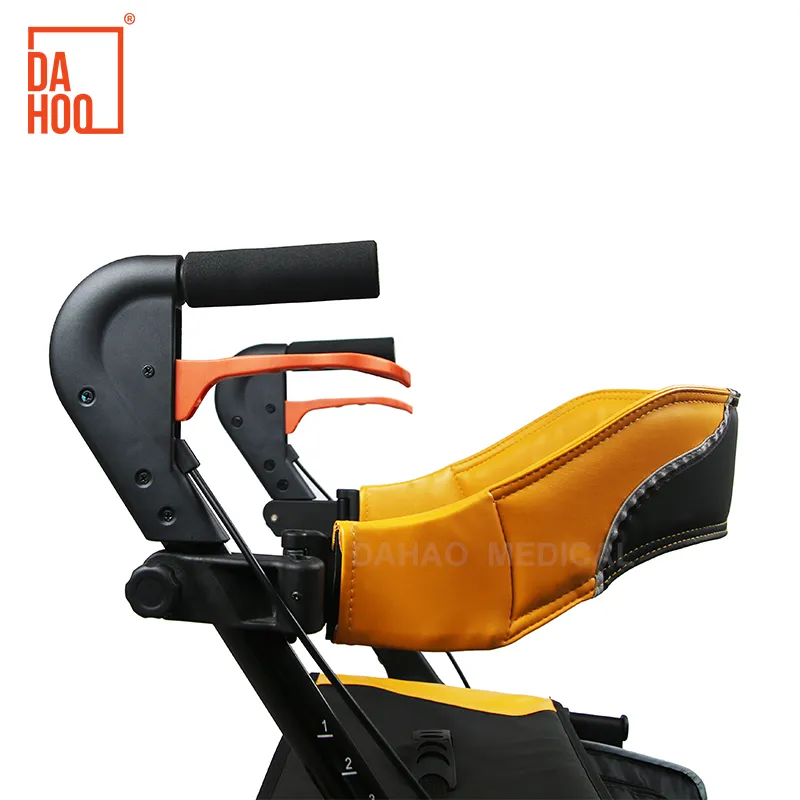
Does a 4-wheeled walking aid help users maintain their ability to walk?
This is one of the core and most important advantages of 4-wheeled walking aids.
1. Why is maintaining mobility so important for the body?
While we won't discuss the future or medical trends, we can simply summarize: The ability to walk deteriorates rapidly if not used.
Any assistive device that helps users maintain independent walking is a positive feedback loop for the body.
2. How does a 4-wheeled walking aid help maintain mobility?
• Provides stable support while walking
• Reduces stress on the knees and hips
• Allows users to take steps more safely
• Avoids the risk of falls due to instability
• Allows users to sit down and rest at any time
Unlike wheelchairs, 4-wheeled walking aids don't allow you to "move while sitting," but rather to "walk while holding on."
For people with some mobility, this method is more beneficial for maintaining physical function than being confined to a wheelchair for extended periods.
Therefore, provided their physical condition allows, many people believe that 4-wheeled walking aids are better than wheelchairs.
Are 4-wheeled walking aids more portable than wheelchairs?
1. Are 4-wheeled walking aids suitable for use in cars and for travel?
Four-wheeled walking vehicles excel in portability due to their lightweight design and easy folding:
• Easily fits in the trunk of a car
• Compact size when folded
• Easy to carry
• Easy for family members to move.
Wheelchairs, especially electric wheelchairs, are significantly inferior to four-wheeled walking vehicles in the following ways:
• Heavier
• More complex or impossible folding mechanism
• Difficult to load into a vehicle
• Takes up more storage space.
For people who need to travel frequently, portability will lead many to choose four-wheeled walking vehicles over wheelchairs.
Are four-wheeled walking vehicles easier to operate than wheelchairs?
For some users, operating wheelchairs, especially electric wheelchairs, requires a learning curve:
• Requires mastering joystick controls
• Requires adjusting movements according to speed settings
• Requires familiarity with the braking system
In contrast, operating a four-wheeled walking vehicle is more natural:
• Like pushing a shopping cart
• Simply push it steadily
• Complete control is achieved by mastering the handbrake
• Turning is easy
• Speed is determined by the user's pace
Therefore, for the elderly or those with limited physical strength, four-wheeled walking vehicles are often easier to use than wheelchairs.
Are four-wheeled walking vehicles safer?
1. How do four-wheeled walking vehicles improve stability?
• Four wheels provide balanced support
• The handbrake allows for immediate stopping control
• Users can immediately grasp the handles when standing
• More stable during walking
• Easier to adjust direction when encountering obstacles
While wheelchairs offer stability when seated, the risks are actually higher when standing or changing positions.
For example:
• Transferring from a wheelchair to a bed
• Standing up from a wheelchair
• Difficulty pushing on a ramp
When using a 4-wheeled walker, the user remains standing, reducing the risk of instability during transfers.
Therefore, assuming the user can walk, a 4-wheeled walker offers a greater sense of security than a wheelchair in certain scenarios.
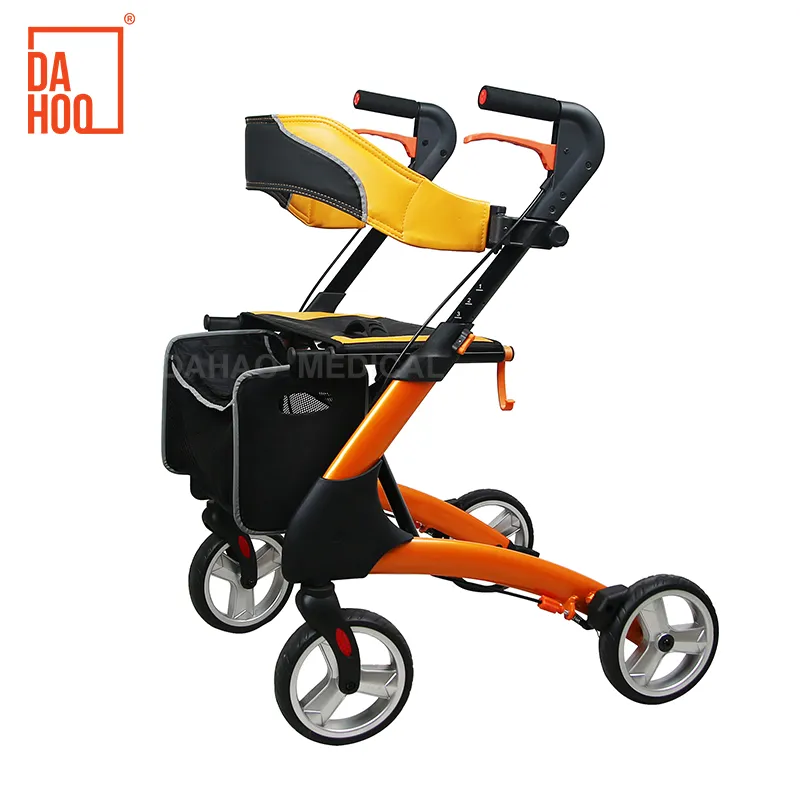
Does a 4-wheeled walker reduce the burden on family members?
For many families, caregivers spend a significant amount of time pushing wheelchairs and assisting with movement.
However, when using a 4-wheeled walker:
• The user can move independently
• No need for family members to push
• Family members do not need to carry heavy equipment
• Easier to go out
• Greater freedom of movement indoors
This is a very important advantage of 4-wheeled walkers compared to wheelchairs.
Many users have significantly reduced their dependence on family members after switching to a 4-wheeled walker.
So, is a 4-wheeled walker suitable for everyone?
Of course not.
We are discussing "when it is better than a wheelchair," not completely replacing a wheelchair.
People unsuitable for using 4-wheeled walking aids include:
• Those unable to stand
• Those unable to walk independently
• Those with severely impaired balance
• Those with central nervous system disorders resulting in loss of gait control
• Those requiring full-time sitting support
For these users, wheelchairs remain a safer and necessary option.
What could be better than a wheelchair?
The answer varies from person to person, but 4-wheeled walking aids are indeed an important option.
When discussing "what could be better than a wheelchair," we must clarify a core point: There is no tool that is "better" for everyone, only tools that are "more suitable" for some.
For those who can still walk but have difficulty walking for extended periods, 4-wheeled walking aids offer several advantages:
• Lighter
• More flexible
• More portable
• Better suited for both indoor and outdoor use
• Maintains walking ability
• Allows users to move independently
• Reduces the burden of care for family members
Therefore, in specific scenarios and for specific groups of people, 4-wheeled walking aids are indeed more suitable, more convenient, and better at improving quality of life than wheelchairs.
Why choose Dahao Medical as your supplier?
Choosing Dahao Medical means working with a reliable manufacturer that combines innovation, scale, and strict quality control. Our factory in China spans over 80,000 square meters and is equipped with 195 advanced machines, ensuring efficient production and high quality output. With certifications like ISO13485, CE, FDA, TUV, and BV, our products meet global standards.
We support OEM and ODM services, making us an ideal supplier for brands and distributors seeking customized solutions.