

Electric mobility wheelchairs play an increasingly vital role among mobility aids, enabling users to move effortlessly both indoors and outdoors while minimizing physical exertion. However, no matter how advanced a battery's performance may be, one situation remains unavoidable: the power wheelchair suddenly running out of power.
When an electric wheelchair loses power, both the user and their caregiver often feel confused—unsure of how to properly push the device. This confusion can lead to operational errors, potentially resulting in equipment damage or making the act of pushing extremely difficult.
This article will delve deeply into the core question: "How do you properly push an electric wheels chair once the battery has died?" We will provide standardized, actionable guidance that strictly adheres to safety principles.
Furthermore, we will break down the specific structural components of an electric wheels chair, outline key precautions for pushing, and address common misconceptions, ensuring you can handle any power outage situation with confidence and composure.

What Structural Components Must You Understand Before Pushing an Electric Wheelchair?
To push a power wheelchair safely and with ease, you must first familiarize yourself with its basic structural components; this knowledge is essential for performing the correct procedures when a power outage occurs.
1. The Motor System
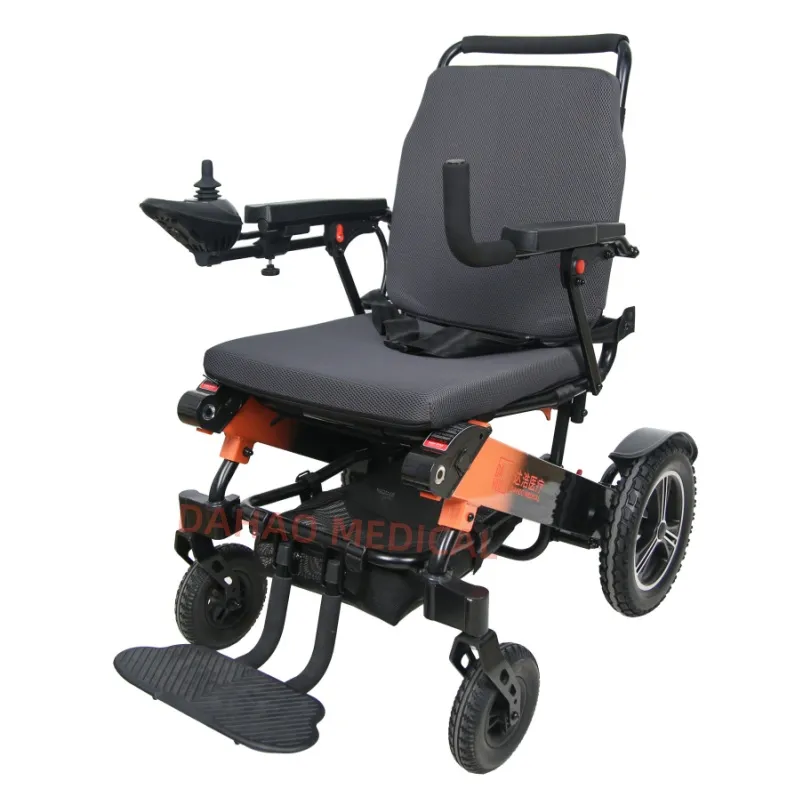
Electric mobility wheelchairs rely on a dual-motor system to drive the rear wheels. Typically, each motor assembly includes:
•An electronic braking system (electromagnetic brakes)
•A motor gearbox
•A manual release mechanism (commonly referred to as a "clutch" or "unlock lever")
If the electromagnetic brakes are not disengaged when the power runs out, the rear wheels of the electric wheels chair will remain locked and unable to rotate.
2. The Control System
The controller is responsible for managing:
•Acceleration and deceleration
•Steering
•Power output
When a power wheelchair loses power, the control system becomes inoperable; however, this system has little direct bearing on the physical act of pushing the chair itself.
3. The Electronic Braking System (Electromagnetic Brakes)
This is one of the most critical components to consider when preparing to push the chair.
Failure to disengage the electronic brakes → The rear wheels remain completely locked → It becomes impossible to push the electric wheels chair.
4. Pushing Points and Force Application Zones
Electric mobility wheelchairs typically feature the following areas for manual propulsion:
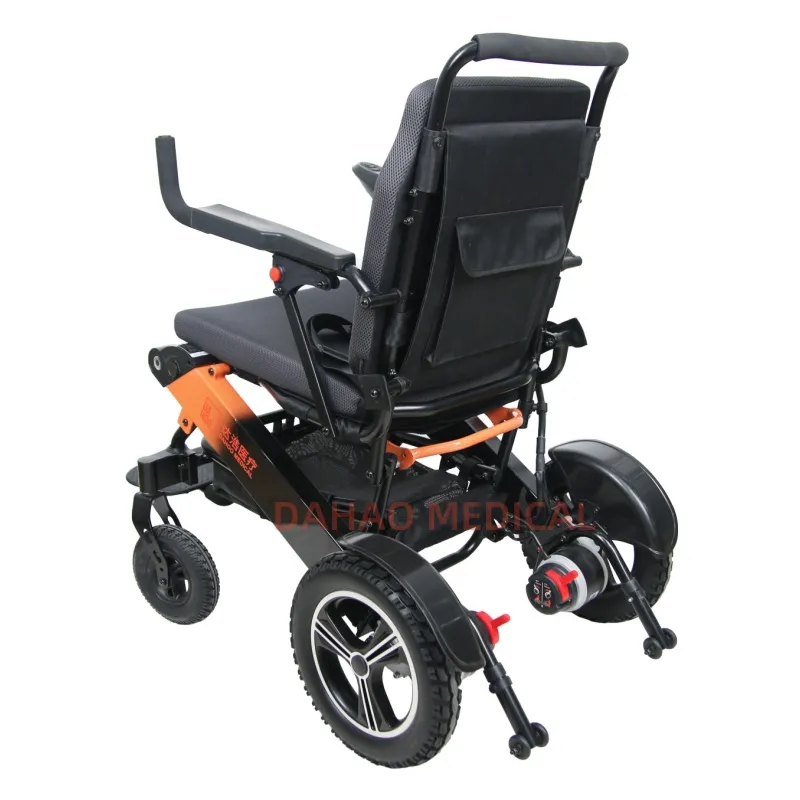
•Push handles (located at the top of the backrest)
•The structural frame located behind the seat cushion
•Designated "safe zones" on the sides of the main chassis frame
To push the chair correctly and safely, force must be applied only at these designated points to avoid damaging the controller, backrest, or armrests.
Why won't an electric wheelchair move when the power runs out? Which mechanisms must be unlocked?
Reason: The electromagnetic brake is in the "locked" state by default.
The electromagnetic brake on an electric wheels chair serves as a safety mechanism: whenever the system loses power, it automatically locks the rear wheels to prevent them from sliding.
Therefore, "no power" does *not* equal "free movement"; instead, "no power" means the rear wheels are completely locked.
The Mechanism You Must Operate: The Manual Clutch / Manual Release Lever
Most electric mobility wheelchairs are equipped with one of the following mechanisms located near the rear wheels:
•A clutch lever
•A release switch
•A manual power-disconnect lever
•A "push mode" switch
Simply switching the device from "Electric Mode" to "Manual Mode" will disengage the electromagnetic brake, allowing the wheelchair to be pushed normally.

What are the correct steps for pushing a power wheelchair when the power runs out?
The following steps outline a safe, universal, and logical procedure for pushing an electric wheels chair, applicable to most models.
Step One: Ensure the Power is OFF
Even if the electric wheelchair has already run out of battery power, you should still ensure that:
•The controller is turned off.
•The main power switch is turned off.
This prevents accidental power restoration or unintended operations caused by accidental contact.
Step Two: Locate the "Clutch Release Mechanism" on Both Sides of the Motors
These mechanisms are typically located:
•On the inner side of the rear wheels
•Between the motor unit and the wheel itself
•As a yellow, red, or metal lever/toggle
The labels on the mechanism may read:
•Freewheel / Locked
•Manual / Electric
•Push / Drive
Once you have located them, you can proceed to the next step.
Step Three: Switch the Clutch from "Electric Mode" to "Manual Mode"
This is the most critical step in the entire process.
The specific action required usually involves:
•Pushing it upward
•Pulling it downward
•Pulling it outward
•Pressing it inward
While the exact method may vary slightly between different brands, the objective remains the same: to disengage the electromagnetic brake. Once successfully unlocked, the rear wheels should be able to rotate freely.
Step Four: Both Motors Must Be Unlocked Simultaneously
If only one side is unlocked:
•One rear wheel will slide freely.
•The other rear wheel will remain completely locked.
•Pushing the wheelchair will be extremely difficult.
•This may result in a loss of directional control.
Therefore, you must ensure that both the left and right sides are set to "Manual Push Mode."
Step Five: Confirm the Rear Wheels Are in Free-Rolling Mode
Manually spin the rear wheels and observe:
•They rotate freely → The clutch has been successfully disengaged.
•They remain locked/stuck → Continue adjusting the clutch levers.
You must confirm that both wheels are spinning smoothly before attempting to push the wheelchair.
Step Six: Push from Behind and Control Direction
Electric mobility wheelchairs are designed to be pushed by a single person. The proper pushing technique is as follows:
•Grasp the push handles located behind the backrest with both hands.
•Stand directly behind the wheelchair.
•Push forward using a natural walking gait.
•Maintain control over both direction and speed.
•Avoid sudden, forceful pushes or abrupt stops.
This technique protects the wheelchair's components while ensuring the user maintains a stable seated position.
Step Seven: Return the Clutch to "Electric Mode" Upon Reaching Your Destination
Upon arrival, you must:
•Re-engage (lock) the clutch levers.
•Restore the normal safety mechanism of the electromagnetic brakes.
Failure to do so will prevent the electric wheels chair from driving properly the next time it is powered on.
What Safety Principles Must Be Strictly Followed When Pushing an Electric Wheelchair?
While pushing a power wheelchair when its battery is depleted is not a complex task, it is still essential to observe the following key safety precautions:
1. Do Not Push the Electric Wheels chair Off Flat, Level Surfaces
Avoid:
•Ramps or inclines
•Steps or curbs
•Soft, muddy ground
•Uneven or rough terrain
The more challenging the terrain, the greater the safety risk to both the person pushing and the user.
2. Avoid Pushing with Only One Hand
Electric mobility wheelchairs are typically much heavier than manual wheelchairs. Attempting to push with only one hand can lead to:
•Loss of control or drifting off course
•Difficulty responding to emergency situations
•Uneven application of pushing force
The person pushing must keep both hands firmly gripping the push handles at all times.
3. Never Forcefully Push the Wheelchair Without Disengaging the Clutch
Attempting to force a power wheelchair forward without disengaging the clutch can result in:
•Damage to the motors
•Damage to the gearboxes
•Excessive physical strain and danger for the person pushing
If the wheelchair cannot be moved, it is almost certainly because the clutch has not been unlocked correctly.
4. Do Not Accelerate When Moving Downhill
When moving downhill, you should:
•Reduce your speed
•Apply resistance against the wheelchair body
•Maintain control over the direction
•Avoid letting the wheelchair coast freely
A power wheelchair with its clutch disengaged can easily spiral out of control when moving down a slope.
5. The User Must Fasten Their Seatbelt (If Equipped)
During manual propulsion, vibrations and turns can cause the user's body to become unstable; therefore, the user must:
•Fasten their seatbelt.
•Keep both feet placed on the footrests.
•Maintain an upright, seated posture.
What Are Some Common Mistakes When Manually Pushing an Electric Wheelchair?
Many people make mistakes when faced with an electric wheels chair that has run out of power. The following misconceptions and errors must be avoided:
Mistake 1: Assuming You Can Push It Immediately Just Because the Power Is Out
Incorrect.
When the power runs out, the electromagnetic brakes automatically lock the rear wheels; they must be manually disengaged.
Mistake 2: Disengaging the Clutch on Only One Side
Disengaging only one side will result in:
•The electric wheels chair spinning in circles.
•A complete loss of directional control.
•Extremely strenuous effort required to push.
You must disengage the clutches on both sides simultaneously.
Mistake 3: Applying Force by Pushing on the Armrests, the Center of the Backrest, or the Controller
These locations lack sufficient structural load-bearing capacity and may lead to:
•A broken controller.
•Loose armrests.
•Deformation of the seat frame.
You must apply force by pushing from the designated push handles located at the rear.
Mistake 4: Pushing Rapidly When on a Ramp or Incline
Going downhill is dangerous; you must proceed slowly and maintain full control over the direction of travel.
Mistake 5: Neglecting to Re-engage the Clutches
If you forget to re-engage the clutches, the electric wheels chair will be unable to enter drive mode and may even trigger an alarm.
If the Power Runs Out, Should the User Get Out of the Electric Wheelchair Before It Is Pushed?
This depends on the specific circumstances.
Situations Where It Is Appropriate for the User to Get Out:
•The path is too narrow to push the wheelchair through.
•It is necessary to ascend a slope or navigate over obstacles.
•The user is medically sensitive to bumps/vibrations or should not be subjected to prolonged manual pushing.
•The electric wheels chair is particularly heavy.
Situations Where It Is Not Appropriate for the User to Get Out:
•The user is unable to stand safely on their own.
•There are no suitable handrails or supports available to assist the user in standing up.
•The surrounding environment is hazardous or unstable.
•The distance to be pushed is relatively short.
Regardless of the situation, the user's safety must always be the top priority.
Is It Necessary to Prepare in Advance Before Going Out? How Can One Avoid the Embarrassment of Running Out of Power?
Although this article focuses on the correct method for manually pushing an electric wheels chair once its power has run out, preventing the power from running out in the first place remains critically important.
The following preparatory principles must be strictly followed:
✔ Check the Battery Level Before Going Out
It is not recommended to venture out if the power wheelchair's battery level is below 30%. ✔ Carry a Charger with You
Some locations provide temporary power outlets.
✔ Regularly Check the Battery
If battery life diminishes, replace it promptly.
✔ Understand the Electric Wheelchair’s Clutch and Braking Systems
Familiarizing yourself with the controls in advance helps minimize risks when manually pushing the chair.
How to Correctly Push an Electric Wheelchair When the Battery Runs Out
When an electric wheelchair runs out of power, pushing it correctly requires adherence to the following core principles:
Summary of Core Steps:
1.Turn off the power.
2.Locate the clutch release levers on both the left and right sides.
3.Switch from electric mode to manual push mode.
4.Verify that both rear wheels can roll freely.
5.Push the wheelchair slowly and safely from behind (using the push handles).
6.Once you reach your destination, switch back to electric mode.
Core Safety Principles:
•Do not force the wheelchair forward.
•Do not attempt to push with only one hand.
•Do not underestimate the risks associated with ramps or inclines.
•Do not push the wheelchair before disengaging the clutches.
•Do not apply force from an incorrect position.
By mastering the information above, you can safely and smoothly push a power wheelchair in the event of a sudden power failure, thereby avoiding potential hazards and preventing damage to the equipment.