

For many seniors, individuals undergoing rehabilitation, or users with diminished balance, choosing the right walking aid is a crucial step toward improving daily mobility. Among the common walking aids available on the market, 3-wheel walkers and 4-wheel walkers are the two types most frequently compared. So, which is the better choice—the 3-wheel or the 4-wheel walker? How should one choose the option that best aligns with the user's actual needs?
Simply put:
A 3-wheel rollator walker offers greater maneuverability but provides less stability than a 4-wheel rollator walker.
If you require more support to walk longer distances, or if you need to take short breaks while walking, a 4-wheel walker may be the more suitable choice for you.
To help you make the best decision, this article provides an in-depth comparison covering various aspects: structural design, safety, user profiles, handling experience, adaptability to different environments, and portability. We have structured this information using a series of question-based headings to ensure you can quickly and confidently make your choice.
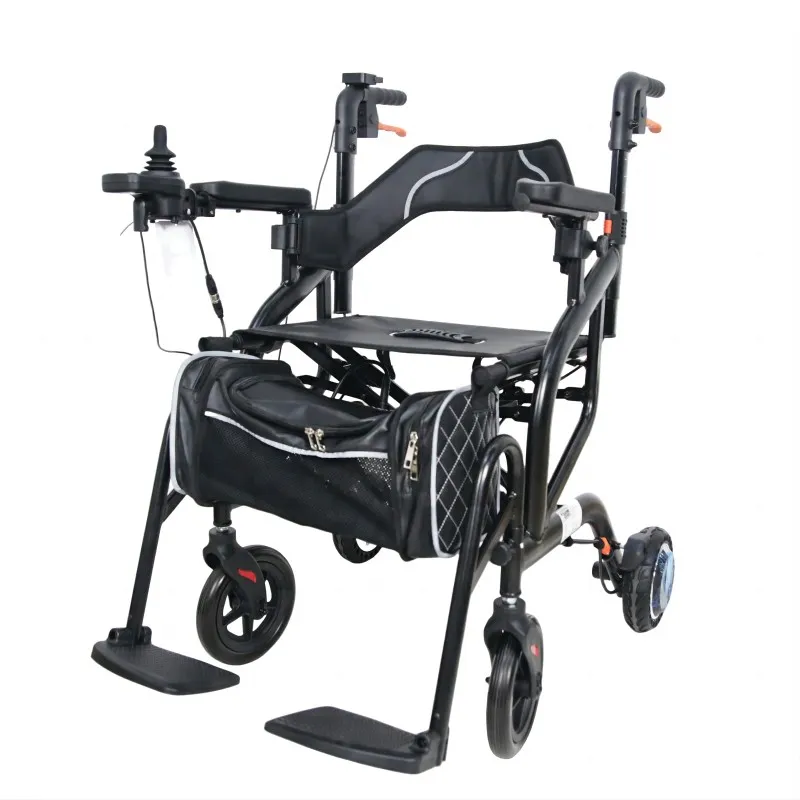
Why Are 3-Wheel and 4-Wheel Walkers So Often Compared?
Although both 3-wheel and 4-wheel walkers serve as walking aids, their underlying design philosophies differ significantly:
•3-wheel walkers prioritize agility and lightweight portability.
•4-wheel walkers prioritize stability and robust support.
While there is some functional overlap between the two, there are also distinct differences in their intended use. Consequently, when selecting a walking aid, many people find themselves asking: "Which one is truly the best fit for me or my family?"
To answer this question, we must begin by analyzing their structure and intended purpose.
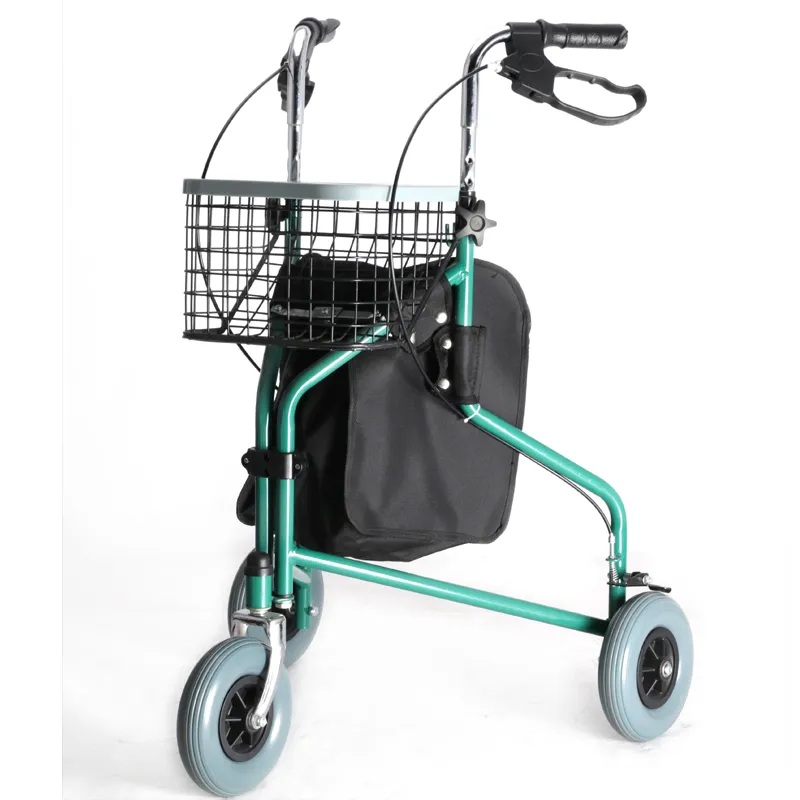
What Are the Key Characteristics of a 3-Wheel Walker's Design?
3-wheel walkers typically employ a "triangular structure," featuring:
•A single wheel at the front.
•Two wheels at the rear.
•A narrower frame.
•A lighter overall weight.
•A more compact folded size.
These design elements result in the following primary characteristics:
1. High Maneuverability and a Tight Turning Radius
The greatest advantage of a 3-wheel rollator walker is its agile handling, making it particularly well-suited for navigating narrow spaces, such as:
•Aisles between supermarket shelves.
•Home hallways.
•Small kitchens or bathrooms.
Users can navigate around obstacles with greater ease.
2. Suitable for Users with a Brisk Pace and Good Balance
Since the stability of a 3-wheel structure is generally lower than that of a 4-wheel rollator walker, it is best suited for users who:
•Prefer to move at a brisk pace
•Have a keen sense of directional control
•Require walking assistance but do not rely on extensive physical support
3. Typically Lacks a Seat; Not Suitable for Resting While Walking
Most 3-wheel rollator walkers do not feature a seat in order to maintain a lightweight profile. This implies that:
•Users cannot stop to rest whenever they wish
•Users may experience fatigue more easily during long-distance walks
•Users may need to utilize other resting aids or equipment
4. Relatively Lower Stability
Specifically, the stability of a 3-wheel design is relatively limited when:
•Ascending or descending slopes
•Traversing uneven surfaces
•Making sharp turns
Overall, 3-wheel walkers are best suited for individuals who prioritize agility and possess good balance capabilities.
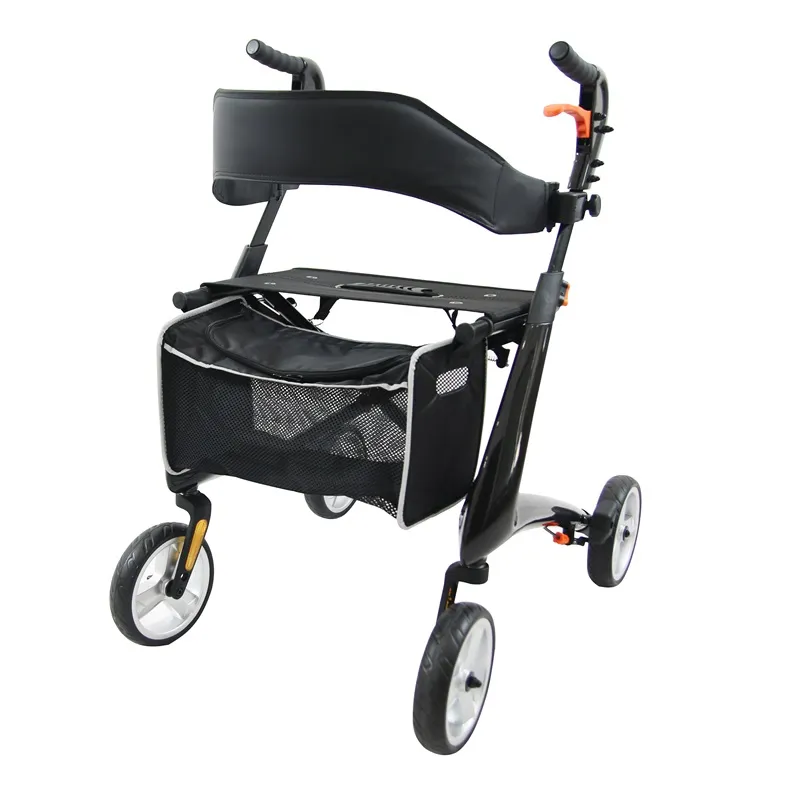
What Advantages Does the Structure of a 4-Wheel Walker Offer?
The structural design of a 4-wheel rollator walker typically includes:
•Four points of support
•A wider frame
•A comfortable seat (usually included)
•A reliable braking system
These features provide the following significant advantages:
1. Far Greater Stability Than 3-Wheel Walkers
Thanks to its four-point support system, the 4-wheel walker is significantly more stable:
•Ideal for users with compromised balance
•Suitable for individuals suffering from lower-limb weakness or instability
•Remains stable and easy to maneuver, even when walking at a slow pace
2. Highly Suitable for Long-Distance Walking
A primary reason many users choose a 4-wheel rollator walker is that:
•It allows users to stop and rest at any time
•It features a comfortable seat
•Its brakes can be locked when stationary to ensure safety
This capability represents a distinct advantage that 3-wheel rollator walkers cannot replicate.
3. Better Suited for Outdoor Use, Slopes, or Uneven Terrain
The 4-wheel structure ensures that:
•Traversing rough or bumpy surfaces is more stable
•Ascending and descending slopes is safer
•The device is less prone to tipping over when turning
4. More Suitable for Users with Poor Balance or a Need for Extra Support
For example:
•Individuals undergoing stroke rehabilitation
•The elderly
•Those suffering from knee or hip joint conditions
•Individuals with chronic mobility impairments
These users derive a far greater sense of security and physical support from a 4-wheel rollator walker compared to a 3-wheel model. Therefore, when the primary requirements are stability, security, and robust support, a 4-wheel walker is typically the superior choice.
Is a 3-wheel walker truly more maneuverable than a 4-wheel walker?
Answer: Generally, yes.
A 3-wheel walker features a single front wheel, which allows for:
•Easier turning
•More agile control
•Superior performance in confined spaces
However, this maneuverability comes at the expense of stability. If the user struggles to maintain directional control or balance, it may lead to a risk of tipping over.
In contrast, while a 4-wheel walker has a relatively larger turning radius, it remains comfortable to operate thanks to the following factors:
•A more balanced body width
•A stable handbrake system
•High-quality wheels that ensure smoother movement
•An evenly distributed center of gravity
Consequently, for the majority of individuals requiring walking assistance, the maneuverability offered by a 4-wheel rollator walker remains entirely sufficient.
Regarding stability, is there a significant difference between 3-wheel and 4-wheel walkers?
The difference is quite pronounced.
Regardless of the specific walking aid, stability is one of its most critical attributes—and the structural design is the primary determinant of that stability.
1. Why is a 4-wheel walker more stable?
•Four-point support
•A wide frame
•A more evenly distributed center of gravity
•The ability to lock both handbrakes simultaneously when stopping
•The ability to use the seat without the risk of tipping
All of these factors ensure that a 4-wheel walker maintains robust stability across a wide variety of environments.
2. Why is a 3-wheel walker more prone to instability?
•Its triangular structure is less resistant to lateral forces
•It is more prone to drifting or veering at higher speeds
•Its balance is more easily compromised by shifts in the center of gravity when ascending or descending slopes
•It may veer to one side when encountering obstacles
•Users with poor balance are at a higher risk of falling
For users with compromised balance, stability is a far more critical requirement than maneuverability; therefore, a 4-wheel walker is the more suitable choice for this demographic.
Which is better suited for long-distance walking: a 3-wheel or a 4-wheel walker?
A 4-wheel walker is better suited for long-distance walking.
The reasons are as follows:
1. A 4-wheel walker features a built-in seat, allowing the user to rest at any time
Users do not need to search for a separate chair or lean against a wall; they simply need to bring the walker to a steady halt, engage the brakes, and sit down to rest.
2. Stable Center of Gravity: Helps Maintain a Consistent Walking Rhythm
For individuals with limited physical strength, relatively stable support is particularly helpful in maintaining a steady walking pace.
3. Better Suited for Outdoor Environments
This is because outdoor settings often feature:
•Uneven terrain
•Minor changes in incline/slope
•Longer walking distances
A 4-wheel walker provides safer and more reliable support throughout the entire walking process.
4. 4-Wheel Structure Reduces Fatigue
Greater stability = Less physical exertion
More support = Greater relaxation
Increased comfort = Enhanced endurance
Therefore, for users covering longer distances, a 4-wheel rollator walker is clearly the more suitable choice.
In terms of portability, is there a significant difference between 3-wheel and 4-wheel walkers?
Regarding portability, 3-wheel walkers are typically lighter and more compact.
Due to their simpler structure and the absence of a seat, 3-wheel walkers offer the following advantages:
•Lighter weight
•Easier folding mechanism
•Smaller folded dimensions
•More convenient for storage in a car trunk
However, modern 4-wheel walkers are also becoming increasingly lightweight:
•Constructed from aluminum alloy
•Feature quick-folding mechanisms
•Frames can be compressed into a compact size
Although they remain slightly larger than their 3-wheel counterparts, the difference in portability is no longer as pronounced as it used to be.
If portability is a top priority—and maximum stability is not the primary requirement—then a 3-wheel rollator walker may be the more appropriate choice.
Which users are best suited for a 3-wheel walker?
Users who are well-suited for a 3-wheel walker typically possess the following characteristics:
•They require walking assistance but maintain good balance
•They frequently walk indoors or in narrow spaces
•They do not require rest breaks while walking
•They possess good hand-foot coordination
•They walk at a relatively brisk pace
•They prioritize lightweight design and folding capabilities
•They do not require advanced levels of physical support
In other words, 3-wheel walkers are best suited for users with mild walking assistance needs.
Which users are best suited for a 4-wheel walker?
4-wheel walkers are suitable for a much broader range of users. 4-wheel walkers are particularly suitable for users who:
•Have poor balance
•Are unsteady when standing but are still able to walk
•Need to walk long distances
•Require the ability to rest at any time
•Suffer from joint issues
•Are elderly and have slowed mobility
•Spend a significant amount of time walking outdoors
•Require greater support and safety
For the majority of users seeking stability and a sense of security, the 4-wheel rollator walker is the more common and safer choice.
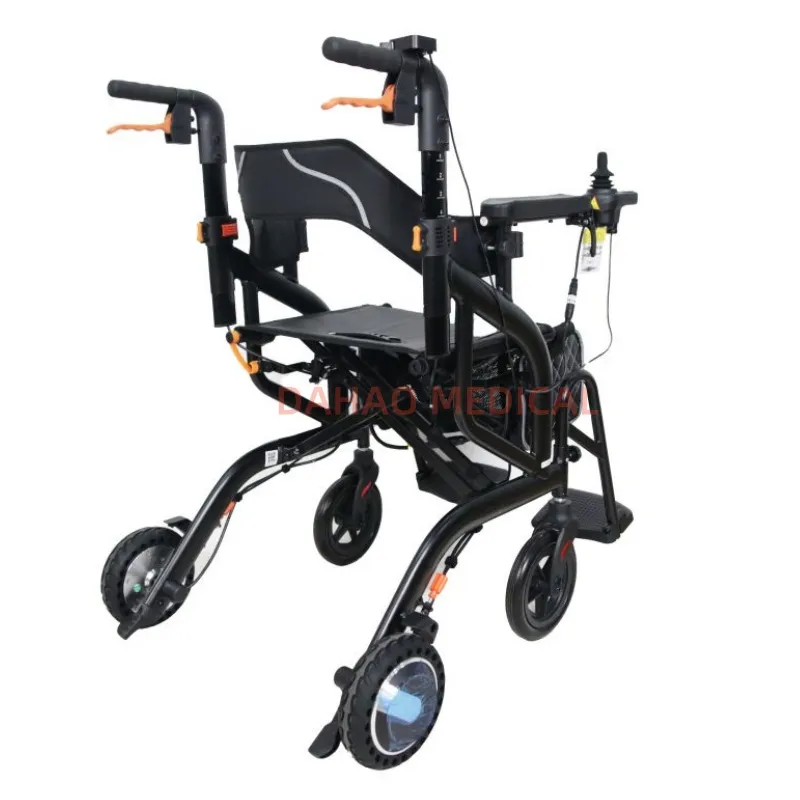
Which is better: a 3-wheel or a 4-wheel walker?
There is no absolute "better" option—only the one that is "more suitable." However, for most individuals with compromised balance or those requiring more secure support, the 4-wheel walker is typically the superior choice.
The reasons include:
•Greater stability
•Stronger support
•Better suitability for long distances
•The ability to rest whenever needed
•Safer for outdoor use
•Better adaptability to various types of terrain
Conversely, 3-wheel rollator walkers are best suited for users who:
•Have relatively good walking stability
•Prioritize maneuverability and agility
•Primarily use the device indoors
•Do not require a seat for resting
•Require a device that offers greater portability