

In caring for people with limited mobility, "transfer" is always a core issue that cannot be avoided.
When patients are unable to stand, walk, or transfer themselves, how to complete the relocation while ensuring safety and dignity becomes a key challenge in nursing work.
It is against this backdrop that patient lifters have gradually become an indispensable piece of equipment in the medical and nursing environment.
So, what exactly are the uses of a patient lifter? What problems does it solve? Why is it becoming increasingly common in nursing work?
This article will systematically explain the uses and value of patient lifters from a professional perspective, addressing these questions.
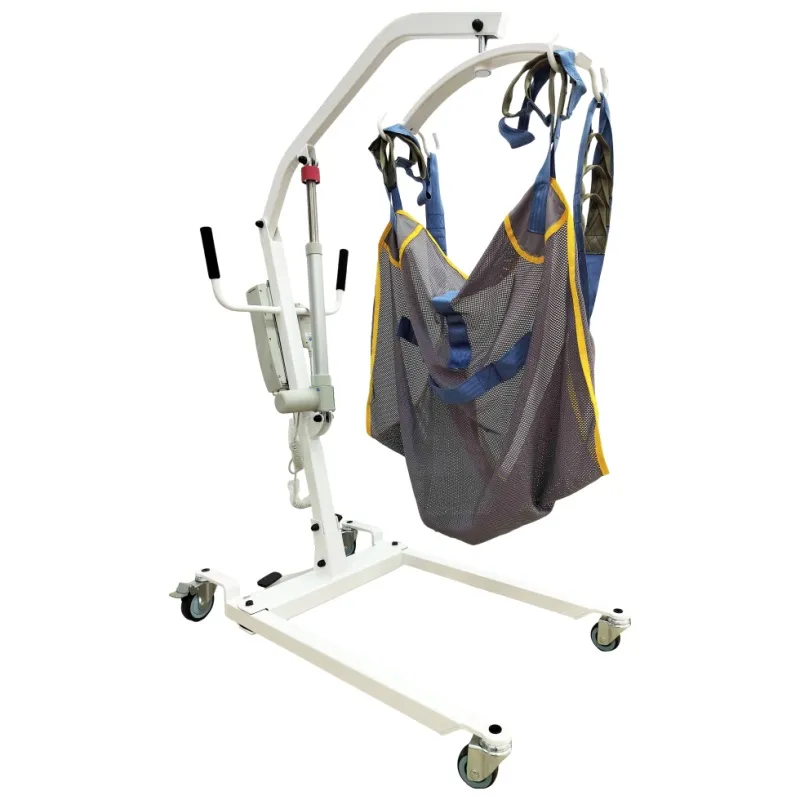
What is a patient lifter?
A patient lifter, also often called a sling-type patient lifter, is an assistive device used to lift and move patients with limited mobility.
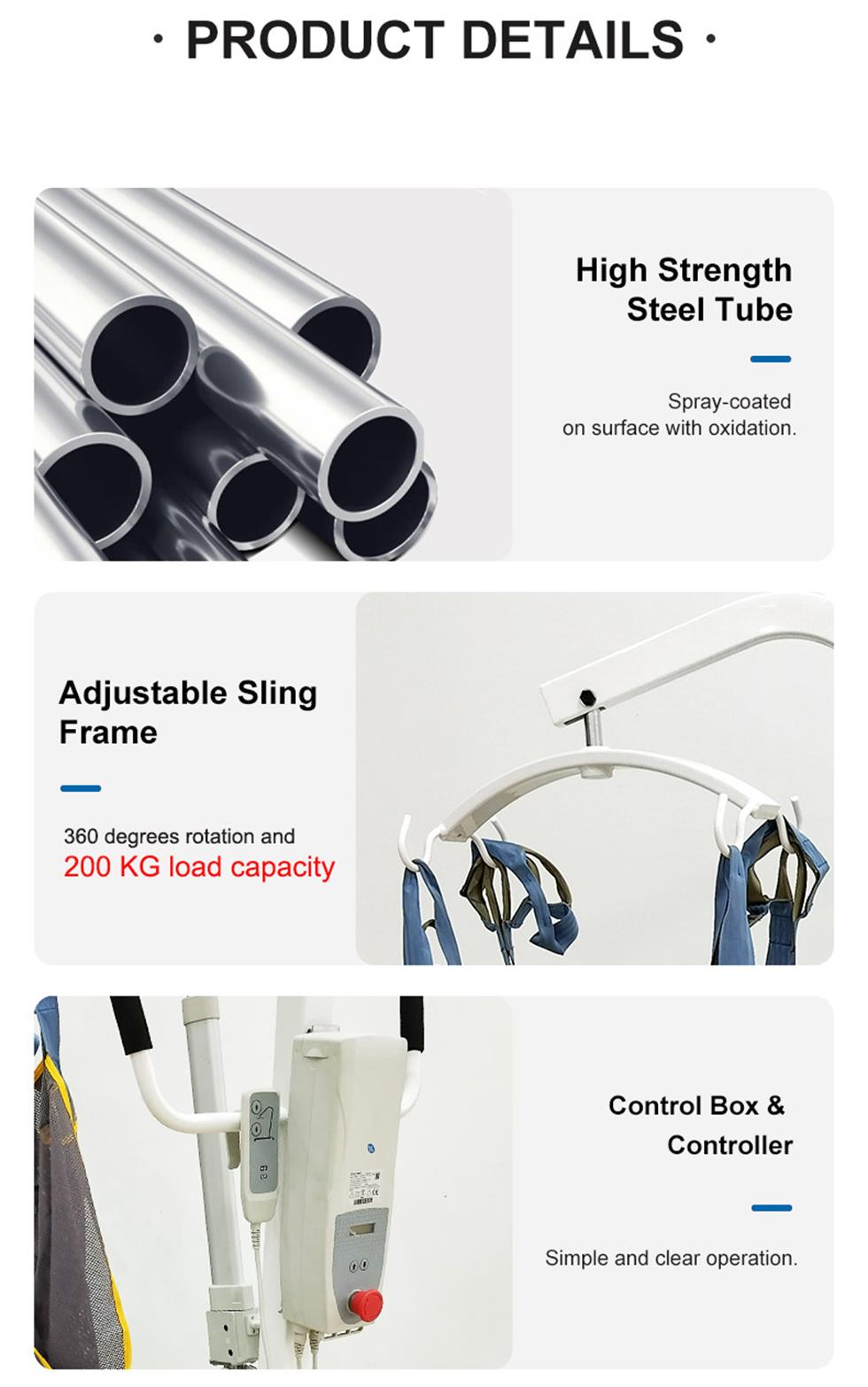
A patient lifter typically consists of the following parts:
• Frame or support structure
• Lifting device (manual, hydraulic, or electric)
• Slings or support fabric
• Walking base or roller system
Its core design goal is:
To achieve safe patient transfer while minimizing direct manual lifting.
What problems does a patient lifter primarily solve?
Why is patient transfer crucial for both patients and caregivers?
Patient transfer activities include:
• From bed to wheelchair
• From wheelchair to chair
• From bed to stretcher
• Changing positions from one to another
For people with limited mobility, these seemingly simple movements actually carry significant risks.
Patient lifters are designed to address the following core issues:
• Reducing the risk of falls during patient transfer
• Preventing unnecessary strain on the patient's joints, muscles, and skin
• Reducing the physical burden on caregivers during transport
What are the uses of a patient lifter?
The most basic and important use of a patient lifter is:
Safely lifting and transferring patients with limited mobility.
By providing overall support to the patient's body with slings, the patient lifter allows for transfer movements without relying on the patient's own strength.
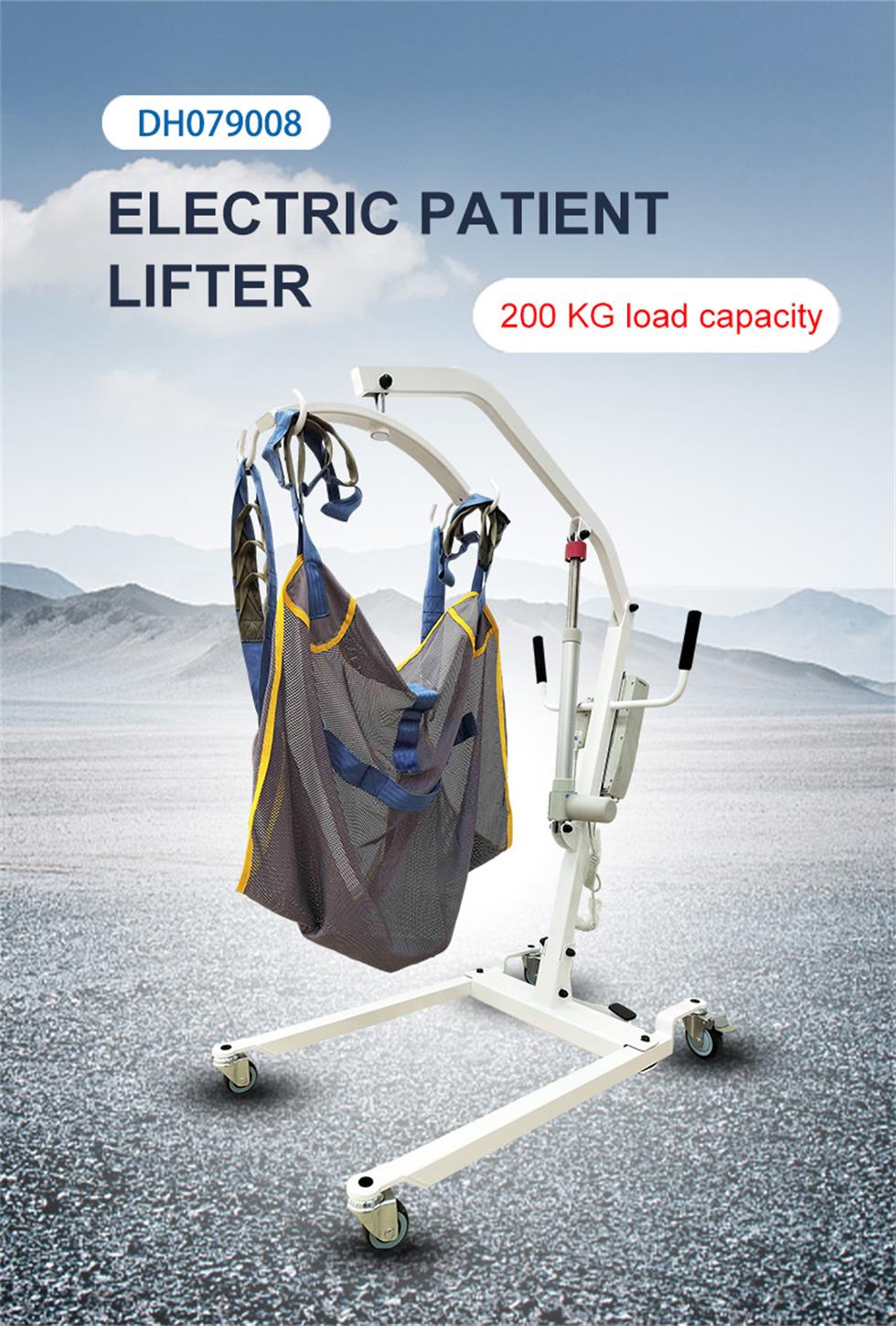
What role does a patient lifter play during transfer?
During patient transfer, a patient lifter can:
• Provide even support, avoiding localized stress
• Maintain relative patient stability
• Control transfer speed, reducing sudden swaying
These functions collectively reduce potential safety risks during transfer.
What are some common patient transfer scenarios?
1. Can a patient lifter be used between a bed and a wheelchair?
This is one of the most common uses of a patient lifter.
When a patient is unable to stand or turn independently, a patient lifter can:
• Lift the patient from the bed
• Smoothly move the patient over a wheelchair
• Then slowly place the patient in the target position
The entire process does not require direct manual support of the patient's body.
2. Is a patient lifter suitable for transferring between a bed and a chair?
A patient lifter is also suitable for transferring between a bed and a regular chair.
Because the sling supports the patient's center of gravity, rather than a single part of the body, stable transfers can be achieved between different heights and different types of chairs.
3. Can a patient lifter be used for short-distance position adjustments?
Patient lifters are not only used for "long-distance movement," but also for:
• Adjusting the patient's position in bed
• Changing the patient's sitting or lying posture
• Assisting in position changes
This is one of the important uses of patient lifters in daily care.
How do patient lifters reduce the occupational risks for caregivers?
Why is manually moving patients high-risk?
Without assistive devices, caregivers need to:
• Bear all or most of the patient's weight
• Frequently bend over and twist their bodies
• Exert force in unstable postures
These actions can easily lead to:
• Lower back injuries
• Neck and shoulder strain
• Long-term occupational injuries
What role do patient lifters play in nursing safety?
One of the uses of patient lifters is to:
Transform "physical labor-intensive care" into "operational care."
By having the equipment bear the main weight, caregivers only need to operate and guide, significantly reducing their physical burden.
How do patient lifters improve patients' sense of security and comfort?
1. What are patients most worried about during repositioning?
For patients with limited mobility, common concerns during transfer include:
• Fear of falling
• Fear of being pulled
• Fear of sudden imbalance
The patient lifter effectively alleviates these concerns through its overall sling support.
2. How does the patient lifter improve the transfer experience?
During use, the patient lifter:
• Provides a larger support area
• Distributes force more evenly
• Smoothers movements
These features make patients feel more secure during transfer and easier to cooperate with nursing procedures.
Is the patient lifter only suitable for completely disabled patients?
What mobility levels are suitable for the patient lifter?
The patient lifter is not limited to those who are completely bedridden or completely disabled. It can also be used for:
• People with lower limb weakness but still able to move their upper limbs
• People with poor balance but who are conscious
• People with temporary mobility limitations
The patient lifter is useful as long as the patient cannot safely transfer independently.
How does the patient lifter differ from other transport equipment?
Are the uses of the patient lifter and wheelchair the same?
The two have different uses:
• Wheelchairs are primarily used for seated movement.
• Patient lifters are primarily used for lifting and transferring patients.
Patient lifters do not replace wheelchairs, but rather solve the "getting up and down, transferring" problems that wheelchairs cannot handle.
Do the uses of patient lifters and transfer chairs overlap?
Patient lifters focus on:
• Patients who have completely or largely lost the ability to stand.
• Patients are lifted using slings.
Transfer chairs are more often used for:
• Patients who can still maintain a seated position.
• Transferring patients between height differences.
The two have different focuses in their uses.
Why is a patient lifter considered a "basic piece of equipment" in the nursing system?
The position of the patient lifter in the nursing process:
In a complete nursing support system, the patient lifter serves as:
• Basic transfer support
• Alternative for high-risk movements
• A safety assurance tool
Without patient lifters, many nursing actions would be highly dependent on manual labor.
Is the use of a patient lifter irreplaceable?
The use of a patient lifter is difficult to replace in the following situations:
• The patient is overweight
• Their mobility is severely limited
• There are limited nursing staff
Under these conditions, the patient lifter is a crucial tool for safe transfer.
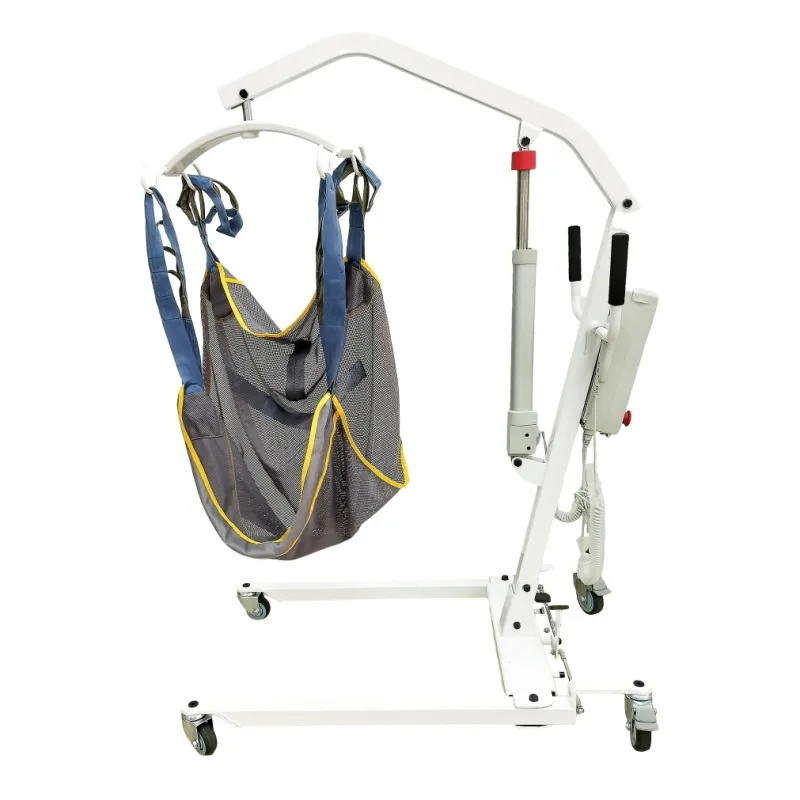
How to correctly understand the "boundaries of use" of a patient lifter?
A patient lifter is not a "panacea."
It needs to be clear that the primary uses of a patient lifter are:
• Lifting
• Transferring
• Short-distance movement
It is not used for:
• Long-distance mobility
• Independent outdoor activities
Clearly defining the boundaries of use helps to correctly understand the value of a patient lifter.
What are the uses of a patient lifter?
• The core purpose of a patient lifter is to safely lift and transfer patients with limited mobility.
• Patient lifters reduce the risk of injury to both patients and caregivers through sling support.
• Patient lifters play a crucial role in transferring patients between beds, wheelchairs, and chairs.
• Patient lifters are not mobility aids, but rather mobility assistance devices.
• Patient lifters play a fundamental and vital functional role in the nursing care system.
In short:
The purpose of a patient lifter is to make necessary transfers safer, more controllable, and more sustainable.
What types of buyers work with Dahao Medical?
Dahao Medical cooperates with medical equipment distributors, healthcare brands, hospital suppliers, rehabilitation centers, and online sellers. Whether the buyer focuses on wholesale, retail, or project-based purchasing, the company offers flexible solutions for sourcing Electric Wheelchairs and nursing care equipment from China.