

When people enter a hospital, whether for inpatient treatment, post-operative observation, emergency care, or intensive care, one of the most frequently encountered medical devices is the "hospital bed." It may seem ordinary, but it plays a crucial role in medical care.
So, what are hospital beds actually called?
Professionally, they are usually called hospital beds, also known as medical beds. Depending on their structure, function, nursing methods, and applicable departments, they can be further subdivided into various types such as general nursing beds, multi-functional beds, and ICU beds.
A hospital bed is not simply a "bed," but a specialized piece of equipment developed specifically for medical care environments, allowing patients to receive care in a safe, comfortable, and correct position.
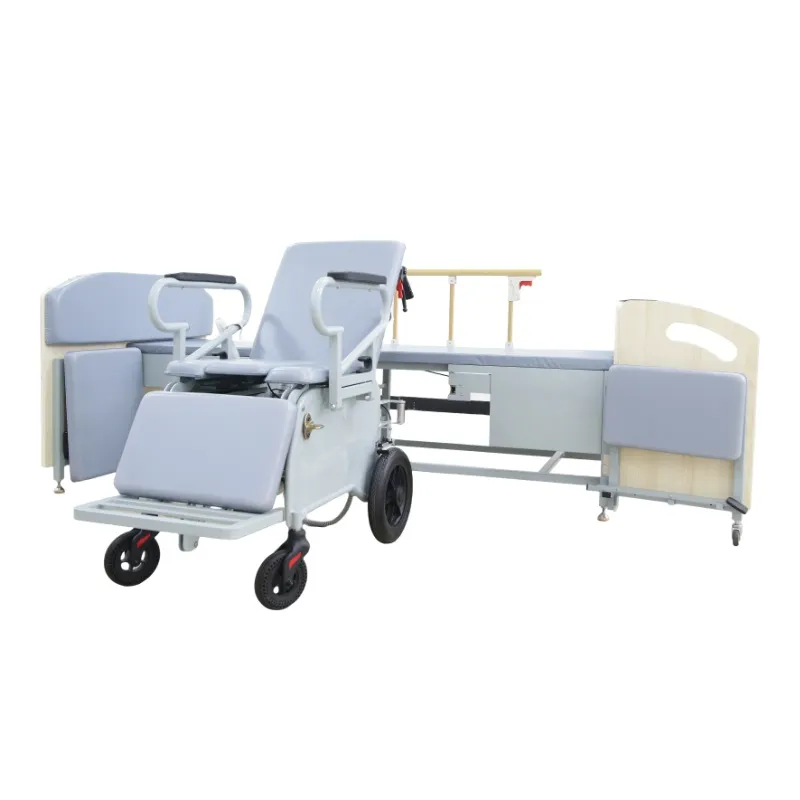
Why are beds in hospitals called hospital beds?
The name "hospital bed" comes from its primary purpose—providing rest and medical care for patients. Hospital beds differ from home beds; they are specifically designed for clinical treatment, nursing procedures, safety management, and patient rehabilitation needs.
Beds in hospitals are called hospital beds because:
• They are specifically designed for patient use.
• They have nursing and treatment support functions.
• They meet hospital medical operation standards.
• Their structure, materials, and functions meet medical-grade requirements.
• They can support high-frequency nursing procedures (turning over, raising, transferring, monitoring).
• Their posture, angle, and height can be adjusted according to the patient's condition.
Therefore, the standard answer to "What are beds called in hospitals?" is:
Hospital beds, also known as medical beds.
What are some other names for hospital beds? What do they all refer to?
The related terms heard in hospitals actually refer to the same piece of equipment, but different names are used in different contexts.
Common terms include:
• Hospital bed (most standard and commonly used)
• Medical bed (emphasizing medical attributes)
• Inpatient bed (beds used in inpatient wards)
• Nursing bed (emphasizing nursing functions)
• Multifunctional bed (with extensive adjustment functions)
• ICU bed (used for intensive care)
These terms cover all specialized beds used in hospitals.
Why are hospital beds different from ordinary beds?
Hospital beds are designed not only for "sleeping," but also to:
• Facilitate nursing procedures by the medical team
• Meet the patient's treatment needs
• Ensure patient safety
• Improve nursing efficiency
• Reduce the physical burden on nursing staff
Compared to ordinary home beds, hospital beds have the following differences:
1. Adjustable structure
Hospital beds can be adjusted electrically or manually:
• Backrest angle
• Legrest angle
• Height adjustment
• Bed tilt
These functions are not available in ordinary beds.
2. Safety Guardrails
Both sides of the bed are equipped with guardrails to prevent patient falls and improve safety.
3. Medical Accessory Interfaces
The bed can be used with:
• IV stand
• Bedside table
• Monitor equipment bracket
• Detachable bedpan
Standard beds do not have these interfaces.
4. Easier to Clean and Disinfect Materials
The bed is made of medical-grade materials, featuring corrosion resistance, easy cleaning, and impermeability.
5. Robust and Durable Structure
The bed can withstand high-frequency nursing procedures and prolonged use.
Therefore, hospital beds are not ordinary furniture; they are specialized medical equipment.
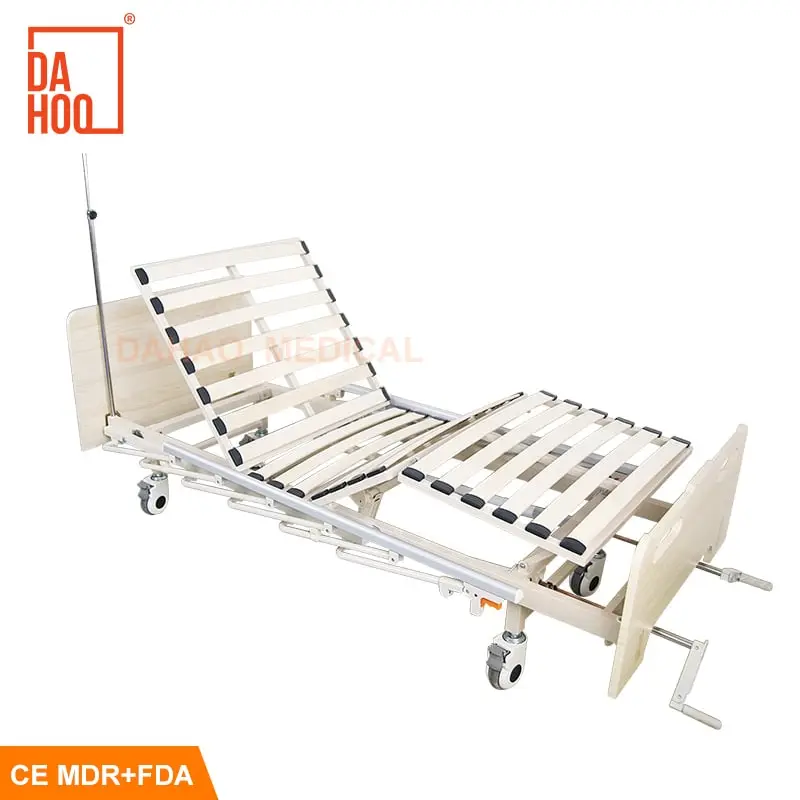
What are the classifications of hospital beds? Why are there different types?
Hospital beds can be classified into many types based on usage scenarios, nursing needs, and functional differences. The most basic classification includes:
1. General Nursing Beds
These are the most widely used beds in hospitals, suitable for general wards such as internal medicine, surgery, and rehabilitation departments. Its features include:
• Support for general patients
• Adjustable backrest and leg support
• Guardrails
• Infusion stand insertion port
• Simple and stable structure
General nursing beds primarily meet basic nursing needs.
2. Multifunctional Beds
Compared to general beds, multifunctional beds typically offer:
• Electric adjustment
• Nursing assistance functions
• Compatibility with more medical equipment
• Suitable for patients requiring moderate-intensity care
Multifunctional beds are commonly found in larger hospitals or rehabilitation departments.
3. ICU Beds
ICU beds are the most complex and fully functional type of bed, suitable for:
• Intensive Care Unit (ICU)
• Patients requiring close medical monitoring
• In-hospital patients with serious illnesses
ICU beds feature:
• High-precision multi-angle adjustment
• Cardiopulmonary function positioning adjustment (e.g., reverse tilt)
• Emergency nursing support functions
• Multi-link safety mechanisms
• Greater weight-bearing capacity
This is the highest-level type of hospital bed.
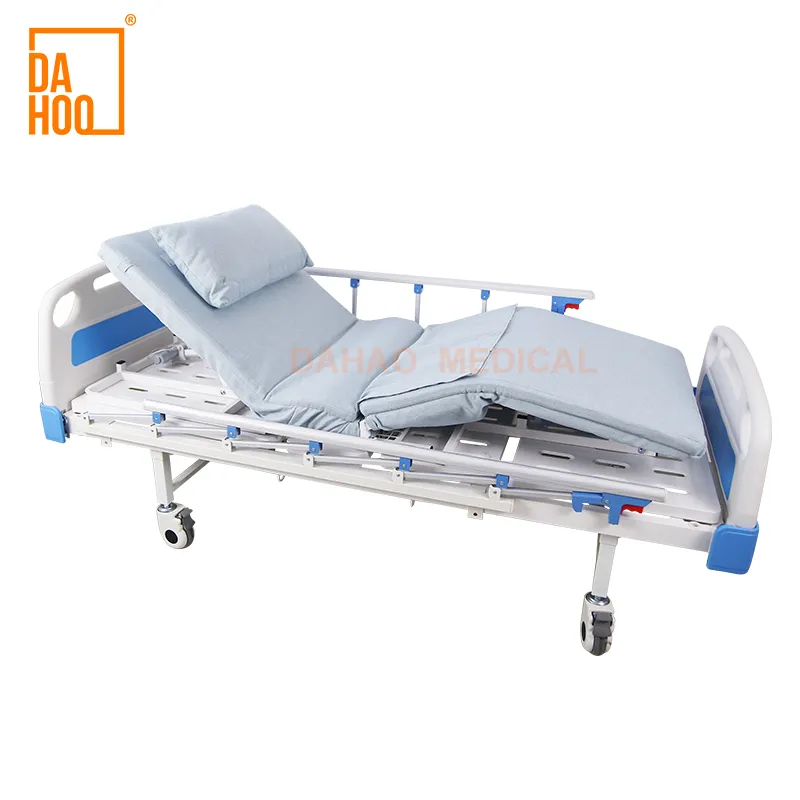
What are the specific functions of a hospital bed? Why are these functions necessary?
The function of a hospital bed is not merely "comfort," but rather to meet medical and nursing needs. Modern hospital beds typically have the following main functions:
1. Back and Leg Lift Functions
Used for:
• Assisting patients to sit up
• Maintaining a comfortable resting posture
• Reducing breathing difficulties
• Preventing aspiration
• Aiding limb recovery
• Reducing lower limb edema
2. Height Adjustment
Facilitating:
• Nursing care by medical staff
• Dressing changes, IV infusions, and procedures
• Patient transfer and getting in and out of bed
3. Guardrail Protection
Preventing:
• Falls from bed
• Postural instability
• Excessive turning over at night
4. Bed Tilt
Used for:
• Emergency treatment
• Improving circulation
• Digestive system care
• Specific clinical treatments
These functions cannot be met by ordinary beds.
Why must hospitals use hospital beds instead of ordinary beds?
The use of hospital beds is an important part of medical standards and risk management in hospitals. Reasons include:
• Medical procedures (IV infusion, dressing changes, monitoring)
• Reduced risk of falls
• Saves nursing staff
• Adapts to patient's physical limitations
• Reduced risk of pressure sores
• Meets hospital infection control requirements
Regular beds cannot meet these medical needs, therefore hospitals must use specialized hospital beds.
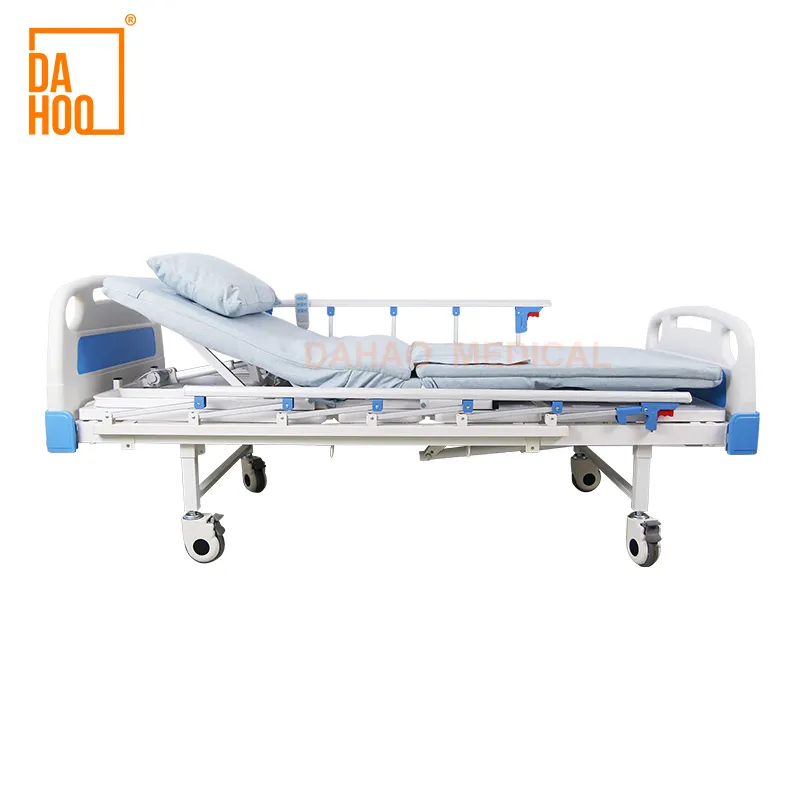
Can families use the same type of hospital bed?
Many families consider purchasing hospital-like beds, also known as "home care beds," to care for elderly people or patients.
These are home versions of hospital beds, more suitable for home care environments.
Home care beds, like hospital beds, possess the following features:
• Backrest and leg raise functions
• Guardrails
• Medical-grade bed structure
• Height suitable for caregivers
• Bed design compatible with medical devices
However, they are more suitable for home use:
• Aesthetically pleasing to home environments
• Functions more suited to long-term care
• Easier to operate
• Support for self-use by ordinary users
Therefore, home care beds are a very effective assistive device for patients who are bedridden for extended periods or have limited mobility.
What are the standard dimensions of a hospital bed?
Standard hospital bed dimensions mostly conform to medical standards:
• Bed length: 200–215 cm
• Bed width: 90–105 cm
• Bed height: 45–85 cm (adjustable)
Different types of hospital beds may have slight adjustments depending on their intended use, but all adhere to medical standards to ensure suitability for patients of various body types and their care needs.
What are the characteristics of hospital bed materials?
Hospital beds utilize professional medical materials, including:
• High-strength steel frame (ensuring load-bearing capacity)
• ABS medical-grade plastic (corrosion-resistant, easy to clean)
• Medical-grade environmentally friendly coating (rust-proof, antibacterial)
• Silent casters (smooth movement)
• Dedicated bed board (breathable, not easily deformed)
These materials not only ensure durability but also meet hospital requirements for hygiene, disinfection, and infection control.
What are hospital beds called?
The formal names for beds in hospitals are:
✔ Hospital bed
✔ Medical bed
Based on usage and function, they can be further divided into:
• General nursing beds
• Multifunctional beds
• ICU beds
Hospital beds are important because they can:
• Facilitate various medical procedures
• Improve nursing efficiency
• Provide safety guarantees
• Meet long-term care needs
• Improve patient comfort and recovery conditions
Whether in a hospital or at home, a hospital bed is an irreplaceable piece of nursing equipment.
Is Dahao Medical suitable for private label medical brands?
Yes, Dahao Medical is highly experienced in private label manufacturing. The factory supports logo customization, packaging design, and product adjustments for Electric Wheelchairs, Transfer Chairs, and Rollator Walkers. This allows brands to build their own identity while relying on a professional China manufacturer for production and quality control.