

In nursing, rehabilitation, and long-term care settings, a seemingly simple yet crucial question is frequently asked:
"Is it okay to sleep in a lift transfer chair?"
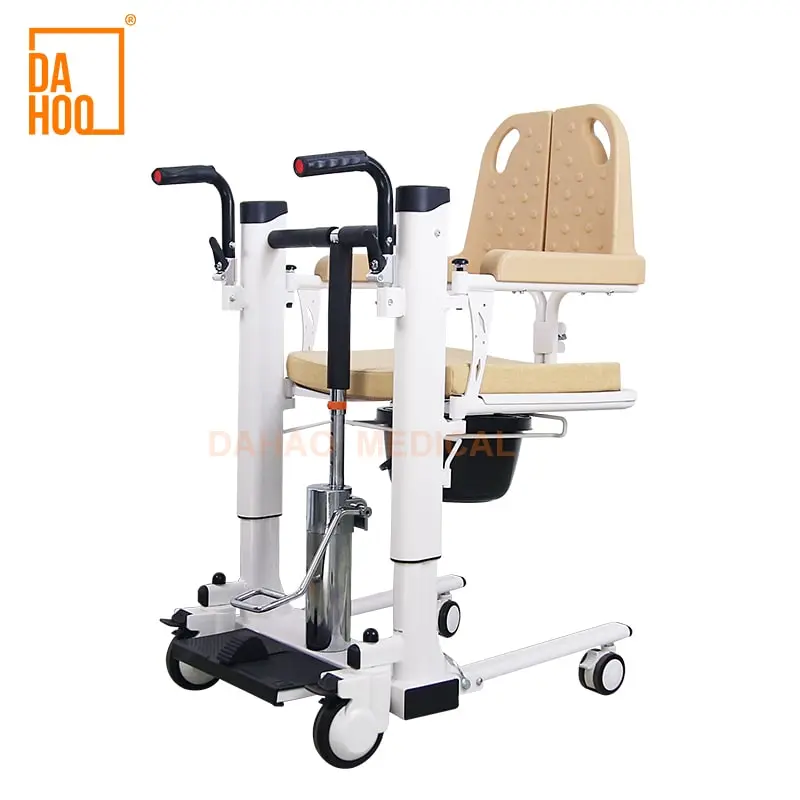
This question involves many factors, including human safety, equipment structure, design purpose, force distribution, and applicable scenarios. Many people mistakenly believe that a lift transfer chair is a mobile device that allows for prolonged sitting or lying down, but in reality, its design purpose and function are entirely different.
This article will explore the question of "Is it okay to sleep in a lift transfer chair?" from a professional perspective to help home caregivers, professional caregivers, and users utilize lift transfer chairs more safely.
Why would anyone want to sleep in a lift transfer chair?
In nursing settings, the question of "Is it okay to sleep in a lift transfer chair?" often stems from several common misconceptions:
• Users feel drowsy while sitting.
• Patients are not promptly transferred to bed.
• It's mistakenly believed that lift transfer chairs, like wheelchairs, can be used for extended periods of sitting or lying down.
• Insufficient short-term nighttime care necessitates a temporary "nap in the chair."
• Excessive waiting time before and after patient transfer.
• Mistaking a lift transfer chair for a reclining comfort chair.
These situations make "Is it okay to sleep in a lift transfer chair?" a crucial question that requires careful analysis. However, the answer isn't a simple "yes" or "no," but rather requires understanding the structural characteristics and essential purpose of a lift transfer chair.
Is a lift transfer chair designed for sleeping?
The answer is: Absolutely not.
The core design purpose of a lift transfer chair is as follows:
• For transfer, not for prolonged sitting or sleeping
• To assist caregivers in transferring individuals from beds, sofas, wheelchairs to bathrooms, etc.
• To maintain stability of the body in a seated position within limited spaces
• To maintain structural strength and support during lifting and transfer
• To ensure safety during short periods of sitting
In other words, a lift transfer chair is positioned as a tool for short-term sitting + vertical lifting + transfer, not a device for supporting the body in a supine position.
Any use beyond its intended purpose may pose potential dangers.
Is the seat structure of a lift transfer chair suitable for prolonged lying down?
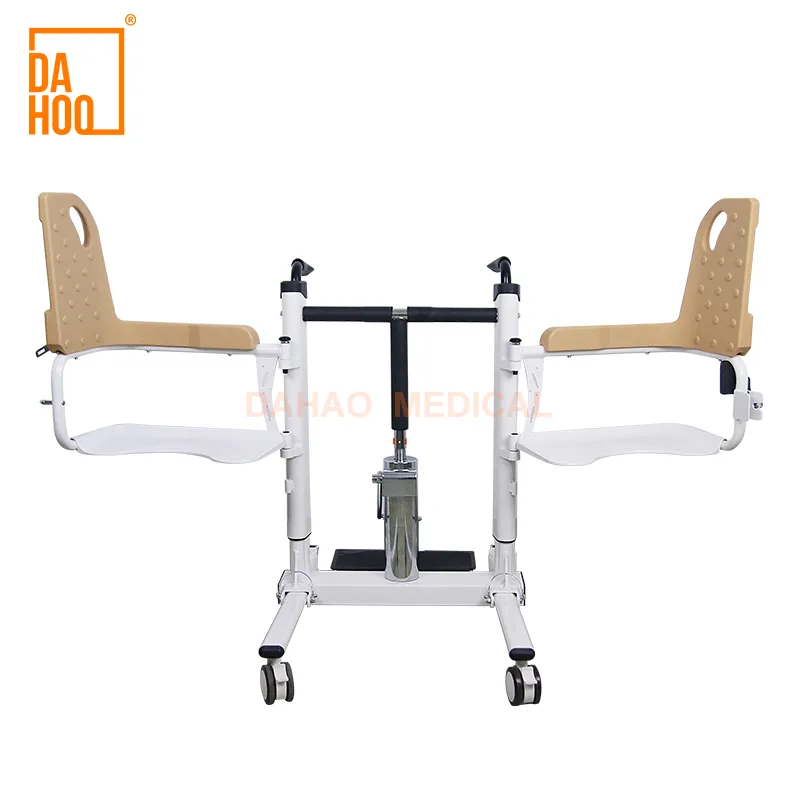
To determine if it is suitable for sleeping, it is essential to understand the seat structure of the lift transfer chair.
Generally, lift transfer chairs have the following characteristics:
1. Open or modular seat
Many lift transfer chairs use:
• U-shaped seat surface
• Segmented seat panel
• Flip-up seat structure
These structures are designed for easy movement, not for prolonged body support.
When sleeping, the body moves laterally and sideways, and these seats cannot provide sufficient support.
2. Narrow Seat Area
The dimensions of a lift transfer chair are typically narrower than a regular chair, preventing the body from receiving:
• Lumbar support
• Back support
• Lateral stability
• Even weight distribution. This results in an unstable sitting posture, let alone sleeping.
3. No Adjustable Angle
The backrest of a lift transfer chair is usually fixed and cannot be adjusted like a medical chair.
The lack of reclining angle means:
• Inability to recline fully
• Inability to tilt.
Therefore, it is not suitable for rest or sleep.
4. Lack of Side Supports
When sleeping, the body naturally relaxes. If it tilts to the sides, it relies solely on the chair frame for support. The side supports of a lift transfer chair are not designed for rest or sleep.
In summary, the seat structure of a lift transfer chair cannot provide the necessary support for sleeping.
What are the risks of sleeping in a lift transfer chair?
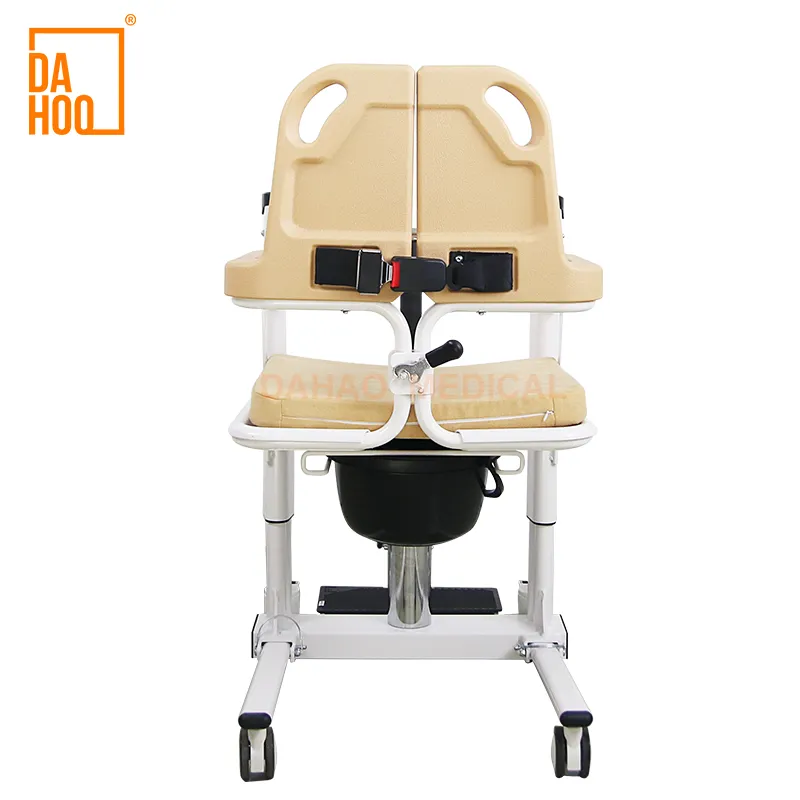
Regarding the question of "Is it okay to sleep in a lift transfer chair?", the most important thing is to understand the risks. A lift transfer chair is not a tool for rest; forcing oneself to sleep in it could have serious consequences.
1. Falls due to body slippage
While sleeping:
• The body naturally relaxes
• Balance decreases
• Posture cannot be maintained
Lift transfer chairs lack lateral protection, making slippage easy.
2. Pressure injuries caused by seat structure
Piecework or hard seat panels cannot:
• Protect the tailbone
• Distribute pressure
• Prevent pressure sores
Prolonged sleep can lead to:
• Skin pressure sores
• Localized pain
• Obstructed blood flow
Especially dangerous.
3. Risk of breathing restriction or postural suffocation
Because the seat angle cannot be adjusted, leaning forward while sleeping can create a feeling of obstruction, especially for:
• Weak airways
• Difficulty breathing
• People with insufficient upper body muscle strength
The risk is greater.
4. Prolonged Compression Causes Circulatory Disorders
The inability to adjust lower limb posture while sleeping can lead to:
• Edema
• Numbness
• Poor blood flow
• Increased venous pressure in the lower limbs
5. Higher Risk If the Chair is in a Lift Transfer Position
During lifting, the structure is under stress, increasing the risk of:
• Structural damage
• Brake loosening
• Shifting center of gravity
These are serious usage errors.
6. Inability to Respond to Emergencies in Time
A sleeping person cannot judge:
• Chair movement
• Brake failure
• Equipment tipping over
• Changes in body position
This increases the risk of complications.
Which users are particularly unsuitable for resting or sleeping on a lift transfer chair?
While almost everyone should avoid sleeping on a lift transfer chair, the following groups should especially avoid it:
1. People who have lost voluntary posture control
For example:
• Post-stroke balance disorders
• Neck and shoulder muscle weakness
• Insufficient upper body strength
Those unable to maintain a stable sitting posture are at particular risk.
2. Elderly People
When elderly people sleep:
• Their bodies are relaxed
• Their balance is weaker
• They are more prone to tipping over
The risk of falling is extremely high.
3. Patients with Breathing Difficulties
Sleeping in a seated position may lead to:
• Airway compression
• Shallow breathing
• Hypoxia
4. Obese or Overweight Individuals
People exceeding the weight limit of the lift transfer chair should not only not sleep in it, but should not even use it.
5. Patients with Cognitive Impairment or Dementia
People who cannot understand that they are in a dangerous position are more likely to fall while sleeping.
What is the purpose of a lift transfer chair? Why is it unsuitable for sleeping?
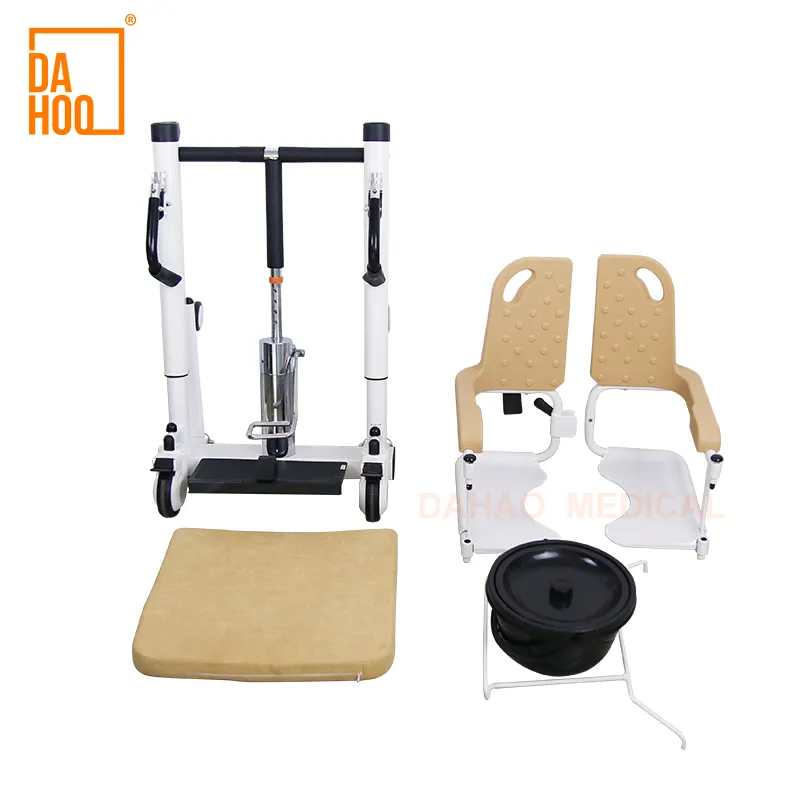
To understand why it is unsuitable for sleeping in, one must first understand its design logic.
The main purposes of a lift transfer chair include:
1. Facilitating transfer between bed/chair, chair/chair, and chair/toilet
The focus is on "safe transfer," not "prolonged sitting or lying down."
2. Provides short-term sitting support
This means:
• Stability is only suitable for short periods
• Seat structure is not designed for long-term support
• Seat dimensions are optimized for transfer, not comfort
3. Provides lifting power for caregivers
A lift transfer chair is a care tool, not bedding.
4. Designed for short-distance movement
The casters are typically small in diameter and not suitable for the minute movements required for sleeping.
Therefore, the lift transfer chair is inherently unsuitable for sleeping.
Safe alternatives: Which devices are better suited for sleeping or short rests?
If you need to sit, recline, or actually sleep, choose the following devices instead of a lift transfer chair:
✔ Nursing bed (best choice)
Height adjustable, recline adjustable, with excellent side support, suitable for extended periods of sleep.
✔ Medical reclining chair (reclining care device)
Reclining is suitable for short rests but cannot completely replace a bed.
✔ Wheelchair (for short rest)
While not suitable for sleeping, it is much more stable than a lift transfer chair.
✔ Nursing sofa or adjustable recliner
Much safer and more comfortable than a lift transfer chair.
The Final Answer to Whether You Can Sleep in a Lift Transfer Chair
No.
From a structural, safety, design purpose, and ergonomic point of view, it is neither recommended nor permissible for users to sleep in a lift transfer chair.
Key reasons include:
• The seat structure does not support sleeping postures.
• Lack of reclining angle and lumbar support.
• The body may slip, posing a serious risk.
• Prolonged pressure can lead to pain and pressure sores.
• Breathing and circulation may be affected.
• The lifting mechanism is not suitable for absorbing movement during sleep.
The correct uses for a lift transfer chair are:
✔ Safe transfer
✔ Short-term sitting position
✔ Assisted movement
✔ Improved care efficiency
✘ Never use it as a sleeping aid.
How does Dahao Medical support product maintenance and service?
Dahao Medical is dedicated to providing ongoing support for the products we supply. Whether you’ve purchased Electric Wheelchairs, Hospital Care Beds, or other medical equipment, our after-sales service ensures that your products continue to perform optimally. We offer troubleshooting assistance, maintenance tips, and repair services, and our team is always available to answer any questions you may have.