

A patient lifter is an assistive device widely used in hospitals, nursing homes, rehabilitation centers, and home care environments. Its main function is to help caregivers transfer, raise, lower, and sit patients without expending excessive physical effort. However, many people worry about one question before using it: Are there any risks associated with using a patient lifter?
The answer is: There are potential risks, but these can be minimized if used correctly, the equipment is compliant, and the operation is proper.
To help you fully understand the relevant knowledge, this article will focus on two main topics: "potential risks" and "correct usage methods," exploring in depth the points to note and standardized usage of patient lifters in the nursing process, allowing you to be more professional and at ease in your daily care.
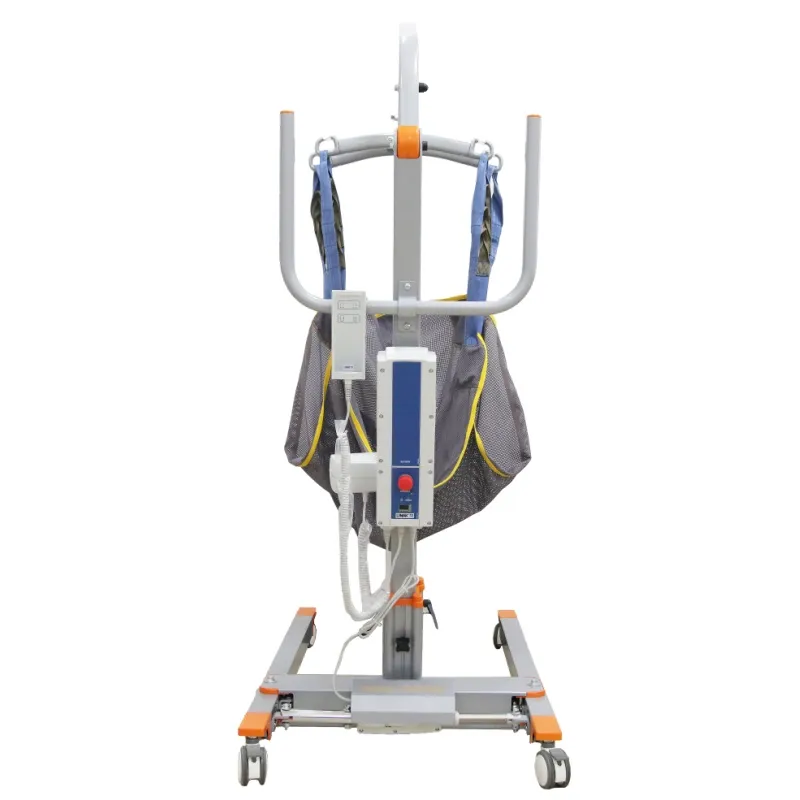
What is a patient lifter?
A patient lifter is an assistive transfer device designed specifically for people with mobility impairments. It is commonly used for:
• Bed to wheelchair transfer
• Bed to toilet transfer
• Bathing transfer
• Short-distance indoor movement
• Height compensation (e.g., raising or lowering position)
Compared to ordinary wheelchairs or walking aids, patient lifters have a lifting system that allows caregivers to easily move between beds and toilets, significantly reducing the risks associated with manual transport.
Since the users are often patients with weak physical strength who cannot stand or move independently, proper operation is crucial; otherwise, the risk of falls and crush injuries may increase.
What are the risks of using a patient lifter?
Although patient lifters are generally considered relatively safe assistive devices, incorrect use or substandard equipment can still pose the following risks.
1. Patient Fall Risk
The most common risks stem from:
• Unlocked casters
• Unstable sitting posture
• Inaccurate transfer position
• Sudden movement during use
• Seatbelt not fastened
If a patient tilts or slides during the lifting process, they may fall from the chair, resulting in serious injury.
2. Caregiver Injury Risk
Incorrect use of the lifting transfer chair can also expose caregivers to:
• Lower back strain
• Excessive arm strain
• Neck and shoulder injuries due to poor posture
Injuries are especially likely when manually adjusting, turning, or assisting patients in repositioning without proper attention to posture.
3. Equipment Tilting Risk
If:
• Uneven ground
• Uneven center of gravity distribution
• Exceeding the weight limit
• Adjusting the height too high
• Improper transfer angle
The lifting transfer chair may tip over.
4. Risk of Limb Pinching
During the lifting process, if:
• Fingers are placed in the joint area of the lifting frame
• Feet are placed in inappropriate positions
• Seat or backrest adjustments are not performed correctly
Pinching injuries may occur.
5. Risk of Skin Abrasions or Pressure Injuries
Skin injuries may occur, especially in the following situations:
• Overly tight seat belts
• Maintaining the same sitting posture for extended periods
• Rough or aged seat material
This is particularly important for elderly people with sensitive skin or patients in recovery.
6. Structural Safety Risks from Using Substandard Products
Some non-medical device-grade lifting and transfer chairs may have:
• Loose welds
• Unstable lifting structure
• Insufficient material strength
• Unreliable braking system
These significantly increase the risk during use.
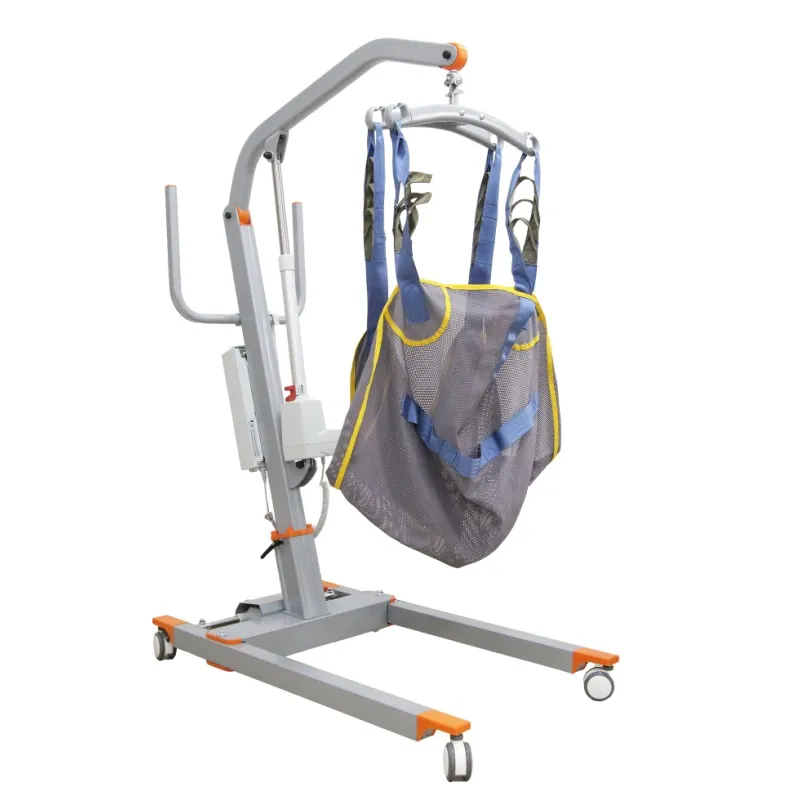
What are the most easily overlooked problems when operating lifting and transfer chairs?
Many caregivers tend to overlook some key points when using lifting and transfer chairs for extended periods. These oversights often lead to potential injuries.
1. Wheels Not Locked
Even experienced caregivers occasionally forget to lock the wheels, causing the equipment to slide, shift, or tip over.
2. Patient Not Seated Deepest
A patient who is not seated securely, is sitting off-center, or is sitting too shallowly increases the risk of sliding forward.
3. Forgetting to Check Weight Capacity and Height Limits
Different models have different weight capacities and lifting heights; exceeding these limits can cause mechanical malfunctions.
4. Incorrect Transfer Angle
For example, transferring a patient directly laterally from the side of the bed without adjusting the angle can easily cause the chair's center of gravity to become unstable.
5. Not Checking Seatbelt Securement
Not fastening the seatbelt or completely forgetting to use it are both high-risk behaviors.
Why Does Incorrect Use of a Lift Transfer Chair Increase Injury Risk?
The purpose of using a lift transfer chair is to improve safety, but incorrect use can have the opposite effect, for reasons including:
1. Uneven Pressure on Both Person and Equipment
Incorrect posture or operation can shift the chair's center of gravity, increasing the risk of tipping over.
2. Patients may have insufficient balance
Patients using height-adjustable transfer chairs often:
• Have insufficient muscle strength
• Have poor balance
• Cannot maintain a stable posture for extended periods.
Any inaccurate operation may lead to loss of body control.
3. The lifting process involves changes in height
Lifting and lowering alters the direction of gravity and the point of force application; improper operation may lead to slippage.
4. Caregivers may be unskilled
Lack of training or prolonged disuse may also cause operational errors.
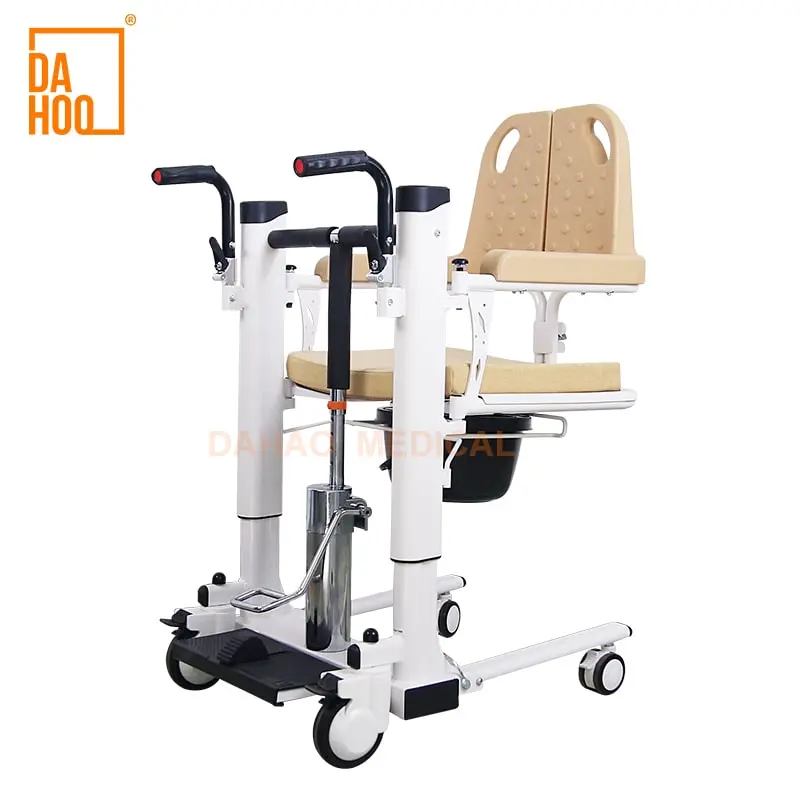
How to use a height-adjustable transfer chair correctly and safely?
The following are the most crucial "correct usage methods," which must be followed in any nursing environment.
1. Before Use: Ensure the Equipment is Stable
• All four wheels are braked.
• Check that the seat is locked.
• Check that the armrests are secure.
• Check that the lifting system is functioning properly.
• Check that the seat belts or support straps are intact.
2. Help the Patient Position Correctly
• Ensure the patient is seated at the deepest point of the seat.
• Backrest firmly against the backrest.
• Feet on the footrests or the ground.
• Hands on the armrests, not the lifting mechanism.
• Fasten the seat belt.
3. Correct Use of the Lifting Function
Whether electric or manual, the following must be followed:
• Raise slowly.
• Lower smoothly.
• Communicate with the patient during lifting.
• Do not lift on inclined surfaces.
• Do not exceed the equipment's height limit.
4. Maintain a Stable Posture When Pushing
• Release the brakes before pushing.
• Slow down when turning.
• Avoid sudden stops.
• Avoid crossing excessively high thresholds.
5. Maintain Correct Angle During Transfer
• Maintain an appropriate angle between the lifting transfer chair and the bed or toilet.
• Keep the equipment's center of gravity aligned with the patient's center of gravity. Avoid Angled Operations
What Preparations are Needed Before Using a Lifting Transfer Chair?
To ensure safety throughout the process, the following preparations are crucial:
1. Environmental Assessment
• Is the ground level?
• Are there any obstacles?
• Is the door frame height suitable?
• Are there any slippery areas?
2. Patient Status Assessment
Confirm that the patient is:
• Conscious
• Able to maintain a sitting posture
• Has sufficient muscle strength?
• Is experiencing dizziness or weakness?
3. Nursing Staff Preparation
• Stable standing posture
• Avoid bending over and exerting force
• Feet apart for support
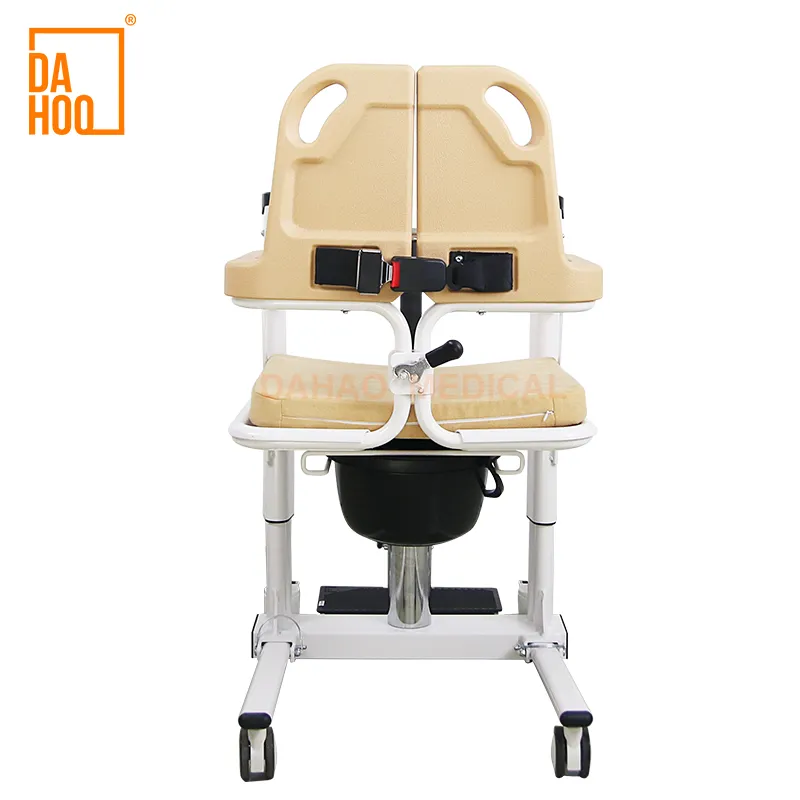
What guidelines should nursing staff follow when using a lifting transfer chair?
1. Remember the "Lock Before Turning" Principle
The wheels must be locked before any operation.
2. Avoid Single-Hand Operation
Lifting, transferring, and pushing should all be done with both hands to maintain equipment stability.
3. Do Not Force Operation
If the patient's position is incorrect, it must be readjusted, not forcibly pushed or pulled.
What precautions should patients take when using a height-adjustable transfer chair?
1. Wear appropriate clothing
Avoid:
• Long skirts
• Loose clothing
• Floor-length trousers
To prevent them from getting caught in the wheels or the lifting mechanism.
2. Maintain a stable posture
• Hold onto the armrests with both hands.
• Keep your back firmly against the wall.
• Do not move your upper body suddenly.
3. Follow the instructions of the caregiver throughout the process
Maintaining communication can reduce errors.
How to choose a safer height-adjustable transfer chair?
1. Choose a medical device certified product
For example:
• CE
• FDA
• Medical device registration number
• ISO13485
2. Check the weight-bearing capacity
Ensure the weight-bearing capacity meets the patient's needs.
3. The materials and structure must be reliable
Prefer:
• Medical-grade aluminum alloy
• Reinforced steel structure
4. High lifting stability
The smoother the lifting, the safer.
Daily Maintenance and Safety Inspection of the Lifting and Transfer Chair
1. Daily Inspection
• Brakes
• Seat surface
• Seat belts
• Lifting motor
• Casters
2. Monthly Maintenance
• Clean and lubricate the structure
• Check for loose screws
• Inspect the lifting system
3. Replace any worn parts immediately
Any wear will reduce safety.
Where are your products sold?
Dahao Medical products are supplied to more than 100 countries worldwide, serving hospitals, distributors, and healthcare brands. As a global manufacturer based in China, we have built a strong international sales network that ensures efficient delivery and reliable supply. Our high quality products are widely recognized in markets across Europe, North America, Asia, and beyond. Customers can confidently buy from us knowing that we meet international standards and provide professional support for all purchasing needs.