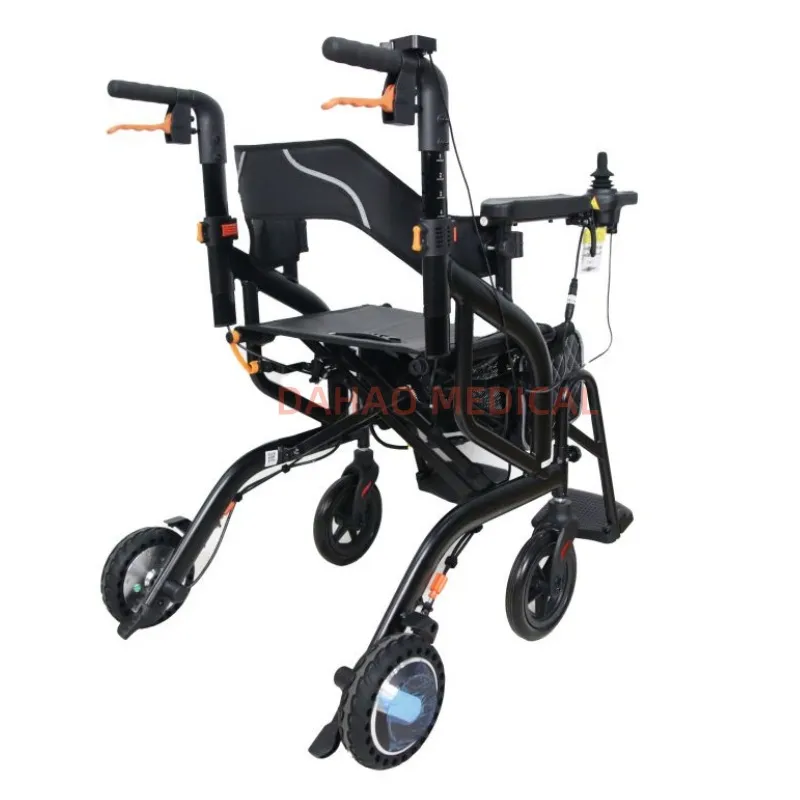
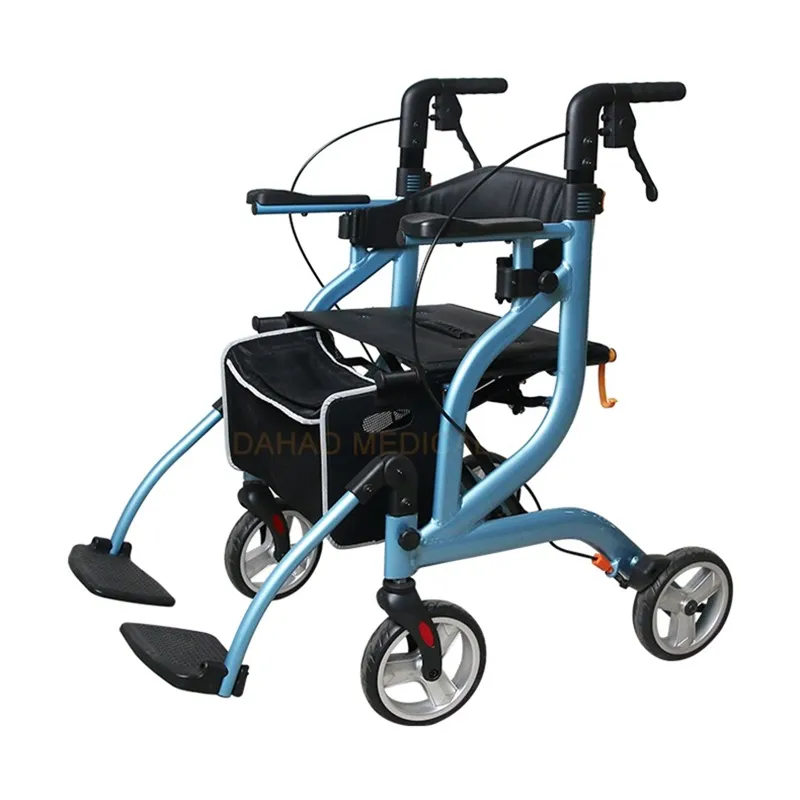
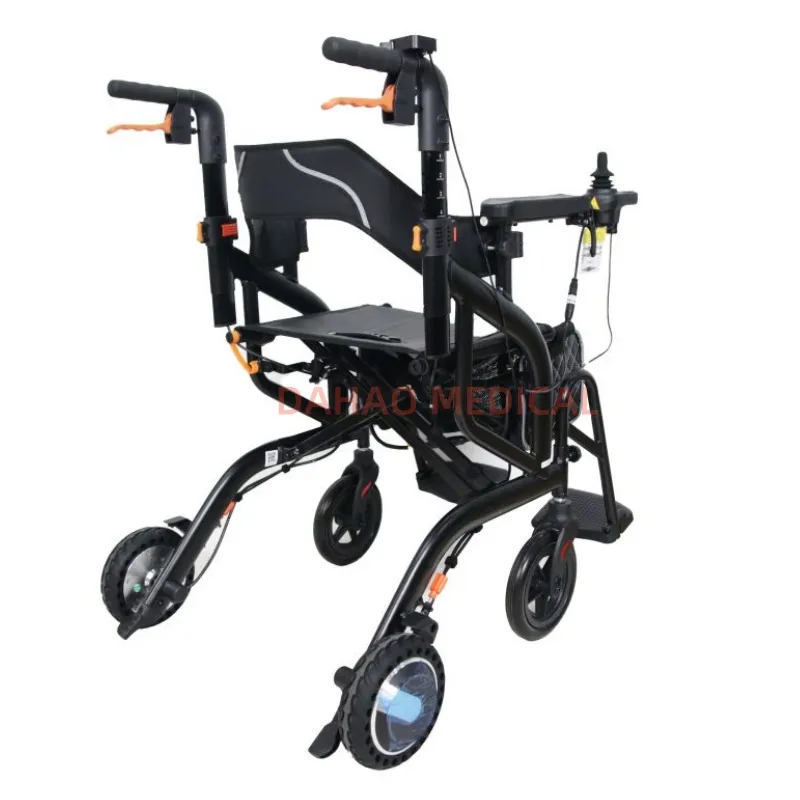
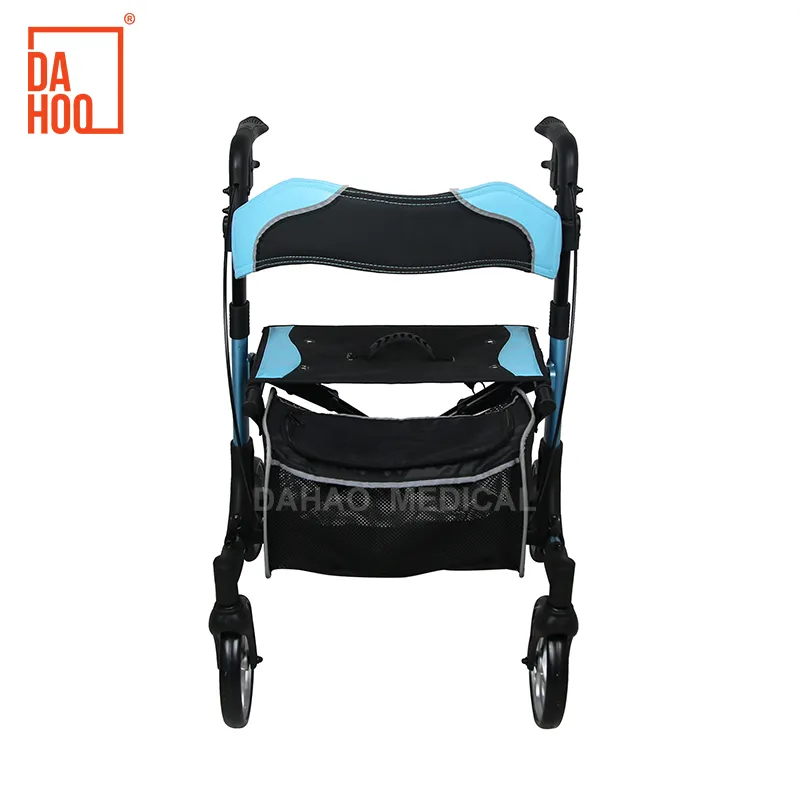
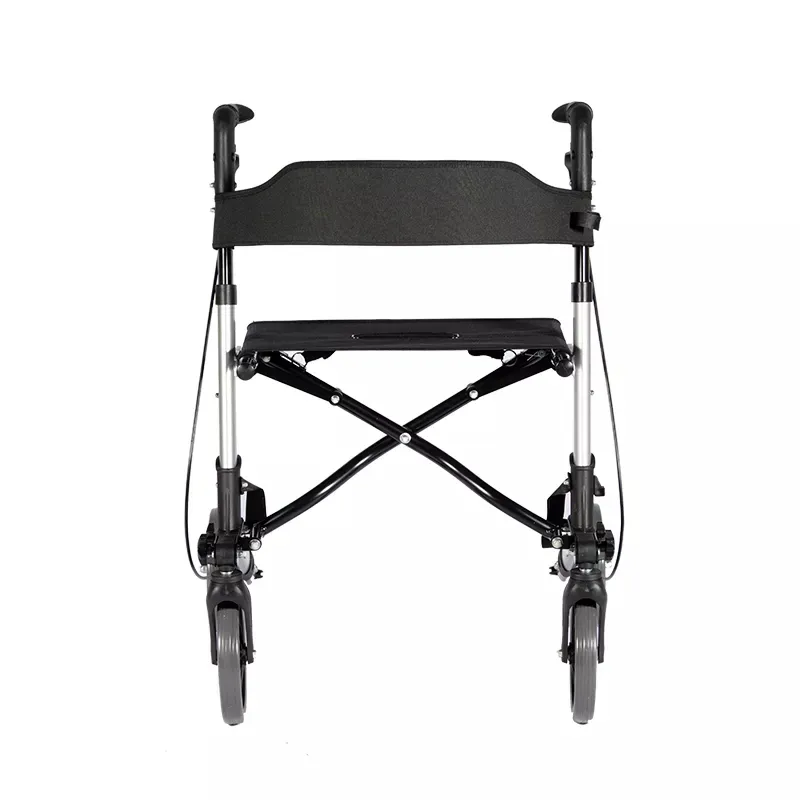
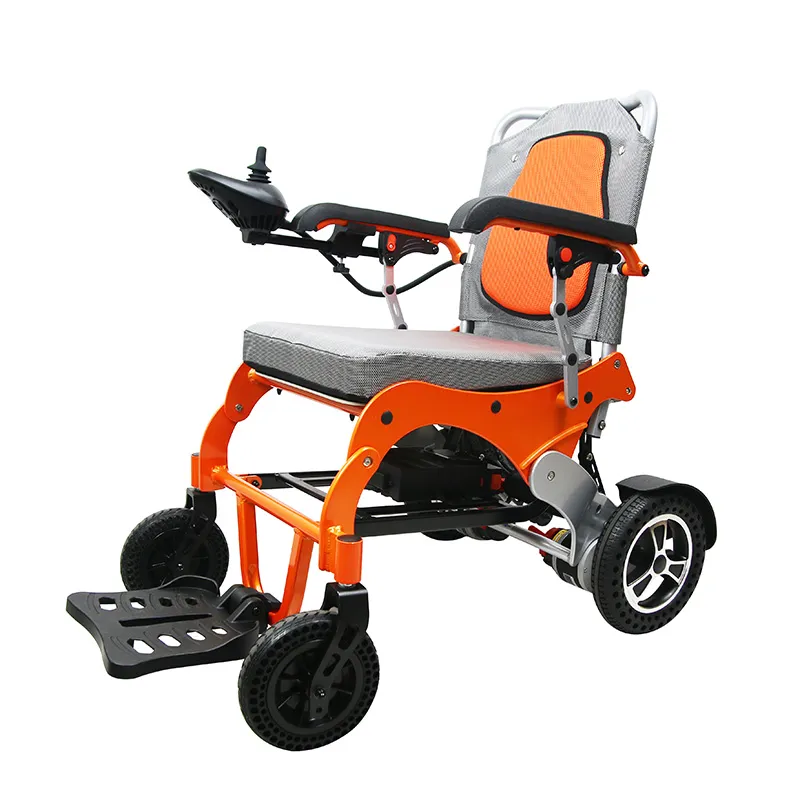
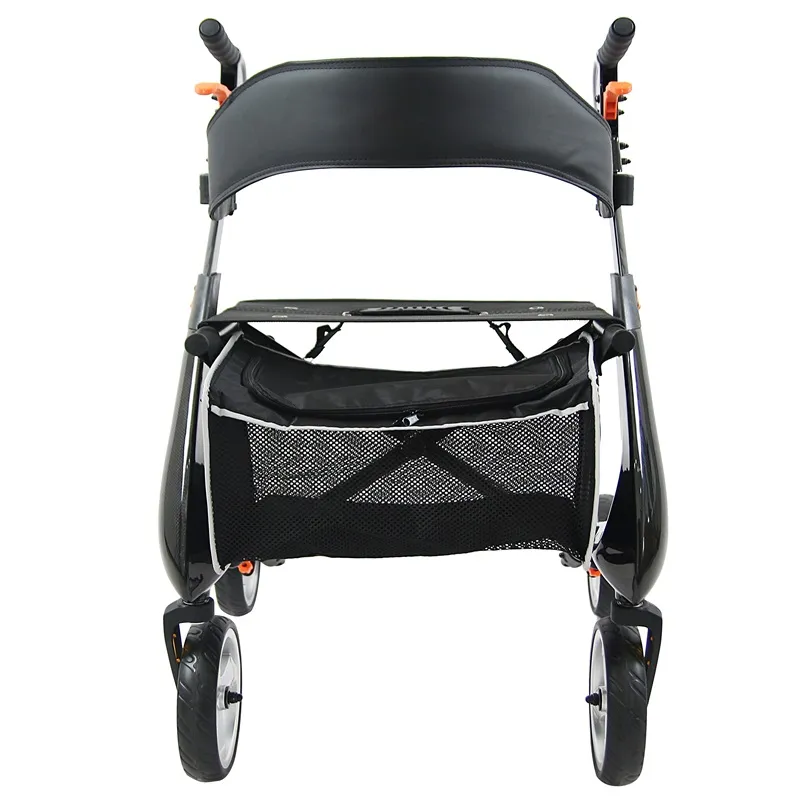
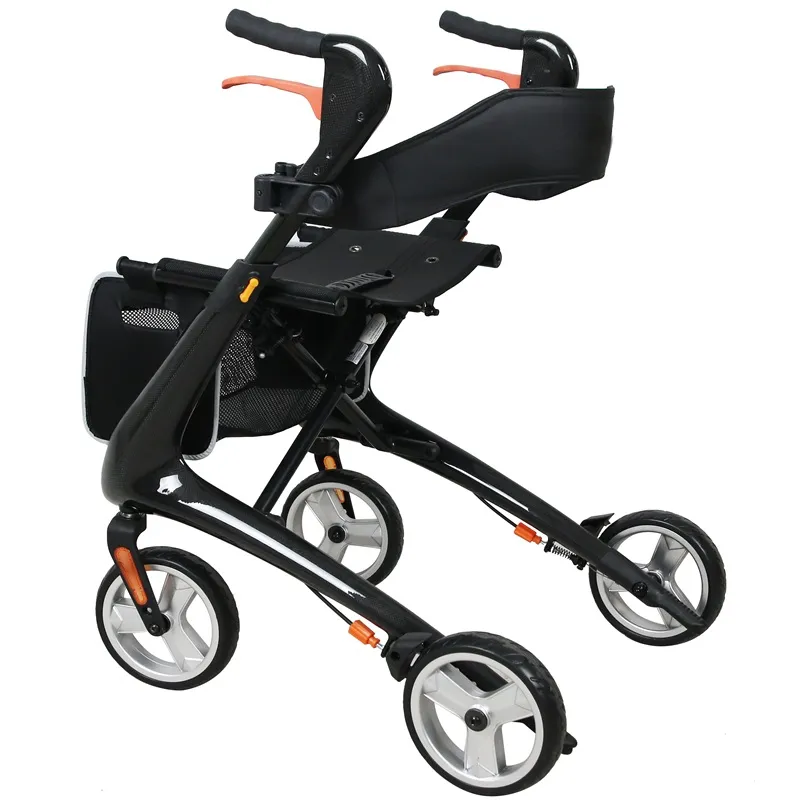
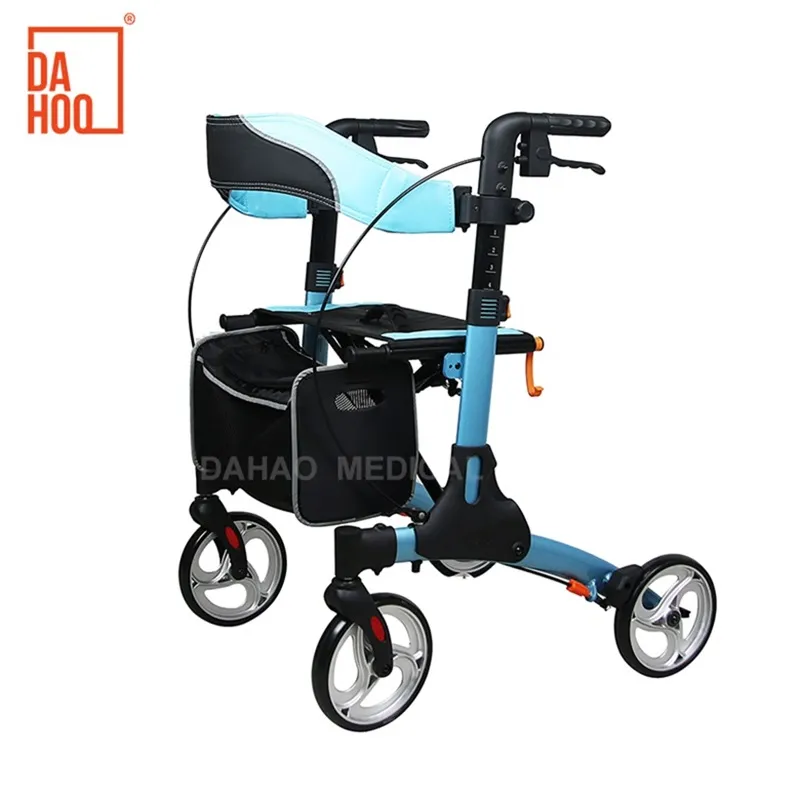
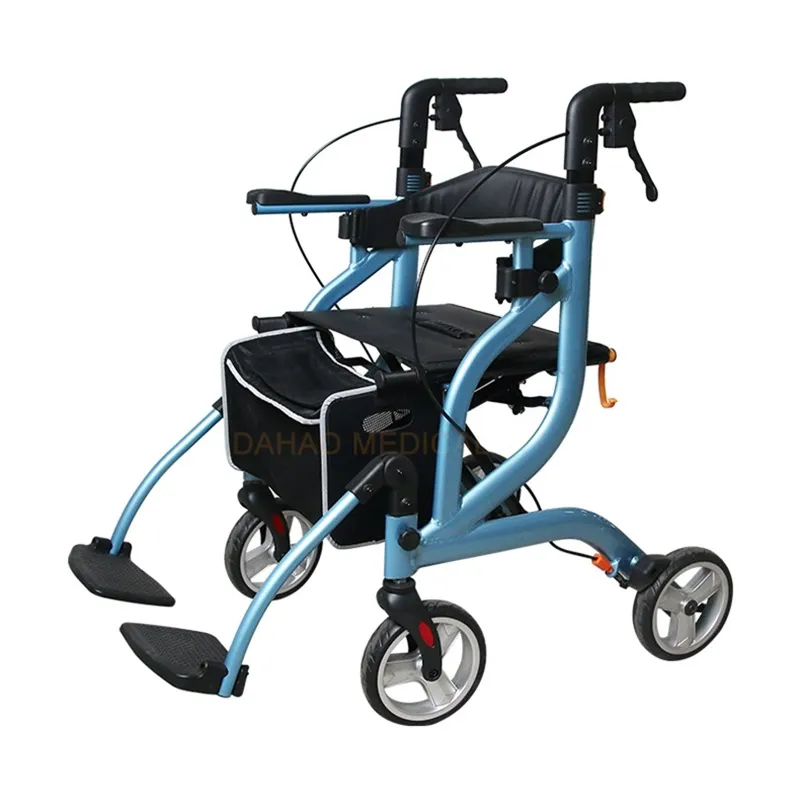
There is no absolute "better" option—only the one that is "more suitable." However, for most individuals with compromised balance or those requiring more secure support, the 4-wheel rollator walker is typically the superior choice.
Absolutely not!
A 4-wheeled rollator is a "walking aid," not a "transportation tool."
Its design purpose is to help users walk independently and maintain balance, not to be pushed by others or to be sat on and propelled.
The following situations suggest that you may benefit from using a 4-wheeled walker:
1. You frequently feel unsteady or wobbly while standing.
2. You experience an unsteady gait or drift to one side while walking.
3. You lose your center of gravity when turning corners.
4. You feel weakness in your legs or tire easily.
If a user is unable to safely control the device, cannot maintain their balance, or if the surrounding environment is unsuitable for wheeled mobility aids, a 4-wheeled walker should not be used.
Using a 4-wheeled walker under unsuitable conditions not only fails to provide assistance but also poses a significant safety hazard.
Advantages of four-wheeled walking aids include:
• Easier walking
• More natural gait
• Better suited for long distances and outdoor activities
Disadvantages include:
• Less static support than wheelless walking aids
• Requires a certain level of maneuverability
The answer often points to a tool that assists walking while providing stable support—a four-wheeled walking aid.
When a person can still walk but is unsteady, a four-wheeled walking aid helps them walk more safely and further, while maintaining physical function, compared to using a wheelchair directly.
Among existing materials, carbon fiber 4-wheeled rollators can weigh approximately 6 kg, making them one of the lightest types currently available.
Their advantages include:
• Extremely light weight
• High-strength structure
• Excellent portability
• Easy folding
While canes are lightweight and simple, they have significant limitations in terms of stability, support capacity, load-bearing capacity, operation, and safety. 4-wheeled rollators, with wheels, brakes, and a seat, offer more comprehensive walking support, making them a preferred choice for many.
International aviation regulations (such as IATA guidelines) typically classify 4-wheel rollators as "mobility aids," similar to wheelchairs, canes, and walking frames. These devices must be allowed to be transported with passengers and are not included in checked baggage allowance.
A 4-wheel rollator is safe when used correctly, with reasonable weight, and when the user has a certain level of balance; however, it is very easy to tip over if operated improperly, excessively weighted, or if the user is in poor physical condition.