

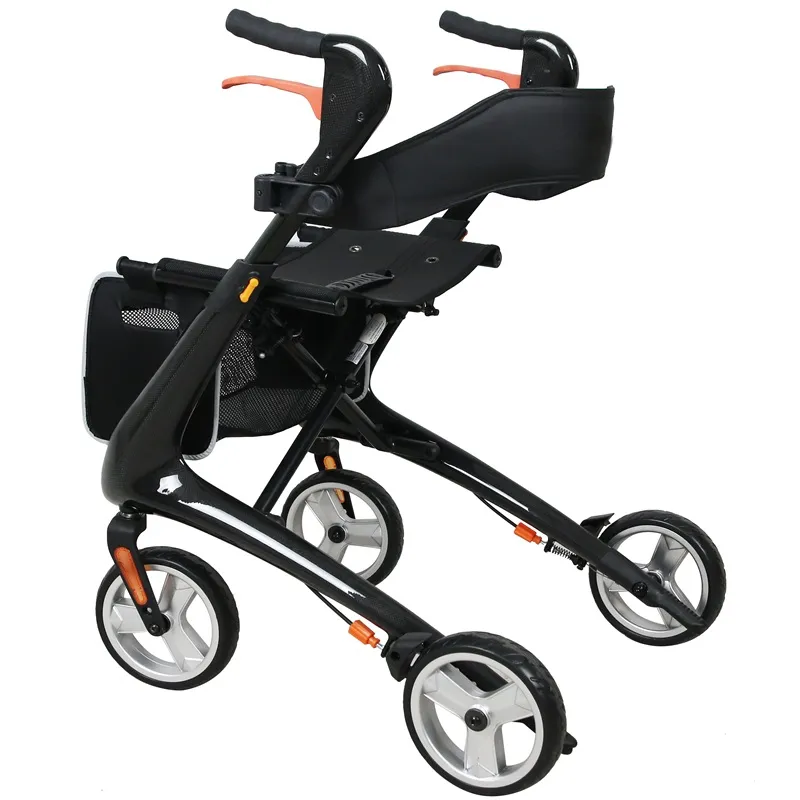
The 4-wheel rollator is a widely used mobility aid that offers excellent support and a sense of freedom to many individuals with limited walking ability. However, a 4-wheel rollator is not a suitable aid for everyone, nor is it appropriate for use in every situation.
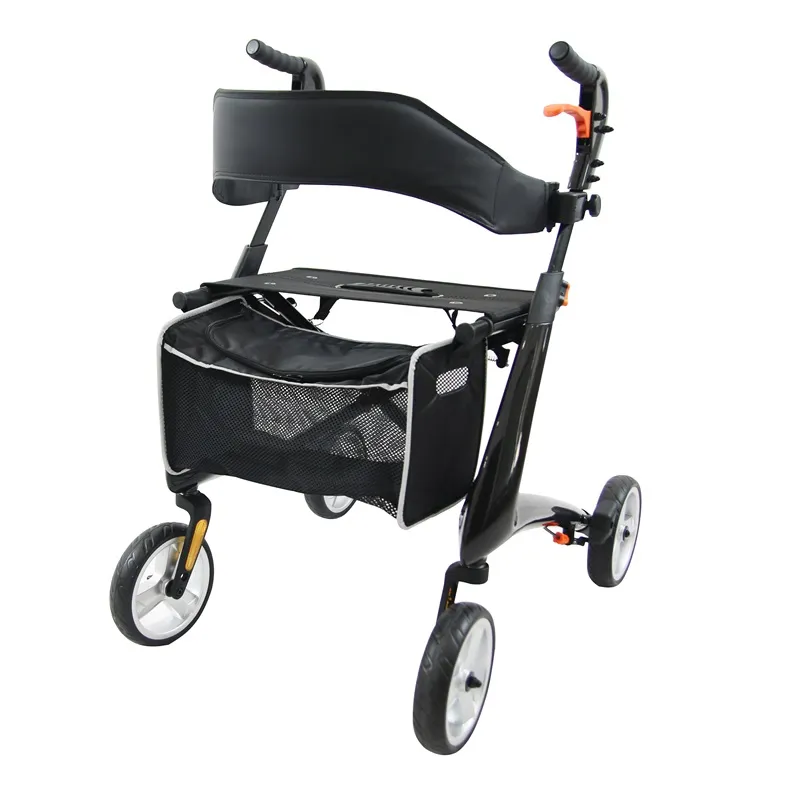
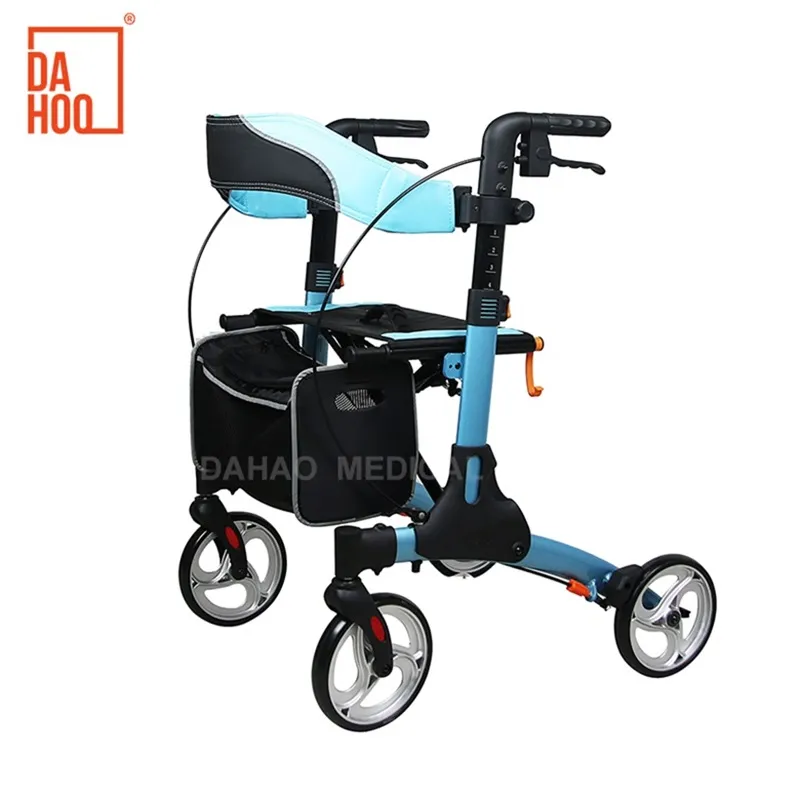
While it is lightweight, easy to push, stable, equipped with a braking system, and often features a seat and storage space, its design philosophy is predicated on the assumption that "the user is able to maintain basic balance and possesses a certain degree of upper-body strength."
If a 4-wheel rollator is used in an unsuitable context, it may not only fail to provide the necessary support but could also pose a safety hazard. Therefore, understanding "when not to use a 4-wheel rollator" is a crucial step in ensuring safety and selecting the appropriate mobility aid.
This article will delve into various perspectives—including structural design, physical condition, safety risks, and environmental factors—to explore the specific scenarios in which a 4-wheel rollator should be avoided, thereby assisting users and caregivers in making informed decisions.
Why Is It Crucial to Pay Special Attention to "Situations Where a 4-Wheel Rollator Is Unsuitable"?
The 4-wheel rollator is designed to:
•Assist in maintaining walking balance
•Provide light to moderate physical support
•Allow the user to sit down briefly and rest when fatigued
•Enhance the independence of individuals with relatively intact mobility
However, it cannot:
•Provide the comprehensive, full-body support offered by a standard walker frame
•Completely compensate for a user's lack of intrinsic balance
•Offer stable support to individuals with severe mobility impairments
•Ensure safe walking in extremely complex or hazardous environments
Consequently, clearly identifying "the situations in which a 4-wheel rollator should not be used" is absolutely vital for preventing falls, accidental slips, or a sudden loss of support.
Under What Physical Conditions Should a 4-Wheel Rollator Be Avoided?
Safe usage of a 4-wheel rollator requires the user to possess a certain level of physical capability; otherwise, safety cannot be guaranteed.
1. Can a 4-wheel rollator still be used if one is completely unable to maintain balance?
No.
The structural stability of a 4-wheel rollator relies, in part, on the user's own ability to maintain balance. If:
•Your body sways significantly while standing
•You are unable to maintain an upright position independently
•You require strong physical support to stabilize your body
•You are unable to distribute your weight evenly
•The walker tips forward with just a gentle push
Then using a 4-wheeled walker is extremely dangerous.
More Suitable Alternatives:
In such cases, more stable mobility aids—such as a standard walker frame or a wheelchair—are typically more appropriate.
2. Is a 4-wheeled walker suitable if I have insufficient hand strength?
No, it is not suitable.
A 4-wheeled walker requires the user to maintain a firm grip on the handles and operate the brakes. Therefore, if you experience any of the following:
•Inability to maintain a firm grip
•A sensation of weakness even with minimal exertion
•Severe joint pain
•Inability of the wrists to provide stable support while pushing
•Inability to operate the brakes effectively
Using a 4-wheeled walker could lead to instability or even a fall.
3. Can I use a 4-wheeled walker if I am unable to control its speed?
No, it is not suitable.
If a user's physical condition causes them to:
•Push the walker too fast
•Lose control of the walker while moving downhill
•Experience sudden surges in walking speed
•React slowly or lack the strength to apply the brakes
The risk of falling increases significantly.
Since 4-wheeled walkers are designed to roll, it is essential that the user be able to effectively control their speed; otherwise, using the device poses a safety hazard.
4. Can I use a 4-wheeled walker if I must rely on the device to bear my weight in order to stand?
No, you cannot.
A 4-wheeled walker is not suitable for users who require "full body weight support."
For example:
•Legs are almost completely unable to bear weight
•Lack of sufficient leg strength to stand
•Severe physical weakness resulting from a medical condition
•Requirement for the sturdy, fixed support provided by a standard walker frame
•Need to lean a significant amount of body weight onto the device using the arms
A 4-wheeled walker cannot provide this level of support and may tip over under such load.
5. Is a 4-wheeled walker suitable for individuals with severe cognitive impairments?
Generally, no, it is not suitable.
Severe cognitive impairments include:
•Inability to understand the purpose of the brakes
•Not knowing how to bring the walker to a stop
•Forgetting to engage the brakes before sitting down
•Inability to exercise appropriate judgment while pushing the walker
Such conditions can create an extremely high safety risk. In what environments should a 4-wheel walker not be used?
In addition to the user's own physical condition, environmental factors also determine whether a 4-wheel walker is suitable for use.
1. Can a 4-wheel walker be used on rugged terrain or extremely uneven surfaces?
Not recommended.
For example:
•Gravel paths
•Lawns/Grassy areas
•Steep slopes
•Muddy ground
•Crushed stone paths
•Uneven sidewalks
While 4-wheel walkers are suitable for indoor use and flat surfaces, they are not designed for extreme environments.
Even 4-wheel walkers equipped with large wheels cannot guarantee stability on very rough surfaces.
2. Can a 4-wheel walker be used in narrow spaces or areas requiring frequent turning?
Not suitable.
For example:
•Extremely narrow corridors
•Very cluttered rooms
•Small bathrooms
•Areas with numerous corners or turns
A 4-wheel walker requires a certain amount of clearance to turn; otherwise, it may get stuck or become unstable.
3. Should a 4-wheel walker be used on steep downhill slopes?
Not suitable.
Although 4-wheel walkers are equipped with braking systems, consider the following:
•Momentum is significant when moving downhill.
•Users with insufficient hand strength may be unable to firmly engage the brakes.
•The device can easily accelerate while being pushed.
•Overall stability is compromised.
Therefore, steep slopes constitute one of the most dangerous environments for using a 4-wheel walker.
4. Can a 4-wheel walker be used on slippery surfaces or in icy/snowy conditions?
Not recommended.
Slippery surfaces can lead to:
•Wheel slippage
•Reduced braking effectiveness
•Loss of balance by the user
The risks associated with using a 4-wheel walker are particularly high in icy or snowy conditions.
Should a 4-wheel walker be avoided if the user's posture or operational ability is inadequate?
The manner in which the device is operated also determines whether its use is appropriate.
1. Can a person who is unable to engage the brakes use a 4-wheel walker?
Not suitable.
The seat on a 4-wheel walker can only be used safely after the brakes have been fully engaged and locked. If the user:
•Frequently forgets to engage the brakes
•Is unable to determine whether the brakes are locked
•Exhibits unsteady movements when using the brakes
The chair may slide, creating a significant safety risk.
2. Is a 4-wheel walker suitable for someone whose arms cannot maintain a steady position while pushing?
No, it is not suitable.
A 4-wheel walker requires both arms to maintain a stable grip and pushing motion. It is unsuitable if the user:
•Cannot maintain adequate control using a single hand
•Cannot keep both arms at an appropriate height
•Has to stoop over while pushing
•Exhibits a clearly unsteady pushing posture
These issues can easily lead to a shift in the center of gravity, thereby increasing the risk of falling.
3. Is a 4-wheel walker suitable for someone who cannot simultaneously control both direction and speed?
No, it is not suitable.
A 4-wheel walker requires continuous directional control and speed management. If a user is unable to coordinate these two abilities, it may result in:
•Drifting off course
•Colliding with obstacles
•Surging forward abruptly
These are all considered high-risk situations.
Are there specific health conditions that make the use of a 4-wheel walker unsuitable?
Certain health conditions can indeed affect a user's suitability for a 4-wheel walker.
1. Can a person suffering from severe dizziness or vertigo use a 4-wheel walker?
No, it is not suitable.
Dizziness can lead to:
•Difficulty maintaining one's center of gravity
•Unsteadiness or swaying while pushing
•Inability to accurately perceive the surrounding environment
•An increased susceptibility to falls
Such conditions make the use of any wheeled mobility aid highly inappropriate.
2. Is a 4-wheel walker suitable for a person with severe visual impairments?
No, it is not suitable.
Insufficient vision can result in:
•Inability to detect uneven or irregular surfaces
•Failure to spot obstacles in time
•Difficulty anticipating changes in the walker's direction
This significantly increases the risk of accidents.
3. Can a person with a neurological condition that causes severely delayed reaction times use a 4-wheel walker?
No, it is not suitable.
This is because they are unable to react quickly enough to:
•Engage the brakes
•Adjust their direction
•Avoid obstacles
This renders the rolling nature of the 4-wheel walker inherently dangerous.
Under what circumstances should a 4-wheel walker not be used?
The following is a summary of the most critical points:
1. Unsuitable Physical Condition
Includes:
•Inability to maintain balance
•Severe upper-limb weakness
•Inability to effectively operate the brakes
•Complete inability to bear one's own weight independently
•Severe cognitive impairment
•Inability to control walking speed
2. Unsuitable Environment
Includes:
•Steep slopes
•Slippery surfaces
•Extremely uneven terrain
•Confined spaces
•Crowded areas
•Icy or snowy surfaces
3. Insufficient Operational Capability
Includes:
•Inability to engage the brakes/locks
•Inability to maintain proper posture
•Inability to simultaneously control direction and speed
4. Specific Health-Related Limitations
Includes:
•Dizziness
•Visual impairment
•Neurological conditions resulting in delayed reaction times
If a user is unable to safely control the device, cannot maintain their balance, or if the surrounding environment is unsuitable for wheeled mobility aids, a 4-wheeled walker should not be used.
Using a 4-wheeled walker under unsuitable conditions not only fails to provide assistance but also poses a significant safety hazard.