

When shopping for an electric wheelchair, weight is often the first parameter users focus on—and also the one most easily misunderstood. Many people immediately ask: "Is lighter always better?" or "At what weight does it qualify as 'lightweight'?"
In reality, the weight of a lightweight electric wheelchair is not an arbitrary figure; rather, it is a technical metric that requires a comprehensive assessment involving structural integrity, safety, maneuverability, and intended use scenarios.
From a professional perspective, this article will systematically analyze the reasonable weight range for lightweight electric wheelchairs, the key factors influencing their weight, and why "lightweight" does not equate to "extreme weight reduction." Our goal is to help you truly understand:
What constitutes a scientifically sound, reasonable, and practical weight for a lightweight power wheelchair.
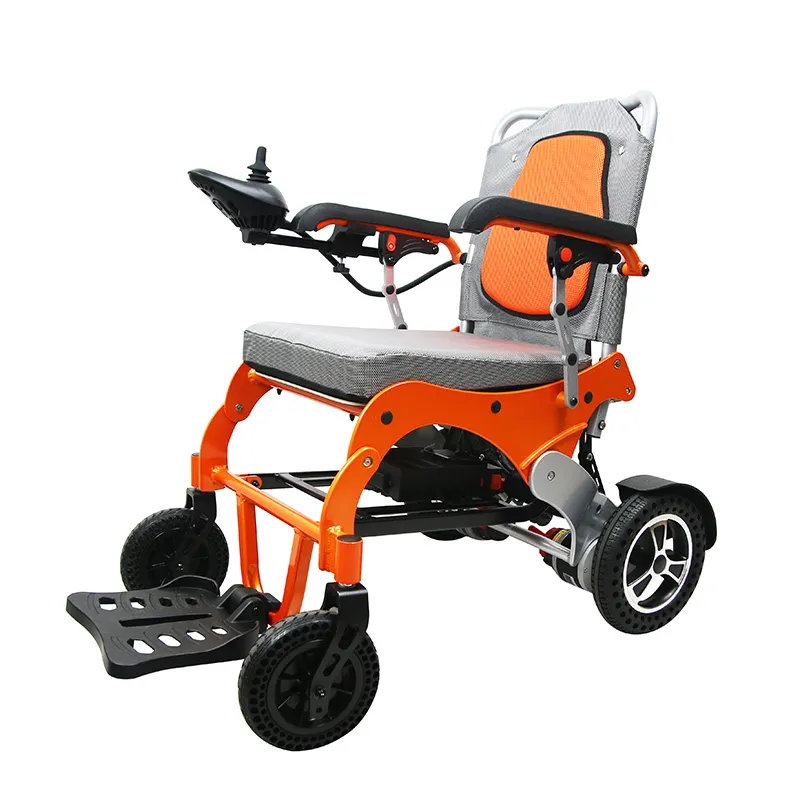
What Defines a Lightweight Electric Wheelchair?
A lightweight electric wheelchair does not simply refer to "the absolute lightest electric wheelchair available." Instead, it refers to a chair designed to minimize overall vehicle weight—while still guaranteeing safety, stability, and essential functionality—in order to enhance the following user experiences:
•Easier lifting and carrying
•Effortless manual pushing
•More convenient folding
•Greater adaptability for travel and mobility
•Reduced physical burden during daily use
Therefore, the emphasis for a lightweight power wheelchair lies in striking a balance between "Lightness + Usability + Safety," rather than sacrificing structural integrity or stability solely for the sake of reducing weight.
What Is the Ideal Weight Range for a Lightweight Electric Wheelchair?
Based on current mainstream product designs and user requirements, the weight of lightweight electric wheelchairs can generally be categorized into several distinct ranges:
1. 20–25 kg (including battery)
This is currently the widely accepted "ideal" range for lightweight wheelchairs.
Lightweight electric wheelchairs falling within this weight range typically feature:
•Robust structural strength
•Reliable motors and drive systems
•Adequate weight-bearing capacity
•A superior experience regarding folding and portability
For the majority of users who require frequent outings or need to load the chair into a vehicle, this weight range offers an optimal balance between practicality and safety.
2. 15–20 kg (including battery)
This weight range falls into the category of high-end, premium lightweight electric wheelchairs.
Typically, this requires:
•Lightweight materials (such as aluminum alloy or carbon fiber)
•A streamlined yet mature structural design
•A more logical arrangement of components
This category of lightweight electric wheelchairs excels in terms of portability, though it places high demands on both design and manufacturing processes.
3. 25–30 kg (including battery)
While some vendors may still market these as "lightweight electric wheelchairs," they actually approach the lower weight limit of standard electric wheelchairs.
Products in this category exhibit distinct differences in the following areas:
•They require significantly more effort to lift or carry
•They remain relatively bulky even after being folded
•They are less user-friendly for individuals who need to handle the device independently
Strictly speaking, this weight range can only be considered "relatively light," rather than representing the ideal lightweight power wheelchair.
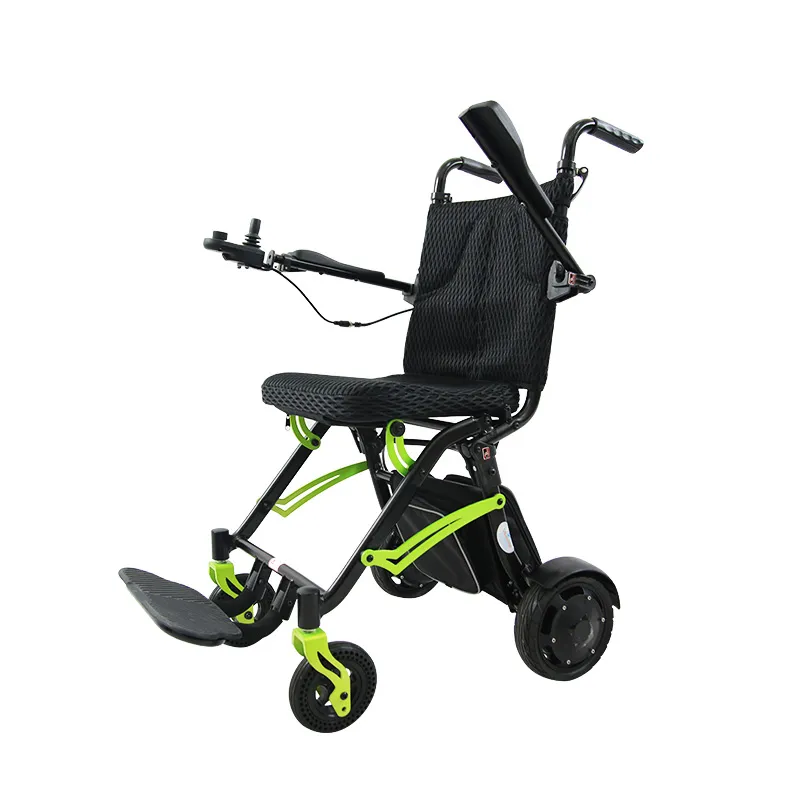
Why shouldn't lightweight power wheelchairs blindly pursue extreme weight reduction?
Many users fall into a common misconception when making a purchase:
"Since it's a lightweight power wheelchair, surely the lighter, the better."
However, from both an engineering and a practical usage perspective, excessive weight reduction can actually introduce risks.
1. Insufficient Structural Strength
If a lightweight power wheelchair attempts to reduce weight by:
•Reducing the amount of structural support
•Using smaller-diameter tubing
•Opting for lower-strength materials
Then, over the course of long-term use, the following issues may arise:
•Frame deformation
•Loosening of connectors or joints
•Compromised stability
The "lightness" of a lightweight electric wheelchair must be built upon a foundation of structural safety.
2. Stability and Center of Gravity Issues
An electric wheelchair that is excessively light—particularly if its center of gravity is poorly designed—may:
•Become unstable when turning
•Tip forward when ascending inclines
•Wobble or shake during braking
For lightweight electric wheelchairs, an appropriate weight is essential for maintaining overall stability.
3. Reduced User Comfort
Extreme weight reduction often entails:
•Thinner seat cushions
•Fewer structural support elements
•Reduced shock absorption capabilities
This directly impacts the level of comfort experienced during prolonged use.
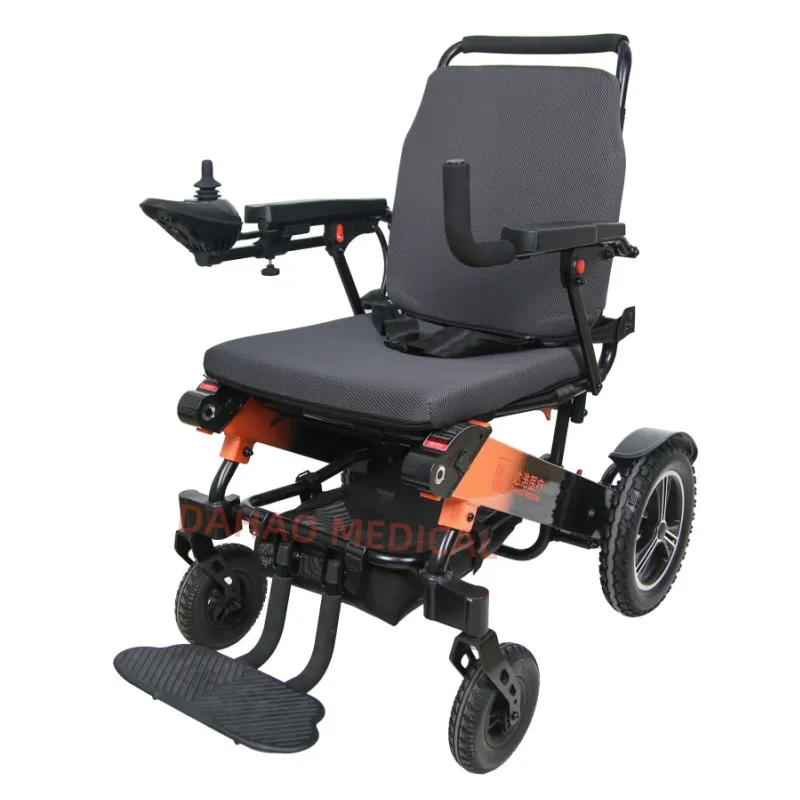
What factors primarily determine the weight of a lightweight power wheelchair?
To understand what constitutes a "reasonable weight," one must first understand the various components that contribute to the overall weight of a lightweight power wheelchair.
1. Frame Material
This is one of the core factors determining the weight of a lightweight power wheelchair:
•Steel Frame: Heaviest
•Aluminum Alloy Frame: Significantly lighter
•Carbon Fiber Frame: The ultimate in lightweight design
Given the same structural strength, the weight difference resulting from different materials is very pronounced.
2. Battery Type and Capacity
The battery accounts for a significant portion of the total weight in a lightweight power wheelchair.
•Lead-Acid Batteries: Heavy; not suitable for lightweight models
•Lithium Batteries: Lightweight; better suited for lightweight power wheelchairs
Even among lithium batteries, different capacities will still influence the overall weight of the vehicle.
3. Motor and Drive System
Dual-motor systems—or those with higher power output—are typically heavier, but they also provide a more stable power delivery.
Lightweight electric wheelchairs often strike a reasonable balance between power output and weight.
4. Folding and Support Structures
Structural components such as the folding mechanism, armrests, footrests, and backrests all contribute cumulatively to the overall weight.
Why distinguish between "weight with battery" and "weight without battery"?
When comparing the weights of lightweight power wheelchairs, a crucial—yet often overlooked—question is this: Does the listed weight include the battery?
1. "Weight with Battery" Reflects Real-World Usage
When users actually lift or operate the device, it is typically in its complete, assembled state; therefore, the weight including the battery serves as a more practical reference point.
2. "Weight Without Battery" Can Lead to Misjudgment
Listing the weight without the battery separately—while resulting in a smaller numerical figure—does not accurately reflect the true physical burden of the lightweight power wheelchair as a whole.
3. The Correct Method for Comparison
When comparing different lightweight power wheelchairs, you should strive to use a consistent standard (either comparing all models with batteries included, or all without).
Is the Weight of a Lightweight Electric Wheelchair Related to Its Weight Capacity?
Many people worry:
Does a lightweight electric wheelchair necessarily have a poor weight-bearing capacity?
In reality, the two are not strictly synonymous.
1. Smart Design Can Balance Lightness with Weight Capacity
By optimizing structural design and material selection, lightweight electric wheelchairs can indeed possess reliable weight-bearing capabilities.
2. Load-bearing capacity depends more on structural design than on weight alone.
Material strength, load distribution, and connection methods all influence the final load-bearing performance.
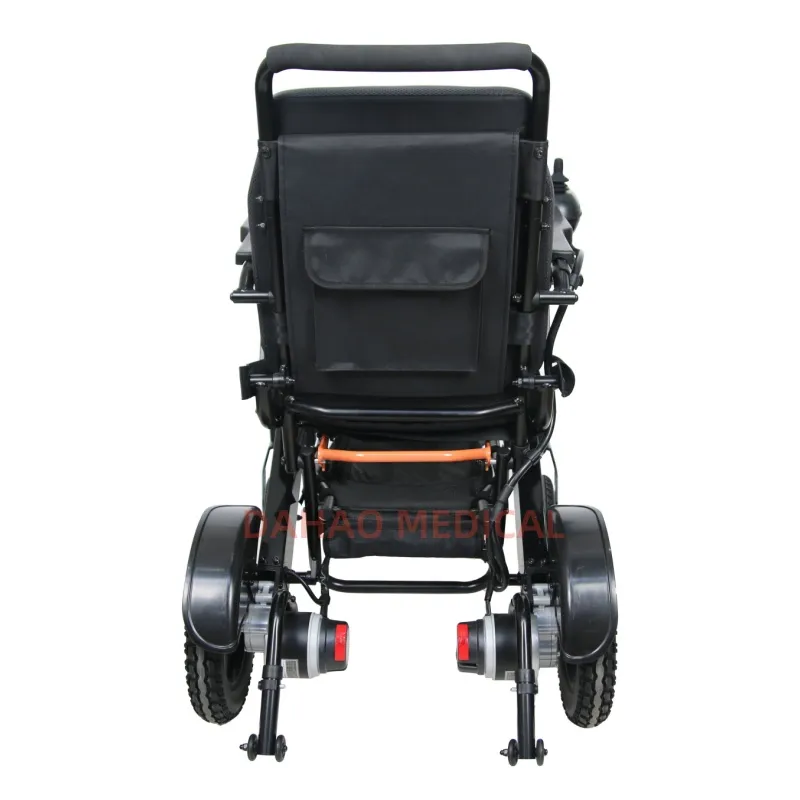
Does the ideal weight for a lightweight power wheelchair vary depending on the usage scenario?
Yes, different usage requirements entail different weight specifications.
1. Frequent outings and vehicle transport
It is more advisable to choose a lightweight power wheelchair with a lower overall weight.
2. Primarily indoor use
Weight requirements are relatively more flexible, with a greater emphasis placed on stability.
3. Independent users
A lighter lightweight electric wheelchair can reduce reliance on assistance from others.
How can one determine if the weight of a lightweight power wheelchair is appropriate?
When making a purchase, consider the following factors for a comprehensive assessment:
•Does the total weight of the wheelchair align with the materials used?
•Is the weight clearly specified (e.g., including or excluding the battery)?
•Does it maintain a stable structural integrity while remaining within the "lightweight" category?
•Does the weight compromise basic functionality or user comfort?
A truly excellent lightweight power wheelchair is not merely one that "looks light," but rather one that is effortless, safe, and reliable to use.
Why is "appropriate weight" considered more important than "minimum weight"?
The true value of a lightweight power wheelchair lies in alleviating burdens, not in creating new safety hazards.
A scientifically determined weight range ensures:
•More stable driving performance
•Greater peace of mind during long-term use
•A more balanced and responsive handling experience
This is precisely why, when making a professional selection, one should not simply chase after extreme weight figures.
What should be the weight of a lightweight power wheelchair?
Based on a comprehensive assessment of structural safety, user convenience, and practical needs:
•20–25 kg (including battery) represents the most universally applicable weight range for lightweight electric wheelchairs.
•15–20 kg (including battery) falls into the category of premium lightweight options.
•Being either too heavy or too light may negatively impact the actual user experience.
The truly appropriate weight for a lightweight electric wheelchair is the result of striking a harmonious balance between portability, stability, safety, and comfort.