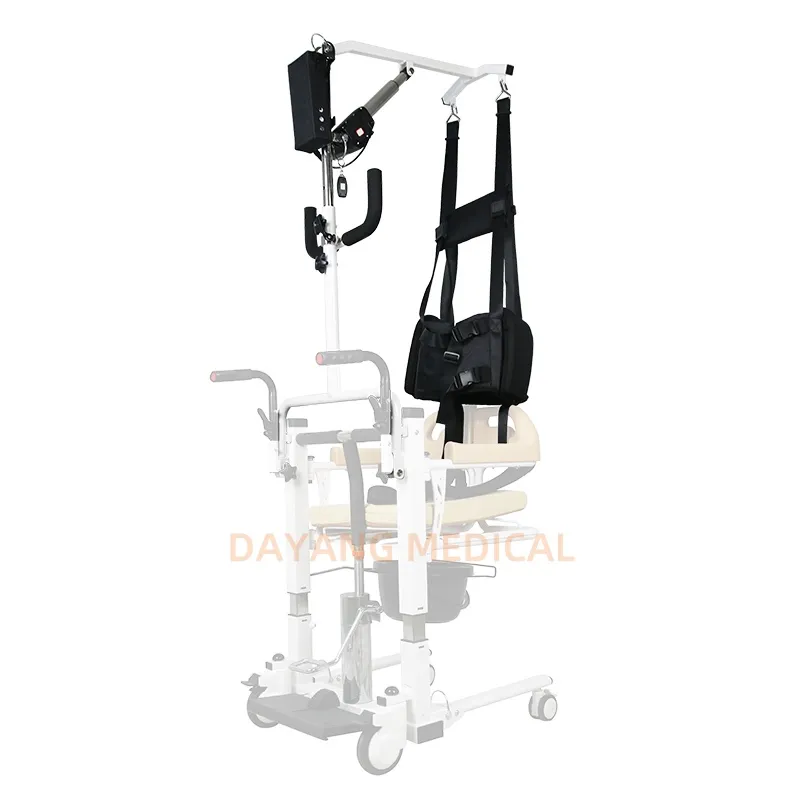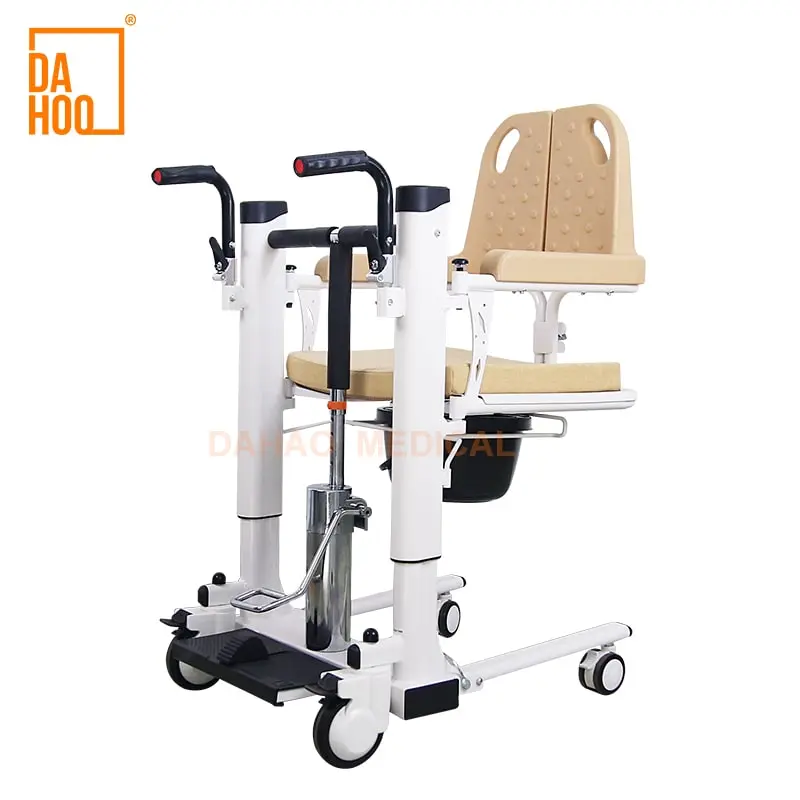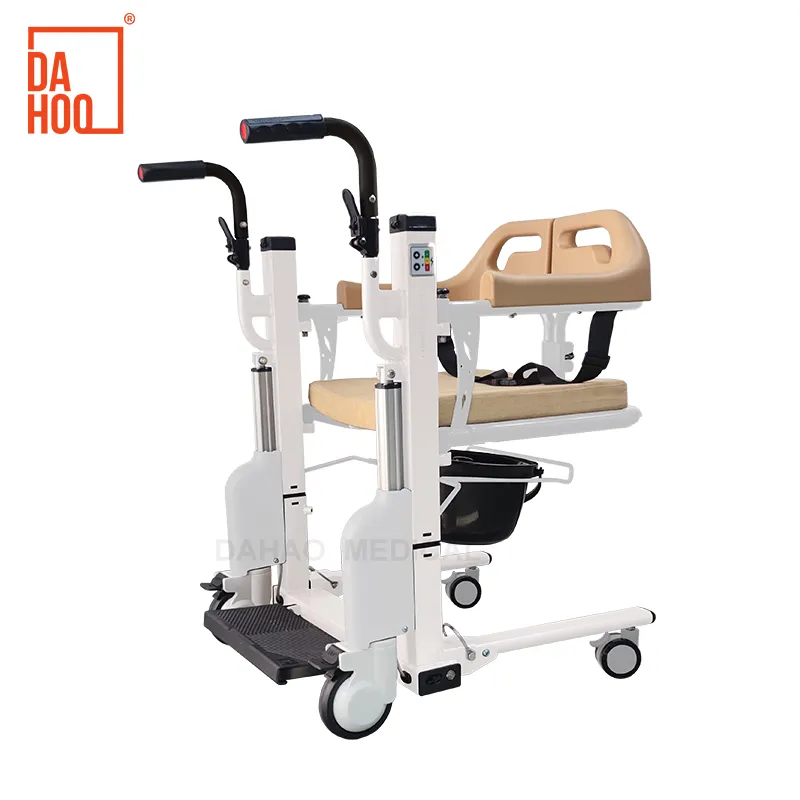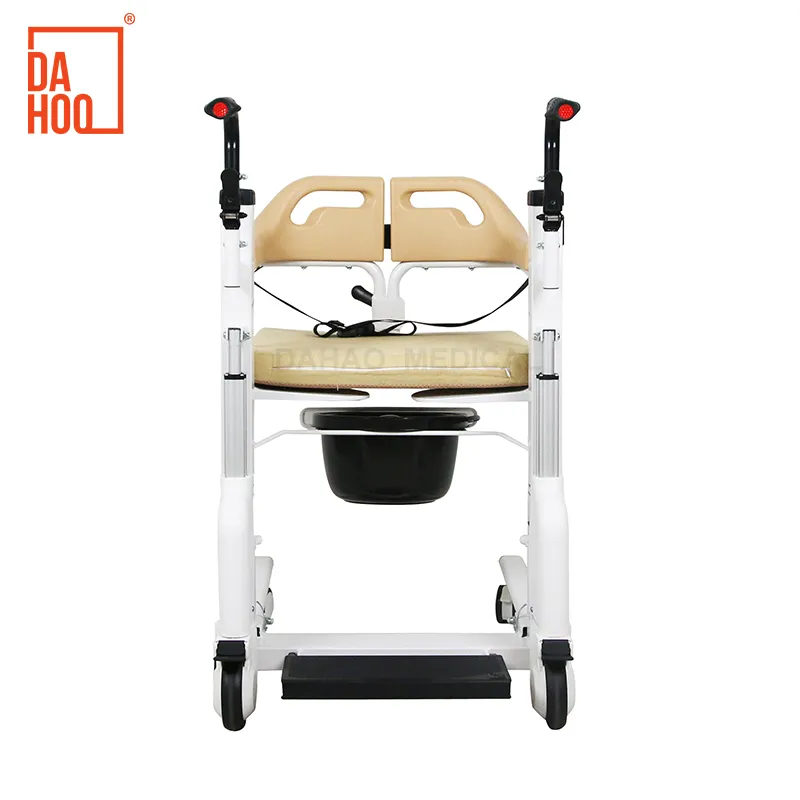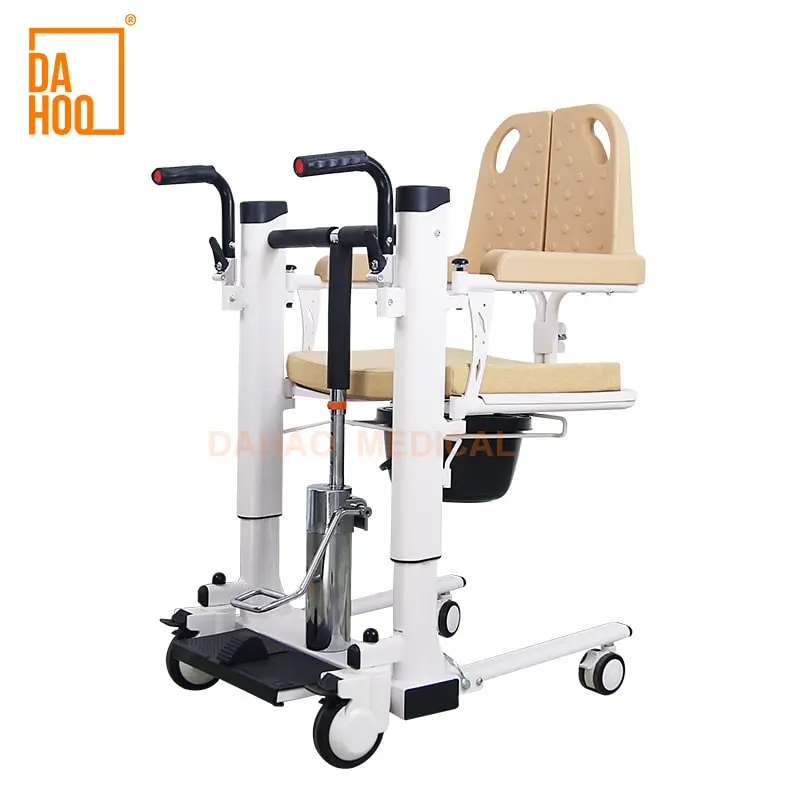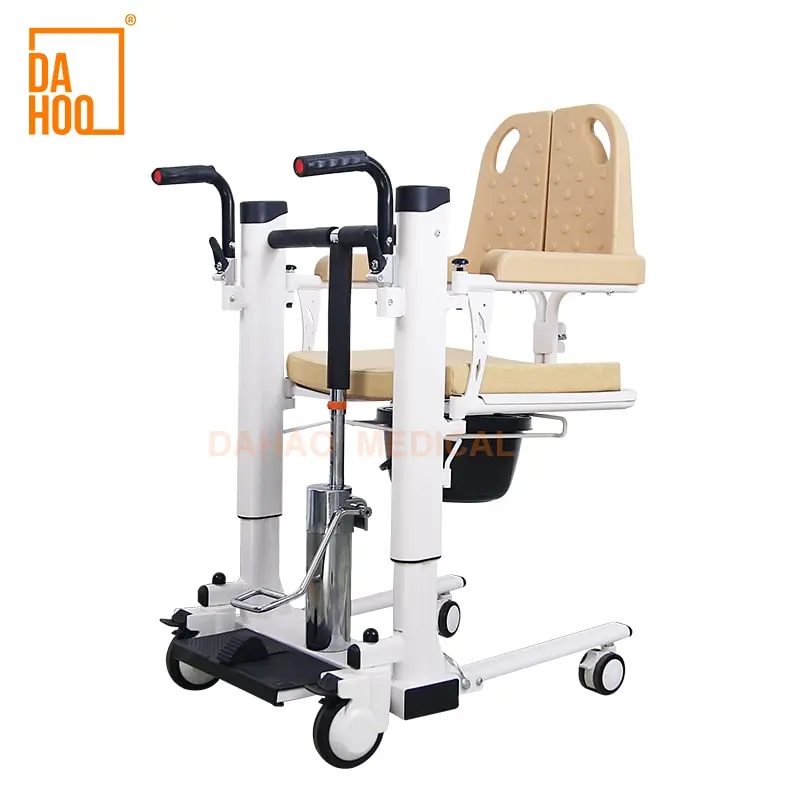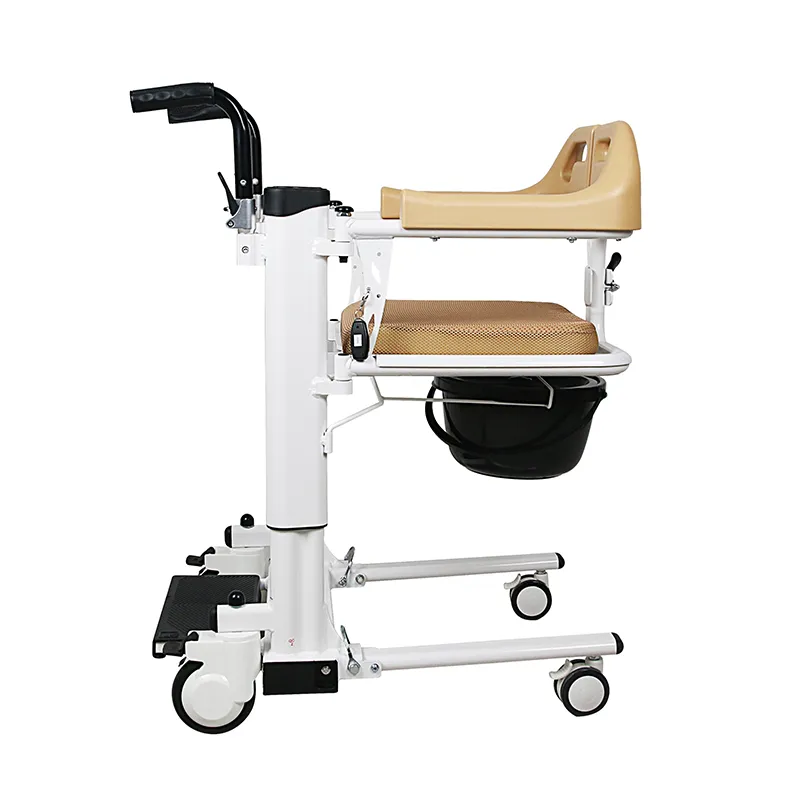

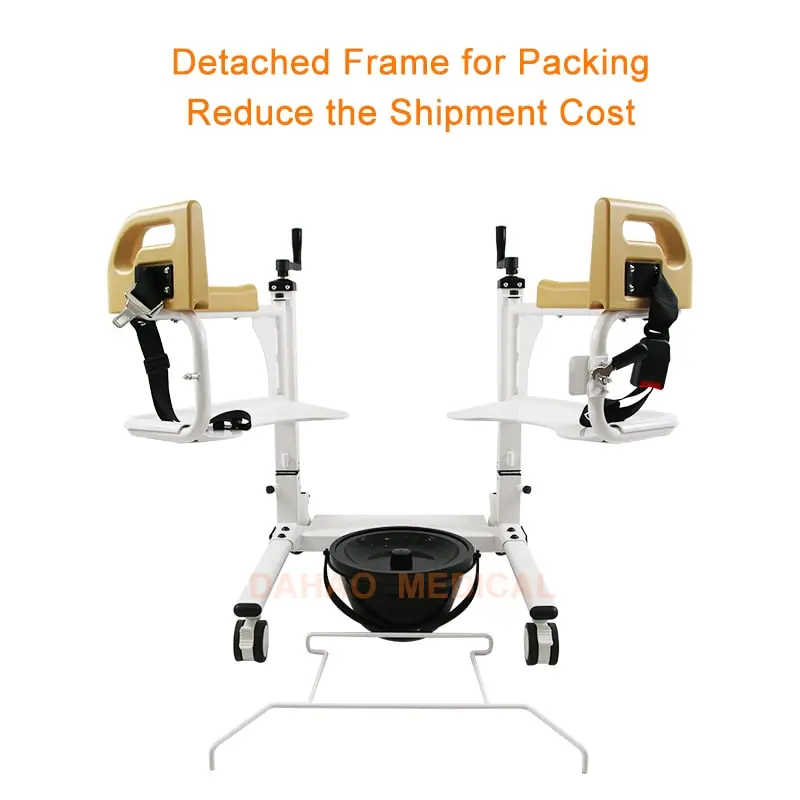
In most cases, an electric lift transfer chair is very suitable for the elderly.
It not only significantly reduces the risks of movement for the elderly but also makes it easier and safer for caregivers to complete transfers.
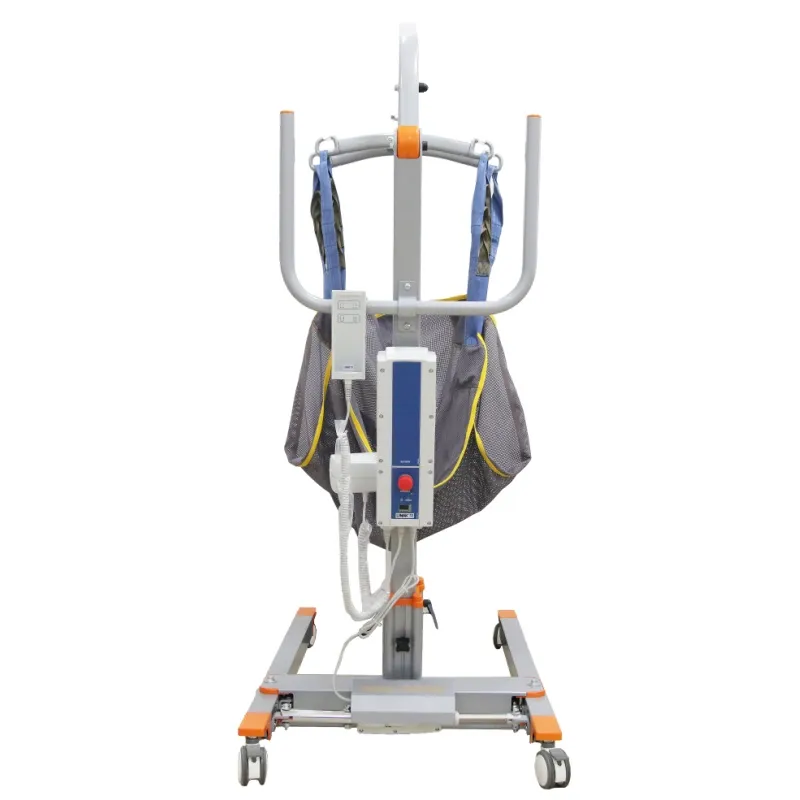
A patient transfer lifter is often referred to as a "sling-type transfer lifter" or "patient hoist." Unlike a patient transfer chair, a patient transfer lifter uses an electrically or manually driven suspension system to wrap and lift the patient's entire body using a sling.
A lift transfer chair is a professional assistive mobile device designed specifically for people with limited mobility, the elderly, people with disabilities, post-operative patients, and those requiring nursing assistance.
Yes, a lift transfer chair falls under the category of medical devices, and it must comply with relevant medical device standards or regulatory requirements in different countries and regions.
On the first day of the new year, Dahao Medical extends its sincere wishes to its global partners and users: May the new year bring health and prosperity, and may high-quality medical mobility equipment accompany you on every warm journey.
Happy New Year!
Hydraulic lift transfer chairs use a hydraulic cylinder as the power core, achieving lifting and lowering through pressure changes in the hydraulic system.
Manual chairs typically use a mechanical structure for lifting and lowering. They do not rely on hydraulic or pneumatic pressure, but instead use human power to drive the mechanical structure to raise or lower the seat.
In this season of warmth and hope, Dahao Medical, from Guangdong, China, extends its sincerest holiday greetings to all its global partners and customers.
Wishing everyone a Merry Christmas and a prosperous New Year!
Yes. Many height-adjustable transfer chairs have electric or hydraulic lifting systems, allowing caregivers to easily adjust the chair's height to be level with the toilet. This allows patients to sit down and stand up more smoothly and naturally.
Many patients' biggest concern in daily life isn't mobility issues, but rather the risk of slipping, falling, or being excessively lifted during transfers. The core design principle of a lift transfer chair is to ensure patients are:
• Safer
• More comfortable
• Less strenuous
• Maintain dignity
• Reduced risk of injury