

In nursing, rehabilitation, and medical care settings, patient transfer has always been a crucial yet challenging process. To improve transfer efficiency, reduce the burden on caregivers, and ensure patient safety, more and more families and institutions are using assistive transfer devices.
Among these, "patient transfer chair" and "patient transfer lifter" are the two most common types of tools, but many people are unclear about the fundamental differences between them.
So, what are the differences between a patient transfer chair and a patient transfer lifter? Which patients are they suitable for? And how should you choose between them? This article will provide an in-depth analysis from multiple dimensions, including structural design, target users, safety, and nursing applications.
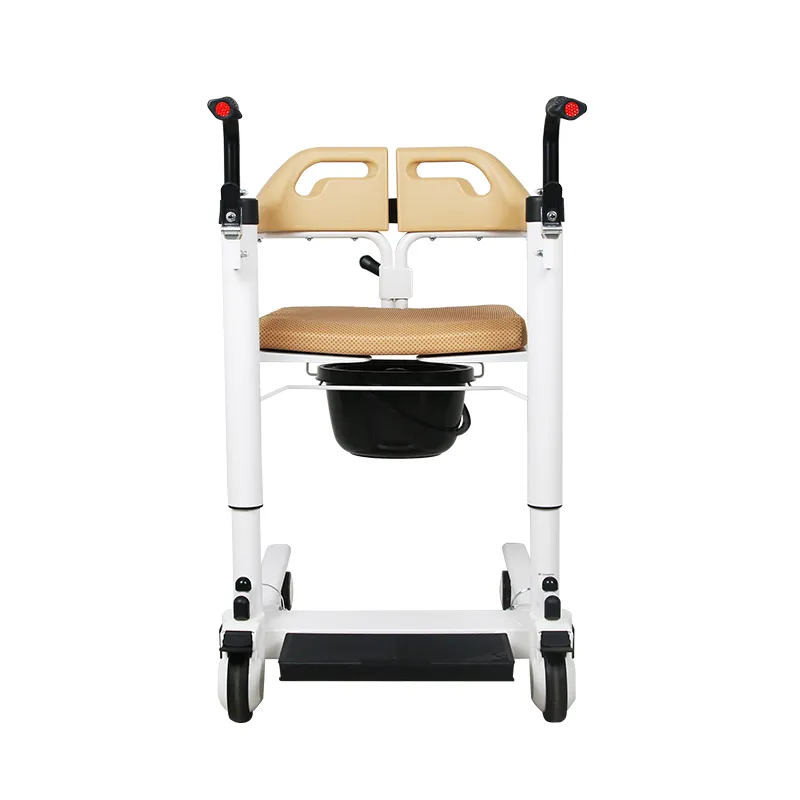
Patient Transfer Chair and Patient Transfer Lifter: What are they?
Before understanding the differences between the two, it's necessary to clearly understand their respective definitions and uses.
What is a patient transfer chair?
A patient transfer chair is an assistive device that allows patients to "transfer while sitting." As the name suggests, a patient transfer chair uses a chair-like structure and usually has the following features:
• Adjustable seat height
• Detachable or openable side wings for easy access from the bedside or other seating surfaces
• Equipped with wheels for mobility
• Some models also have a portable commode function
The core function of a patient transfer chair is to allow patients to complete short-distance transfers in a seated position, such as from bed to wheelchair, from wheelchair to toilet, or from room to bathing area. It requires the patient to have a certain degree of upper body balance or basic cooperation ability.
What is a patient transfer lifter?
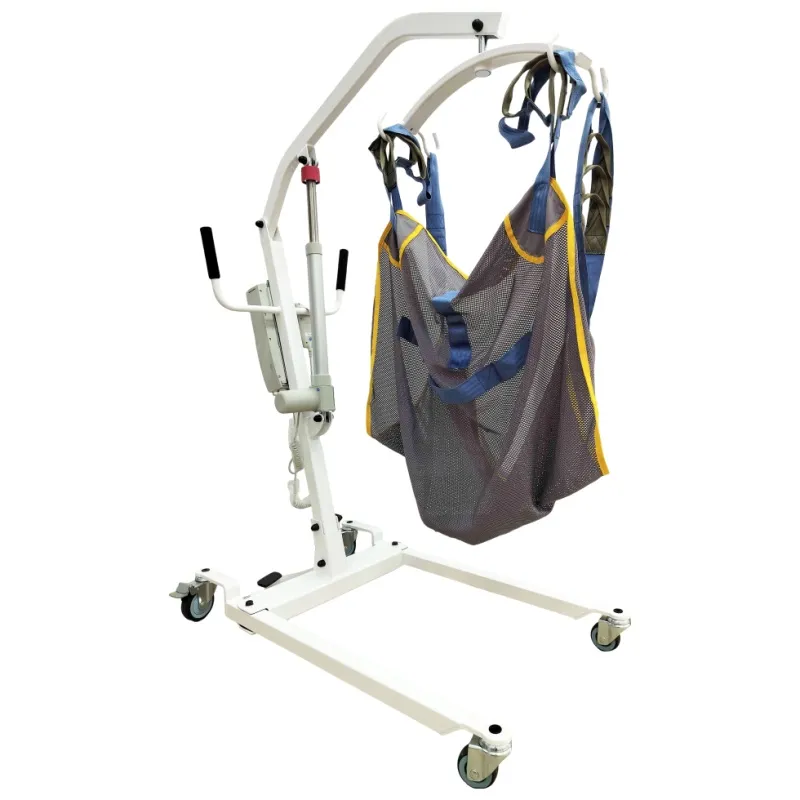
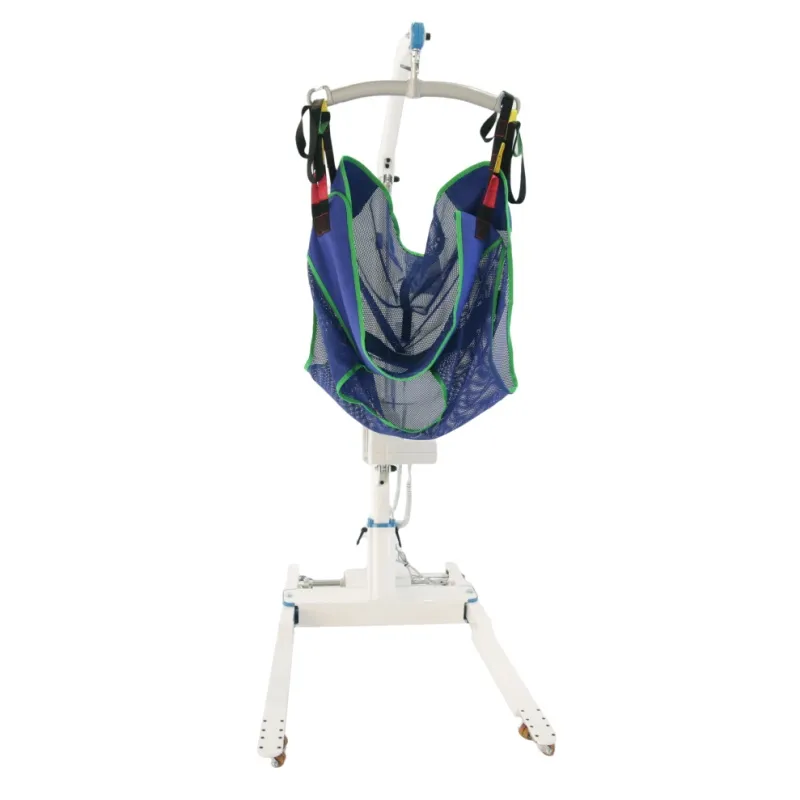
A patient transfer lifter is often referred to as a "sling-type transfer lifter" or "patient hoist." Unlike a patient transfer chair, a patient transfer lifter uses an electrically or manually driven suspension system to lift and move the patient's entire body using a sling. Its main features include:
• Uses a sling to support the body
• Electric or manual lifting structure
• Can be used for patients who cannot sit up independently
• The patient is mostly in a "suspended state" during movement
The core function of a patient transfer lifter is to assist patients who are unable to sit up or are completely incapacitated, helping them complete transfers between bed and wheelchair, bed and stretcher, or bed and bathing area. In simple terms:
A patient transfer chair is a "device for transferring patients while seated," while a patient transfer lifter is a "device for transferring patients while suspended."
Patient Transfer Chair and Transfer Lifter: What are the significant structural differences?
What are the structural features of a patient transfer chair?
The design focus of a patient transfer chair is on "stable seating." The structure generally includes:
•An adjustable seat
•Removable or rotating armrests
•Non-slip footrests
•Braking wheels
•Safety belts or back support to protect the patient
The design logic is: the patient is transferred from another seating surface to the chair, and then pushed to the destination, with the patient maintaining a seated position throughout the process.
How are the structural features of a patient transfer lifter different?
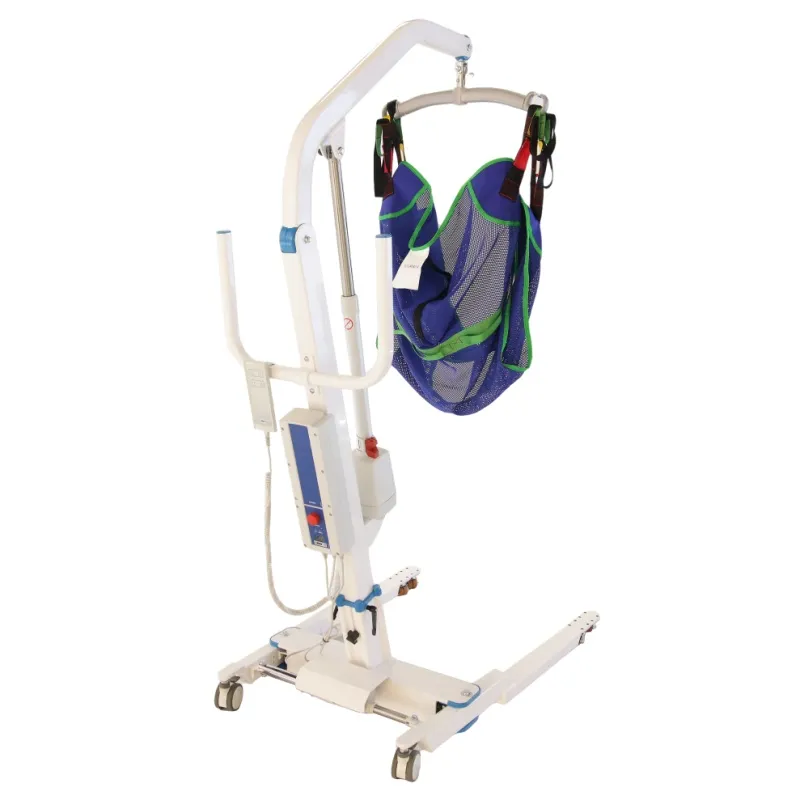
A patient transfer lifter typically includes the following parts:
•Main frame (with wheels)
•Lifting arm and hook structure
•Sling to wrap around the patient's body
•Electric lifting control system
The characteristics of a patient transfer lifter are "strong load-bearing capacity" and "enveloping protection," allowing even patients who cannot maintain a seated position to be transferred.
How do the usage methods of the two devices differ?
How is a patient transfer chair used?
A patient transfer chair requires the patient to have at least:
•Some upper body strength
•Basic ability to maintain a seated position
•The ability to semi-stand or move a short distance with the assistance of a caregiver
The caregiver positions the patient transfer chair near the bedside, opens the side wings, assists the patient onto the chair, adjusts the height using the lifting system, and then pushes the chair to the destination. The entire process is relatively natural and does not give the patient the unfamiliar experience of being suspended.
How is a patient transfer lifter used?
The process for using a patient transfer lifter is generally:
•Placing the sling under the patient's body
•Attaching the sling to the transfer lifter hook
•Slowly lifting the patient using the hand control
•Pushing the transfer lifter to the transfer point
•Lowering the patient and removing the sling
The patient does not need to exert any effort throughout the process; it is a more "fully assistive" device.
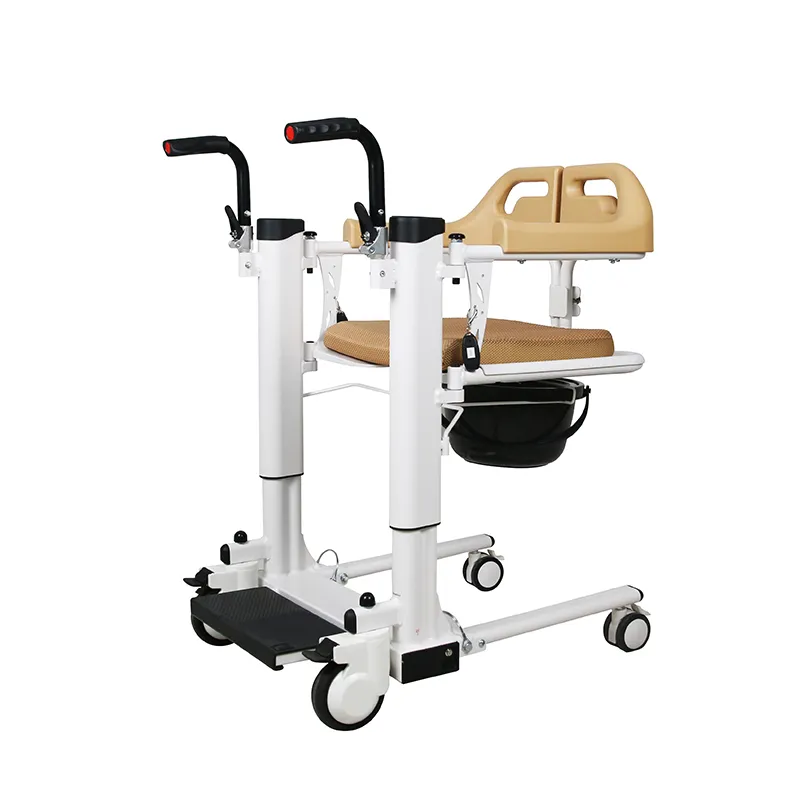
Which patients are suitable for using a patient transfer chair?
A patient transfer chair is more suitable for the following situations:
• Patients who can maintain a basic sitting posture
• Patients who can stand or slide with assistance
• Patients who require frequent short-distance transfers between bed, chair, and toilet
• Settings requiring high-frequency transfers, such as home care, nursing homes, and rehabilitation centers
A patient transfer chair is ideal for patients with mild to moderate mobility impairments or those recovering from surgery.
Which patients are more suitable for using a patient transfer lifter?
A patient transfer lifter is mainly suitable for:
• Patients who are completely unable to stand or sit
• Patients with general weakness or paralysis
• Patients with severe limb disabilities
• Institutions that need to reduce the burden of lifting for caregivers
For these patients, the patient transfer lifter provides "all-around soft-padded lifting," which is the safest method for transferring patients requiring heavy care.
What are the safety differences between a patient transfer chair and a transfer lifter?
Safety features of the patient transfer chair
The advantages of the patient transfer chair are:
• The patient is in a normal sitting position, which is more comfortable
• Multi-point locking structure enhances safety
• Low center of gravity and good stability during transfer
• Caregivers can maintain continuous contact, increasing psychological security
However, using a patient transfer chair requires that the patient has some ability to sit upright; otherwise, there is a risk of tipping over.
Safety attributes of the patient transfer lifter
The patient transfer lifter protects the patient through a sling, preventing them from slipping due to muscle weakness. It is suitable for those who cannot sit upright. However, it requires correct sling application, and the patient may feel unfamiliar or anxious about the suspended posture.
How does the patient transfer chair perform in terms of care efficiency?
The patient transfer chair is ideal for frequent short-distance transfers, greatly improving efficiency:
• Can be operated by one person
• Easy to lift and lower
• Lightweight and easy to move
• Suitable for frequent daily use
Caregivers do not need to repeatedly lift and carry patients, significantly reducing the risk of back injuries.
Does the patient transfer lifter also have advantages in terms of care efficiency?
The patient transfer lifter is best suited for:
• Severely disabled patients requiring complete assistance
• Full-body transfers, such as from bed to stretcher
For severely disabled patients, the patient transfer lifter allows caregivers to work more effortlessly and safely.
However, it takes up more space and the operation process is more complex than the patient transfer chair, so it is not suitable for very frequent, short-distance daily transfers.
Patient transfer chair and transfer lifter: What are the differences in terms of space usage?
• Patient transfer chair: Compact structure, suitable for use in narrow spaces such as homes and bathrooms.
• Patient transfer lifter: Larger size, requires a larger turning radius, and is mostly used in spacious environments such as hospitals or nursing homes.
For home use, the patient transfer chair is more suitable.
How to choose between a patient transfer chair and a patient transfer lifter based on actual circumstances?
Situations where a patient transfer chair should be chosen:
• The patient has some control over their sitting posture.
• Frequent daily transfers are required.
• Multi-functional use is needed, such as for toileting and bathing.
• Limited space at home.
Situations where a patient transfer lifter should be chosen:
• The patient has no independent mobility.
• Large-scale or difficult transfers are required.
• Medical institutions need to mitigate care risks.
How long does Dahao Medical’s warranty last?
Dahao Medical offers a warranty for all our products to ensure your peace of mind. The standard warranty covers parts and labor for at least one year from the date of purchase. This warranty ensures that any defects in materials or workmanship will be addressed by our support team.
In the unlikely event that a product needs repair or replacement, we are committed to resolving the issue quickly and efficiently. Additional warranty options may be available for certain products—please contact us for more information.