

When there is a family member who needs long-term bed rest, rehabilitation care, or has limited mobility, many people ask a core question: "Can I buy a home care bed?"
The answer is – yes, you can.
Anyone can purchase a home care hospital bed without a doctor's prescription or authorization from a medical institution. As long as you have care needs, you can purchase a medical bed suitable for home use.
As a professional device designed specifically for the home care environment, home care beds have a wide range of functions, sizes, and accessory configurations to meet various needs in home treatment, rehabilitation care, and long-term care.
This article will comprehensively analyze the value and purchasing considerations of home care hospital beds, addressing questions such as "Can I buy one?", "Why buy one?", "How to choose one?", "Who is it suitable for?", and "What are the characteristics of a home care hospital bed?".
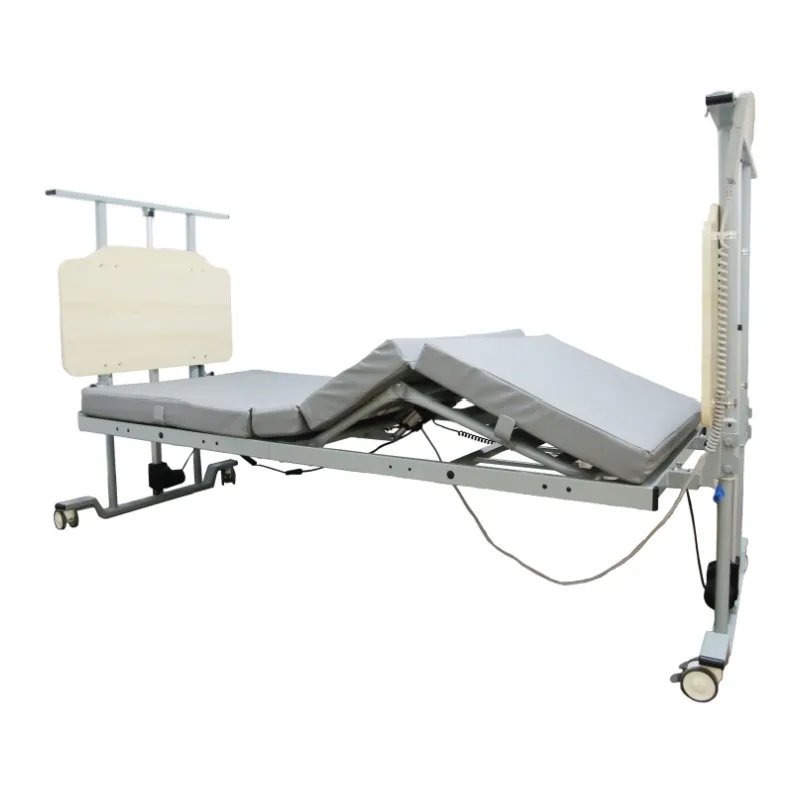
What exactly is a home care bed? Why is it suitable for home use?
To answer the question "Can I buy a home care bed?", we must first understand what it is and its purpose.
A home care bed is a professional medical bed designed specifically for home care settings. Its core objectives are:
• To increase patient comfort
• To reduce the difficulty of caregiving
• To support more postures and treatment needs
• To improve the safety of home care
• To make home rehabilitation more professional
Compared to hospital beds, home care beds focus more on:
• Adaptability to home space
• Ease of operation
• User-friendly functions
• Safety for long-term care
Therefore, whether it's for long-term bed rest for the elderly, post-operative rehabilitation, chronic disease care, or temporary care needs, a home care bed can play an important role.
Can anyone buy a home care bed?
Many people mistakenly believe that "medical supplies must be purchased through a doctor or hospital," but in fact:
Anyone can purchase a home care bed without a prescription, recommendation, or approval.
The reasons include:
1. Home care beds belong to the category of freely available medical equipment
Unlike special medications or medical equipment requiring approval, home care beds are sold to ordinary consumers.
2. Wide range of uses, not considered "restricted medical equipment"
It does not involve invasive treatment or critical use, so it is not subject to any restrictive regulations. 3. Directly Applicable in Home Environments
Most people purchase home care beds for the purpose of caring for the elderly, patient rehabilitation, or long-term care, and this does not involve the authority of medical institutions.
Therefore, as long as you have care needs, you can purchase a home care hospital bed.
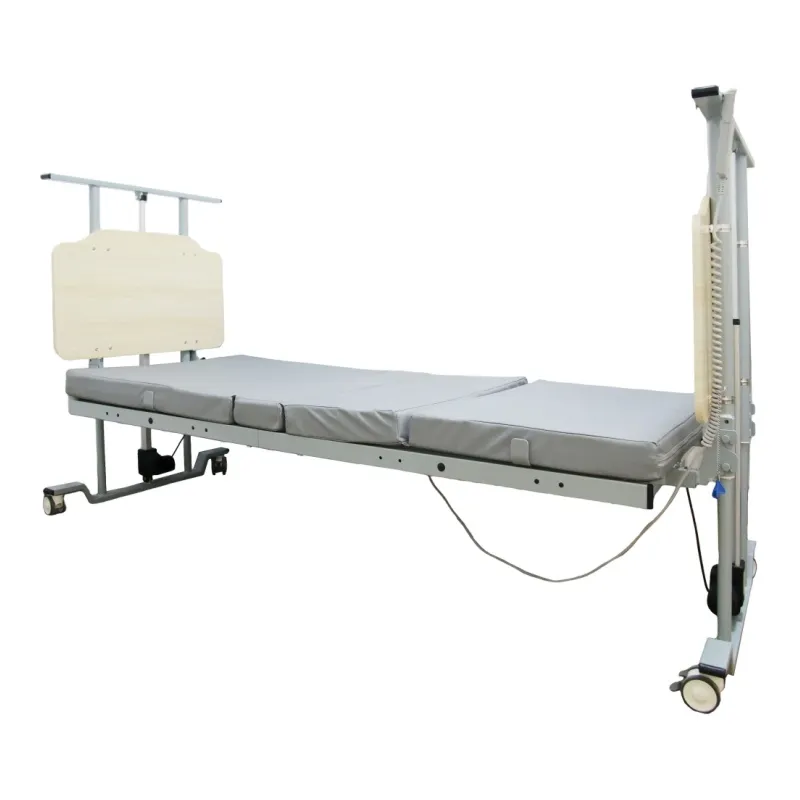
Why should I buy a home care bed? What is the necessity?
Many families may initially try using ordinary beds, folding beds, or sofa beds to care for family members with limited mobility, but they often find that:
• Ordinary beds cannot adjust angles
• Nursing operations are strenuous and easily cause back injuries
• The patient's position is unsuitable, easily leading to pressure sores
• Getting in and out of bed is unsafe
• Cannot meet the posture requirements during treatment
• Lacks important safety features such as handrails, guardrails, and anti-slip features
In contrast, home care beds provide more professional care support.
The necessity of home care hospital beds includes the following points:
1. Supports multiple position adjustments to improve patient comfort
Most home care hospital beds support:
• Backrest adjustment
• Leg adjustment
• Bed surface lifting
• One-button flat lying
• Semi-sitting position
• Special position placement
These functions reduce the discomfort caused by prolonged bed rest and also improve physiological states such as respiration, digestion, and circulation.
2. Makes nursing operations safer and less strenuous for caregivers
The most strenuous nursing actions include:
• Turning the patient over
• Lifting the patient's upper body
• Helping the patient sit up
• Assisting with movement
The functions of home care hospital beds can significantly reduce the physical strain of these actions, preventing back injuries to caregivers.
3. Prevents patient falls and pressure sores
Professional design includes:
• Anti-fall guardrails
• Adjustable bed frame
• Anti-pinch structure
• Stable bed body
These configurations effectively reduce the risk of accidents.
4. Suitable for long-term care environments
For patients who need long-term bed rest, such as:
• Elderly people
• Post-operative rehabilitation patients
• Stroke and paralyzed patients
• Patients with chronic diseases
Home care beds can provide a more humane care foundation.
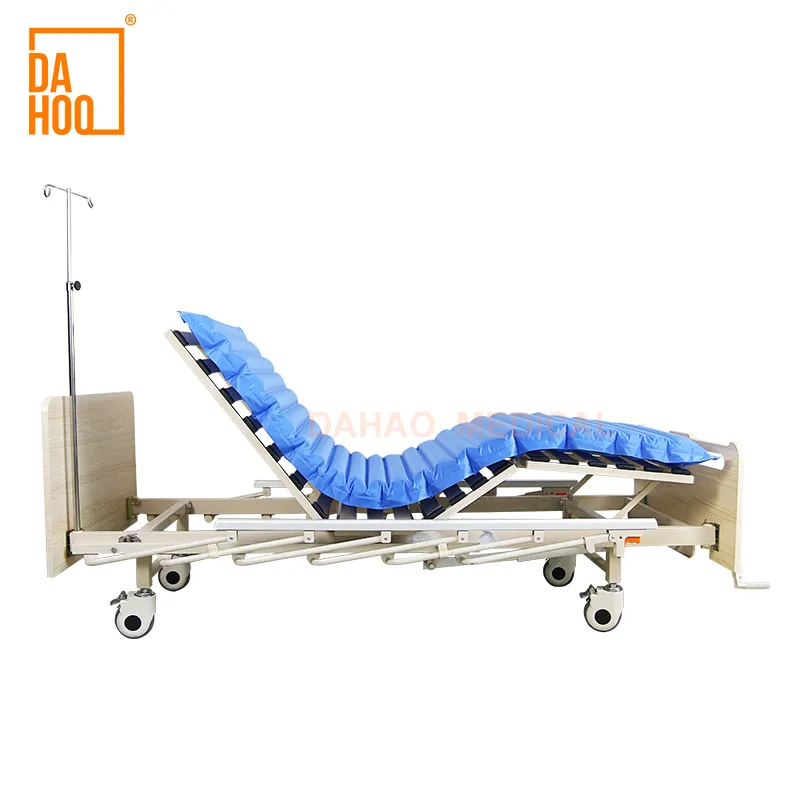
What are the main functions of home care beds?
To meet the practical needs of home care environments, home care hospital beds usually have multiple practical functions and different configurations can be selected according to needs.
1. Electric or Manual Adjustment Functions
Including:
• Electric/manual backrest adjustment
• Electric/manual leg rest adjustment
• Electric/manual height adjustment
Electric medical beds are more suitable for families with more complex care needs.
2. Safety Guardrails
Effectively prevent patients from accidentally falling.
3. Convenient Under-Bed Space for Caregiving
Suitable for use with:
• Caregiving robots
• Portable lifts
• Caregiving chairs
To achieve a more professional care process.
4. Mobile Design
Most home care beds are equipped with silent casters for easy cleaning and movement, and also have braking functions to ensure safety.
5. Compatible with Various Accessories
Including:
• Overbed table
• IV pole
• Bedside nameplate
• Bedside lamp
• Anti-pressure sore mattress
Enabling flexible expansion.
What are the differences between home care beds and hospital beds?
Although both serve the same purpose, home care hospital beds are more suitable for a home environment. The differences include:
1. Appearance Design More Suitable for Home Use
Hospital beds tend to have an industrial style, while most home care hospital beds use softer colors, making them more suitable for home furniture styles.
2. Functions Focus More on Ease of Use
The operation interface of home care beds is simpler and more intuitive, making it easier for family members to use.
3. Stricter Noise Control
A quieter environment is needed at home, so home care beds have lower motor noise.
4. Sizes More Suitable for Home Spaces
Available in various bed widths and lengths to meet the needs of different room sizes.
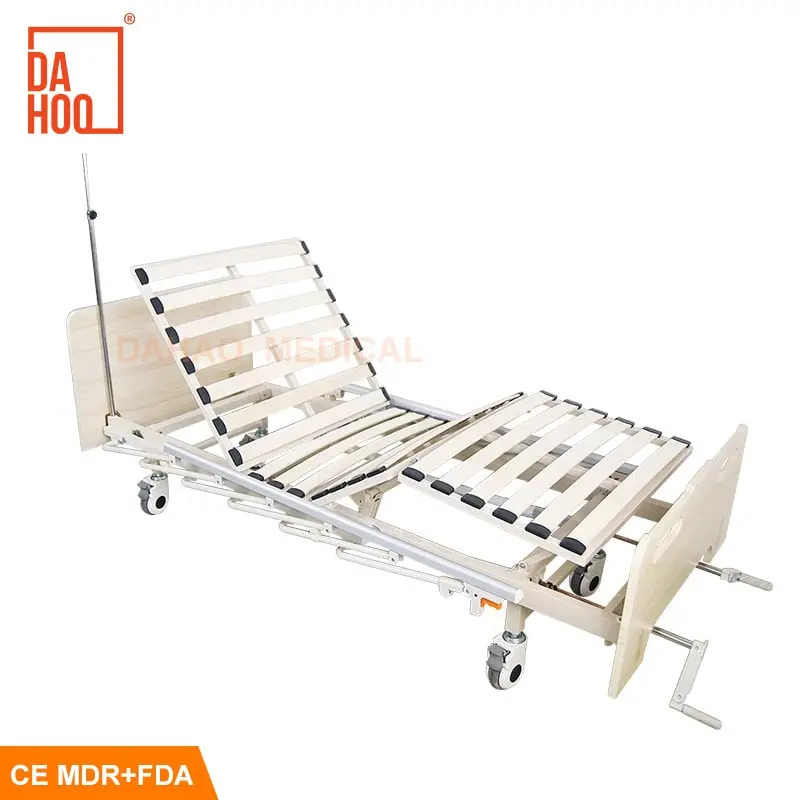
What factors should I consider before buying a home care bed?
Buying a home care bed is not about simply choosing a model, but rather making a comprehensive judgment based on the patient's condition, the intensity of care required, and the available space in the home.
The following are key factors to consider before purchasing:
1. What is the patient's level of care?
The functions required for patients with mild care needs, semi-independent patients, and completely bedridden patients are completely different.
2. Does the patient need electric adjustment?
Electric beds are more suitable for:
• The elderly
• Patients in rehabilitation
• Completely bedridden patients
• People who need frequent posture adjustments
3. Is there enough space in the room?
Home care hospital beds come in different sizes, so you need to ensure that:
• It fits
• It's convenient for caregiving
• It can be moved
4. Do the caregivers have enough strength?
If caregivers have limited physical strength, an electric home care hospital bed is strongly recommended.
5. Are any accessories needed?
For example:
• Anti-bedsore mattress
• Overbed table
• Patient lift
• Bedside chair
These accessories can significantly improve the effectiveness of care.
Is a home care bed suitable for long-term use?
The answer is yes.
Home care beds are designed for long-term care, with a sturdy and durable structure, suitable for:
• Long-term bedridden patients
• People undergoing long-term rehabilitation
• Elderly care
• People with chronic diseases or functional limitations
Their durability is comparable to hospital beds and can fully meet the needs of many years of use.
Are home care beds suitable for different groups of people?
From the perspective of actual care needs, home care hospital beds are suitable for the following groups:
1. Elderly people with mobility difficulties
Such as:
• Decreased ability to perform daily activities
• Insufficient balance
• Needing assistance getting in and out of bed
2. Post-operative rehabilitation patients
Including:
• People bedridden after various surgeries
• People requiring continuous rehabilitation training
3. Stroke and paralysis patients
Home care beds can provide professional posture adjustment, which is helpful for care.
4. Patients with long-term chronic diseases
Such as:
• Heart failure
• Respiratory diseases
• Patients undergoing long-term dialysis for kidney disease, etc.
5. Families with temporary care needs
For example, patients with short-term injuries or fractures can also use home care hospital beds to improve comfort and care efficiency.
What spaces are suitable for home care beds?
Due to their flexible size, home care beds can be used in various home spaces:
• Bedroom
• Rehabilitation room
• Dedicated care corner in the living room
• Elderly person's room
• Independent care room
As long as sufficient space is reserved for care operations.
How do I know if Dahao Medical products are suitable for my needs?
Dahao Medical’s diverse product range is designed to meet various healthcare needs, from home care to hospital settings. Our team can assist you in selecting the best products for your specific situation. Whether you're looking for an Electric Wheelchair for mobility, a Transfer Chair for patient handling, or a Hospital Care Bed for comfort, we offer expert recommendations.
Our products are customizable to meet individual requirements, ensuring they are the right fit for your healthcare facility or personal use.