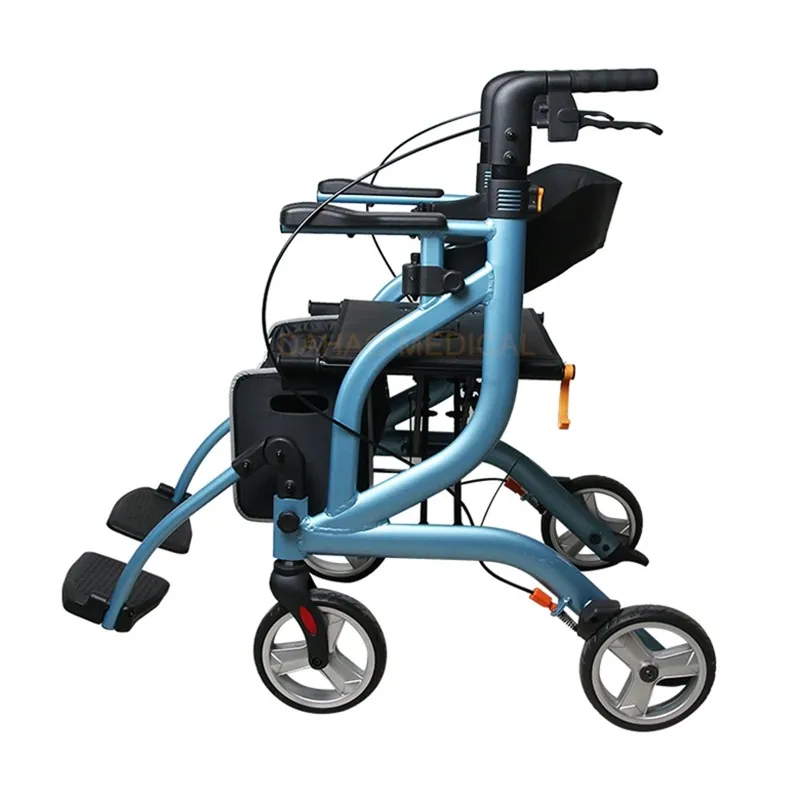
Absolutely not!
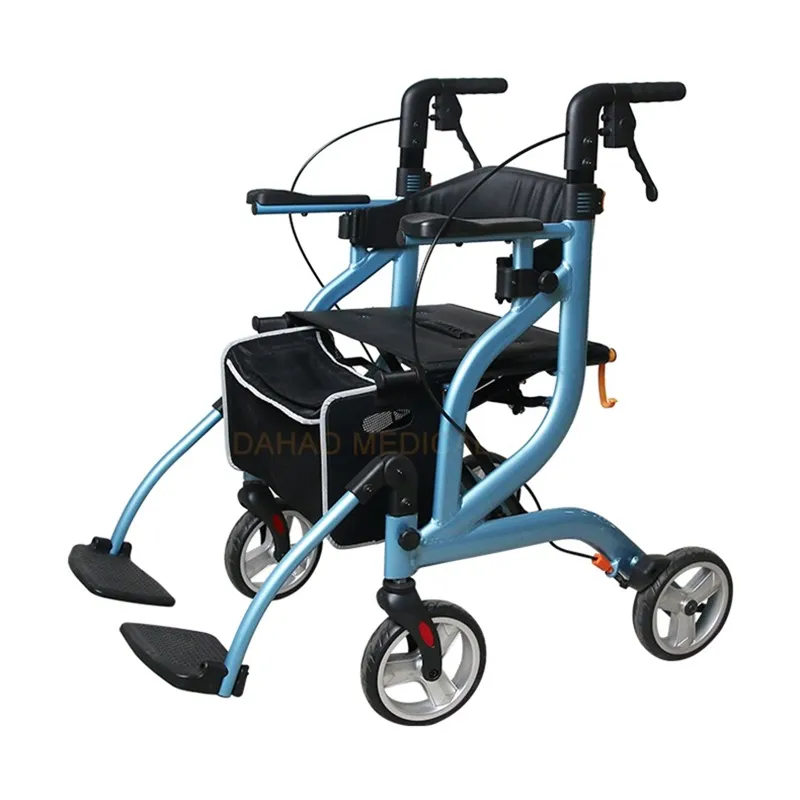
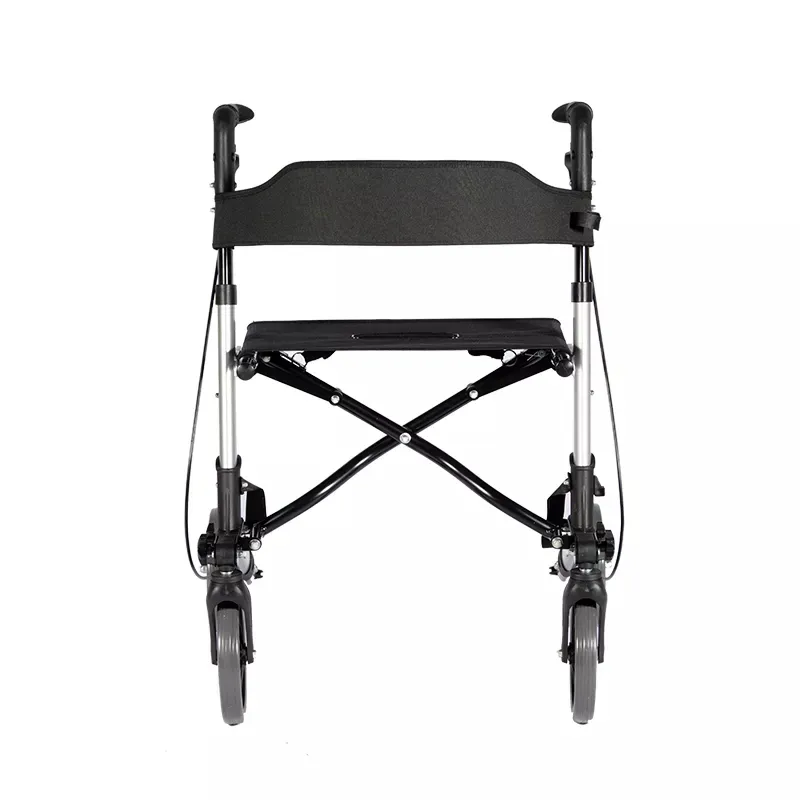
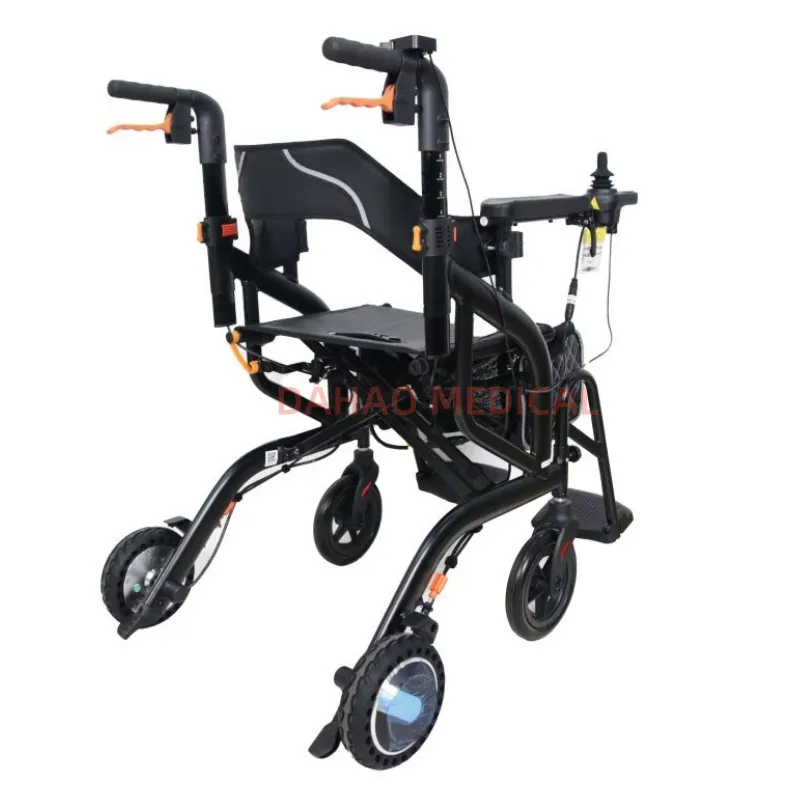
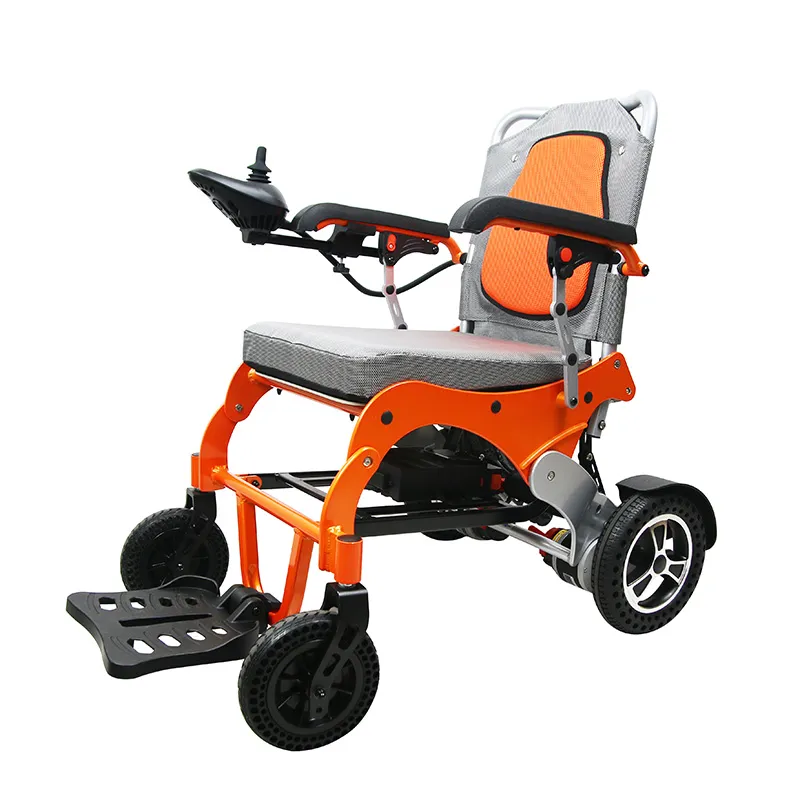
A 4-wheeled rollator is a "walking aid," not a "transportation tool."
Its design purpose is to help users walk independently and maintain balance, not to be pushed by others or to be sat on and propelled.
Advantages of four-wheeled walking aids include:
• Easier walking
• More natural gait
• Better suited for long distances and outdoor activities
Disadvantages include:
• Less static support than wheelless walking aids
• Requires a certain level of maneuverability
There is no absolute safety.
The safest approach is: user ability + matching the correct type of equipment.
If the user is too weak, a wheeled walker is unsafe; if the user is too weak to lift a wheelless walker, then a wheelless walker is unsafe.
The answer often points to a tool that assists walking while providing stable support—a four-wheeled walking aid.
When a person can still walk but is unsteady, a four-wheeled walking aid helps them walk more safely and further, while maintaining physical function, compared to using a wheelchair directly.
The following situations are unsuitable for using a 4-wheeled walking vehicle:
• Completely dependent on external support when standing
• Unable to maintain upright balance even with legs spread
• Immediately leans forward when letting go
• Significant balance impairment, indicating severe gait instability