

Among walking aids, "4-wheel rollators" and "wheelless walkers" are the two most common types. While many elderly people, those recovering from illness, and those with lower limb weakness benefit from walking aids, different types are suitable for different physical conditions and walking abilities.
Many people mistakenly believe that "walkers with wheels are always easier" or that "4-wheeled walkers are more advanced." However, 4-wheel rollatorers are not suitable for everyone.
For some people with certain physical conditions, choosing a wheelless walker is actually safer and can effectively reduce the risk of falls.
This article will answer in depth: Who is not suitable for using a 4-wheel rollatorer? In what situations must a wheelless walker be chosen?
It will provide a comprehensive analysis from the perspectives of stability, physical ability, risk factors, and usage methods.
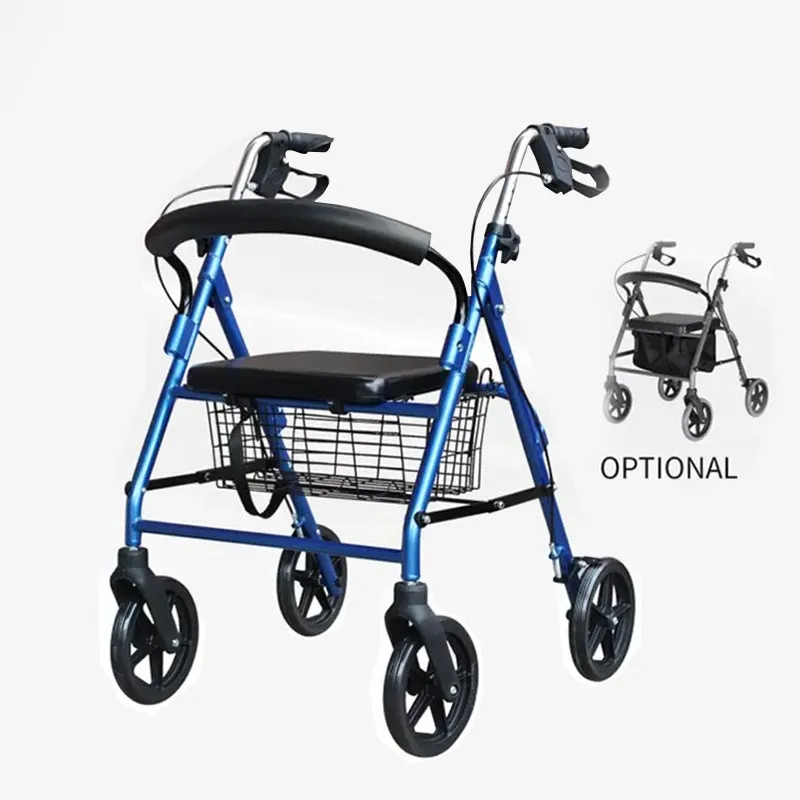
Which people with different walking abilities should not use a 4-wheel rollator?
While 4-wheeled walkers are easy to use, require little effort to push, and have various functions, they rely on the user having a certain level of balance. If certain abilities are insufficient, using a four-wheeled walking vehicle may be counterproductive, even increasing the risk of falls.
1. People with insufficient lower limb strength to support their weight
A four-wheeled walking vehicle is not a weight-bearing tool; it only provides forward support and balance stability and cannot fully support the user's weight.
Therefore, the following groups are not suitable for using it:
• Significantly insufficient lower limb muscle strength
• Inability to stand steadily
• Severe swaying when standing
• Inability to bear body weight for more than a few seconds
In these cases, using a four-wheeled walking vehicle will result in uncontrolled slippage due to the overly flexible wheels, creating a significant risk of falls.
A wheelless walker allows the user to put more force on the walking device and lift themselves up step by step, providing greater stability.
2. People completely unable to maintain balance independently
A four-wheeled walking vehicle requires the user to have a certain level of standing balance ability; otherwise, they are highly prone to tilting forward, sideways, or even falling.
The following situations are unsuitable for using a 4-wheeled walking vehicle:
• Completely dependent on external support when standing
• Unable to maintain upright balance even with legs spread
• Immediately leans forward when letting go
• Significant balance impairment, indicating severe gait instability
These individuals should choose a "wheelless walker," as it provides a more stable structure through fixed support, preventing balance loss due to wheel slippage.
3. Individuals with severely insufficient hand grip strength
4-wheeled walking vehicles rely on hand grip strength for:
• Pushing
• Braking
• Direction control
• Maintaining body stability
If the user:
• Has an unstable grip
• Has weak wrists
• Cannot firmly grip the handbrake
• Has severe hand tremors
Using a 4-wheeled walking vehicle would be extremely dangerous, as the inability to lock the brakes means slippage is possible at any time.
Wheelless walkers do not require a braking system and do not rely on wheels, therefore requiring less grip strength and are safer.
4. Individuals who have recently undergone lower limb surgery or require strict weight-bearing restriction
Some surgeries or fracture rehabilitation necessitate avoiding weight-bearing on the lower limbs, such as:
• The initial stage after hip surgery
• The initial stage of knee replacement surgery
• Incomplete healing of lower limb fractures
• Strict protection period after spinal surgery
• No weight-bearing after foot surgery
Four-wheeled walkers do not provide the function of "completely unloading lower limb weight," while wheelless walkers allow patients to support their body with their arms, effectively reducing the burden on the legs.
Therefore, wheelless walkers should be the priority for these patients.
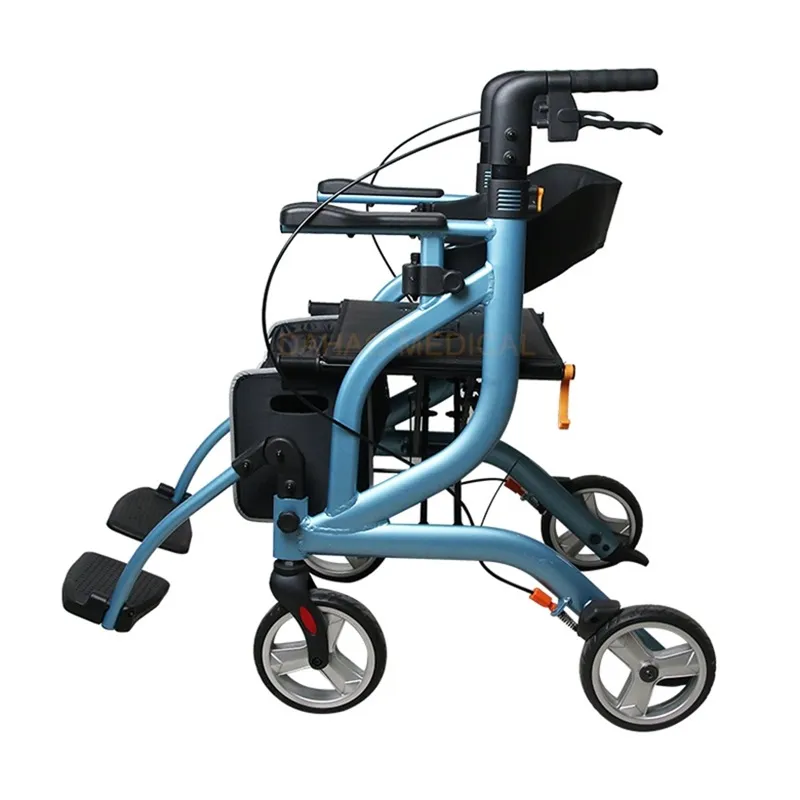
What health conditions make a 4-wheeled rollator unsuitable?
Besides walking ability and strength factors, some medical conditions themselves can also affect the choice of walking aids.
1. Patients with moderate to severe Parkinson's disease
Parkinson's disease can cause:
• Chronic postural instability
• Forward-leaning gait
• Small steps
• Difficulty initiating movement and frozen gait
• Hand tremors
Using a 4-wheeled walker may result in:
• Sudden slippage of the walker when going downhill or leaning forward
• Inability to control the gait in time during a frozen gait
• Difficulty braking due to single-hand tremors
• The walker moving forward on its own due to a forward-leaning posture
Therefore, wheelless walkers are generally more suitable for patients in the middle to late stages of Parkinson's disease because they do not slip and can be used for controlled movement step by step.
2. People with hemiplegia and asymmetrical muscle strength after a stroke
Hemiplegic patients have a significant difference in strength between their two sides, and using a 4-wheeled walker can easily lead to:
• The walker leaning to one side
• Instability
• Inability to brake simultaneously
• Falls due to body tilting while walking
Wheelless walkers provide a "rigid" structure, do not slip, and are safer for hemiplegic individuals.
3. Elderly individuals with severe cognitive impairment or slow reaction time
Users with cognitive decline or slow reaction time may:
• Forget to use the brakes
• Have difficulty judging speed
• Push the walker too fast
• Lose balance when turning
• Lack body-device coordination
4-wheeled walking aids are too flexible, while wheelless walkers eliminate the risk of slippage, making them more suitable for this group.
4. High-risk individuals prone to falls or with a history of falls
If a user has previously fallen due to instability, using a 4-wheeled walking aid may further increase the risk.
Wheelless walkers are the most stable type of walking aid and are suitable for high-risk individuals.
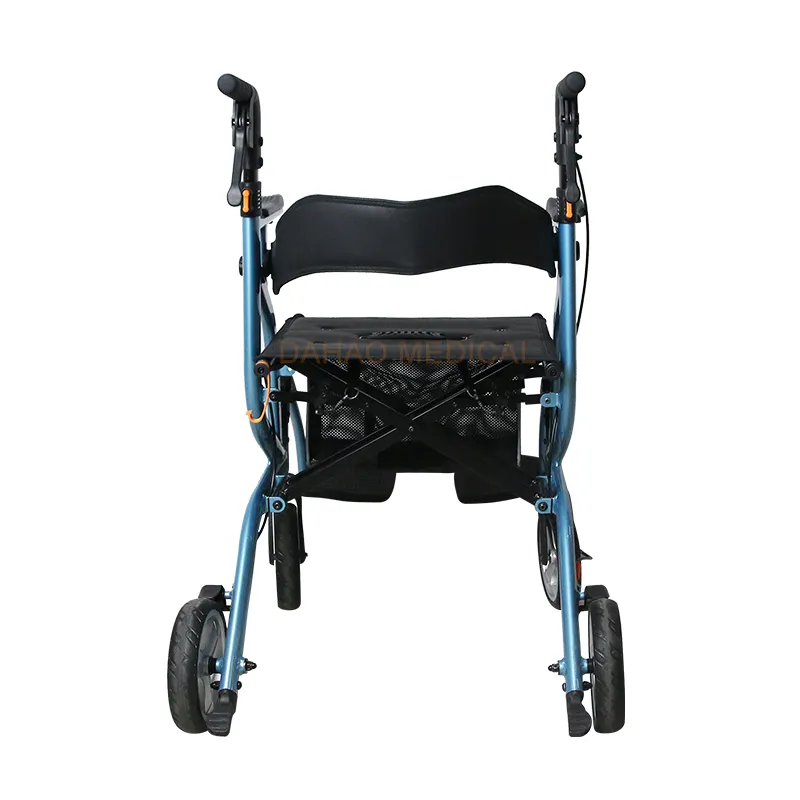
In what scenarios should a wheelless walker be prioritized?
The choice of walking aid is not only related to the user's own abilities but also closely related to the usage environment.
1. In confined spaces, on carpets, or on ramps
4-wheeled walkers are prone to becoming uncontrollable in the following areas:
• Thick carpets
• Uneven floors
• Slopes
• Small rooms with many corners
• Narrow doorways
• Passages with moving obstacles
Wheelless walkers are better suited to environments with slow gait, uneven surfaces, or confined spaces because they provide a more stable movement.
2. Rehabilitation scenarios for initial walking training
In the initial stages of rehabilitation training, the focus is on:
• Establishing a safe gait
• Practicing correct posture
• Controlling stride length
• Strengthening lower limb strength and joint stability
4-wheeled walkers are too "flexible" in the initial stages of rehabilitation, making them difficult to control.
Wheelless walkers are more suitable for gradual training.
3. Balance training when first regaining standing
In the early stages of standing, the body relies heavily on balance.
4-wheeled walkers can affect stability due to wheel slippage.
Wheelless walkers provide a stable support frame, better meeting the needs of initial standing training.
Why is it more dangerous for some people to use a 4-wheel rollator?
4-wheel rollators themselves are not dangerous devices, but potential risks arise when the usage scenario or user conditions do not conform to their design logic.
Reason 1: Uncontrolled slippage of the wheels
Especially in the following situations:
• Downhill
• Excessive pushing force
• Slippery ground
• Slippery carpet surfaces
• Failure to apply the handbrake in time
• The user leans forward, "running with the rollator"
Users with insufficient strength, slow reaction time, or poor balance are prone to falling.
Reason 2: Insufficient physical condition for users to control direction and speed
The agility of a 4-wheel rollator is a double-edged sword, requiring good hand-eye coordination, upper and lower limb coordination, and safety judgment.
Vulnerable individuals may find it difficult to master, thus increasing the risk.
Reason 3: Incorrect Use of Power
Some people incorrectly use 4-wheeled walkers for weight-bearing, leading to:
• The walker tilting forward
• Falling forward
• Inability to maintain balance
• Inability to support weight when the hips or knees suddenly weaken.
Wheelless walkers, on the other hand, can support more weight and are more stable.
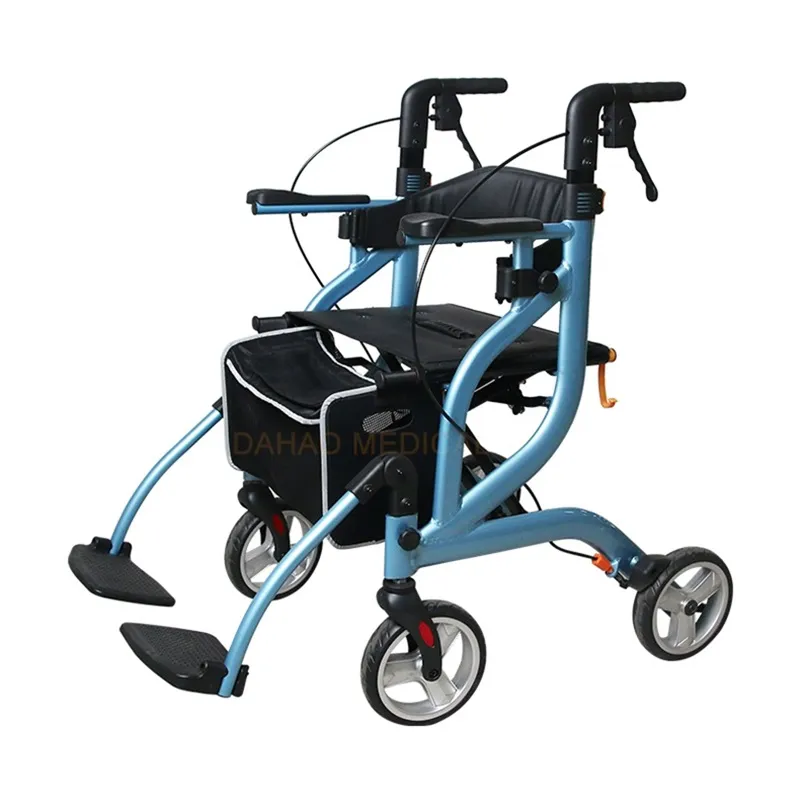
What are the safety advantages of wheelless walkers compared to 4-wheeled walkers?
Wheelless walkers are designed with greater emphasis on stability and weight-bearing capacity than 4-wheeled walkers, making them suitable for people with limited walking ability.
Here are the core advantages of wheelless walkers:
1. Completely non-slip, extremely stable
Wheelless walkers require lifting to move forward, making them the most stable and consistent mode of assistance.
2. Can support a large amount of upper limb support
Users can place most of their weight on the wheelless walker, reducing the burden on their legs.
3. Controllable pace, not too fast
The speed of a wheelless walker is entirely determined by the user, preventing "loss of control" due to wheel slippage.
4. No Braking System Required
Wheelless walkers do not require brakes, so users do not need strong grip or quick reaction time.
5. Suitable for Users with Slow Walking Speed and Weak Strength
Especially Suitable for:
• Stroke recoveries
• Individuals with weak muscles
• Elderly individuals with poor balance
• Individuals who should not bear weight after lower limb surgery
• Individuals at high risk of falls
Who should not use a 4-wheel rollator and must choose a wheelless walker?
The following situations require prioritizing a wheelless walker:
✘ People unsuitable for a 4-wheel rollator include:
• Individuals with insufficient lower limb strength to support themselves
• Individuals with extremely poor balance
• Individuals unable to operate brakes or with weak hand strength
• Individuals who have recently undergone lower limb surgery and need to limit weight-bearing
• Individuals with moderate to severe Parkinson's disease
• Individuals with stroke-induced hemiplegia
• Elderly individuals with severe cognitive impairment
• Individuals prone to falls or with a history of falls
• Individuals with slow walking speed and unstable control
• Individuals in the early stages of rehabilitation for standing and walking training
✓ People more suitable for a wheelless walker include:
• Users requiring maximum stability
• Individuals needing to support their weight using both hands
• Individuals walking very slowly with very small strides
• Users in confined indoor spaces
• Individuals in environments with complex, uneven surfaces
Why should I choose Dahao Medical for bulk orders?
When choosing a supplier for bulk medical equipment, Dahao Medical offers a competitive edge. As a leading manufacturer in China, we specialize in wholesale orders of Electric Wheelchairs, Transfer... Chairs, and other medical devices. Our facility is equipped with advanced machinery to ensure large-volume production without compromising quality. With certifications such as ISO 13485, FDA, and CE, our products are built to meet international standards. We also offer flexible payment terms and customized branding for bulk orders.