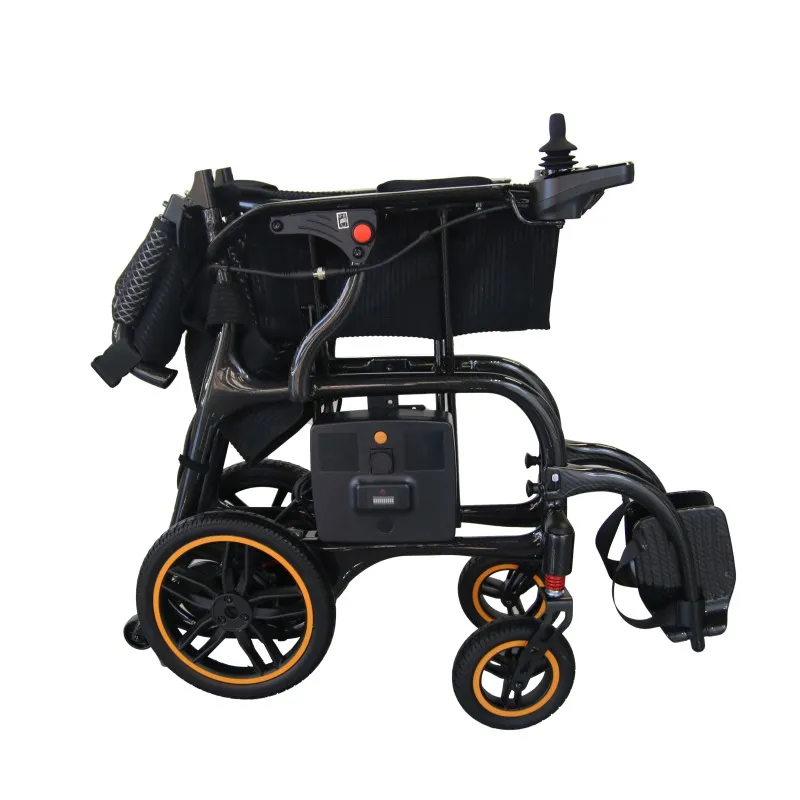
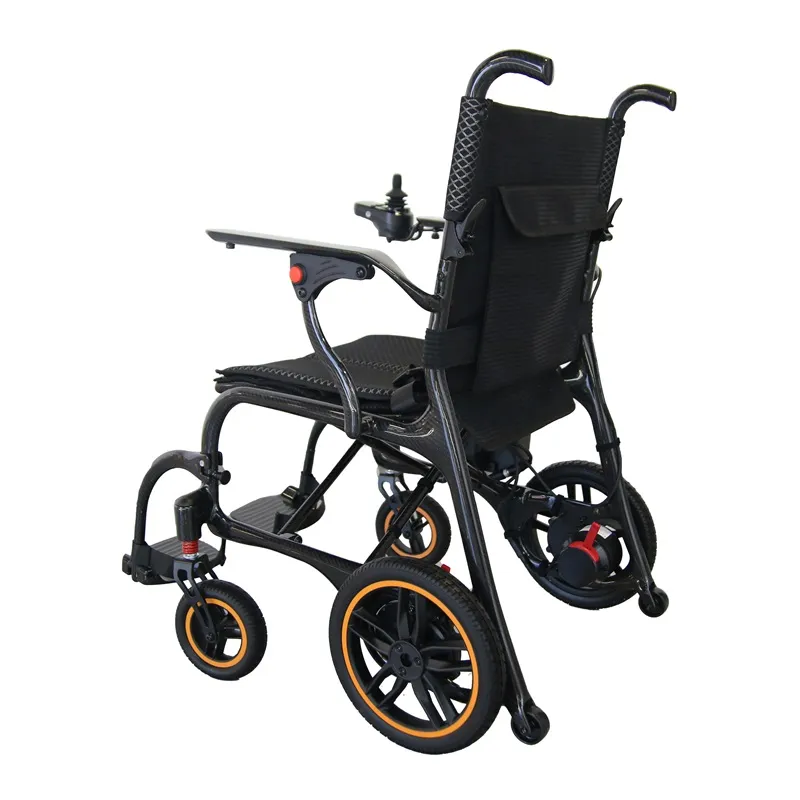
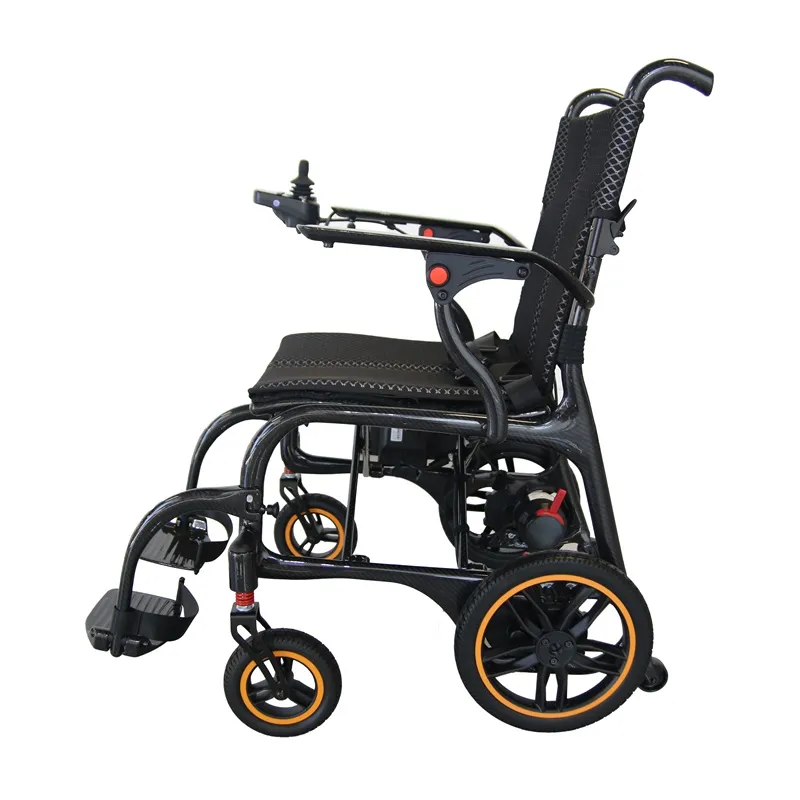
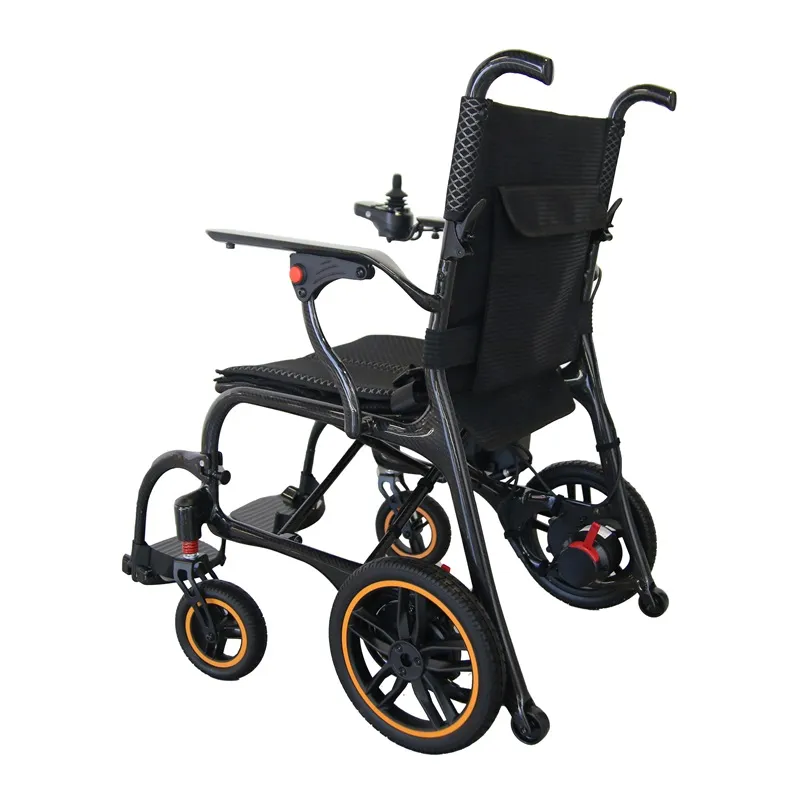
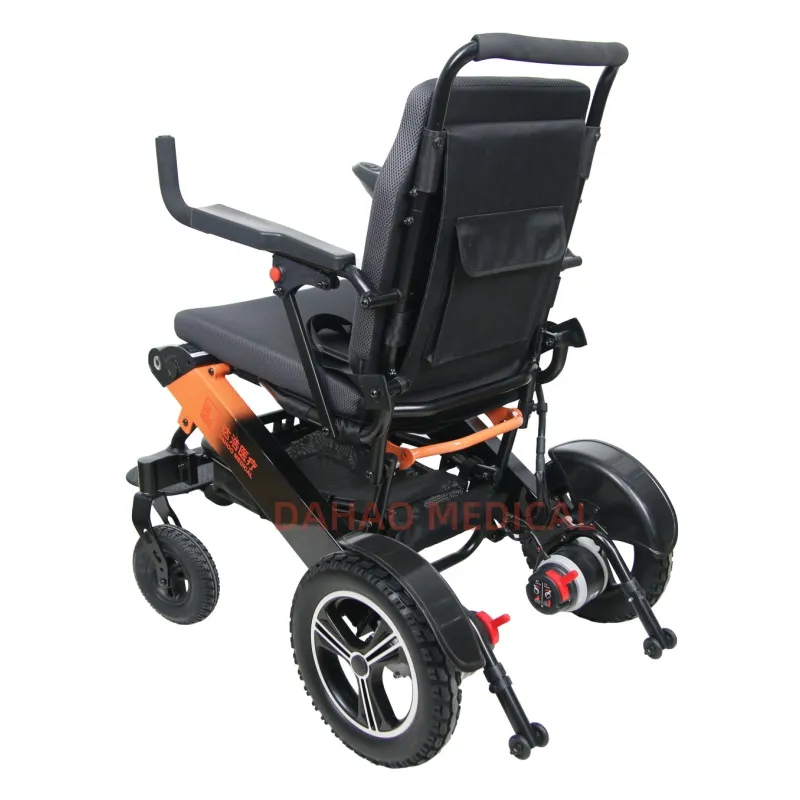
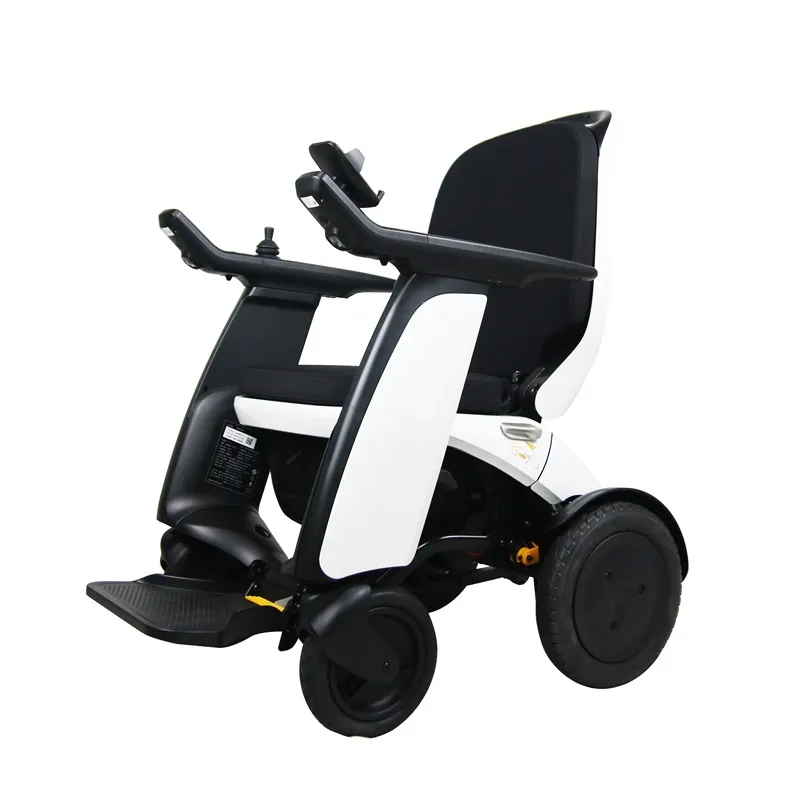
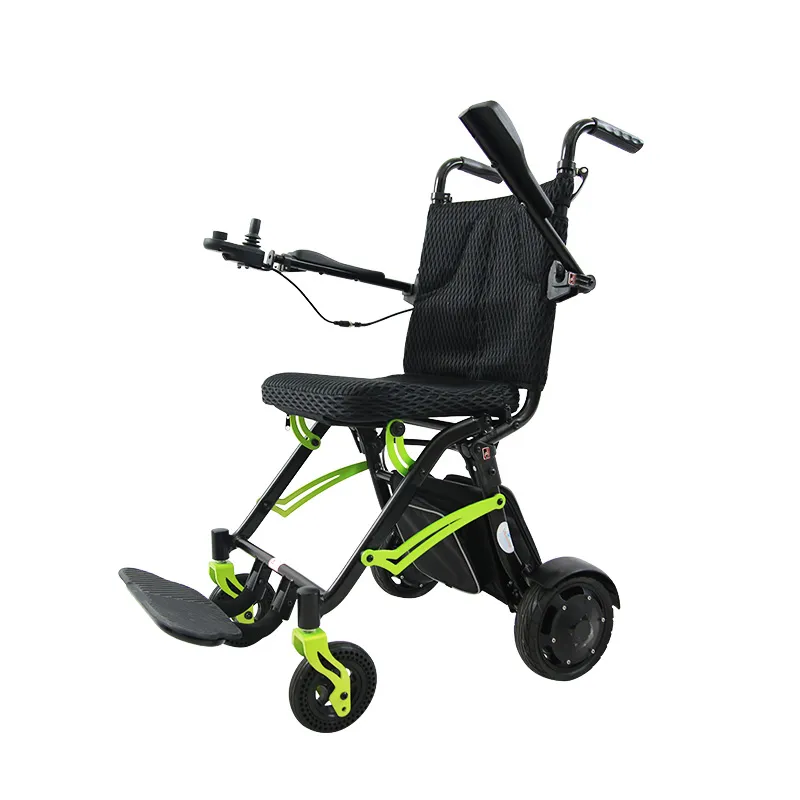
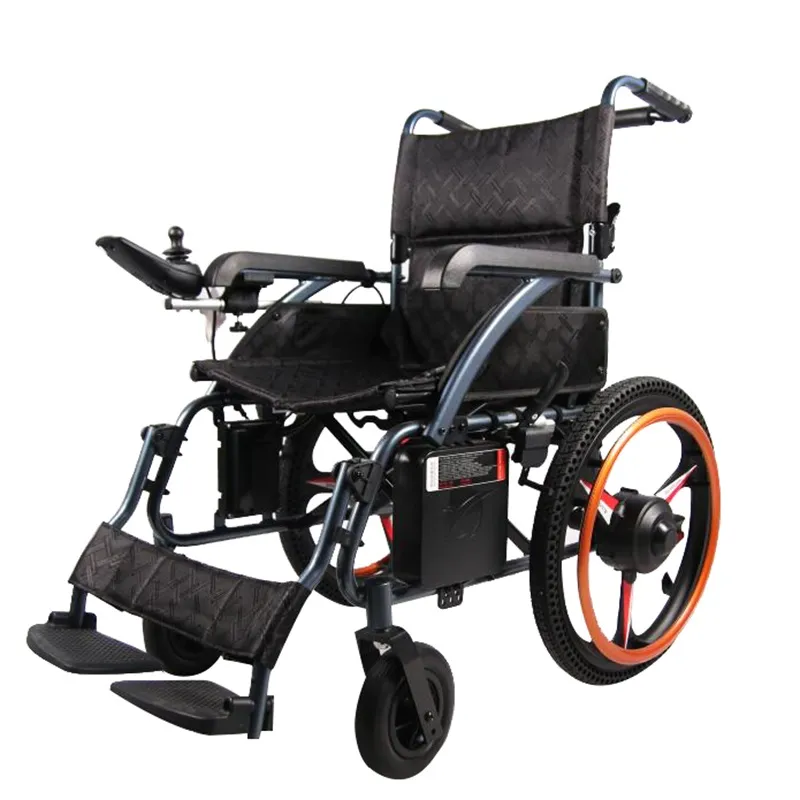
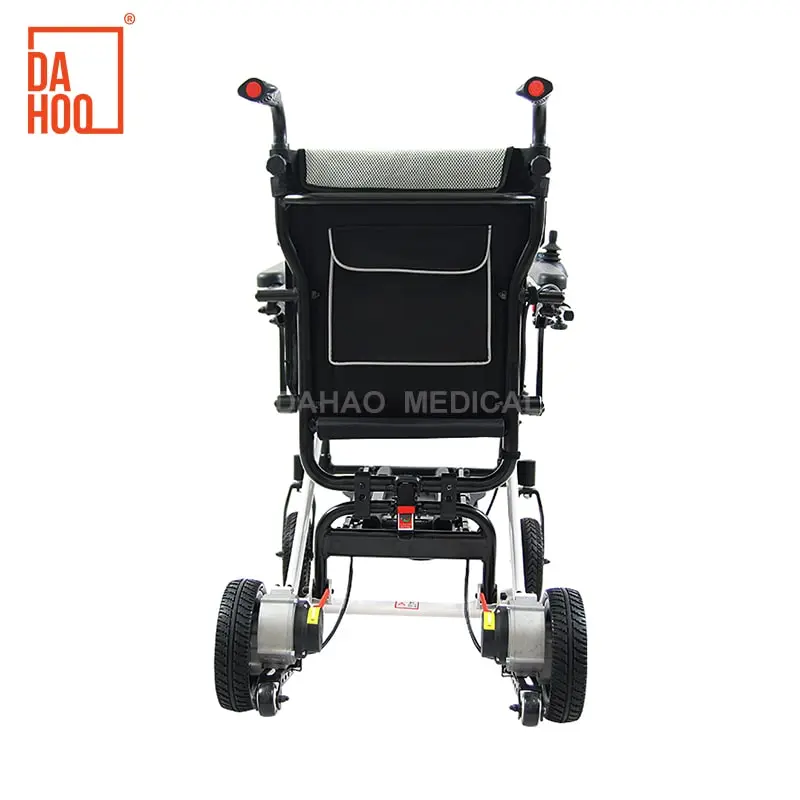
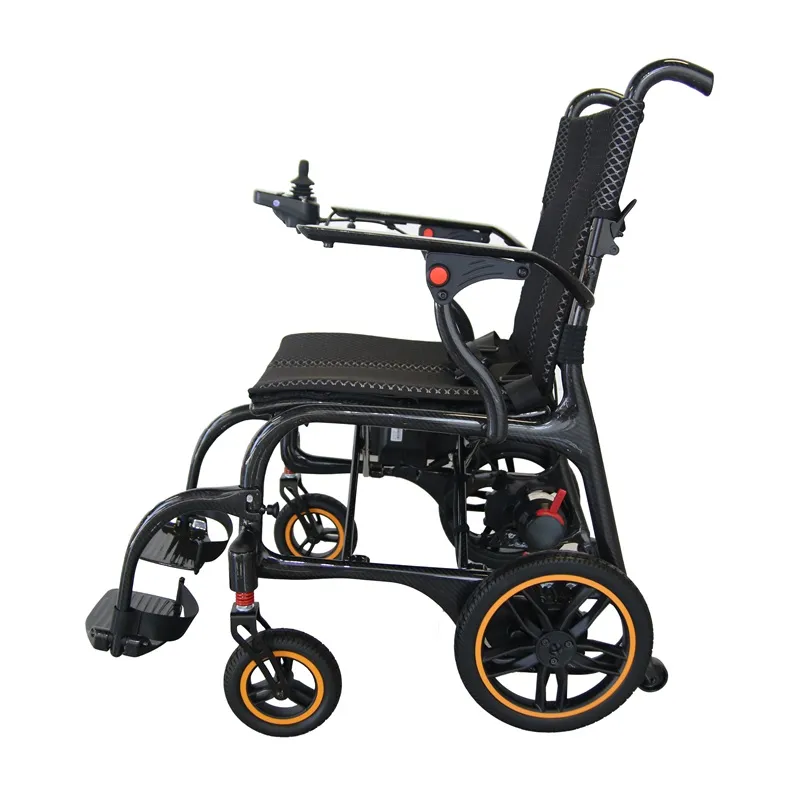
The Dahao Medical® carbon fiber electric wheelchair, for example, has folded dimensions of 63 cm (L) x 25 cm (W) x 71 cm (H), making it highly compatible with car trunks.
The factors driving up the cost of carbon fiber electric wheelchairs go beyond the material itself to include critical stages such as structural design, composite material layup, mold making, molding processes, joining technologies, quality control testing, and overall system integration.
For some high-end carbon fiber electric wheelchairs, if the main frame sustains severe damage, the repair cost may even approach the price of a new frame. Consequently, after weighing the options, many users choose to simply replace the damaged component.
Among the various lightweight solutions, carbon fiber electric wheelchairs stand out as a prime example. The use of carbon fiber composites allows these wheelchairs to shed weight while maintaining excellent strength and stability.
Step 1: Ensure the power is turned off.
Step 2: Locate the "clutch release mechanisms" situated on either side of the motors.
Step 3: Switch the clutch from "Electric Mode" to "Manual Mode."
Step 4: Both motors—on the left and right sides—must be unlocked simultaneously.
Step 5: Verify that the rear wheels are now free to roll.
Step 6: Push the chair from behind while guiding its direction.
Step 7: Once you have reached your destination, return the clutch to "Electric Mode."
Whether called Power Wheelchair or Electric Wheelchair, they both belong to the category of electrically powered wheelchairs. Essentially, they refer to wheelchairs powered by motors, batteries, and control systems, designed to provide independent, easy, and reliable mobility for people with mobility limitations.
20–25 kg (including battery) represents the most universally applicable weight range for lightweight electric wheelchairs.
15–20 kg (including battery) falls into the category of premium lightweight options.
Being either too heavy or too light may negatively impact the actual user experience.
An electric wheelchair is an assistive device that uses a motor and battery-powered system, allowing users to move easily using joysticks or other control devices. Compared to manual wheelchairs, electric wheelchairs do not require arm strength to push, making them ideal for the elderly.
General aviation regulations:
• Below 100Wh: Usually allowed in carry-on baggage
• 100Wh–160Wh: Requires approval
• Over 160Wh: Usually not allowed in check-in or carry-on baggage
Many electric wheelchairs use lithium batteries with capacities far exceeding 160Wh, and therefore may not be permitted by airlines.
Lightweight Power Wheelchair Advantages:
1. Lighter weight, easier to carry and store
2. Foldable structure for greater mobility
3. Simple operation, easier to learn
4. More suitable for indoor and short-distance use
Disadvantages:
1. Relatively limited motor power
2. Smaller battery capacity, limited range