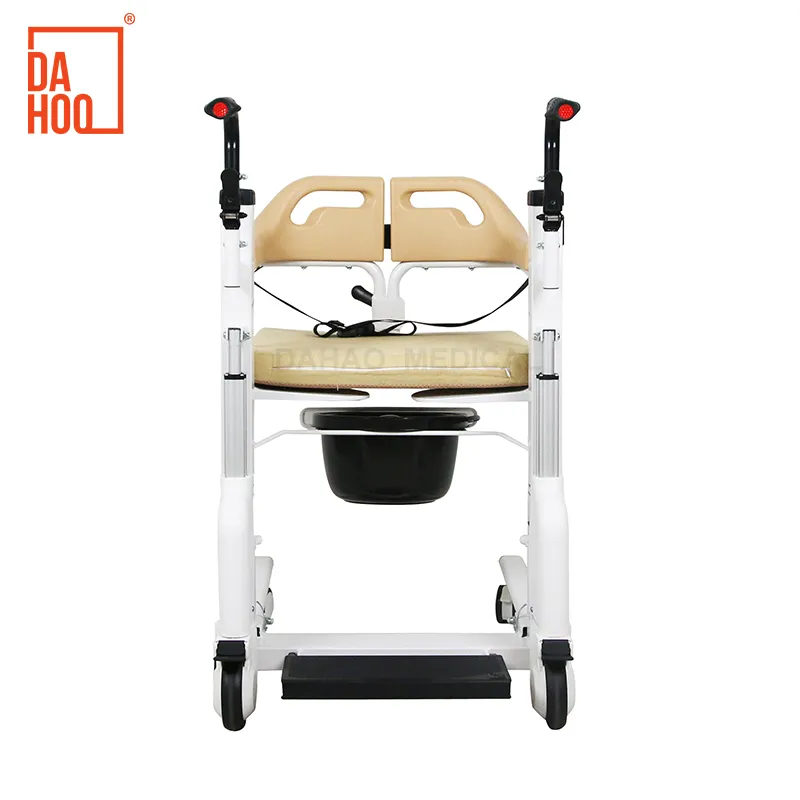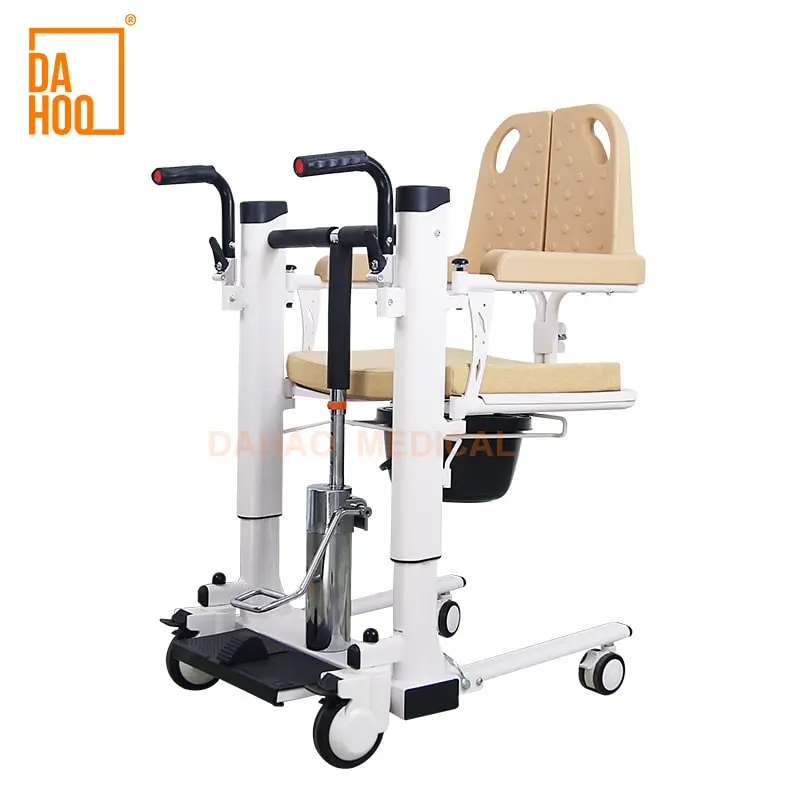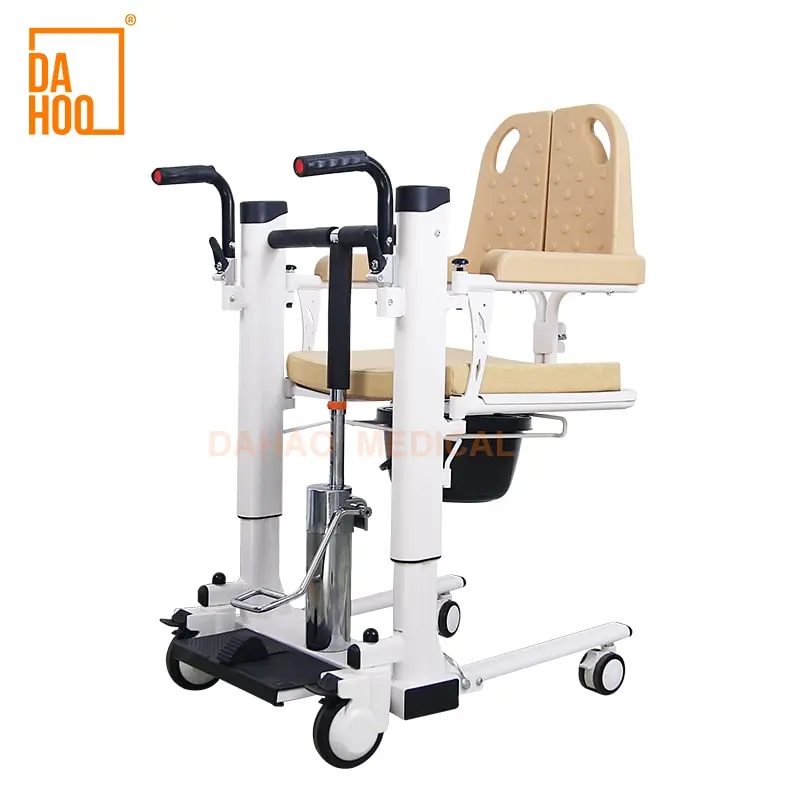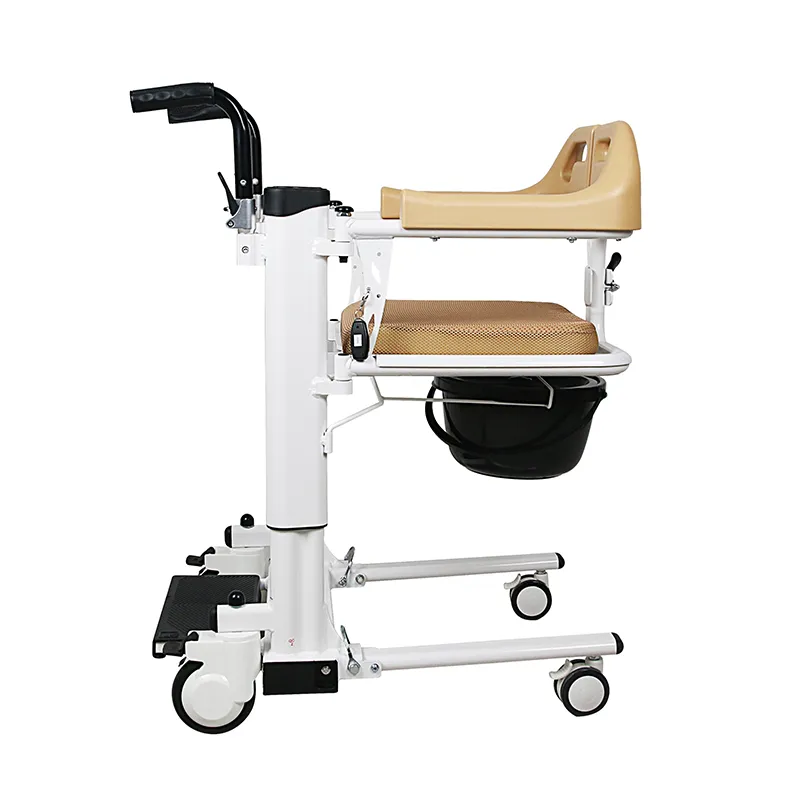

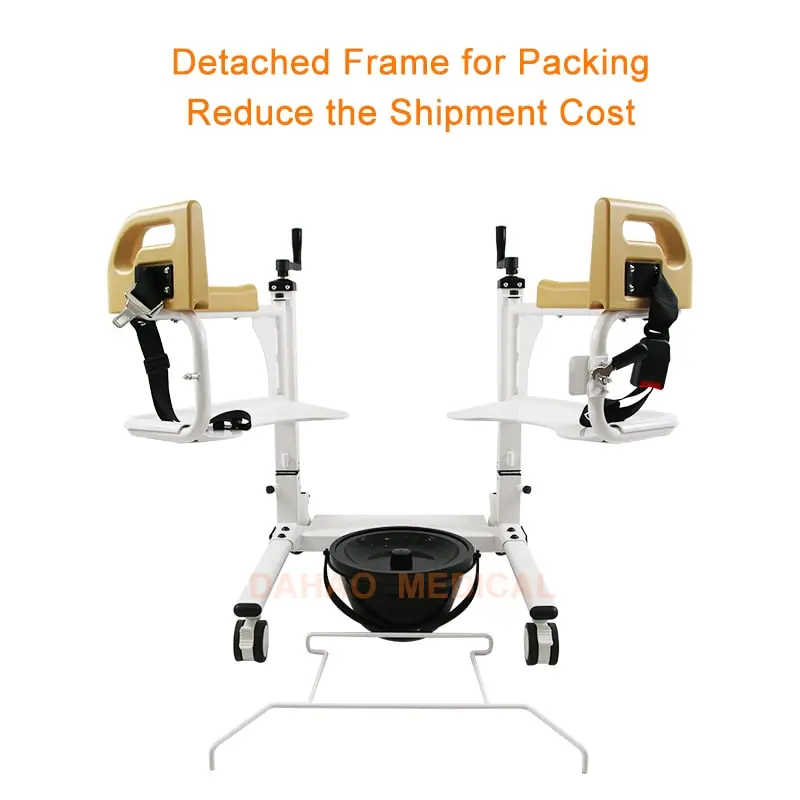
Yes, a lift transfer chair falls under the category of medical devices, and it must comply with relevant medical device standards or regulatory requirements in different countries and regions.
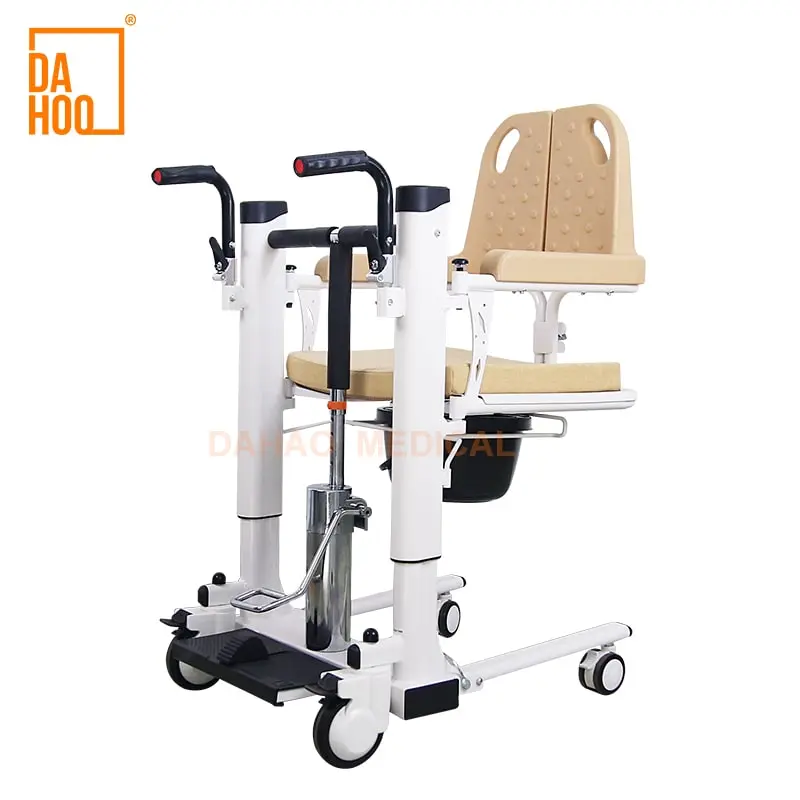
Hydraulic lift transfer chairs use a hydraulic cylinder as the power core, achieving lifting and lowering through pressure changes in the hydraulic system.
Manual chairs typically use a mechanical structure for lifting and lowering. They do not rely on hydraulic or pneumatic pressure, but instead use human power to drive the mechanical structure to raise or lower the seat.
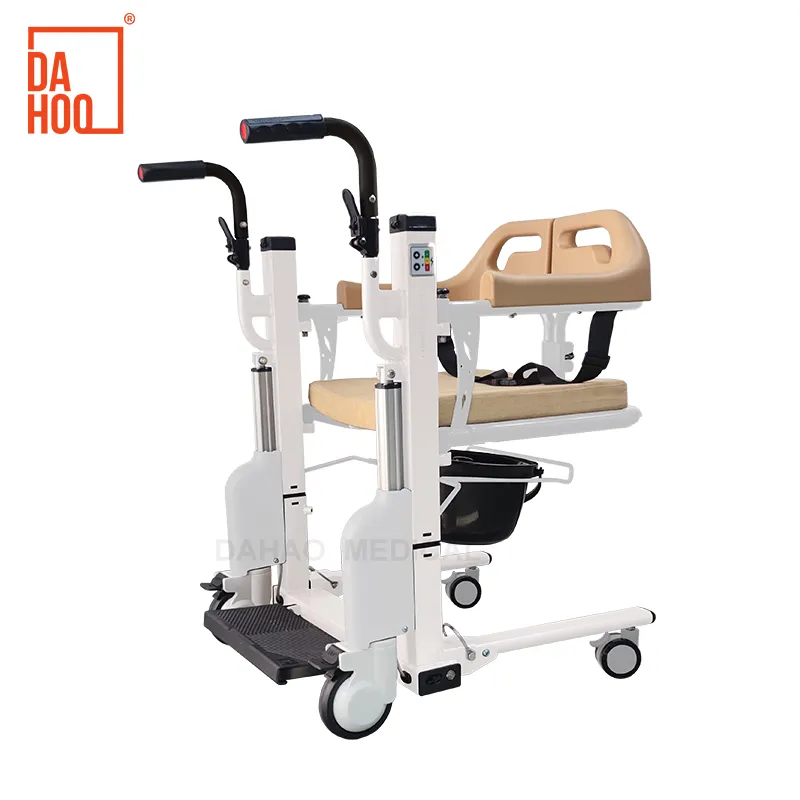
Yes. Many height-adjustable transfer chairs have electric or hydraulic lifting systems, allowing caregivers to easily adjust the chair's height to be level with the toilet. This allows patients to sit down and stand up more smoothly and naturally.
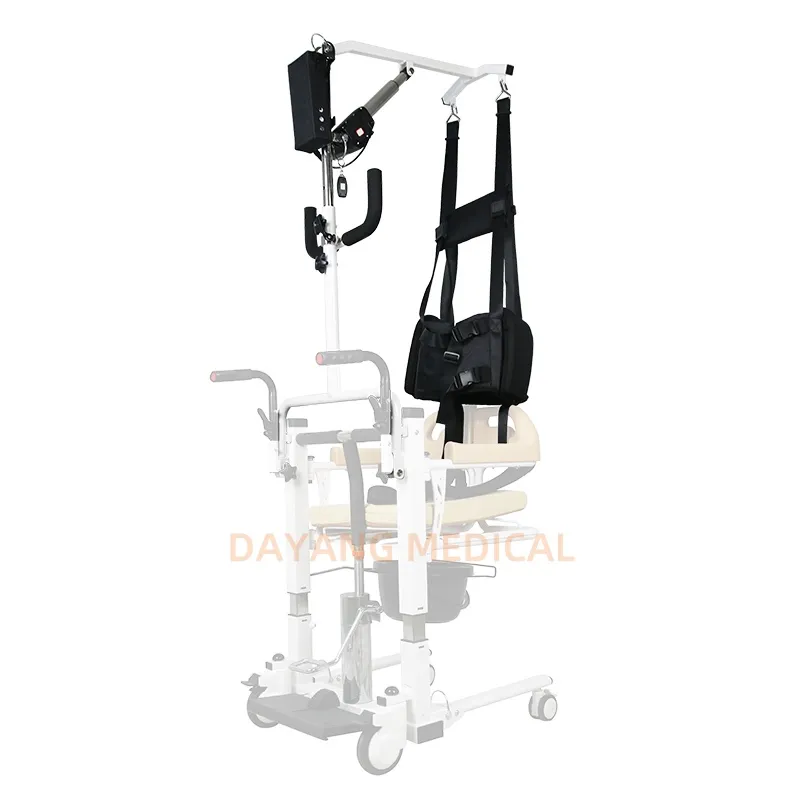
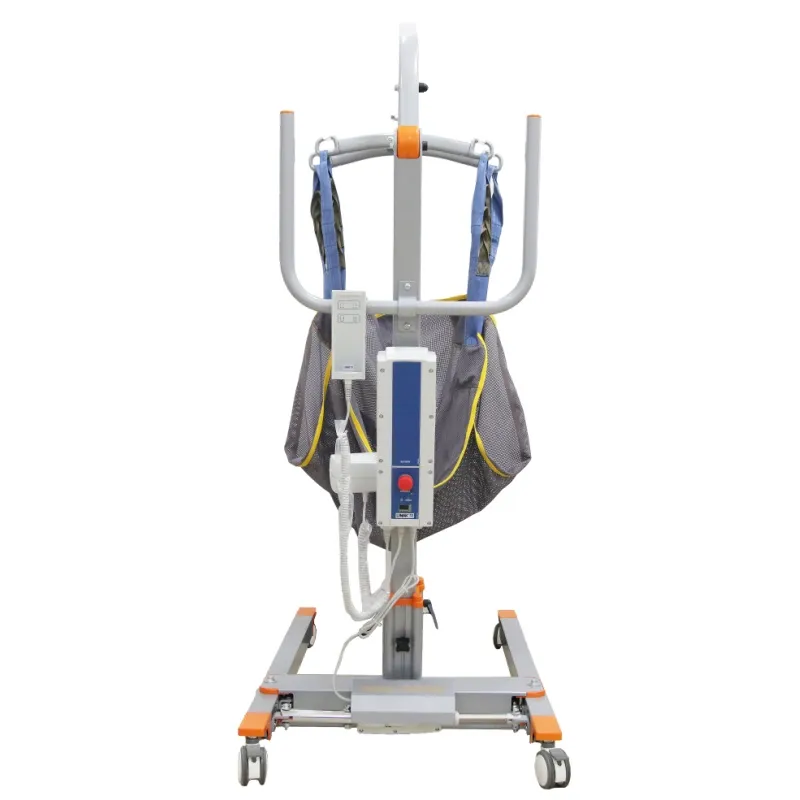
To ensure the patient lifter safely, reliably, and comfortably transfers the patient, nursing staff must:
• Be familiar with the equipment's structure
• Correctly select and wear the sling
• Always maintain slow and steady movements
• Observe the patient's physical response
• Inspect the equipment and environment before operation
Many patients' biggest concern in daily life isn't mobility issues, but rather the risk of slipping, falling, or being excessively lifted during transfers. The core design principle of a lift transfer chair is to ensure patients are:
• Safer
• More comfortable
• Less strenuous
• Maintain dignity
• Reduced risk of injury