

In long-term care, rehabilitation, and hospital care, the patient lifter (also known as a patient hoist or sling-type transfer device) is a crucial assistive device. It not only helps severely disabled patients or those unable to sit or stand on their own move safely, but also effectively reduces the physical burden on caregivers and minimizes injuries caused by lifting.
Since patient lift transfer machines involve "suspension-style" transport, improper use can cause discomfort or even risks to the patient. Therefore, "How to use a patient lifter safely?" and "How many people are needed to operate a patient lifter?" are questions of great concern to many caregivers, families, and institutions.
To help you fully understand the safe use of a patient lifter hoist, this article will systematically explain it from multiple aspects, including structural understanding, operating procedures, environmental safety, nursing cooperation, and personnel requirements.
What is the most important safety foundation when using a patient lifter?
Before discussing operational details, it is essential to understand the fundamental principles of safe use of a patient lifter hoist.
1. Understanding the Structure and Function of a Patient Lifter
One of the key steps to safely using a patient lifter is having a clear understanding of its basic structure and operating logic.
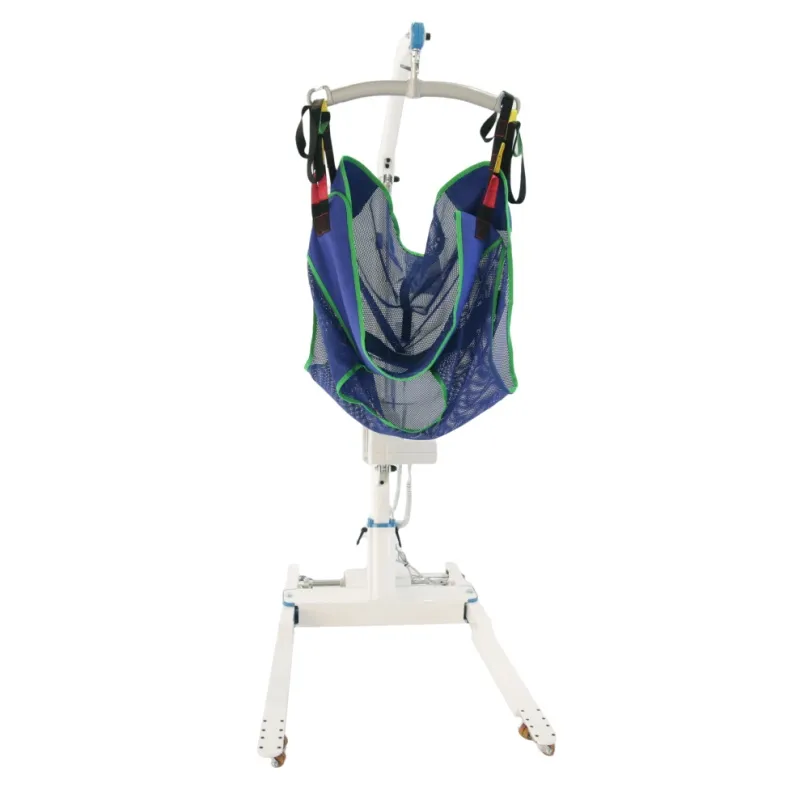
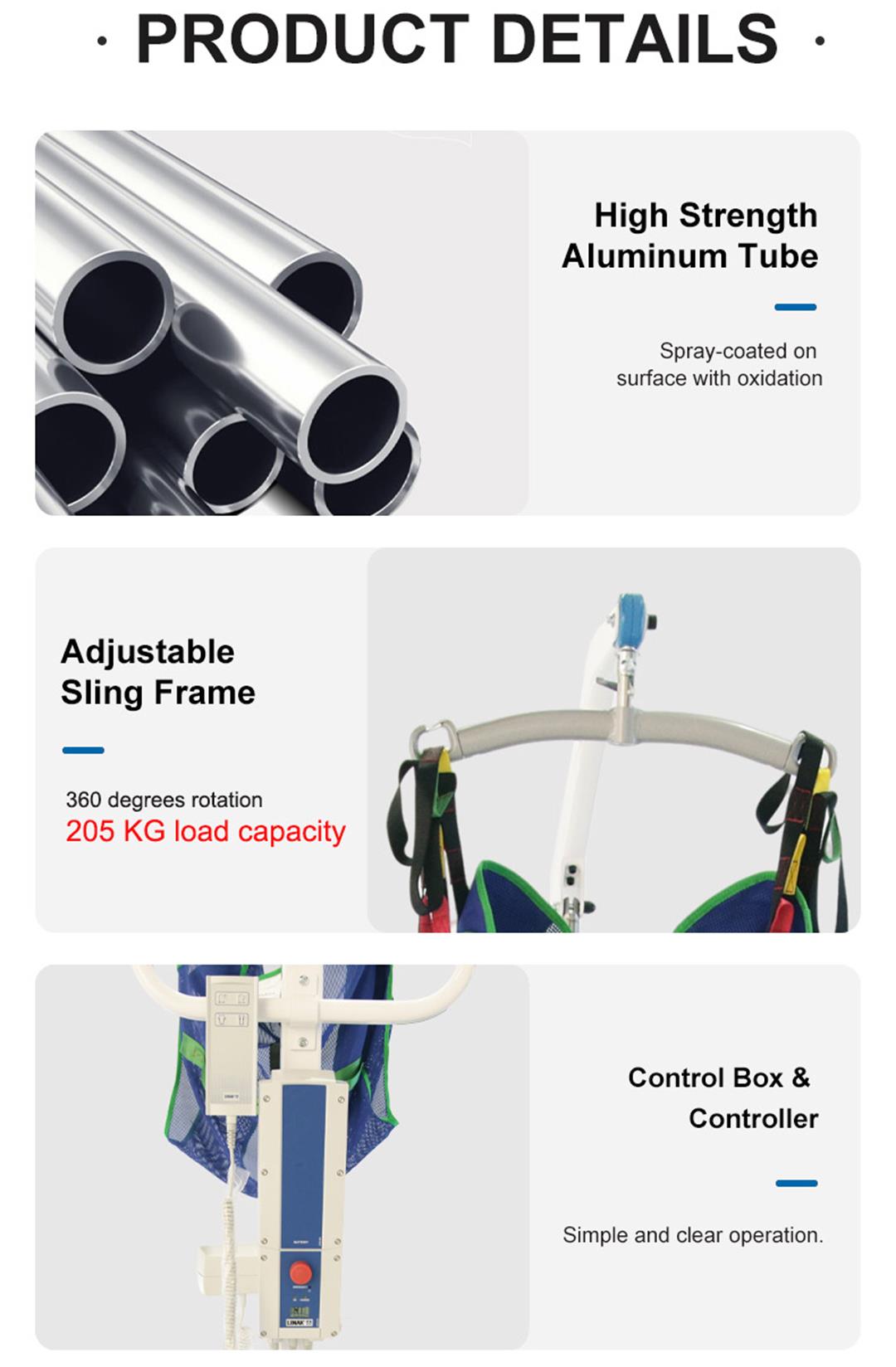
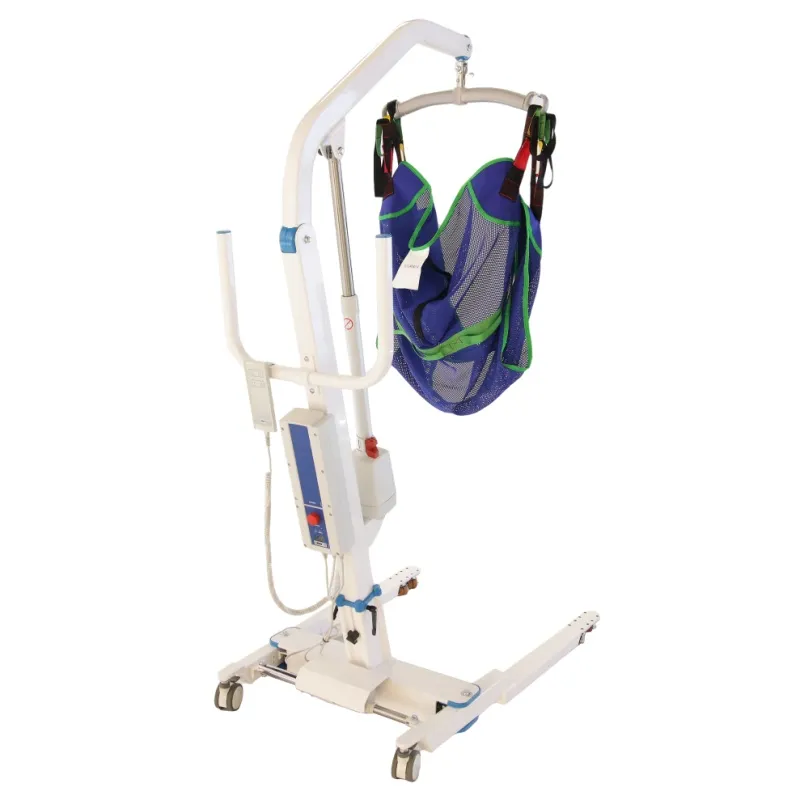
A patient lifter typically consists of the following main parts:
• Support base
• Lifting boom
• Hook or sling anchor points
• Sling system
• Brake wheel
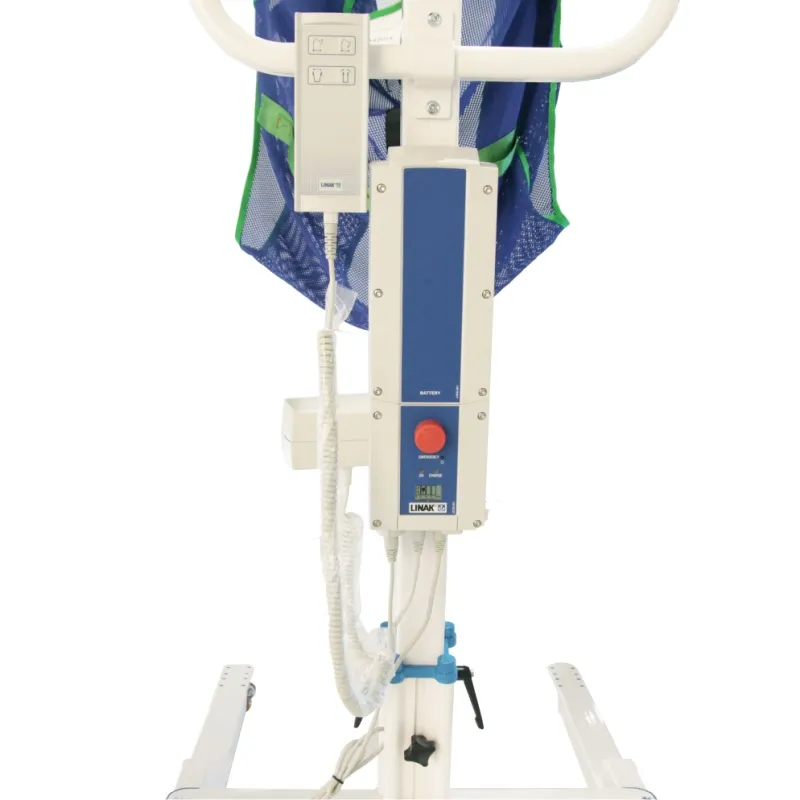
• Electric controller or manual lifting device
These components work together to allow the patient lifter to move the patient through a process of "slings wrapping the body – boom rising – smooth movement – placement in the target position." Therefore, nursing staff must be familiar with the function of each component and the key points for inspection to avoid accidents caused by incorrect operation.
2. Understanding the Patient's Physical Condition and Cooperation Ability
The core purpose of a patient lifter hoist is to assist patients who cannot move themselves, but different patients have different muscle strength, consciousness, and postural stability abilities. To use a patient lifter safely, nursing staff must understand the following beforehand:
• Whether the patient can maintain head control
• Whether the patient can cooperate with instructions
• Whether there is a risk of fracture
• Whether the patient is prone to tension or anxiety
• Whether there are pain-sensitive areas.
This information directly affects the choice of sling, transfer posture, and operation speed.
3. Always adhere to the basic principles of "slow, smooth, and controllable"
The operation of a patient lifter must ensure:
• Slow movements
• Smooth lifting and lowering
• Avoid sudden turns
• Observe the patient's response at all times
• Maintain communication throughout the process
In particular, the lifting and lowering movements must be stable; this is crucial to prevent discomfort or psychological fear caused by swaying.
What preparations are needed before operating a patient lifter?
To operate a patient lift transfer machine safely, nursing staff must complete a series of preparatory tasks before actual use. These preparations are an indispensable part of the entire process.
1. Check the overall condition of the patient lifter
Before each use, the patient lifter hoist must undergo a basic check, including:
• Sufficient battery power (for electric models)
• Undamaged boom
• Intact, tear-free slings
• Secure base support
• Flexible wheels and properly locking brakes
• Controller functions correctly for lifting and lowering.
The core of a patient lifter is "stable load-bearing and safe suspension." Damage to any component will reduce overall safety.
2. Ensure a sufficiently safe operating environment
A safe operating environment significantly reduces the risk of accidents. The operating space must meet the following conditions:
• Free of water and debris on the ground
• Unobstructed operating area
• Beds, wheelchairs, and other target equipment are within easy reach
• Sufficient space for the patient lifter to move and turn freely.
Especially in home environments, it is essential to plan the route in advance to avoid confined spaces affecting operation.
3. Communicate with and prepare the patient psychologically
Safety comes not only from the equipment but also from the patient's stable cooperation. Nursing staff should explain to the patient in advance:
• What will happen next
• What actions will be involved in the process
• Keep the patient relaxed
• Tell the patient not to exert any force; the nursing staff will control the entire process
Reducing the patient's anxiety can significantly improve the smoothness of the patient lifter hoist operation.
How to choose the correct sling when using a patient lifter?
The sling is a key component of the patient lifter hoist that directly contacts the patient; therefore, its selection and wearing method are crucial for safety.
1. Choose according to the patient's physical ability and needs
Common sling types include:
• Full-body sling
• Seated sling
• Shower sling
• Toilet opening sling
The choice of sling must be based on:
• Whether the patient can sit up
• Whether the patient needs to shower or use the toilet
• Whether maximum support and wrapping are required.
Incorrect sling selection may result in unstable wrapping or uncomfortable shifting.
2. Ensure the sling size is appropriate
A sling that is too large may slip off, while a sling that is too small will compress the body and cause discomfort. Before use, ensure the sling matches the patient's body size.
3. The sling must be worn correctly, smoothly, and without folds
During sling wearing, ensure:
• The fabric is smooth.
• It does not compress skin folds.
• The sling loops are securely connected to the hooks.
• All connection points are symmetrical and reliable.
Incorrect sling wearing is one of the main risk factors for patient lifter accidents.
What are the correct operating procedures for a patient lifter?
After preparation, nursing staff can operate the patient lifter hoist according to the following standard procedure:
1. Position the patient comfortably
If the patient is in bed, ensure they are in a stable, centered, and comfortable position.
2. Place the sling correctly
Depending on the type of sling, place it evenly and smoothly under or around the patient's body.
3. Hook the sling onto the patient lifter hooks or bars
Confirm that each hook is securely fastened, and there are no missed, incorrect, or crossed hooks.
4. Activate the lifting system and slowly lift the patient
During this process, it is essential to:
• Maintain slow movement
• Observe the patient's facial expressions and physical condition at all times
• Ensure even tension on the slings
If the patient feels discomfort, stop immediately.
5. Move the patient lift transfer machine to the target location
For example, beside the bed, wheelchair, or in the shower area. Keep the equipment stable during movement and avoid pushing too quickly.
6. Slowly lower the patient
Gently lower the patient onto the target sitting or bed surface before releasing the slings. Ensure the patient is completely stable before unfastening the buckles.
How many people are needed to operate the patient lifter? Why?
This is a question of great concern to many families and institutions.
1. Generally: One person can operate the patient lifter
Modern patient lifters are designed with single-person operation in mind:
• Easy-to-control electric lifting
• Stable bottom support
• Simple sling installation
• One-handed operation of the controller
For caregivers familiar with the equipment, a single person can safely complete the entire transfer process.
2. In some situations: Two people are safer and more stable to operate
While single-person operation is feasible, it is recommended to have two people in the following situations:
• The patient is overweight.
• The patient is easily agitated and has uncontrollable movements.
• The patient has bedsores, fractures, etc., requiring extra protection.
• The operating space is limited.
• The nursing staff lacks experience.
• Positioning adjustments or wearing complex slings are required.
One person operates the device, while the other stabilizes the patient, monitors safety, and assists with sling donning.
3. Professional advice
Home use: For beginners, at least two people are recommended, gradually transitioning to one person operating independently.
Institutional use: Generally, following standard operating procedures, one person can often complete the task, but additional assistants may be added depending on policy.
What are some common safety mistakes when operating a patient lifter?
To improve safety, the following high-risk procedures must be avoided:
• Lifting before the sling is fully on
• Using a sling type unsuitable for the patient
• Pushing too quickly during the procedure
• Failing to check the brakes or forgetting to lock the bed wheels and chair wheels
• The sling curling or folding during application
• Failing to observe the patient's reaction
• Operating on an inclined surface
• The patient exerting force to "help" and causing instability
These procedures are risky and must be strictly avoided.
How to make using a patient lifter more comfortable?
Besides safety, "comfort" is also a crucial aspect of patient lifter hoist operation.
1. Maintain a comfortable room temperature
The patient's clothing may be adjusted during suspension, so avoid discomfort caused by low temperatures.
2. Continuously communicate with the patient throughout the procedure
Letting the patient understand each movement can significantly reduce tension and improve cooperation.
3. Use appropriate sling material
Soft, breathable slings are more suitable for daily use and will not irritate the skin.
4. Control the Lifting and Lowering Speed
Avoid excessively rapid lifting and lowering to ensure the patient does not sway excessively.
How to Use a Patient Lifter Safely? How Many People are Required to Operate?
To ensure the patient lift transfer machine safely, reliably, and comfortably transfers the patient, nursing staff must:
• Be familiar with the equipment's structure
• Correctly select and wear the sling
• Always maintain slow and steady movements
• Observe the patient's physical response
• Inspect the equipment and environment before operation
• Communicate with the patient beforehand
• If necessary, two people should work together
Regarding the Number of Operators:
• Experienced nursing staff: One person can safely operate the patient lifter hoist.
• Novices or patients with special needs: Two people are recommended for a more secure operation.
In short:
A patient lifter can be safely operated by one person, but in some situations, two people are safer. The prerequisites are always: correct method + stable operation + patient comfort.
What makes Dahao Medical a reliable supplier of medical equipment?
Since 2008, Dahao Medical has built a reputation for excellence in the manufacturing of medical mobility products. Our factory, located in Foshan, China, is equipped with over 195 advanced machines, ensuring high production capacity and precision. We are ISO 13485:2016 certified and adhere to international regulations such as CE and FDA, making us a reliable partner for purchasing medical devices. Whether you need a bulk order of Electric Wheelchairs or custom Hospital Care Beds, our team offers efficient manufacturing and on-time manufacturing delivery. We supply to over 100 countries and offer both OEM and ODM services to meet the specific needs of our clients.