

The performance, stability, maneuverability, and comfort of a 4-wheel rollator walkers are directly related to wheel size. Among different design parameters, wheel diameter is one of the most significant factors affecting the walking experience. Many people often ask when purchasing a 4-wheel rollator: "Are bigger wheels always better?"
The answer is: For outdoor use, 4-wheel rollators with larger wheels do perform better, but whether bigger is always better depends on individual needs.
This article will comprehensively analyze this question from the perspectives of wheel diameter design, maneuverability, handling, usage scenarios, and selection criteria, providing users with professional and complete guidance.
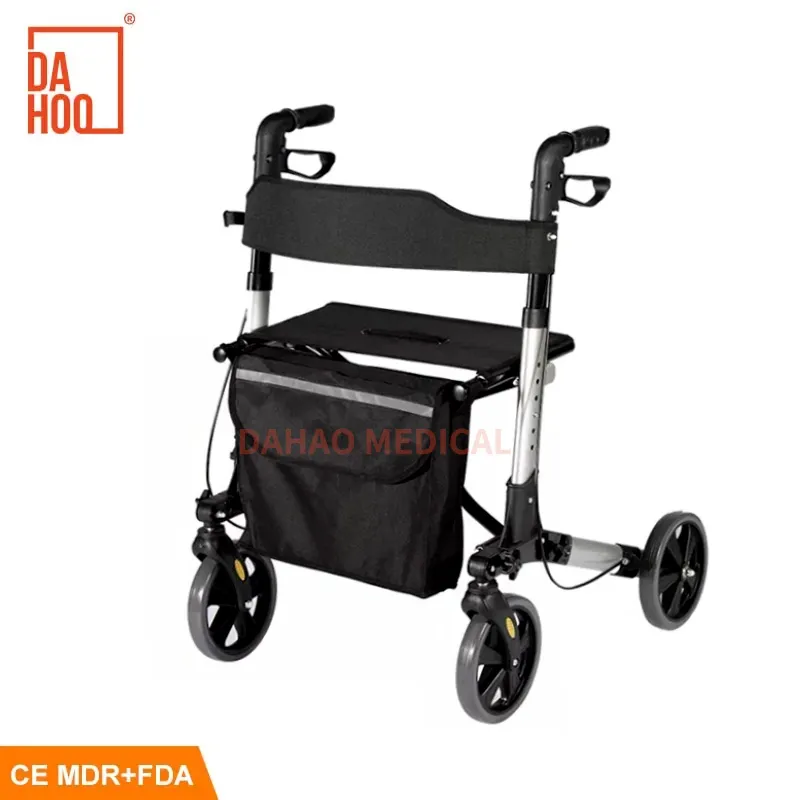
Why does wheel size affect the performance of a 4-wheel rollator?
The core function of a 4-wheel rollator walker is to assist the user in walking; therefore, the wheel design directly affects its mobility, stability, and comfort. Larger wheels generally mean:
• Easier to traverse uneven surfaces
• Smoother passage through cracks and rocks
• Less drag
• Better shock absorption
Conversely, 4-wheel rollator walkers with smaller wheels perform well on flat surfaces, but their traversal performance in complex outdoor environments decreases.
Therefore, wheel size is crucial and a key factor affecting the overall experience of a 4-wheel rollator walker.
What are the common wheel sizes for 4-wheel rollators?
The wheel diameters of 4-wheel rollator walkers on the market mainly fall into the following ranges:
1. Small wheels: 6 – 7 inches
Common in lightweight or indoor mobility scooters.
2. Medium wheels: 8 inches
The most common universal size.
3. Large wheels: 10 – 12 inches
Suitable for outdoor, gravel roads, uneven surfaces, grass, and other complex environments.
In summary: Larger wheel diameters result in better mobility for the scooter.
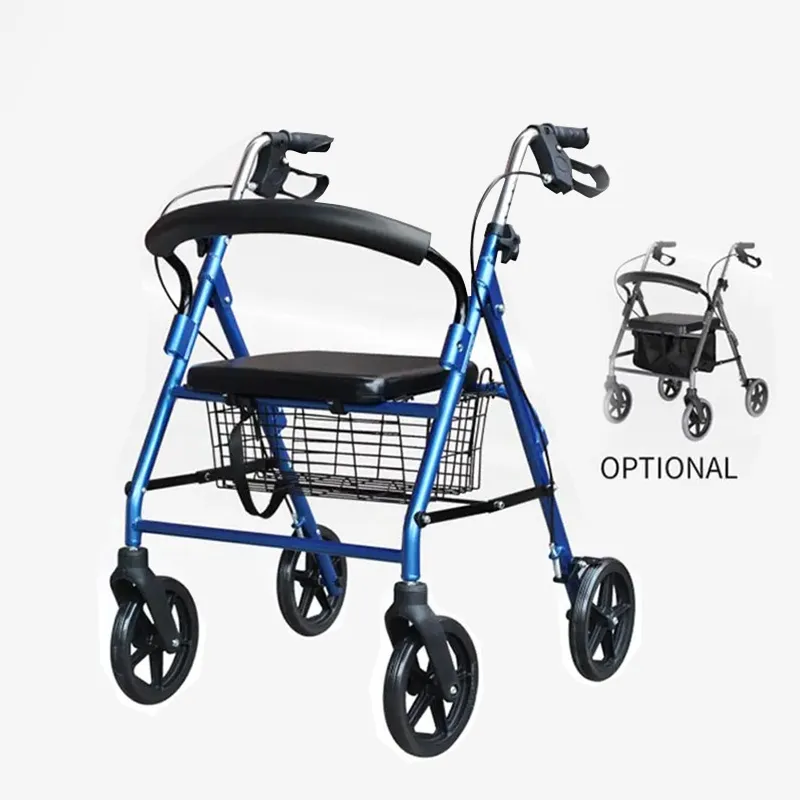
What are the core advantages of 4-wheel rollators with large wheels?
Based on your description, "Larger wheels make it easier to overcome obstacles and improve comfort," this is entirely correct.
A 4-wheel rollator walker with large wheels has significant advantages in the following aspects:
1. Easier Obstacle Crossing
Larger wheels can easily overcome:
• Curbs
• Rocks
• Grass
• Irregular roads
• Gravel roads
• Brick seams
• Small potholes
This is the main reason many users choose larger wheels.
2. More Stable and Comfortable Walking
Larger wheels reduce the feeling of bumps on the road, improving overall comfort, especially helpful for people with sensitive joints or unstable gait.
3. Superior Outdoor Performance
Outdoor use often involves various road surfaces, and a 4-wheel rollator walker with large wheels performs significantly better than a smaller wheel model.
4. Better Shock Absorption
Larger wheels have a more stable contact point with the ground, reducing vibration and making it easier to push.
Therefore, if the user mainly engages in outdoor activities, the advantages of a 4-wheel rollator walker with large wheels are very obvious.
Are smaller-wheeled 4-wheel rollators more suitable for indoor use?
The answer is yes.
While larger wheels offer superior performance, smaller-wheeled 4-wheel rollator walkers also have significant advantages for indoor environments:
1. Smaller turning radius
Smaller wheels facilitate:
• Turning around in tight spaces
• Moving between furniture
• Navigating narrow hallways
2. Lighter overall design
Smaller wheels result in a smaller overall size, making them easier to store.
3. Better suited for smooth floors
Indoor floors are typically flat, and smaller wheels are sufficient.
Therefore, smaller-wheeled models may be more suitable for users whose primary use is at home.
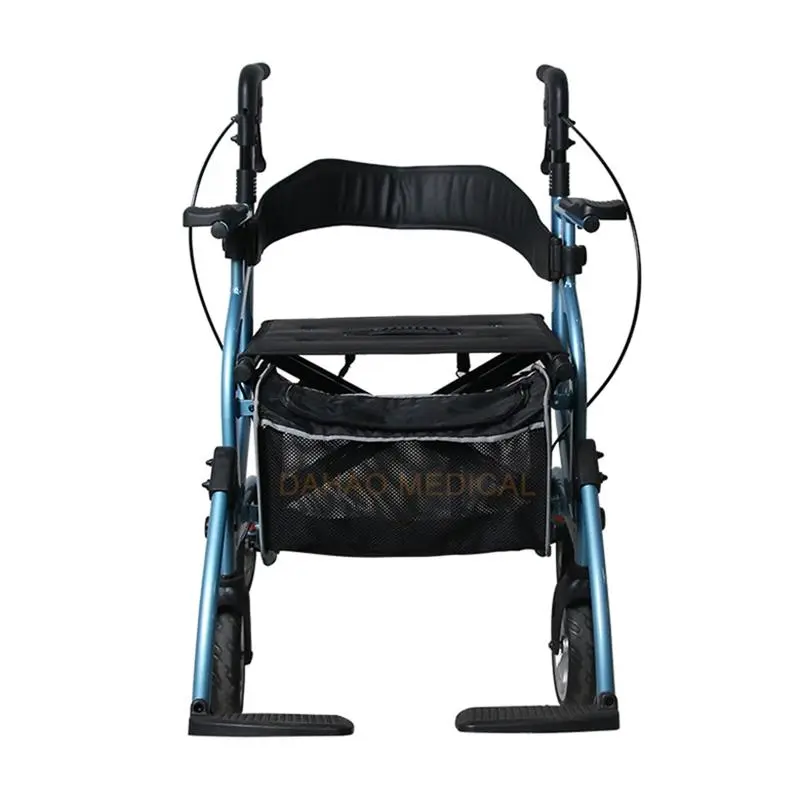
Will larger wheels make them more difficult to control?
Many people worry that larger-wheeled 4-wheel rollator walkers might be "heavier" or "more difficult to control."
The actual situation is as follows:
Advantages of larger wheels:
• Smoother pushing
• Less resistance
• Easier handling on uneven surfaces
Possible disadvantages:
• Slightly larger size
• Slightly larger turning radius in confined indoor spaces
However, in everyday outdoor use, larger wheels are often easier to handle because users don't have to struggle to find flat paths.
Does larger wheels mean heavier?
Larger wheels don't necessarily mean a heavier scooter. Here's why:
• High-end 4-wheel rollator walkers use aluminum alloy or carbon fiber materials
• Wheels are made of lightweight PU or EVA materials
• Optimized frame design keeps the overall weight lightweight
For example:
Even 10–12 inch models with large wheels may only weigh 6–8 kg, still making them lightweight overall.
Weight depends more on materials than wheel size.
Which scenarios are suitable for choosing a large-wheel 4-wheel rollator?
If you frequently go out and engage in outdoor activities, a large-wheeled 4-wheel rollator walker offers significant advantages, especially suitable for:
• Walking in parks
• Community roads
• Uneven sidewalks
• Grass and dirt
• Stone and gravel roads
• Gentle slopes
In these environments, the large wheels significantly reduce bumps, making walking easier.
Which scenarios are more suitable for a small-wheeled 4-wheel rollator?
If your primary usage scenarios are:
• At home
• Indoors
• Hospitals
• Supermarkets
• Flat surfaces
Then a small-wheeled 4-wheel rollator walker will be more:
• Compact
• Flexible
• Easy to turn
• Better suited for narrow spaces
For indoor users who prefer lightweight and flexible vehicles, small wheels are more suitable.
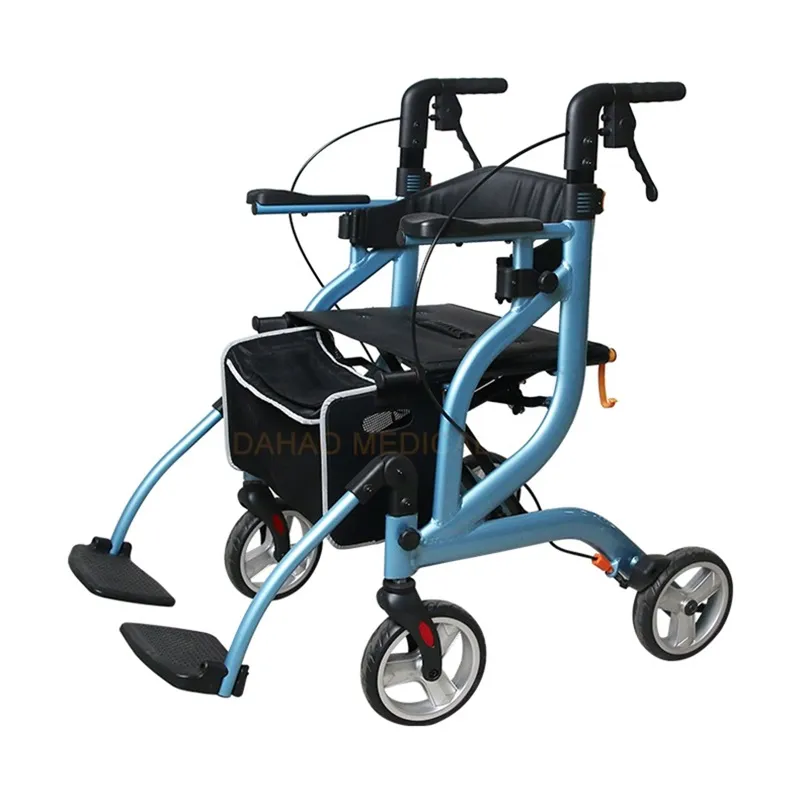
How to determine the wheel diameter based on your needs?
The following is a selection guide designed for different users:
1. Primarily for outdoor use?
✔ Choose large wheels (10–12 inches)
Reasons: Strong traction, good shock absorption, high comfort
2. Primarily for indoor use?
✔ Small wheels (6–8 inches)
Reasons: Easier to handle, more agile turning, saves space
3. Want to be suitable for both indoor and outdoor use?
✔ Choose medium-diameter wheels (8–10 inches)
Reasons: Versatile, balanced, highly adaptable
Does the tire material of a 4-wheel rollator affect performance?
Wheel diameter isn't the only factor; wheel material also affects the experience.
Common wheel materials include:
1. EVA (Lightweight Foam)
• Lightweight
• Maintenance-free
• Suitable for general indoor and outdoor use
• Good shock absorption
2. PU (Polyurethane)
• More durable
• Stronger grip
• Best performance on smooth roads
3. Rubber wheels
• Good cushioning
• Greater flexibility
• Slightly heavier When choosing wheel diameter, wheel material should also be considered. Are bigger wheels always better for a 4-wheel rollator?
A comprehensive Analysis Leads to the Following Professional Conclusion
✅ Outdoor use: Larger wheels generally result in better performance.
• Easier obstacle crossing
• More comfortable walking
• Better stability
However, "bigger wheels are always better" is not always true.
For example:
• Confined indoor spaces
• Users primarily use their homes
• Greater maneuverability is required
In these situations, a smaller-wheeled 4-wheel rollator walker might be more suitable.
The final choice should be based on individual needs, usage environment, and operating habits.
What types of medical mobility products does Dahao Medical manufacture?
Dahao Medical manufactures a comprehensive range of medical mobility products designed to support patients and caregivers. Our offerings include Electric Wheelchairs, Transfer Chairs, Hospital Care Beds, 4-Wheel Roller Walkers, and Electric Patient Lifters. All products are engineered to ensure comfort, mobility, and safety for patients, with features tailored to meet the specific needs of different healthcare environments.