

For people with limited mobility, post-operative patients, the elderly, or those who are bedridden for extended periods, daily toileting is often a difficult and high-risk activity. Whether in a home care setting or in a hospital or nursing facility, safely, hygienically, and effectively assisting patients with toileting is one of the most common challenges caregivers face.
Many caregivers ask, "Can a Lift Transfer Chair be used for toileting?"
The answer is: Yes.
Furthermore, some Lift Transfer Chair models even have a built-in portable toilet function, providing toileting support without requiring a trip to the toilet. This makes care more convenient and safer, and enhances the patient's comfort and dignity.
The following article will help you systematically understand the important role of Lift Transfer Chairs in toilet care.
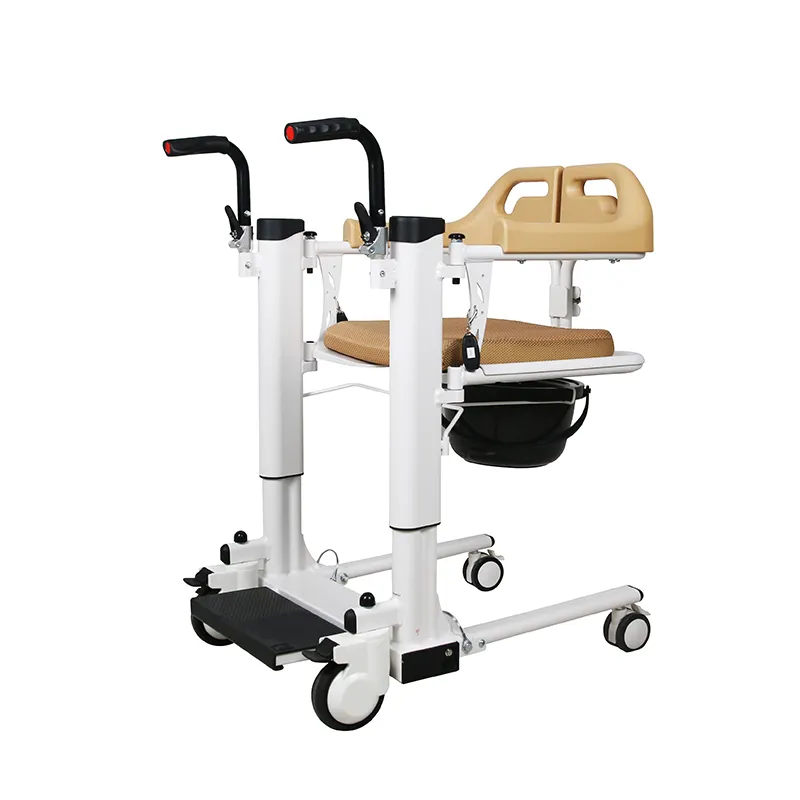
Can a Lift Transfer Chair Be Used for Toileting?
Yes. A Lift Transfer Chair can not only be used for toileting, but it is also extremely practical in toileting situations. Its applicability is mainly reflected in the following points:
1. Height Adjustable for Precise Alignment with Toilet Seats
Many height-adjustable transfer chairs have electric or hydraulic lifting systems, allowing caregivers to easily adjust the chair's height to be level with the toilet. This allows patients to sit down and stand up more smoothly and naturally.
2. Smooth and Safe Transfer Process
Moving patients from bed to toilet often carries the risk of falls. Height-adjustable transfer chairs, with their stable structure and safety devices, make the entire process more controllable.
3. Seat Design Supports Toileting Operations
Some height-adjustable transfer chairs have an opening in the center of the seat, allowing direct alignment with the toilet without the need for additional movement.
4. Equipped with Brakes and Stabilizing Wheels
The transfer chair can still be precisely positioned in the confined space of the toilet, preventing accidental slippage.
Therefore, both structurally and functionally, height-adjustable transfer chairs are very suitable for toilet-related nursing tasks.
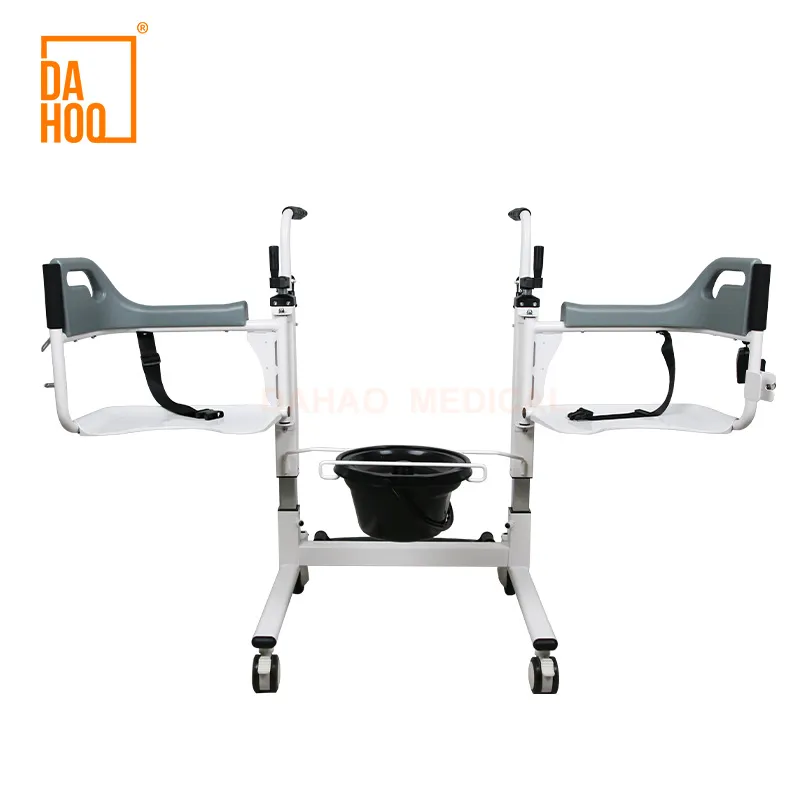
How do height-adjustable transfer chairs help patients use the toilet more safely?
Falls, slips, and instability during toileting pose serious safety risks to patients. The height-adjustable transfer chair offers a professional solution to these problems.
1. Reduced Fall Risk
Toileting involves:
• Walking
• Standing
• Turning
• Sitting
• Getting up
These movements are high-risk for people with mobility impairments. The height-adjustable transfer chair allows patients to complete these movements with minimal effort, relying on the chair's height adjustment and handrail support.
2. Enhanced Stability with Safety Belts and Guardrails
Height-adjustable transfer chairs are typically equipped with sturdy safety belts and handrails to help patients maintain balance during movement before and after using the toilet.
3. Precise Alignment with Toilet to Reduce Slipping
The chair's height is adjusted to align with the toilet, allowing patients to sit stably without slipping or leaning forward.
4. Suitable for Confined Bathroom Environments
The flexible wheels of the height-adjustable transfer chair allow for easy maneuvering in small bathrooms, making the nursing process safer.
Overall, adjustable transfer chairs significantly reduce all potential risks of injury during toileting.
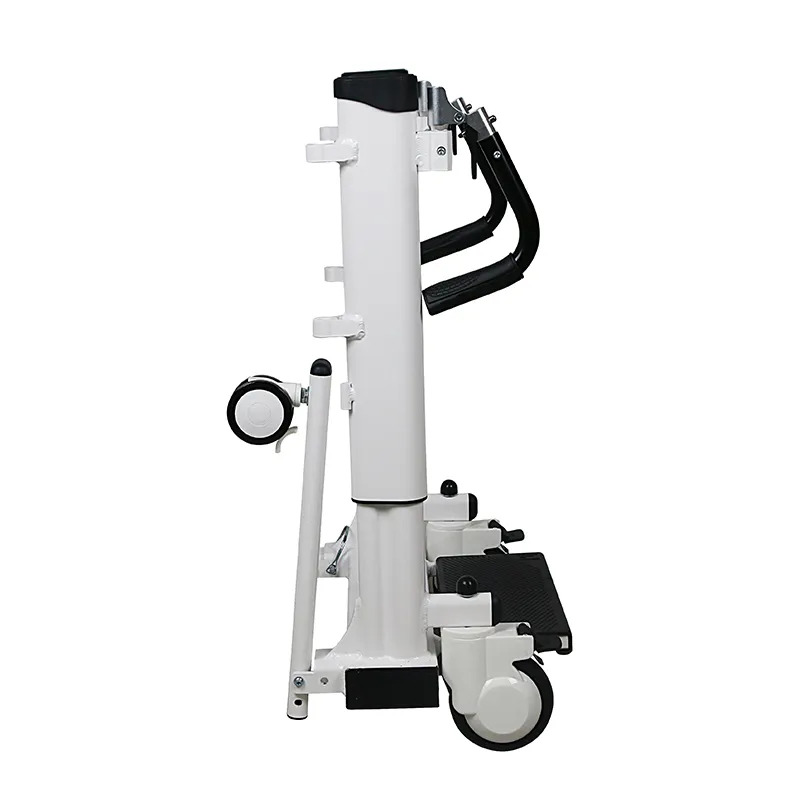
Are adjustable transfer chairs comfortable during toileting?
Comfort is a crucial aspect of excretory care, and adjustable transfer chairs offer a better experience in the following ways:
1. More Ergonomic Seat Design
Many adjustable transfer chairs feature curved seat designs that conform to the buttocks, making patients more relaxed during toileting.
2. Smooth Lifting and Lowering Reduces Fear
The process of sitting down and standing up is no longer accompanied by sudden descent or strain, but rather completed slowly and gently by the device.
3. Natural Toileting Posture Reduces Discomfort
Because they connect directly to the toilet, patients can use the toilet in a natural, standard posture, reducing pressure and discomfort.
4. More Comfortable for Prolonged Sitting
Transfer chairs are typically equipped with backrests and armrests for support, preventing patients from feeling tired or unstable while waiting or defecating.
Therefore, for those who are bedridden or have limited mobility, a height-adjustable transfer chair can provide a very good toileting experience.
Does a height-adjustable transfer chair protect the patient's dignity?
Toileting is one of the most private and sensitive activities. Many patients experience the following during toilet care:
• Embarrassment
• Passivity
• Helplessness
• Lack of privacy
• Fear of exposing their body
A height-adjustable transfer chair has significant advantages in maintaining the patient's dignity.
1. The patient does not need to be lifted up
Avoiding being completely exposed to another person's embrace greatly enhances the patient's psychological dignity.
2. More natural and orderly movements
Toileting is controlled by height adjustment, making the patient feel like they are "sitting down," not being "put down."
3. Precise and controllable toilet position, reducing embarrassment
Precise docking makes it less likely for embarrassing exposure during toileting.
4. Combined with a portable toilet function, it can be completed in a private environment
Eliminating the toilet without going to a restroom maximizes privacy.
Therefore, the height-adjustable transfer chair makes toilet care more civilized, respectful, and reassuring for patients.
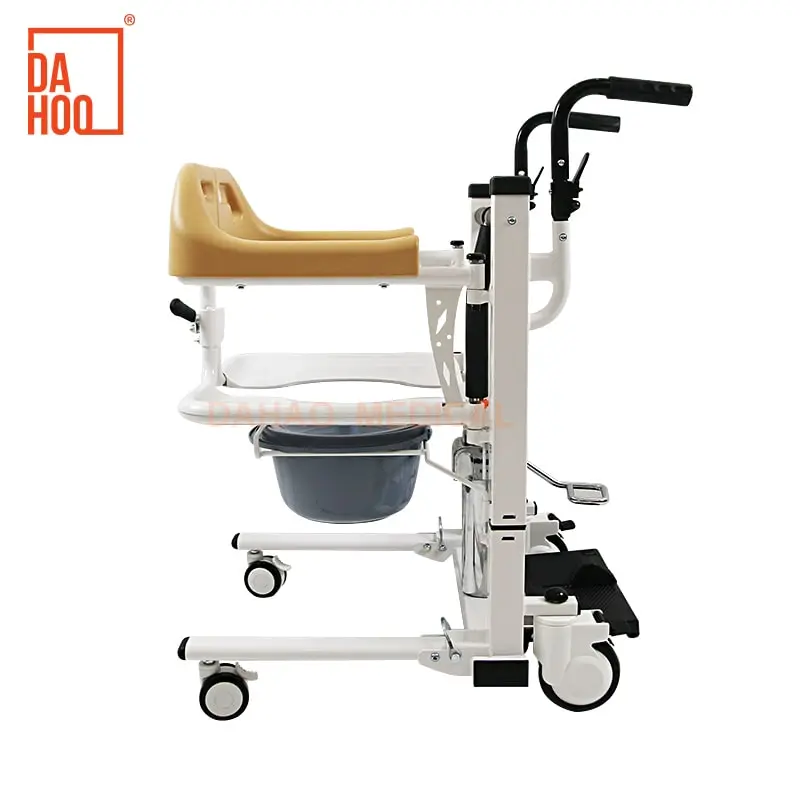
Can a height-adjustable transfer chair be used directly as a portable toilet?
Yes, this is one of the most important functions of a height-adjustable transfer chair, and it is extremely valuable to many patients.
1. Most models support bedpan function
Some height-adjustable transfer chairs have an opening in the middle of the seat, allowing the installation of:
• Bedpan
• Collection trough
• Removable bedpan
Patients can relieve themselves in the chair without having to move to the toilet.
2. Particularly helpful for patients who cannot enter the toilet independently
For example:
• Long-term bedridden patients
• Those unable to stand
• Post-operative patients in recovery
• Patients with severe mobility impairments
These individuals often find it difficult to enter small bathrooms, and the bedpan function of the height-adjustable transfer chair can directly replace the toilet.
3. Improved safety
Some patients are at risk of falling in toilet spaces; not using the toilet may actually be safer.
4. More Convenient and Time-Saving Care
Caregivers no longer need to move the patient multiple times; cleaning can be completed simply on the lift-up transfer chair.
Therefore, the portable toilet function makes the lift-up transfer chair highly flexible and practical for toilet care.
Is using a lift-up transfer chair suitable for all patients? What are the applicable scopes?
The lift-up transfer chair is suitable for most patients with limited mobility, but the following conditions must still be met:
Applicable populations include:
• Elderly patients with weak legs
• Stroke patients with hemiplegia
• Postoperative rehabilitation patients
• Individuals with weak muscles
• Parkinson's disease patients
• Obesity causing mobility difficulties
• Patients who are bedridden for extended periods but can sit up briefly
These patients can safely and efficiently complete the toilet process using the lift-up transfer chair.
Some situations may require special assessment
For example, patients who are unconscious or unable to maintain head stability may require more suffocating care equipment.
However, overall, the lift-up transfer chair has a very wide range of applications, covering almost the entire population requiring toilet assistance.
How is the lift-up transfer chair operated during the toilet process? Is it complicated?
Many caregivers worry that the equipment is too complicated. In fact, operating a lift transfer chair is very simple.
The process is roughly as follows:
1. Push the lift-and-transfer chair to the bedside
2. Adjust the height to be level with the bed surface
3. Assist the patient to move smoothly from the bed to the chair
4. Fasten the safety belt
5. Push the lift-and-transfer chair to the toilet
6. Adjust the chair height to align with the toilet opening
7. Assist the patient to sit down
8. After using the toilet, raise the chair again and return it to the bedside
For caregivers, the overall process is smooth, safe, and easy to master.
What are the advantages of a lift-and-transfer chair compared to traditional assisted toilet transport?
Common problems with traditional assisted toilet transport include:
• Caregiver's back is easily injured.
• Patients are prone to fear.
• Unstable swaying during transfer.
• Improper movements can easily cause secondary injuries.
The lift-and-transfer chair provides:
1. Assisted transfer without carrying: Reducing reliance on the caregiver's physical strength.
2. Enhanced safety: Stable structure, slow and controllable movements.
3. Enhanced Patient Comfort: The entire process is natural and stable, without causing physical pain.
4. Long-Term Use: Suitable for daily excretion, not just temporary assistance.
Therefore, the advantages of a lift transfer chair are extremely significant in excretion care.
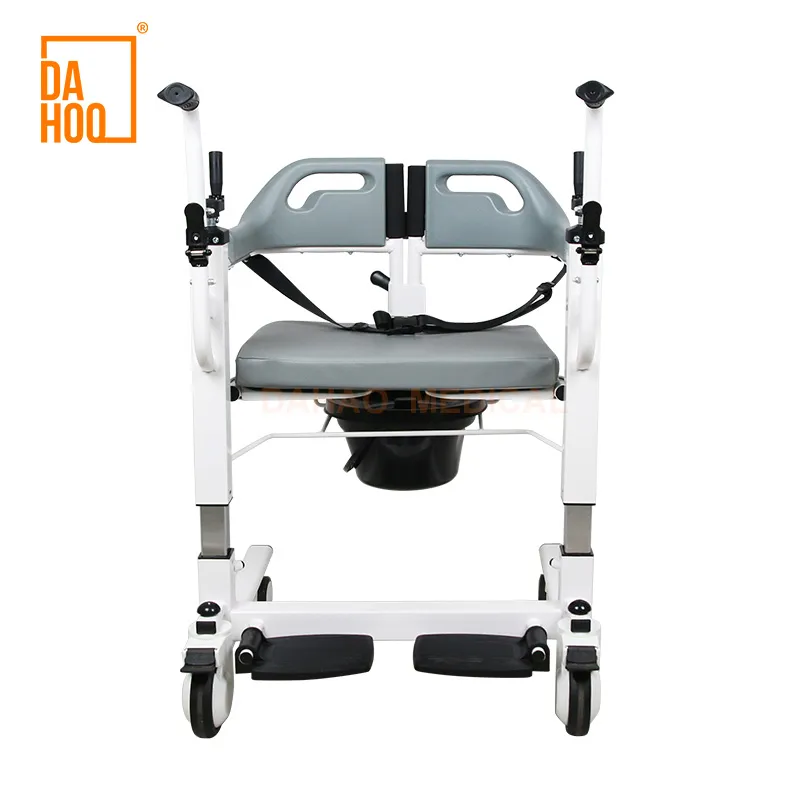
Can a lift transfer chair be used to go to the toilet?
—The answer is clear: Yes, and it's very suitable.
A lift transfer chair is a professional device ideally suited for toilet care. It features:
• Precise docking with the toilet
• Safe patient transfer
• Reduced care risks
• A more comfortable toilet experience
• Enhanced patient dignity and autonomy
• Can be used directly as a portable toilet
Especially important, some lift transfer chairs have a built-in bedpan design, allowing patients to complete excretion without even going to the toilet, making the care process more flexible, safer, and more hygienic.
If your patient has mobility issues, difficulty transferring them, or high risks associated with toileting, then using a lift transfer chair is undoubtedly a very scientific, professional, and humane solution.
How does Dahao Medical ensure the quality of its products?
At Dahao Medical, quality control is our top priority. We have a dedicated quality assurance team that oversees every step of the manufacturing process, from sourcing raw materials to final inspection. Our products are tested and certified according to international standards, including ISO 13485:2016, CE, FDA, and TUV certifications.
Additionally, we use advanced machinery and automated production lines in our factory to ensure precision and consistency.