

For the elderly, those with limited mobility, post-operative recoveries, or those who are bedridden for extended periods, home care beds not only improve their quality of life but also reduce the burden on caregivers, making the care process safer, easier, and more standardized.
However, the market offers a wide variety of home care beds, from manual and electric models to multi-functional integrated care beds, each with different structures, functions, and application scenarios.
Many families are confused when choosing a home care bed: What types of home care beds are available? What are the differences between the different types? Which one is most suitable for us?
This article will give you a quick overview of the structural features, functional structures, applicable needs, and advantages and disadvantages of various models, helping you make a more accurate and scientific choice.
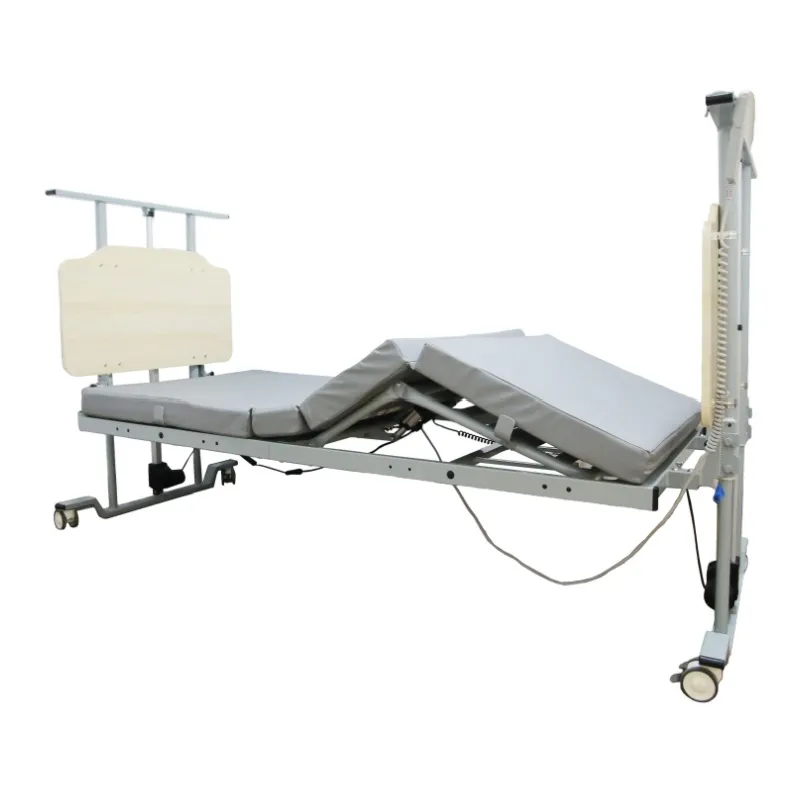
How can home care beds be classified?
Before discussing specific types, it's important to clarify that a home care bed is not simply a "bed," but a professional device combining ergonomics, electric systems, mechanical transmission, and nursing assistance functions.
Therefore, their classification is usually based on the following dimensions:
• Drive method: Manual, electric, hybrid
• Number of functions: Two-function, three-function, five-function, and multi-function
• Usage scenarios: Family bedroom, rehabilitation room, elderly care room
• Additional functions: Bedpan, side-tipping, bed lifting, bed rails, IV stand interface, etc.
• Structural design: Folding, split, integrated
Next, we will analyze the most common and important classification methods in depth.
What are the main types of home care beds?
The following are the most common and practical types of home care beds, each suitable for different care needs.
What type of home care bed is a manual home care bed? Who is it suitable for?
Manual home care beds are a traditional form of care bed, using a crank to drive a mechanical structure to achieve angle or height adjustment.
Manual Home Care Bed Features
• No power required
• Backrest, legboard, or bed surface adjustments are all controlled by a crank handle (some models)
• Stable and durable structure
• Lower cost, making it one of the most cost-effective nursing care devices
Advantages of Manual Home Care Beds
• No electricity required, can be used even during power outages
• Simple operation, low maintenance rate
• Affordable, suitable for families with limited budgets
Disadvantages of Manual Home Care Beds
• Adjustment is relatively laborious
• Adjustment precision is not as high as electric care beds
• Users cannot operate independently and must rely on caregivers
• Slow adjustment speed, unsuitable for patients who need frequent repositioning
Suitable for
• Elderly people with low care needs
• Users with limited budgets
• Users who occasionally need to adjust their position
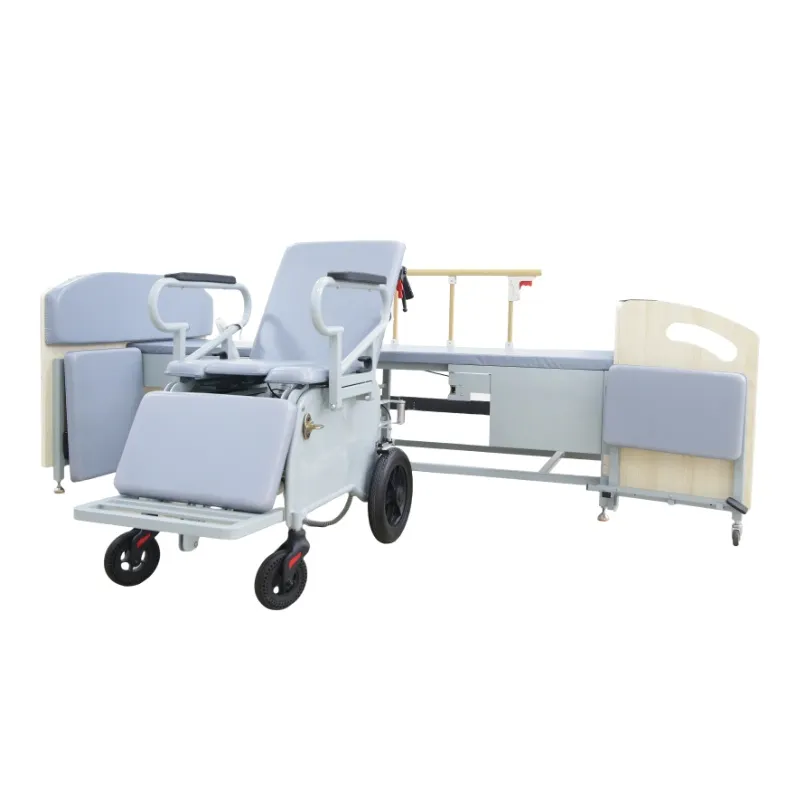
What types of electric home care beds are there? How are their functions categorized?
Electric home care beds are currently the most common type of home care bed, and also offer the highest stability and comfort. They use a motor to drive push rods to achieve various adjustments to the bed.
Electric nursing beds are generally classified by the number of functions as follows:
What kind of families are suitable for a two-function electric home nursing bed?
Two-function nursing beds typically have:
• Backrest lift function
• Leg lift function. This is the most basic type of electric nursing bed.
Features of two-function nursing beds:
• Meets basic nursing needs
• Helps improve posture during breathing, eating, and reading
• Reduces the workload of caregivers
Suitable scenarios for two-function nursing beds: Suitable for families requiring light care, short-term post-operative recovery, and those needing assistance sitting up.
What are the advantages of a three-function electric home nursing bed compared to a two-function one?
In addition to backrest and leg lift adjustment, a three-function nursing bed adds:
• Height adjustment function (whole bed height adjustment)
Advantages of three-function nursing beds:
• Height adjustment facilitates nursing procedures such as dressing changes, washing, and turning over.
• Caregivers can adjust the nursing height according to the patient's height.
• Reduces the burden on the lower back when moving patients.
• Allows users to safely get in and out of bed at a lower height.
Suitable users for three-function nursing beds: Families with moderate nursing needs, the elderly, or those requiring frequent nursing procedures.
What are the additional features of a five-function electric home care bed?
A five-function care bed generally features:
• Backrest adjustment
• Legrest adjustment
• Overall height adjustment
• Independent upper and lower body adjustment
• Head-down/foot-up or feet-down/head-up position (commonly known as the "Trendlenberg position")
Advantages of a five-function care bed:
It allows for more positional changes, suitable for users with more complex nursing needs, and can effectively assist breathing, drainage, and rehabilitation training.
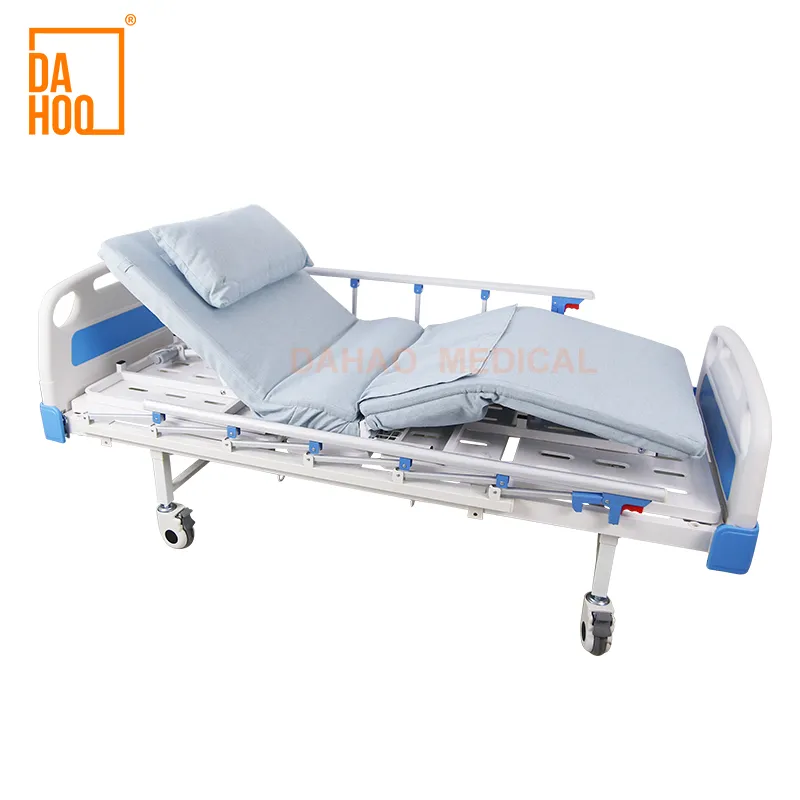
Is a multi-functional electric home care bed a high-end model?
Yes, multi-functional care beds combine a variety of high-end functions, such as:
• Automatic left and right turning
• Automatic sitting up
• Anti-slip shifting
• Zoned airbag anti-decubitus mattress
• Remote control/APP control
• Integrated bedpan function
These are typically used in homes with long-term bedridden patients or those requiring comprehensive care.
What type of home care bed has a bedpan? Which patients is it suitable for?
A home care bed with a bedpan integrates the bedpan system with the bed frame, allowing the user to perform toileting care without being moved.
Features of Home Care Beds with Bedpans
• Bedpan can be concealed within the bed body
• Electrically operated bedpan position (some models)
• Reduced risk of movement
Suitable for
• Long-term bedridden individuals
• Individuals unable to use the toilet independently
• Families seeking significantly improved care convenience and hygiene
Which families are folding home care beds designed for?
Folding home care beds prioritize convenience, storage, and transport.
Advantages of Folding Home Care Beds
• Easy to fold and store
• Suitable for small living spaces
• Easy to move
Limitations of Folding Home Care Beds
Folding care beds often have basic functions and are suitable for mild care.
Are home care beds with a side-tilting function considered high-end care beds?
Side-tilting care beds are generally multi-functional care beds, driven by a motor, and the bed surface can tilt to the left or right.
Home care beds with side-turning function
• Reduces the workload of caregivers in turning the patient over.
• Prevents bedsores.
• Improves local blood circulation.
• Assists in sputum drainage.
Suitable for
Long-term bedridden individuals who are unable to turn over independently.
What types of home care beds can be classified by structure?
Besides functional classification, home care beds can also be classified by structural design:
What are the characteristics of a one-piece care bed?
One-piece care beds feature a sturdy, robust structure with strong load-bearing capacity and stable function.
Advantages of one-piece care beds:
• Quieter operation
• More robust structure
• Less vibration and longer lifespan
Why are modular care beds more flexible?
Modular structures are easy to disassemble and move, making them suitable for families who frequently need to move or transport their beds.
How should families choose a care bed based on its type?
Different types of home care beds are suitable for different individuals. It is recommended to consider the following:
What is the level of care needed?
• Mild care: Manual nursing bed, two-function electric bed
• Moderate care: Three-function electric bed
• Deep care: Five-function, multi-functional nursing bed
Do you need deep care functions such as a bedpan or side-turning bed?
If the patient cannot move, a multi-functional model is necessary.
Do you need a height adjustment function?
If care is frequent, height adjustment is essential.
Is your home space limited?
For small spaces, choose a folding or split-type nursing bed.
Can the user operate it independently?
If the user can operate it independently, an electric nursing bed is the best choice.
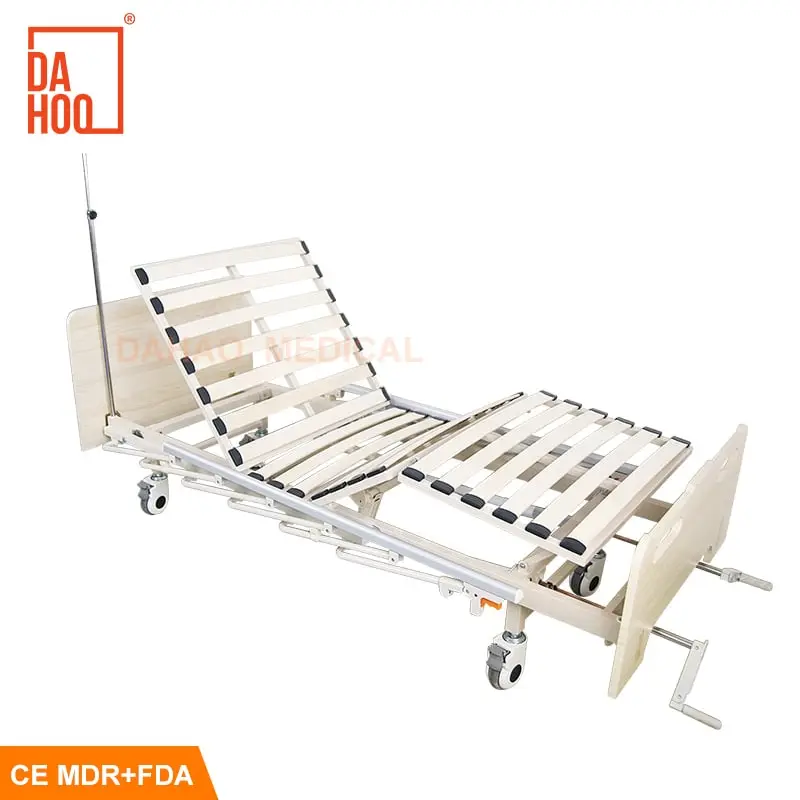
What types of home nursing beds are available?
Based on the drive method, number of functions, structural design, and care needs, they can be divided into:
• Two-function electric nursing bed
• Three-function electric nursing bed
• Five-function electric nursing bed
• Multi-functional electric nursing bed
• Nursing bed with bedpan
• Side-turning nursing bed
• Folding nursing bed
• Split-type/integrated nursing bed
Each type of home nursing bed has its specific advantages and suitable users. The most important thing is to make a reasonable choice based on the user's level of care, home space, budget and operational needs.
What kind of products does Dahao Medical manufacture?
Dahao Medical manufactures a wide range of medical mobility and care equipment, including Electric Wheelchairs, Transfer Chairs, Hospital Care Beds, 4-Wheel Rollator Walkers, Home Care Beds, and Electric Patient Lifters. These products are designed to improve the quality of life for patients and caregivers, providing comfort, mobility, and ease of use. We use advanced technologies and materials to ensure durability, safety, and performance.
As a leading manufacturer based in China, we offer competitive prices and exceptional customer service for all our wholesale and custom orders.