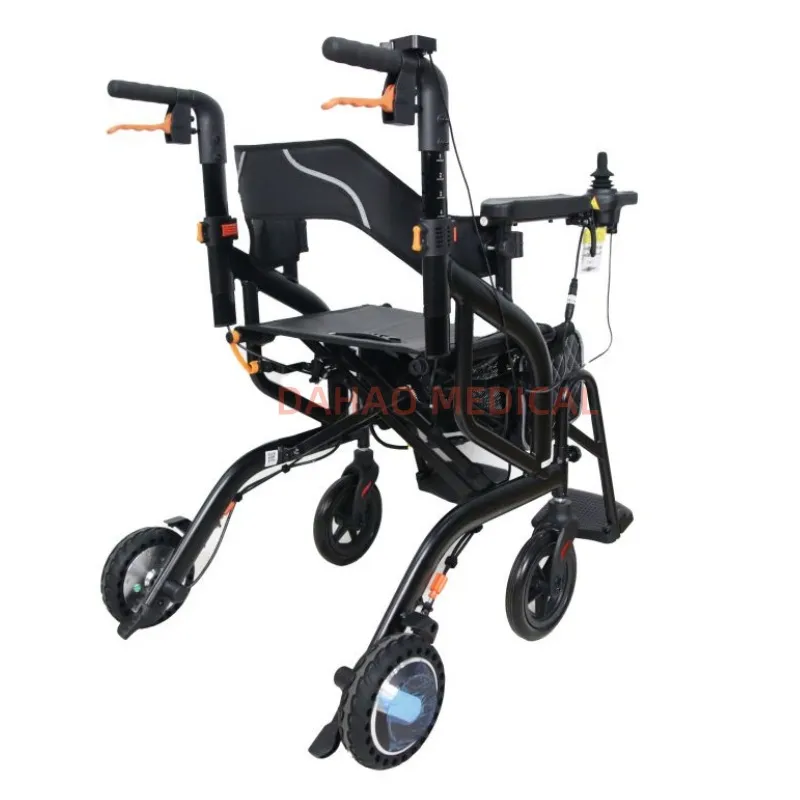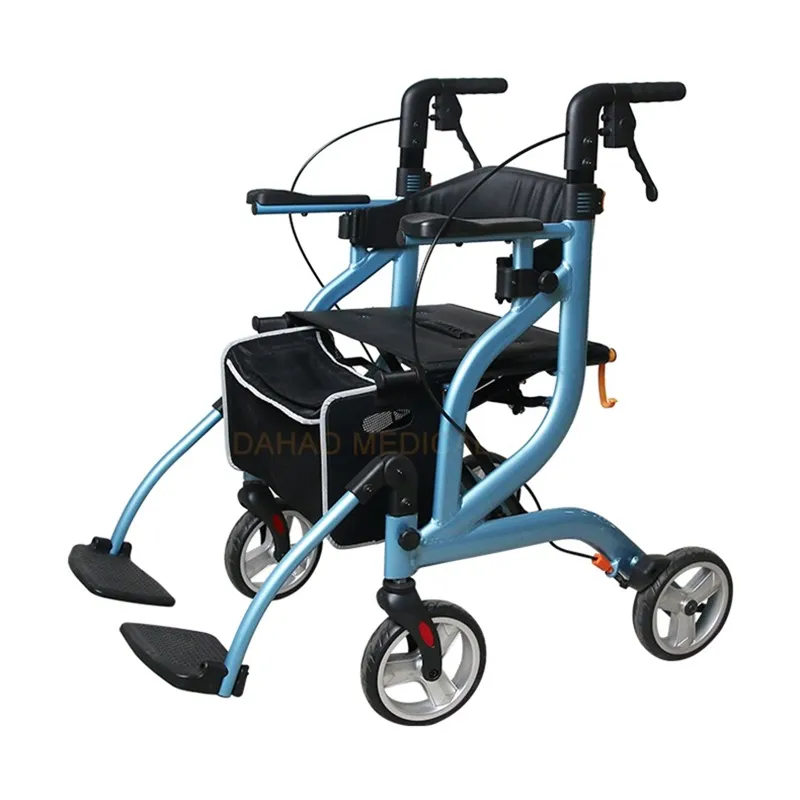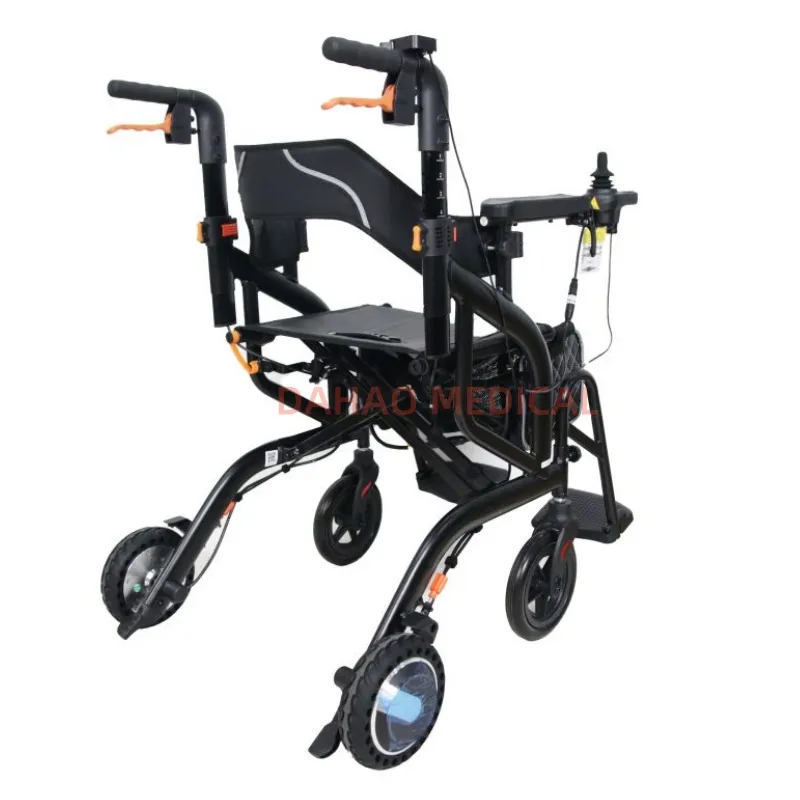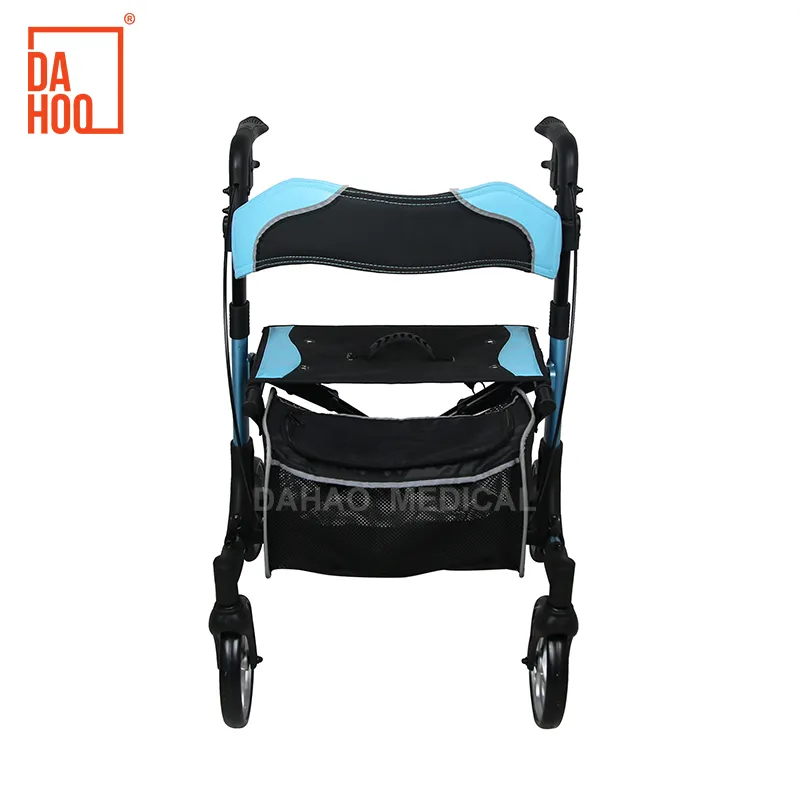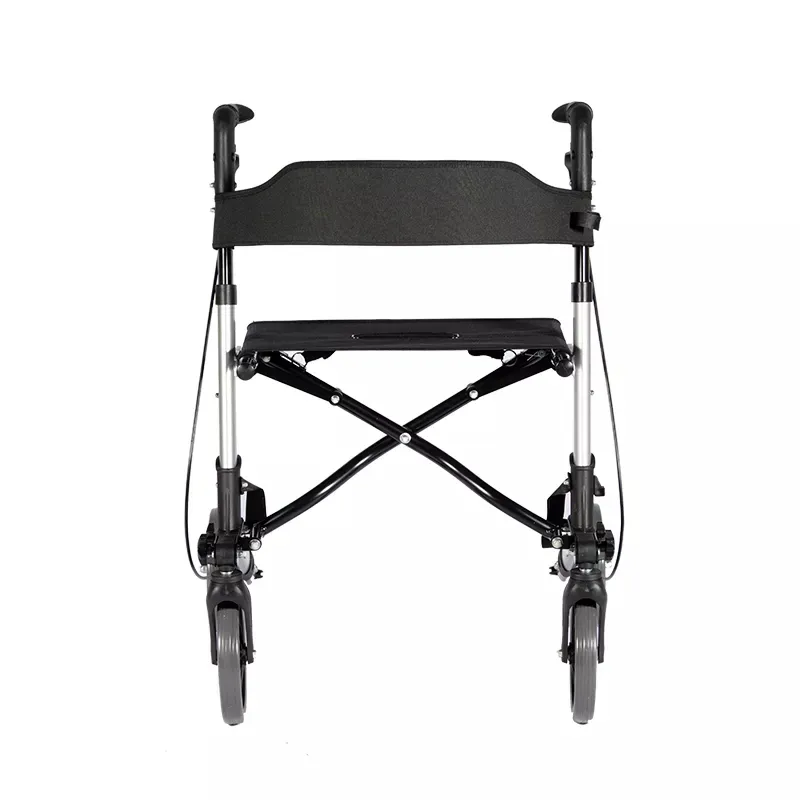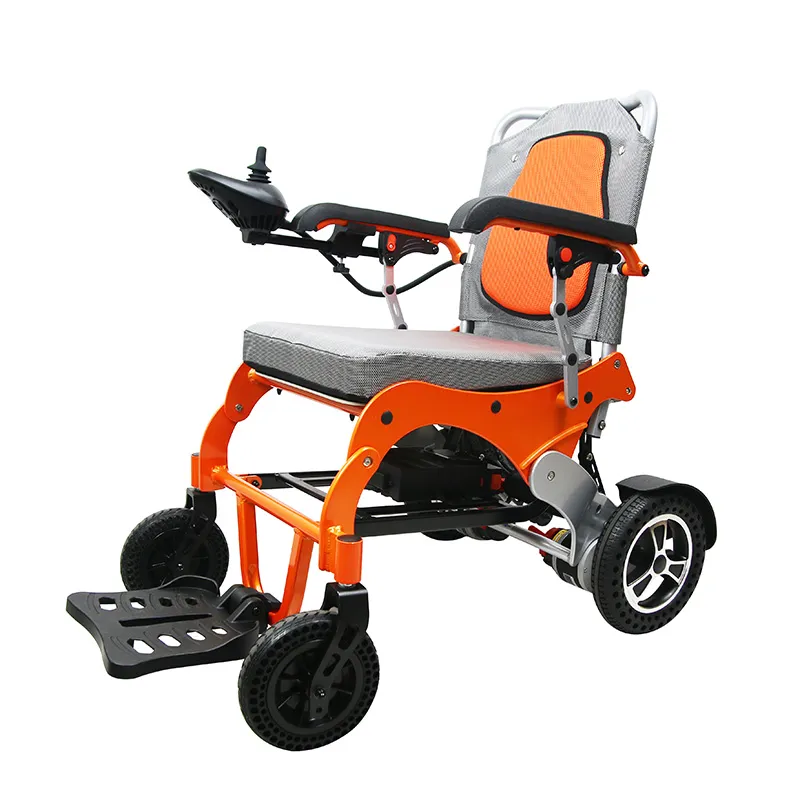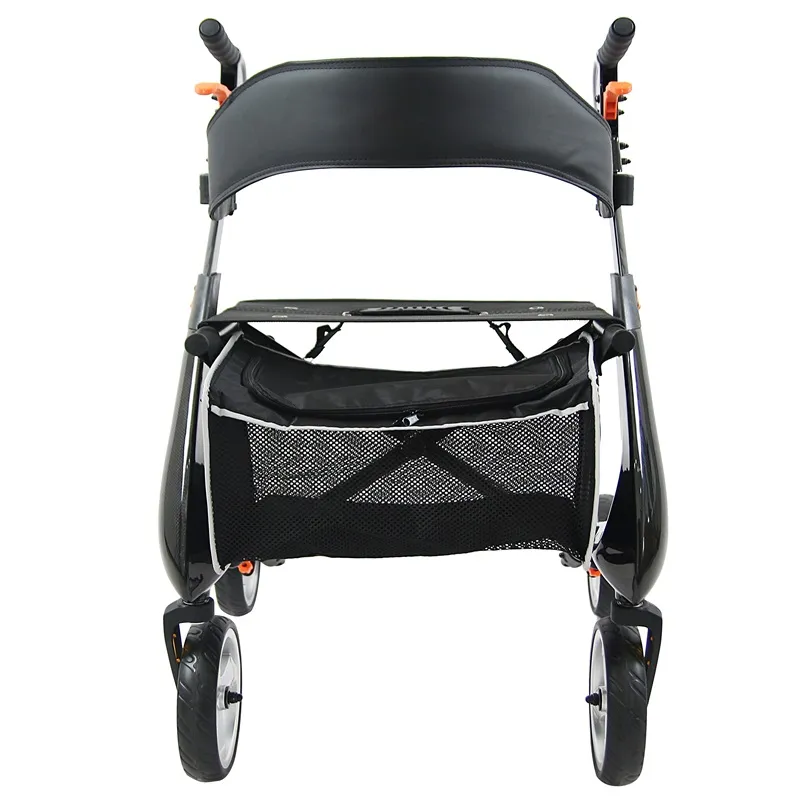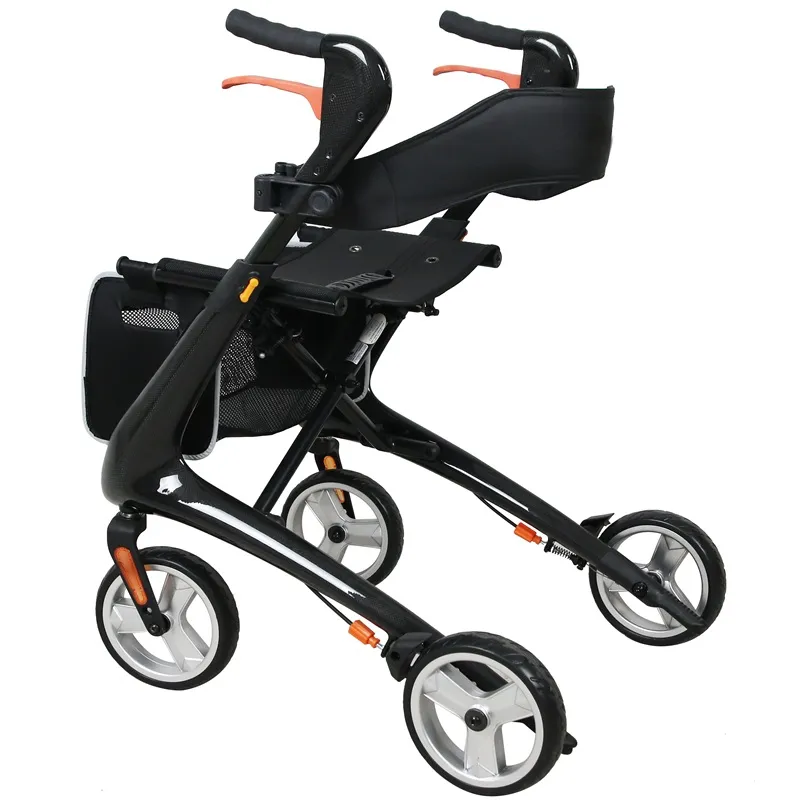

If the user is unable to take steps at all or experiences extreme difficulty, a 4-wheel rollator can no longer provide safe support, and a wheelchair is clearly the safer option.
A 4-wheel rollator "assists walking," while a wheelchair "replaces walking."
When a person is no longer suitable for standing or walking, continued use of a 4-wheel rollator becomes a potential hazard.
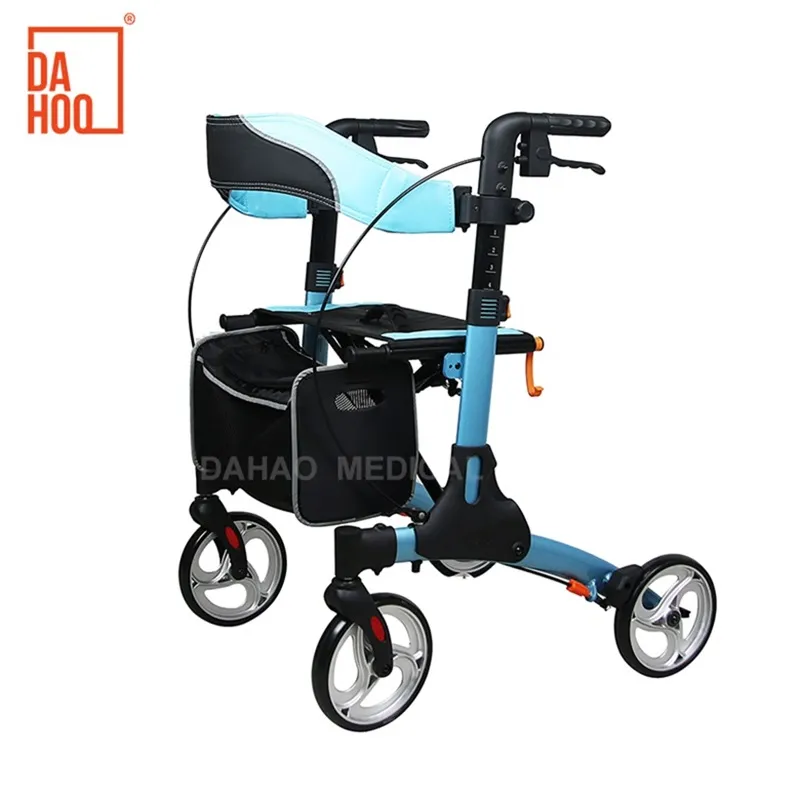
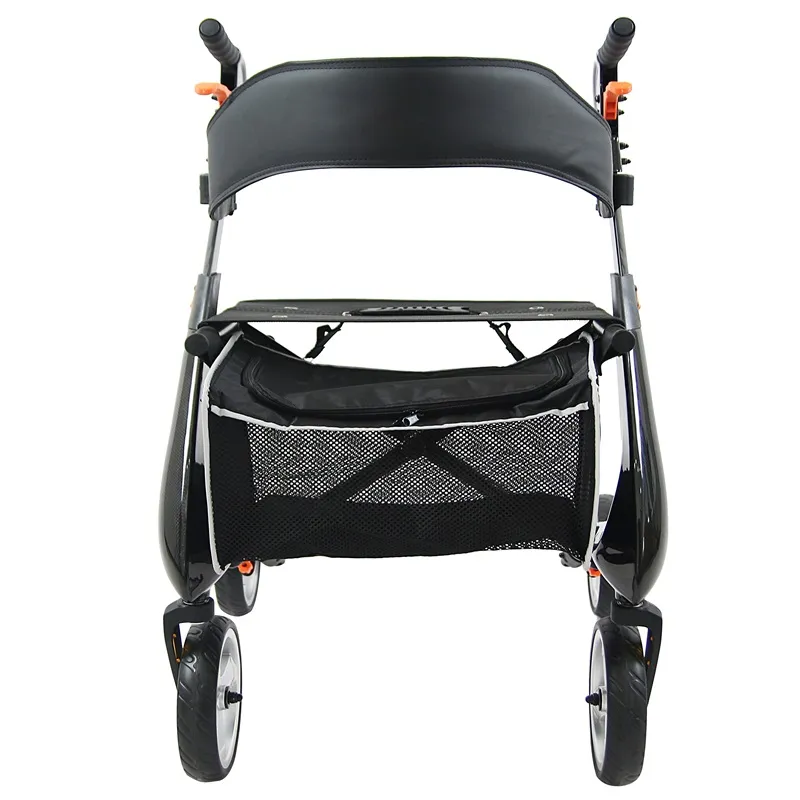
The seats in 4-wheel rollator walkers are typically lightweight, designed to:
• Provide short breaks
• Prevent user fatigue from prolonged standing
• Help users temporarily recover energy while walking
But it is absolutely not designed for "sitting and gliding" or "being pushed around."
Walking itself is a low-impact, easy-to-maintain, and low-risk form of exercise, and the extra stability and support provided by the 4-wheel rollator allows more people who were previously unable to walk safely for extended periods to regain their mobility, thus achieving the goal of exercising and maintaining health.
When it comes to "what a 4-wheel rollator walker is used for," many people's first impression is "to help with walking." But in reality, it can do much more than that. It can be used for daily walking support, outdoor mobility, carrying shopping items, resting, and even carrying light loads.
The biggest difference between a 4-wheeled rollator walker and a traditional walking frame is that it is equipped with wheels, a braking system, and a built-in seat. This design is to meet the user's need to "rest at any time" while walking.
If you can still walk, but have difficulty walking for extended periods, then a 4-wheel rollator walker is a better choice.
If you cannot walk safely or have very limited mobility, then an electric wheelchair is a better choice.