

When choosing mobility aids, safety is often a key factor for many people. Among all mobility aids, 4-wheel rollator walkers and wheelchairs are the two most frequently compared products. They have different design goals, different uses, and are suitable for different groups of people.
To determine which is safer, a 4-wheel rollator or a wheelchair, it's necessary to understand their functional purpose, sources of stability, operating requirements, and user conditions before making a comprehensive comparison.
This article will provide an in-depth analysis of the safety factors of both types of devices from a professional perspective, including stable structure, user ability requirements, fall risk, environmental adaptability, braking and control systems, etc.
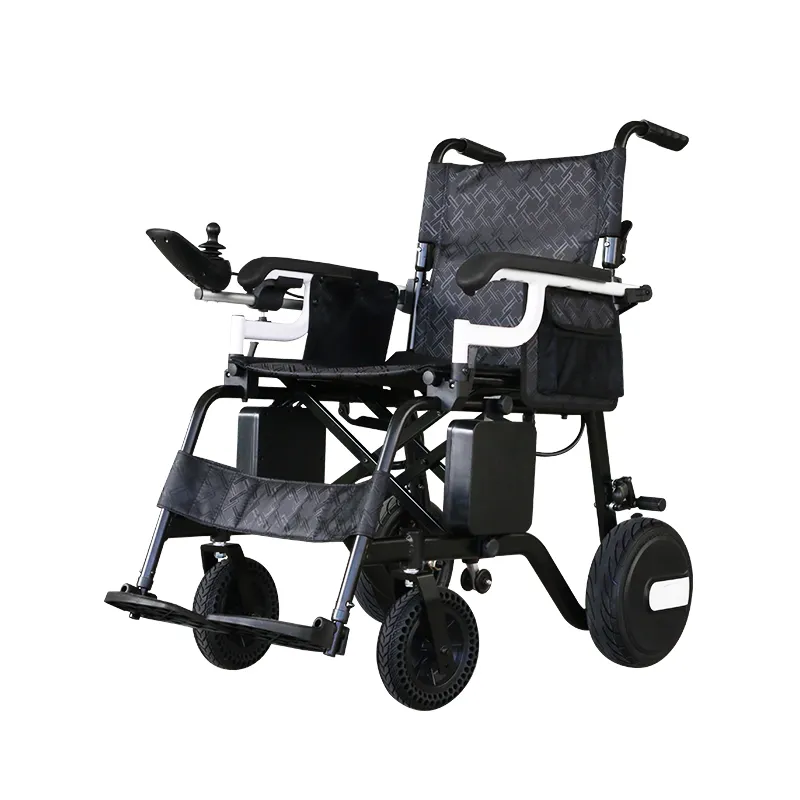
What factors primarily determine the safety of a 4-wheel rollator?
The safety and user experience of a 4-wheel rollator walker are closely related. It is essentially a mobile tool that provides support and assists with balance. Because it requires the user to actively stand, grip, and propel themselves forward, its safety primarily depends on the following aspects:
1. The user's own standing and balance abilities
4-wheel rollators are suitable for people who can still stand independently, maintain a certain degree of balance, and control their gait. This means that the user's lower limb strength, core stability, and reaction time directly affect the safety of using this type of walking aid.
If the user cannot stand stably, even with a well-designed 4-wheel rollator walker, there may be a risk of accidents, such as leaning forward, slipping, or losing control on slopes.
2. The 4-wheel rollator's braking system and hand grip ability
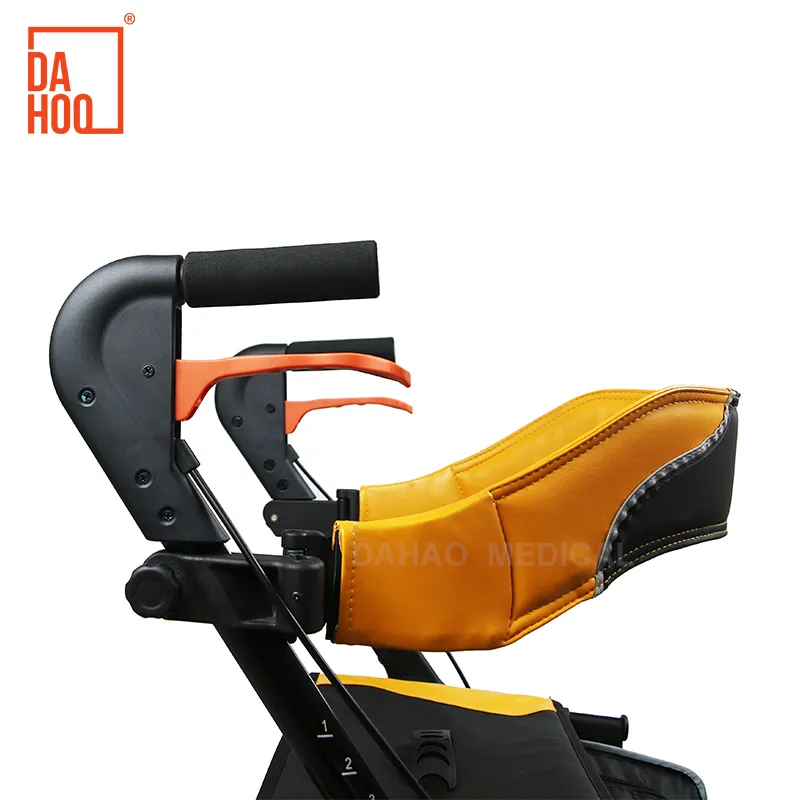
Most 4-wheel rollators are equipped with a dual-hand braking system. Users need sufficient hand strength to grip, operate, and lock the brakes. Therefore, if the user has insufficient hand strength, limited joint mobility, or slow reaction time, braking ability will be affected, thus impacting overall safety.
3. Ground Environment and Terrain Adaptability
4-wheel rollator walkers typically have larger wheels and are designed for outdoor environments, such as:
• Community roads
• Shopping malls
• Flat park paths
• Hard floors indoors
They provide stable support in most flat areas, but the risk increases in the following environments:
• Very steep ramps
• Slippery surfaces
• Terrain with a lot of loose gravel
• Turning in extremely narrow spaces
Therefore, the safety of a 4-wheel rollator is closely linked to the environment and terrain.
4. User Awareness and Usage Methods
Even with adequate physical ability, improper posture can affect the safety of a 4-wheel rollator walker, such as:
• Leaning too far forward
• Not holding the brakes when going downhill
• Pushing too fast
• Sitting down without fully locking the seat
All these factors can cause varying degrees of risk.
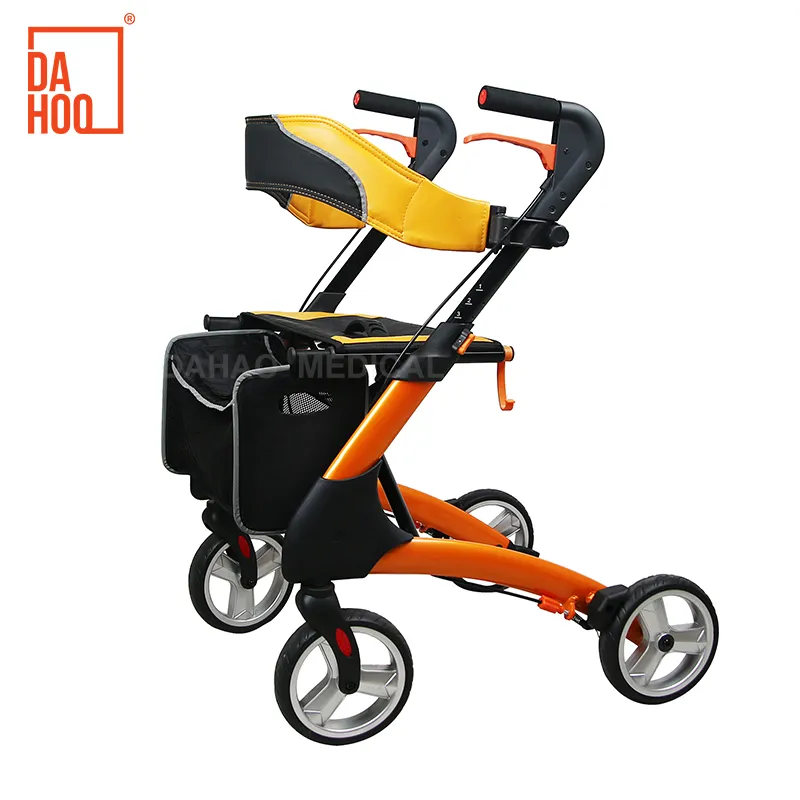
Where does wheelchair safety come from?
Compared to 4-wheel rollators, the basis of wheelchair safety is completely different. Wheelchairs primarily provide a "carrying" function, not "walking assistance," so their safety structure comes from the following aspects:
1. Users do not need to stand, requiring less body stability
The biggest advantage of a wheelchair is:
Users do not need to have the ability to stand, do not need to bear weight on their lower limbs, and do not need to maintain walking balance.
This greatly reduces the risk of falls for people with poor balance or insufficient lower limb strength.
2. Sitting posture provides a higher level of safety
During use, users almost always maintain a sitting posture, which is more stable than standing and pushing. Except for getting in and out of the wheelchair, there is almost no risk of falling due to loss of balance.
3. Less reliance on the user's physical strength (especially electric wheelchairs)
Manual wheelchairs require arm strength, but are still safer than walking aids; electric wheelchairs require almost no physical strength, so their safety no longer depends on the user's physical condition, but mainly on operation and the environment.
4. Structural strength and anti-tipping design
Modern wheelchairs usually have:
• Anti-tipping bars
• Brake locking system
• Sturdy frame
• Low center of gravity design
These structurally enhance safety, allowing them to maintain good stability in most terrains.
In what situations is a 4-wheel rollator safer than a wheelchair?
Some people mistakenly believe that "sitting is always safer than standing," but this isn't entirely true. Under certain conditions, a 4-wheel rollator walker is indeed safer than a wheelchair.
1. The user can stand but is not suited for prolonged sitting
If the user still has some ability to walk, relying on a wheelchair for extended periods can:
• Increase the risk of muscle atrophy
• Reduce lower limb strength
• Negatively impact balance over time
• Lead to posture-related problems
For these individuals, a 4-wheel rollator provides a suitable amount of daily activity, keeping the body active, which is more advantageous from both a health and safety perspective.
2. The user needs external support while walking
A 4-wheel rollator provides:
• Handrails
• A stable frame
• Light weight support
• A temporary seat
These features help users maintain a safe gait. If the user can still walk, it's better to use a 4-wheel rollator walker to maintain mobility rather than requiring them to sit in a wheelchair for extended periods, resulting in a higher overall safety level.
3. The user has mild but not severe balance problems
If the user has mild balance issues but is not at high risk of falling, a 4-wheel rollator walker can provide sufficient assistance and maintain independent mobility, avoiding the secondary negative effects of excessive reliance on a wheelchair.
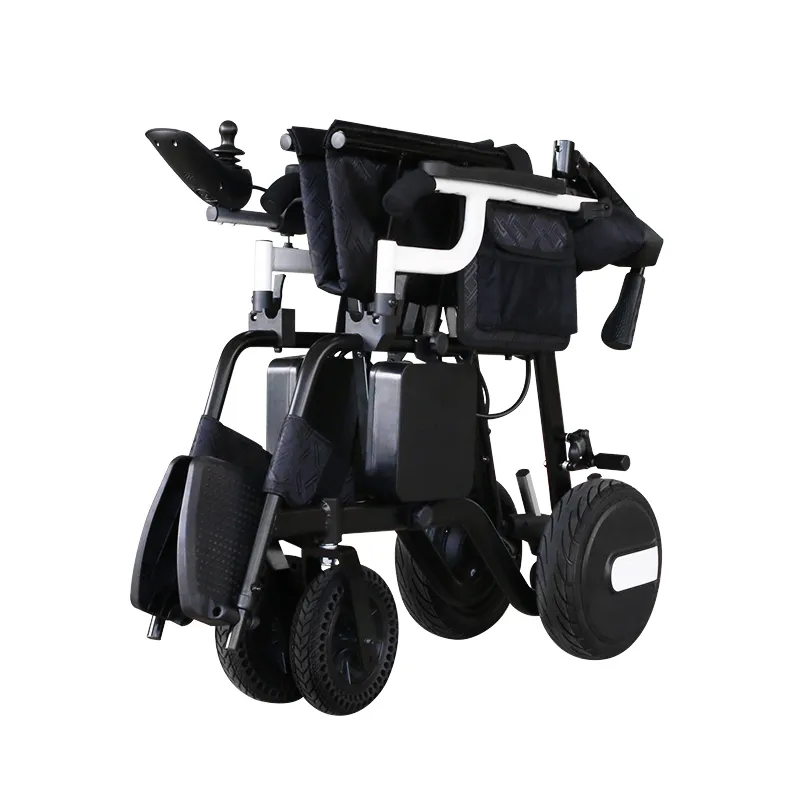
In what situations is a wheelchair safer than a 4-wheel rollator?
In the following situations, a wheelchair is almost certainly safer than a 4-wheel rollator.
1. The user cannot stand stably
This is the most crucial factor. If the user cannot stand independently or maintain balance, using a 4-wheel rollator will pose a significant risk of falling.
2. Insufficient hand strength to operate the 4-wheel rollator
If the user cannot:
• Grip the brakes
• Control the speed
• Push the rollator steadily
Then a wheelchair will be safer.
3. Individuals at high risk of falling
For example:
• Lower limb nerve damage
• Severe balance disorders
• Prone to sudden weakness
• Early stages of post-illness recovery
These individuals are not suitable for a 4-wheel rollator because unstable standing posture will lead to a higher risk.
4. Extremely limited or complete lack of mobility
If the user is unable to take steps at all or experiences extreme difficulty, a 4-wheel rollator can no longer provide safe support, and a wheelchair is clearly the safer option.
Does the 4-wheel rollator have unique safety risks?
Structurally, 4-wheel rollators may present the following safety hazards, which require special attention:
1. Excessive speed downhill
Since the device requires manual braking, loss of control may occur if the user's reaction is not quick enough.
2. Excessive forward leaning during use
This can cause the rollator to "run" forward, leading to falls.
3. Instability due to changes in terrain
Potholes, slopes, and slippery surfaces can all cause the rollator to shift.
4. Seat not fully locked when resting
If the user sits down without locking the brakes, the rollator may slide, causing a fall.
These are risks not commonly associated with wheelchairs, so it is crucial to assess whether a 4-wheel rollator walker is suitable.
What safety risks must be considered when using a wheelchair?
While wheelchairs seem safe, they also have some specific safety issues:
1. Risk of falling when getting in and out of the wheelchair
The transfer process is the riskiest part.
2. Sliding down slopes or tipping backward
Danger may occur if brakes or anti-tip devices are not used correctly.
3. Operating errors with electric wheelchairs
Accidental button presses or unfamiliarity with direction control can lead to minor accidents.
4. Wheelchair tire slippage
In slippery conditions or environments with many obstacles, the wheelchair may also be unstable.
However, overall, wheelchairs have a stable structure, and safety risks are mainly concentrated in specific operating procedures.
From a professional perspective, which is safer: a 4-wheel rollator or a wheelchair?
A comprehensive analysis leads to the professional opinion that:
If the user can still stand independently, grasp objects, and has basic balance, a 4-wheel rollator can provide a safer way to perform daily activities.
Because:
• It supports walking
• Improves mobility
• Maintains lower limb strength
• Reduces the risks associated with prolonged sitting
However, if the user has poor balance, is unstable when standing, or has difficulty walking, a wheelchair is undoubtedly safer. Because:
• Wheelchairs do not require standing
• They are less likely to cause falls
• They require less physical ability from the user
• They have greater structural stability
The ultimate criterion is: which device best matches the user's physical condition.
This is also the core principle that medical professionals use when evaluating assistive devices.
Is it possible to get customized branding on Dahao Medical products?
Yes, Dahao Medical offers customized branding options for bulk orders. Whether you need to add your company logo, brand colors, or specific product labels, we can work with you to create a customized solution. Our OEM and ODM services allow for full personalization, including design changes and product adaptations.
We understand the importance of branding, especially for businesses in the medical field, and are committed to providing products that represent your brand with professionalism and quality.