

In the field of mobility assistance devices, "electric wheelchairs" and "mobility scooters" are the two most common options.
Although both can help people with mobility impairments improve their mobility, there are significant differences between the two in terms of structure, control methods, stability, and usage requirements.
Many users, after comparing the two, find that power wheelchairs are often more suitable as their primary mode of transportation.
So, why are electric wheelchairs better?
In what aspects do electric wheelchairs have significant advantages?
Under what circumstances are electric wheelchairs more suitable?
This article will analyze this issue with a professional and clear logical system, providing you with a comprehensive and in-depth interpretation.
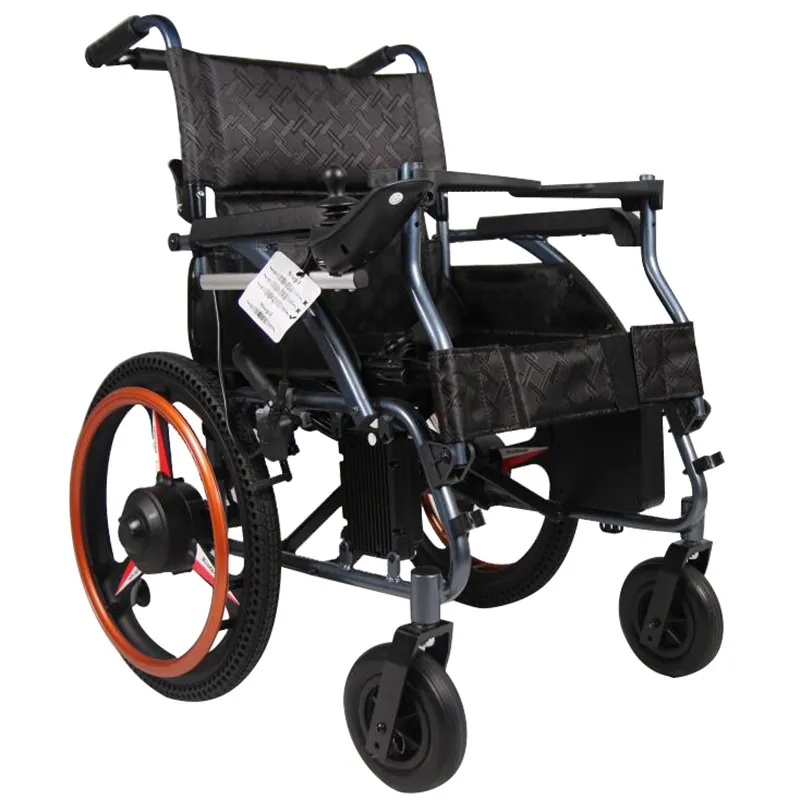
What are the core differences between electric wheelchairs and mobility scooters?
To understand why electric wheelchairs are better, it is essential to understand the fundamental differences between the two.
1. Electric Wheelchair
• Designed for people who cannot walk for extended periods or cannot support their own body weight independently.
• Controlled by a joystick.
• Suitable for both indoor and outdoor use.
• Smaller in size and has a shorter turning radius.
• Requires low physical ability from the user.
2. Mobility Scooter
• Designed for people who can sit steadily and hold the handlebars.
• Controlled by handlebars.
• More similar to a small "electric vehicle."
• Suitable for larger spaces (such as parks and outside shopping centers).
• Requires upper limb control ability.
Structurally, electric wheelchairs are more intelligent and sophisticated, and adapt to a wider range of users, making them the most reliable mobility partner for many people.
Why are electric wheelchairs superior in terms of control?
Is operating an electric wheelchair easier?
The answer is yes.
With an electric wheelchair, you can simply use one hand to lightly touch the joystick to:
• Accelerate
• Decelerate
• Turn in place
• Move forward and backward
• Make fine adjustments to direction
In contrast, a mobility scooter requires:
• Holding the handlebars with both hands
• Controlling the throttle lever
• Controlling the direction
• Maintaining stable arm position at all times
For people with insufficient hand strength, arthritis, muscle weakness, or poor balance, mobility scooters can be difficult to control. Therefore, in terms of ease of control, electric wheelchairs are clearly superior to electric mobility scooters.
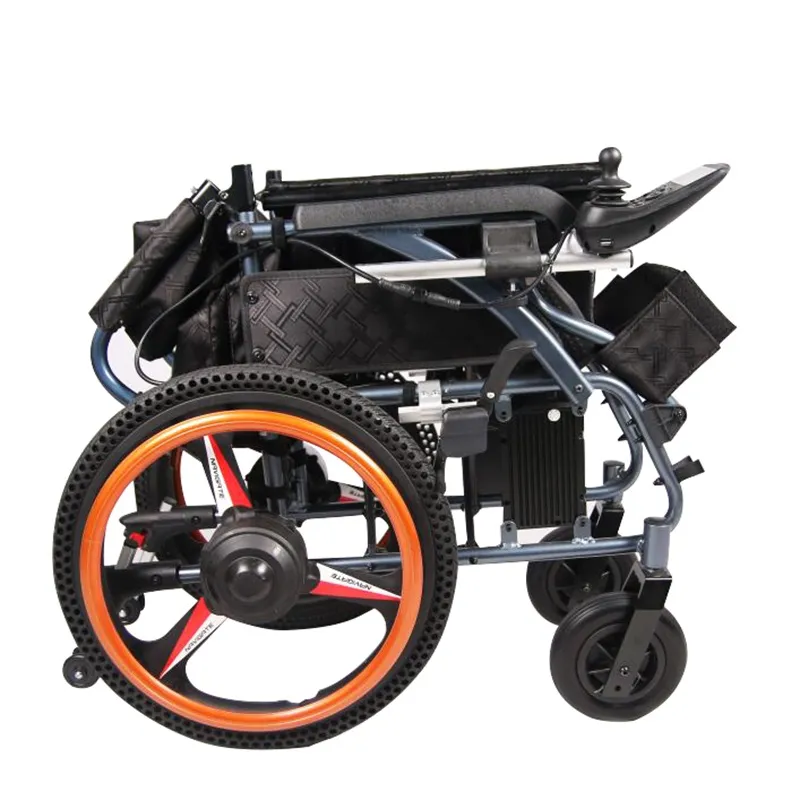
Are power wheelchairs really more maneuverable indoors than electric mobility scooters?
What are the fundamental differences in indoor usage requirements?
Indoor environments generally have the following characteristics:
• Narrow passages
• Insufficient turning space
• Complex furniture layout
• Requires precise maneuvering
Electric wheelchairs are designed for this environment and have the following advantages:
Advantage 1: Much smaller turning radius
Electric wheelchairs can usually perform the following in very small spaces:
• Turning in place
• Precisely maneuvering around furniture
• Entering narrow passages
Electric mobility scooters have a larger turning radius and often cannot turn around smoothly indoors.
Advantage 2: Compact body structure
Electric wheelchairs are narrower, suitable for:
• Indoor doorways
• Bathroom entrances
• Elevators
• Kitchen aisles
In contrast, electric mobility scooters are larger and less maneuverable, making them difficult to use flexibly in everyday home environments.
Advantage 3: More precise low-speed control
Electric wheelchairs can move at extremely slow speeds, which is ideal for fine adjustments indoors.
Due to structural limitations, electric mobility scooters do not have the same precise low-speed control capabilities as power wheelchairs.
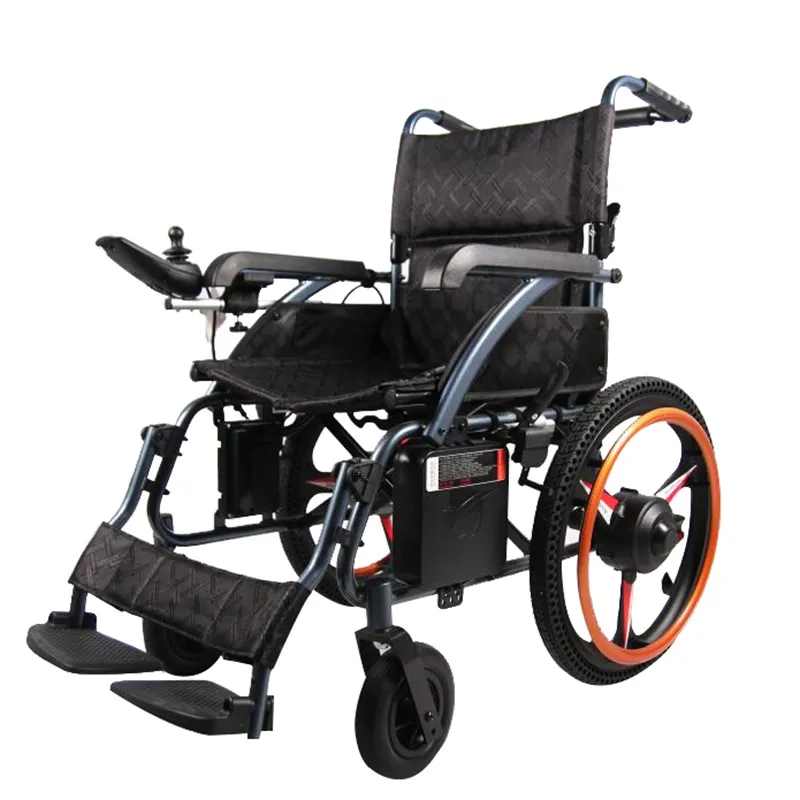
Why do electric wheelchairs require fewer physical abilities from the user?
What physical abilities do electric mobility scooter users need?
To safely drive an electric mobility scooter, users typically need:
• Sufficient upper body strength to hold the handlebars
• Good hand-eye coordination
• Sufficient lumbar stability to maintain a seated position
• The ability to operate the throttle, brakes, and steering control system
Many people with mobility impairments do not possess these abilities.
Why are electric wheelchairs more "inclusive"?
Electric wheelchairs are designed to serve people with limited physical function, and therefore have several key advantages:
1. Can be operated with one hand
The joystick only needs a gentle push, suitable for:
• Weak arms
• Hand tremors
• Limited function in one hand
• Poor limb coordination
2. No need to maintain upper body stability
Electric wheelchair seats have:
• High backrests
• Side support
• Lumbar support
These help users maintain body stability.
3. No balance skills required
Electric scooters require users to have a certain level of balance, while power wheelchairs do not.
In summary, power wheelchairs have very low physical requirements, making them suitable for a wider range of people to use stably and safely.
In terms of safety, why are electric wheelchairs superior?
Safety is one of the core indicators when choosing a mobility aid, and electric wheelchairs have significant advantages in this respect.
1. Electromagnetic brakes are more reliable than the mechanical brakes of scooters
Electric wheelchairs' electromagnetic brakes feature:
• Stops immediately when the hand is released
• Automatic anti-rollback on inclines
• Automatic locking when power is cut off
Electric scooters' braking systems are usually:
• Lever-operated
• Manually stopped
• Requires quick reaction from the user
In comparison, power wheelchairs are more automated and safer.
2. More stable center of gravity, less prone to tipping over
Electric wheelchairs:
• Lower chassis
• Concentrated center of gravity
• Strong and stable structure
Electric scooters:
• Higher chassis
• Prone to tilting during sharp turns
• Requires maintaining a steady direction
In scenarios such as sloping roads, inclines, and narrow passages, the stability of power wheelchairs is significantly better.
3. Safer control on inclines and declines
Electric wheelchairs have intelligent speed control and braking systems, which means:
• No rollback on inclines
• Automatic deceleration on declines
• Stable and prevents uncontrolled acceleration downhill
Electric scooters rely on manual control, and a slight lapse in attention can lead to a risk of loss of control.
What are the irreplaceable advantages of power wheelchairs in terms of convenience?
1. Easier access to public spaces
Electric wheelchairs are compatible with:
• Elevators
• Accessible areas on buses
• Supermarket aisles
• Hospital outpatient areas
• Home bathrooms
In contrast, electric scooters are usually larger and have limited access.
2. Electric wheelchairs are more suitable for all aspects of daily life
Including:
• Indoor movement
• Kitchen operations
• Turning in the bathroom
• Short-distance travel
• Navigating narrow paths
This is something electric scooters cannot do.
3. Control methods are closer to daily life needs
The controller of an electric wheelchair can:
• Fine-tune direction
• Control very small movements
• Provide precise control in crowded spaces
Therefore, it is more suitable as an "all-day mobility tool" for users.
Why are power wheelchairs more user-friendly for long-term users?
For people who need to use mobility aids for extended periods, power wheelchairs offer more advantages.
1. Seating design conforms to ergonomics
Electric wheelchairs:
• Equipped with soft cushions
• Have stronger back support
• Support adjustable footrest height
• More suitable for sitting for long periods
Electric scooters are not designed for prolonged sitting, and may be uncomfortable for long-term use.
2. Can reduce fatigue
Due to simple control, low vibration, and no need for strong grip, power wheelchairs are more suitable for:
• Long-distance travel
• Continuous use
• Frequent turns in daily life
People who rely on mobility aids for extended periods usually prefer power wheelchairs.
3. Can help users maintain maximum independence
Electric wheelchairs do not require strong muscle groups, allowing users to independently complete:
• Moving around at home
• Going up and down small slopes
• Operating everyday objects
• Controlling direction
• Short-distance travel indoors and outdoors
Electric scooters often require assistance from others in some situations.
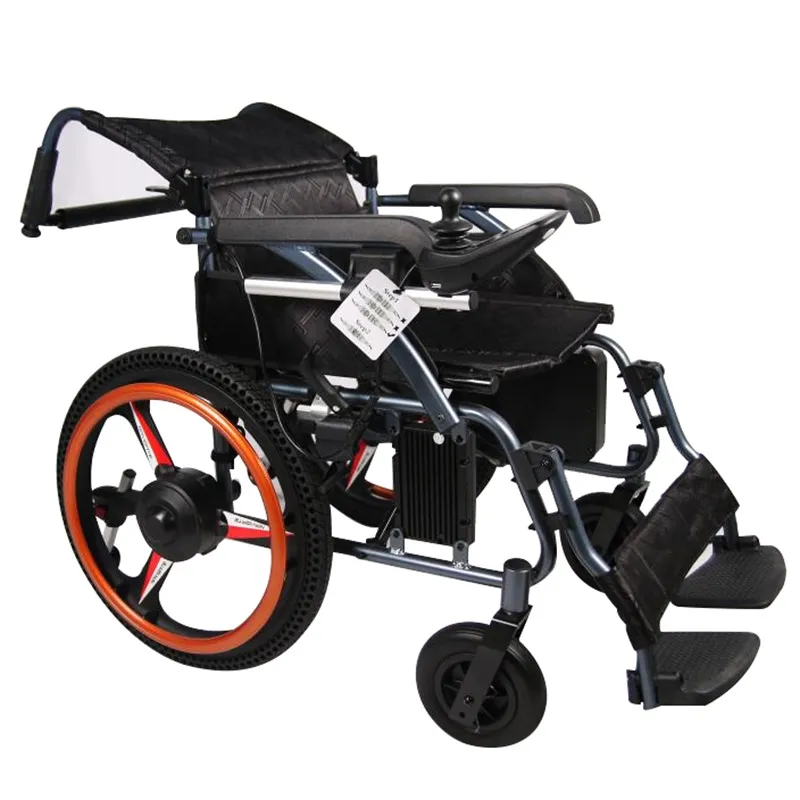
Are electric wheelchairs more suitable for the elderly or people with limited mobility?
1. Electric wheelchairs have a wider target group
Including:
• The elderly
• People with weak muscle strength
• People with poor balance
• Arthritis patients
• People who cannot use their upper limbs for extended periods
Electric scooters are more suitable for:
• People with sufficient hand strength
• Good upper limb stability
• Good sitting balance
• Normal reaction speed
Therefore, electric wheelchairs are more suitable as a general-purpose mobility aid.
Does the high flexibility of power wheelchairs make them suitable for more complex scenarios?
The answer is yes.
Scenarios where power wheelchairs can be used include:
• Home life
• Medical institutions
• Small elevator spaces
• City streets
• Shopping malls
• Public transportation
• Indoor corridors
• Narrow streets
Electric scooters are often limited in confined spaces and are not suitable as a primary mobility tool.
How does Dahao Medical maintain its high product standards?
Dahao Medical follows strict quality control procedures to ensure that every product meets international safety and performance standards. Our factory is ISO 13485:2016 certified, which means we adhere to stringent quality management practices in every stage of production.
We conduct comprehensive testing on all products, including Electric Wheelchairs, Home Care Beds, and Transfer Chairs, to ensure they are safe and durable. With certifications like FDA, CE, and TUV, our products undergo rigorous third-party testing for compliance and performance.