

In long-term care, home rehabilitation, or elderly care, people often wonder: can a regular bed replace a home care bed?
On the surface, both are "beds" and seem to meet the basic needs of lying down and resting. However, in reality, a home care bed performs far more functions than just "sleeping." From structure, safety, and ease of care to supporting the patient's physiological needs, a regular bed cannot provide the same capabilities.
This article will combine nursing principles and equipment structural characteristics to deeply analyze from multiple perspectives why a regular bed can never replace a home care bed, helping family caregivers, nursing institutions, or rehabilitation families make more informed choices.
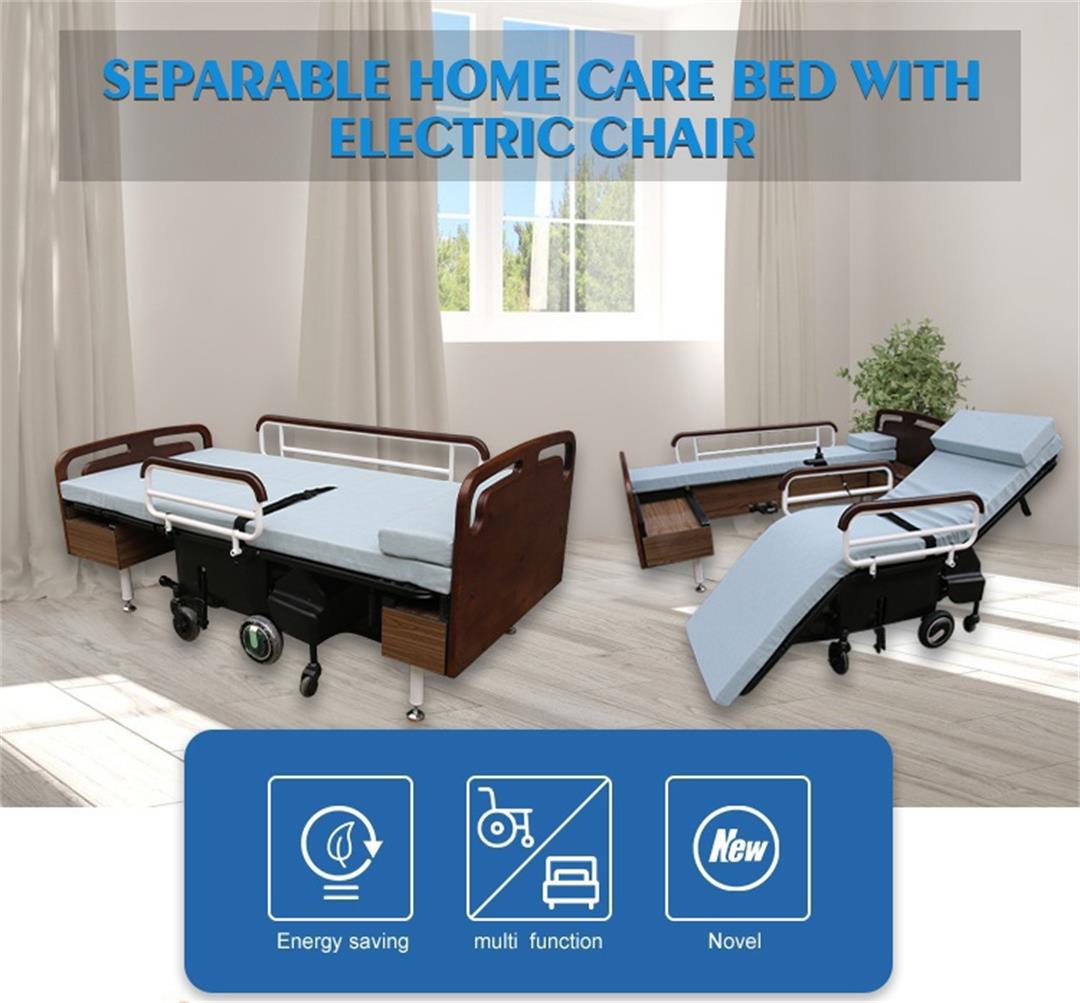
What is a Home Care Bed?
A home care bed is a professional care device designed specifically for:
•Long-term bedridden individuals
•Patients in the rehabilitation phase
•Elderly people
•Individuals with mobility impairments
It is not just a bed, but a comprehensive care platform that integrates safety, nursing, assisted standing, turning, fall prevention, rest, and rehabilitation functions.
Home care beds typically feature:
•Multi-section adjustable bed frame (back, legs, overall height adjustment)
•Electric control system
•Safety guardrails
•Reinforced load-bearing structure
•Non-slip bed surface
•Under-bed space for easy care (compatible with hoists/transfer equipment)
Its core design principle is:
To make patients safer, make care easier, and make long-term bedridden status manageable.
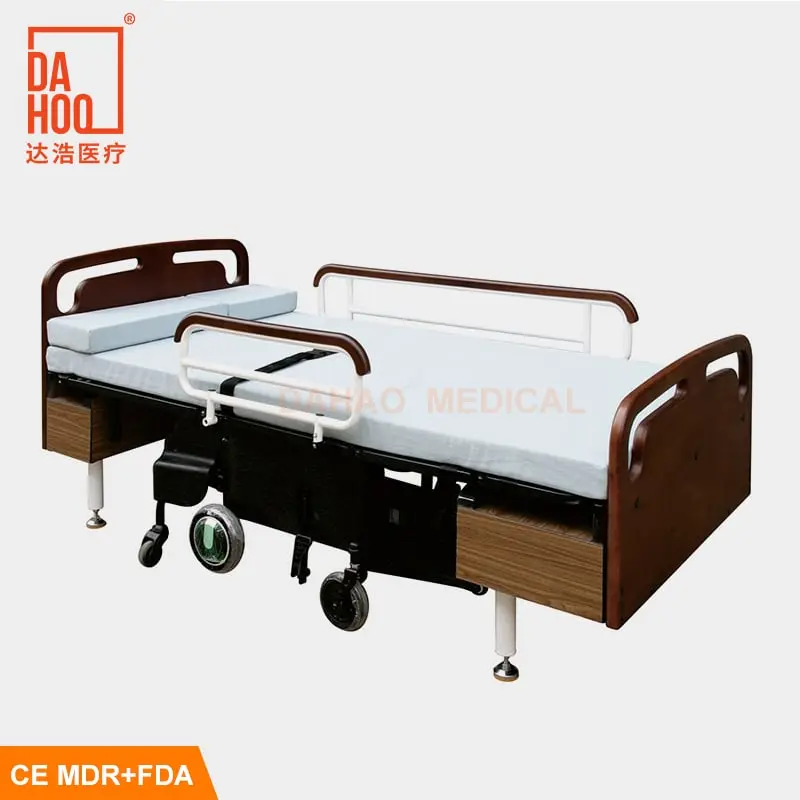
What is a Regular Bed?
Its Positioning Determines Its Limitations.
The design goal of a regular bed is very simple:
To provide sleep for healthy people.
Characteristics of a regular bed:
•Fixed height
•Fixed bed surface
•No safety guardrails
•No auxiliary functions
•Structure designed for rest, not nursing services
A regular bed is very suitable for healthy people, but when the user is a patient with functional decline or complete disability, it exposes significant risks.
Due to the difference in positioning, a regular bed exhibits fundamental shortcomings in a care environment.
What are the fundamental structural differences between a home care bed and a regular bed?
From a structural perspective, the two are completely different types of products.
1. Differences in Bed Adjustability
Home Care Bed:
• Backrest adjustable
• Leg rest adjustable
• Overall height adjustable
• Precise angle adjustment
• Supports various care positions such as semi-sitting, sitting, leg elevation, and backrest elevation
These positions are crucial for patients and can be used to:
• Reduce the risk of pressure ulcers
• Assist with swallowing
• Aid breathing
• Promote blood circulation
• Assist with toileting, eating, turning over, and rehabilitation exercises
Ordinary Bed:
• All parts are fixed
• Cannot adjust angles
• Cannot be raised or lowered
• Patient position adjustments rely solely on manual handling
Ordinary beds cannot adapt to different diseases and care needs.
2. Completely Different Safety Structures
Home Care Bed:
• Raised guardrails
• Anti-pinch design
• Anti-fall design
• Stable base
• Lockable wheels
These are crucial for preventing falls and avoiding falling out of bed at night.
Ordinary Bed:
• No guardrails
• Low bed edges with no protection
• Cannot be adjusted in emergencies
This structure is very dangerous for the elderly or bedridden patients.
3. Significant Differences in Load-Bearing Capacity and Stability
The load-bearing structure of home care beds is designed with medical-grade reinforcement:
• Stronger pressure resistance
• Stable lifting system
• Ensures safety even when changing angles
Ordinary beds are prone to loosening or even damage under long-term pressure, vibration, and handling by caregivers.
4. Different Under-Bed Space Design
Home care beds usually have:
• Space for care hoists to access
• Sufficient clearance for trolleys and care equipment
• High base for easy cleaning
Ordinary beds are often close to the ground or have cluttered storage space, making them incompatible with professional equipment.
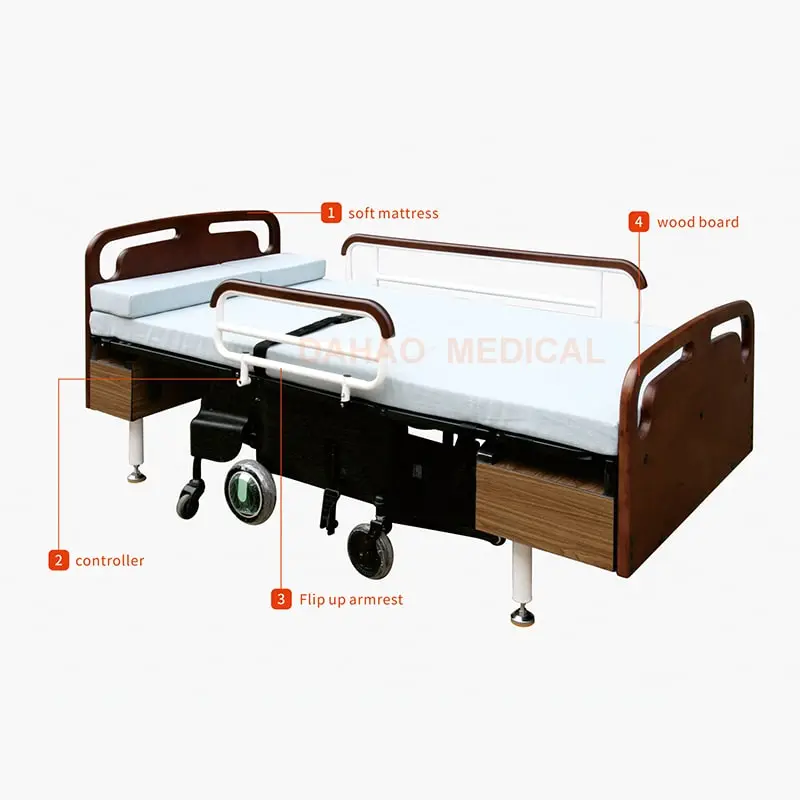
What care functions do home care beds provide that ordinary beds cannot?
Home care beds are irreplaceable because they provide key functions necessary for professional care.
1. Posture Adjustment Function
Home care beds support:
• Back elevation
• Leg elevation
• Whole bed elevation
• Adjustment to sitting position
• Adjustment to semi-reclining position
• Flat lying position
These functions are crucial for:
• Individuals with breathing difficulties
• Patients with gastroesophageal reflux
• Elderly individuals
• Bedridden patients undergoing rehabilitation
• Post-stroke patients
Ordinary beds cannot provide these functions.
2. Pressure Ulcer Prevention Function
Home care beds reduce the risk of pressure ulcers by changing posture, thus reducing:
• Prolonged pressure on the same area
• Impaired blood circulation
• Skin damage
• The likelihood of pressure ulcer formation
Ordinary beds cannot change angles; manual turning is required, which is a significant burden.
3. Lifting and Assisting Care Function
Home care beds can be raised or lowered:
• Caregivers can operate in a standing position
• Avoiding bending over
• Better control of the patient's body
• Reducing occupational injuries for caregivers
Ordinary beds have a fixed height, requiring caregivers to bend over, leading to long-term lumbar spine damage.
4. Toilet Assistance Function (for some nursing beds)
Some home care beds support:
• A central opening
• Used in conjunction with a commode
• Reducing the risk of transfer injuries
Ordinary beds cannot provide these functions at all.
5. Locking and Mobility Function
Nursing beds are equipped with:
• Medical casters
• Single-sided braking system
This allows for easy movement of the patient and quick fixation of the bed.
Ordinary beds cannot do this.
Why are home care beds safer for patients?
Safety is the most critical advantage of home care beds.
1. Fall Prevention
Guardrails prevent:
• Falling out of bed at night
• Rolling off due to unstable posture
• Falls by elderly individuals with dementia when getting out of bed
Ordinary beds offer no such protection.
2. Stability During Lifting
Home care beds maintain stability of the entire bed structure during:
• Back elevation
• Leg elevation
• Angle adjustment
There is no tilting or shaking. Using pillows to prop up a regular bed can lead to:
• Tilting
• Uneven pressure distribution
• Increased risk of suffocation
3. Easier rescue in emergencies
Hospital beds can be quickly adjusted to a flat or elevated position, which is beneficial for:
• Emergency treatment
• Suctioning
• Nursing procedures
Regular beds are fixed in place, low to the ground, and difficult to move, affecting the efficiency of rescue efforts.
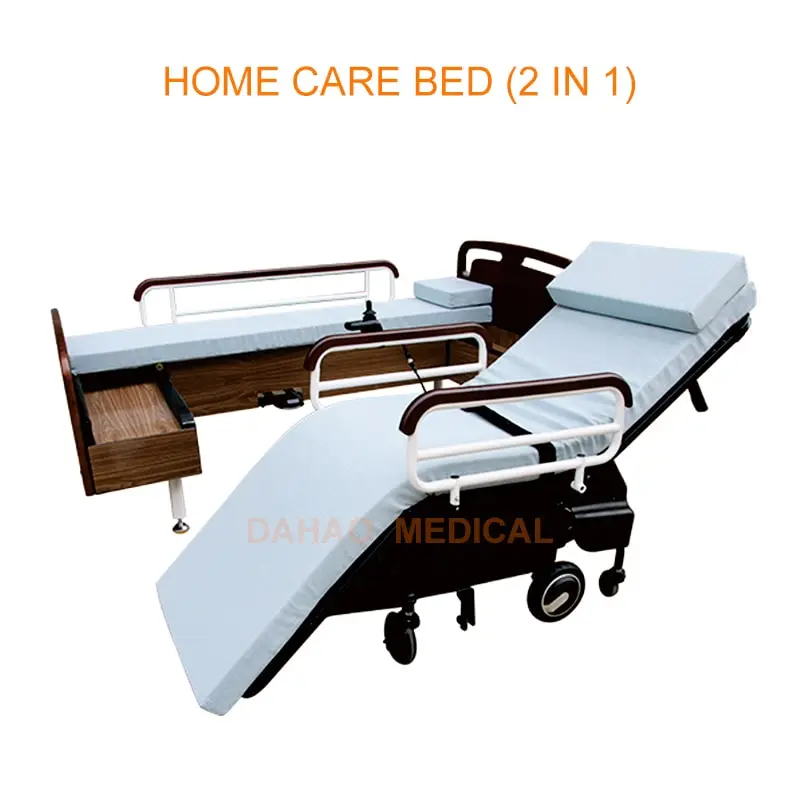
Why do regular beds increase the burden on caregivers in long-term care?
Long-term care is not only painful for the patient but also challenging for the caregiver. Problems with regular beds include:
1. Inability to adjust height, requiring caregivers to bend over for extended periods
Caregivers need to:
• Provide care
• Clean
• Turn the patient
• Change dressings
• Change diapers
The low height of regular beds is a major cause of lumbar spine injuries in caregivers.
2. Turning the patient requires significant manpower
Home care beds can assist with turning or reduce the burden, while regular beds require manual lifting of the patient.
This leads to:
• Caregiver strain
• Difficult procedures
• Potential for patient sprains or pain
3. Regular beds are difficult to clean, making hygiene management challenging
The limited space under the bed leads to:
• Dust accumulation
• Difficult-to-clean stains
• Easy breeding of bacteria
Home care beds are completely optimized for cleaning and disinfection.
What essential support does a home care bed provide for the patient's physical condition?
Home care beds directly relate to the patient's vital sign stability, psychological comfort, and physical function recovery.
1. Respiratory support
The back elevation function can improve:
• Lung expansion
• Gas exchange
• Breathing difficulties
Regular beds cannot provide a safe semi-sitting position.
2. Circulatory system support
Leg elevation allows for:
• Improved lower limb blood return
• Edema relief
• Reduced risk of deep vein thrombosis
Regular beds cannot provide precise leg elevation.
3. Digestive function support
Elevating the back during eating can prevent:
• Choking
• Swallowing difficulties
• Aspiration risk
Using pillows to prop up a regular bed is very dangerous.
4. Psychological Well-being and Dignity Maintenance
The sitting position mode of home care beds allows patients to feel:
• More like they are living a normal life rather than being confined to bed
• More engaged and involved
• Reduced feelings of depression associated with prolonged lying flat
Ordinary beds only allow for lying flat, lacking human-centered design.
Comfort Comparison: Why are care beds more suitable for long-term bedridden patients?
The comfort of home care beds comes from:
• Precise angle adjustment
• Ergonomic support
• Scientifically designed firmness and softness
• Adaptable anti-bedsore mattresses
Ordinary beds are unsuitable for long-term bedridden patients due to their non-adjustable firmness and angles.
Cleaning and Hygiene Management: How do care beds reduce the risk of infection?
Home care bed designs effectively reduce:
• Accumulation of contaminants
• Hard-to-clean areas
• Potential sources of infection
Hygiene management is crucial for long-term bedridden patients, and ordinary beds cannot meet these requirements.
Cost Comparison: Is a home care bed a worthwhile investment?
Although the initial cost of a home care bed is higher than an ordinary bed, in the long run:
• It reduces caregiver injuries
• It reduces labor costs
• It lowers the risk of complications such as pressure ulcers
• It improves patient comfort and quality of life
It is more cost-effective in terms of both economics and care effectiveness.
What are the advantages of purchasing from Dahao Medical?
Purchasing from Dahao Medical gives you access to premium medical equipment at competitive prices. We are a reliable supplier with over a decade of experience in the industry. Our products come with international certifications, including FDA, ISO, and CE, ensuring that they meet global safety standards. Additionally, we offer OEM and ODM services, providing you with customized products that suit your exact requirements.