

When choosing an electric wheelchair, "lightweight" is almost always one of the core indicators that users and their families care about most. Especially for those who frequently travel, get in and out of vehicles, carry, or use independently, traditional steel or ordinary aluminum alloy electric wheelchairs often cause many inconveniences due to their excessive weight.
So the question is: which lightweight electric wheelchair is the best?
Given current material and structural conditions, the answer is very clear—carbon fiber electric wheelchairs.
This article will systematically analyze why carbon fiber is the best choice for lightweight electric wheelchairs from multiple professional perspectives, including material properties, weight advantages, structural strength, user experience, safety, and target audience, helping you make a rational and scientific judgment when purchasing an electric wheelchair.
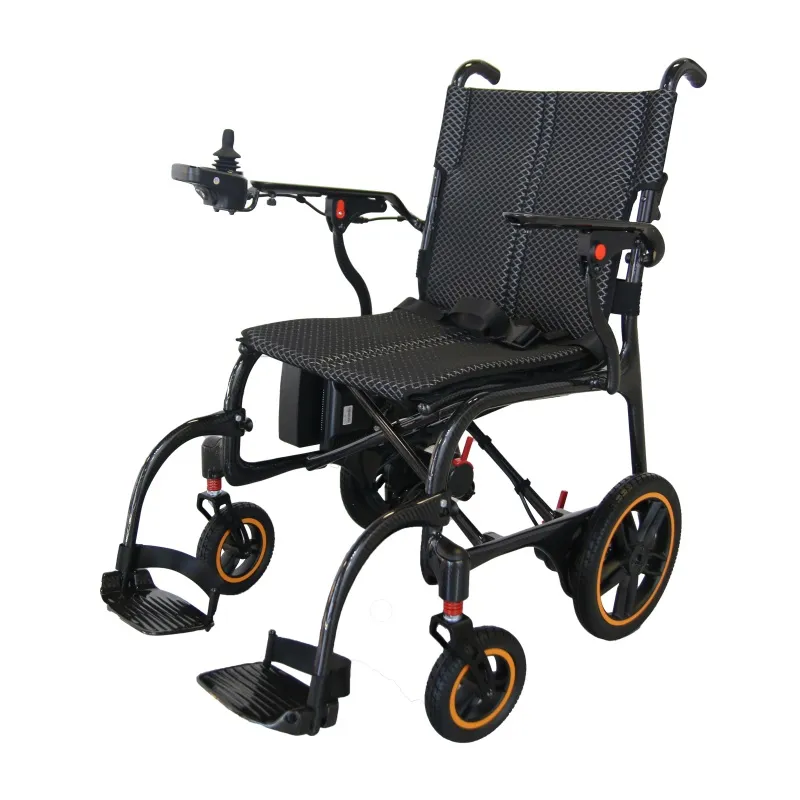
What Constitutes a Truly Lightweight Electric Wheelchair?
Before discussing which lightweight electric wheelchair is the best, it's important to clarify one concept: "Lightweight" is not just about a smaller weight on paper, but rather an overall improvement in the user experience.
Generally, a qualified lightweight electric wheelchair should meet the following conditions simultaneously:
• Significantly lower overall weight than traditional electric wheelchairs
• Easily pushable, liftable, or foldable by a single person
• Convenient to carry, load, and store
• Structural strength not sacrificed for weight reduction
• Stability and safety not affected
Many users focus only on weight parameters when purchasing electric wheelchairs, neglecting the impact of materials and structure on overall performance. This is precisely where carbon fiber electric wheelchairs excel.
Why does material have such a significant impact on the weight of an electric wheelchair?
The weight of an electric wheelchair is mainly composed of the following parts:
• Frame material
• Motor and drive system
• Battery
• Wheelset and support structure
Among these factors, the frame material is the key factor determining the overall weight.
Comparison of Common Electric Wheelchair Frame Materials:
• Steel Frame: Sturdy but very heavy
• Aluminum Alloy Frame: Relatively lightweight, but with limited strength
• Carbon Fiber Frame: Ultra-lightweight, ultra-strong, and corrosion-resistant
When an electric wheelchair is upgraded from steel to aluminum alloy, its weight decreases significantly; however, when further upgraded to a carbon fiber structure, the overall weight enters a completely new level.

Why is carbon fiber suitable for lightweight electric wheelchairs?
Carbon fiber is not ordinary "plastic" or "composite material," but a high-performance material widely used in aerospace, medical devices, and high-end sports equipment.
Using carbon fiber in electric wheelchairs has a very clear and mature technological logic.
1. Carbon fiber's strength is far superior to metal
Under the same weight conditions, the tensile strength of carbon fiber is significantly higher than that of steel and aluminum alloy. This means:
• The frame can be made thinner
• The structure is more compact
• It does not require reliance on large amounts of metal reinforcement. This is very important for electric wheelchairs because it directly relates to the balance between lightweight and safety.
2. Carbon fiber has an extremely low density, significantly reducing the overall weight of the vehicle
Compared to traditional materials, carbon fiber has a significant density advantage.
With the same structural strength, an electric wheelchair frame made of carbon fiber can be much lighter than one made of aluminum alloy.
For users, this difference manifests in:
• Easier to push
• Easier to carry after folding
• Less effort required to get in and out
• Less fatigue during extended use
3. Carbon fiber structure is stable and not easily deformed
Lightweight electric wheelchairs do not mean "fragile."
High-quality carbon fiber electric wheelchairs typically employ integral molding or high-precision connection processes in their structural design, effectively avoiding:
• Loosening after long-term use
• Localized metal fatigue
• Frame deformation
This allows the electric wheelchair to maintain its lightweight design while still possessing long-term reliability.
What are the obvious advantages of carbon fiber electric wheelchairs in daily use?
Choosing a carbon fiber electric wheelchair is not just about being "lighter"; its advantages will continue to be apparent in daily use.
1. Easier to Carry and Travel
Many users face challenges when using electric wheelchairs:
• Loading into a car trunk
• Transferring via public transportation
• Airline baggage
• Storage in confined spaces
Carbon fiber electric wheelchairs, due to their lighter weight and more compact structure, significantly reduce the difficulty of operation in these scenarios.
2. More Flexible Control and Easier Steering
The lighter the weight, the less inertia the electric wheelchair has during movement, resulting in:
• Smoother starts
• More responsive steering
• More controllable braking
• Better operation in small spaces
This is especially important for users who need to operate the electric wheelchair independently.
3. Less Physically Exertive for Users
Even with electric wheelchairs, the following are unavoidable:
• Pushing
• Adjusting direction
• Manual assistance during movement
Lightweight carbon fiber electric wheelchairs effectively reduce the physical exertion in these processes, improving overall user comfort.
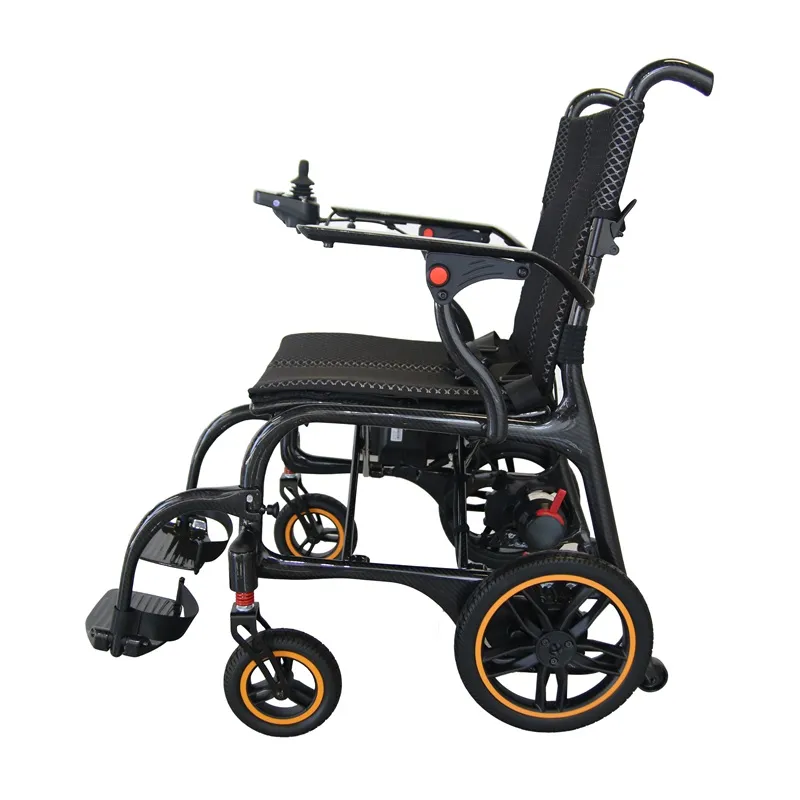
Is a carbon fiber electric wheelchair safe and reliable?
Many people have a question when first encountering carbon fiber electric wheelchairs:
"Isn't it unsafe since it's so light?"
From a materials and structural perspective, this concern is unnecessary.
1. Carbon fiber is not "fragile"
The carbon fiber used in electric wheelchairs is typically a multi-layered composite structure, possessing:
• Good impact resistance
• Stable stress distribution characteristics
• Less prone to permanent deformation
Under normal use conditions, its structural safety fully meets the requirements of electric wheelchairs.
2. More scientifically designed center of gravity
Lightweight electric wheelchairs are often redesigned and optimized in terms of:
• Battery layout
• Motor location
• Seat height
This allows carbon fiber electric wheelchairs to maintain good stability and prevent tipping even with reduced overall weight.
Who is a better candidate for a carbon fiber electric wheelchair?
While carbon fiber electric wheelchairs offer clear advantages, whether they are the "best" depends on the user's specific needs.
The following groups are particularly suited to lightweight carbon fiber electric wheelchairs:
• Users who frequently travel
• People who frequently need to load or move their electric wheelchairs
• Users who wish to operate independently without relying on assistance
• People who require high levels of dexterity and comfort
• People with limited physical strength who are not suitable for pushing heavy equipment
Lightweight Electric Wheelchairs ≠ Reduced Functionality
A common misconception is:
Lightweight electric wheelchairs are "compromised" in terms of functionality.
In fact, high-end carbon fiber electric wheelchairs, while maintaining a lightweight design, can still possess:
• A stable electric drive system
• A reliable braking system
• Adjustable armrests and footrests
• A comfortable seat and backrest
Lightweight design does not mean cutting back on functionality, but rather achieving this through more advanced materials and structural design.
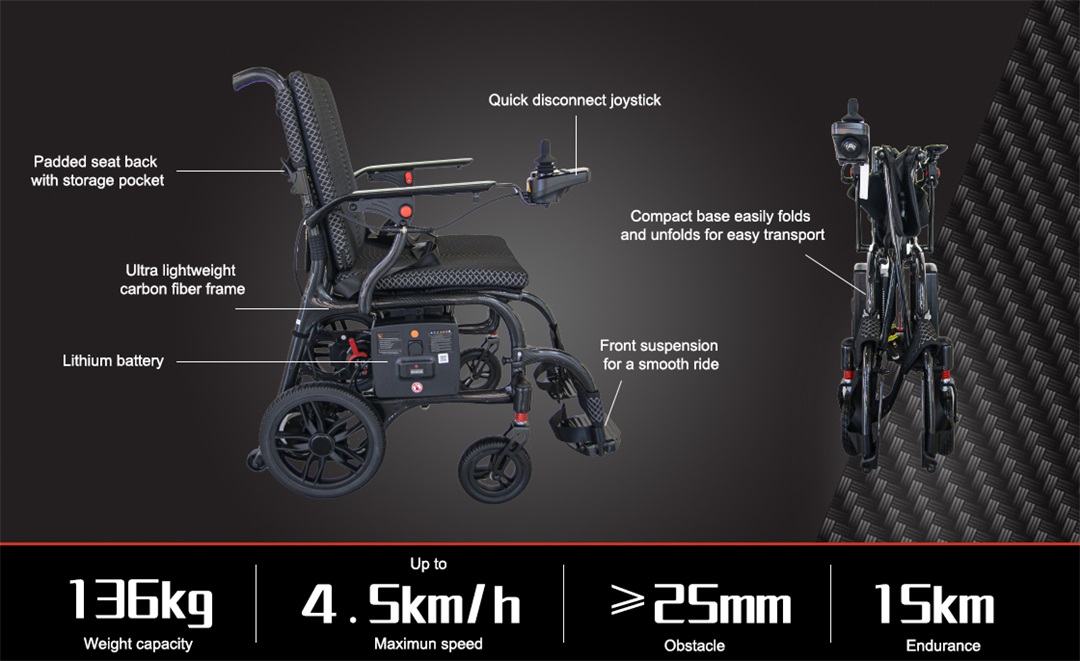
What aspects should be focused on when choosing a carbon fiber electric wheelchair?
Even among carbon fiber electric wheelchairs, there are still differences between different products. When purchasing, pay attention to the following points:
1. Is the frame a true carbon fiber structure?
Avoid wheelchairs that only use carbon fiber trim in certain areas while the overall structure remains predominantly metal.
2. Is the overall vehicle weight clearly labeled?
Distinguish between "overall vehicle weight" and "weight excluding battery".
3. Is the load-bearing capacity reasonable?
Lightweighting does not equate to reduced load-bearing capacity; a reasonable load-bearing range is crucial.
4. Are the structural connections secure?
Check folding points, connectors, and key load-bearing areas.
Why is carbon fiber considered the best lightweight electric wheelchair?
In summary, carbon fiber electric wheelchairs excel in the following key indicators:
• Lighter overall weight
• Higher structural strength
• Better handling experience
• Greater convenience of travel
• Better meets the needs of modern users for electric wheelchairs
With "lightweight" as the core requirement, carbon fiber is undoubtedly the most ideal and mature material choice currently available.
What types of medical products does Dahao Medical specialize in?
Dahao Medical specializes in designing and manufacturing a variety of high-quality medical mobility and care products. Our product range includes Electric Wheelchairs, Transfer Chairs, Hospital Care Beds, 4-Wheel Rollator Walkers, Home Care Beds, and Electric Patient Lifters. We are committed to offering reliable solutions that improve patient comfort, mobility, and caregiving efficiency.
With a strong focus on innovation and quality, we offer customized products that meet the diverse needs of clients across different sectors, from hospitals to home care.