

In hospitals, rehabilitation facilities, and professional nursing environments, using a patient lifter to lift a patient is a high-risk, highly regulated nursing procedure. While patient lifter hoists significantly reduce the physical burden of manual lifting, "having the equipment" does not equate to "zero risk."
Many safety incidents are not due to equipment malfunction, but rather to improper operation. Therefore, clearly defining what should not be done when lifting a patient is extremely important for ensuring the safety of both the patient and nursing staff.
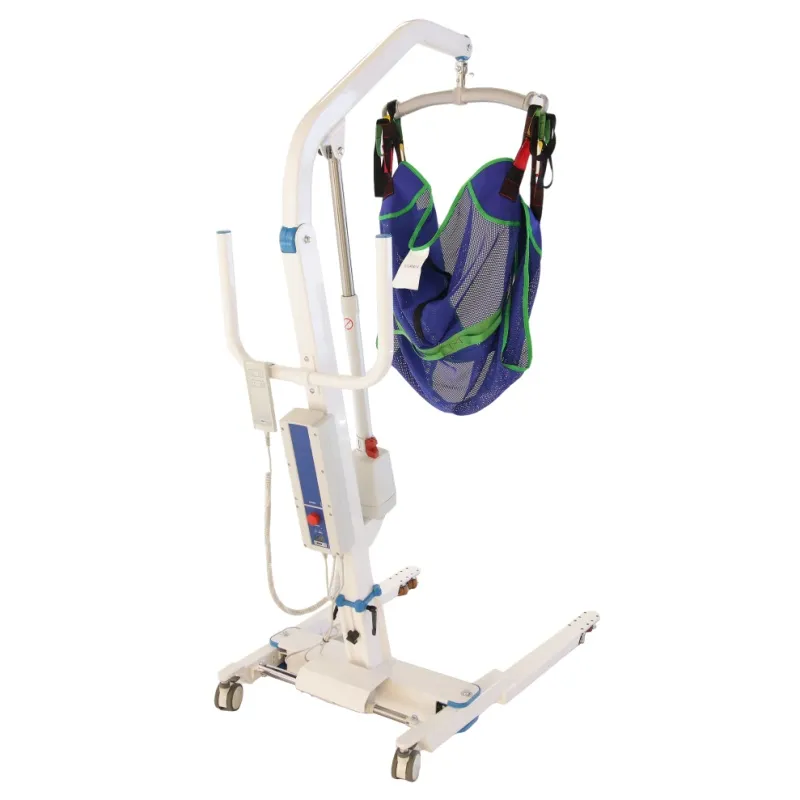
Is using a patient lifter always safe?
This is a common misconception. A patient lifter is essentially an assistive device; it only functions when used correctly. Ignoring operational contraindications when lifting a patient can actually amplify the risks.
Therefore, rather than "what should be done," "what should not be done" often needs to be repeatedly emphasized.
Can I skip checking the patient lifter before lifting a patient?
Absolutely not.
Before lifting a patient, the following actions are prohibited:
• Failure to check that the patient lifter is in normal working order
• Failure to confirm that the lifting system is functioning smoothly
• Failure to confirm that the base is stable
• Failure to confirm that the sling connections are secure
The patient lifter hoist is a load-bearing device; any minor abnormality can be amplified during the lifting process. Therefore, lifting a patient without checking the equipment is a serious violation of safety principles.
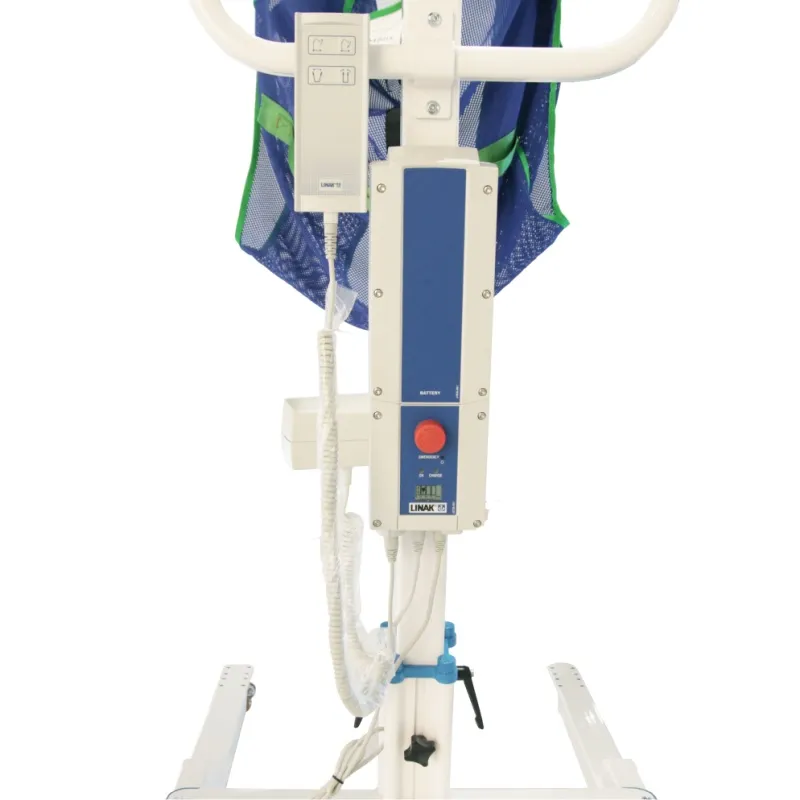
Is it okay to use the patient lifter without assessing the patient's condition?
No.
Before lifting a patient, the following practices are incorrect:
• Failure to assess the patient's physical stability
• Failure to confirm that the patient can tolerate changes in position
• Failure to understand whether the patient has strong resistance
The patient lifter is not suitable for all patients. Ignoring the assessment process and blindly lifting the patient can easily lead to loss of posture or safety risks.
Is it safe to operate the patient lifter alone?
In hospital and standardized nursing environments, it is not permitted for one person to arbitrarily lift a patient without assessment and cooperation.
Things that must not be done include:
• One caregiver operating the equipment and monitoring the patient simultaneously
• Insisting on single-person operation when the patient's condition is complex
• Starting the lifting process without preparing an assistant
Operating a patient lifter hoist emphasizes collaboration; ignoring this significantly increases risk.
Is incorrect sling use a serious problem?
Yes, and very serious.
When using a patient lifter, the following are explicitly prohibited:
• Incompatible sling size with the patient
• Sling not fully extended or twisted
• Incorrect sling anchor points
• Sling not conforming to the patient's body structure
The safety of a patient lifter hoist largely depends on the correct use of the sling. Any complacency can have serious consequences.
Can the patient be raised or lowered suddenly while being lifted?
Absolutely not.
When using a patient lifter to lift a patient, the following actions are not permitted:
• Rapidly raising the patient
• Sudden stopping or lowering
• Changing the action without prior notification to the patient
Patients in a suspended state are extremely sensitive to changes in speed. Sudden movements can easily lead to fear, postural imbalance, and even dangerous situations.
Can a patient's feelings be ignored when lifting them?
This is a very dangerous misconception.
The following behaviors are not permitted during patient lifting:
• Failing to observe the patient's facial expressions and reactions
• Ignoring the patient's discomfort signals
• Continuing to operate when the patient is clearly tense or fearful
Although a patient lifter hoist is a mechanical device, the object of its operation is a human being. Ignoring the patient's feelings is itself a serious nursing error.
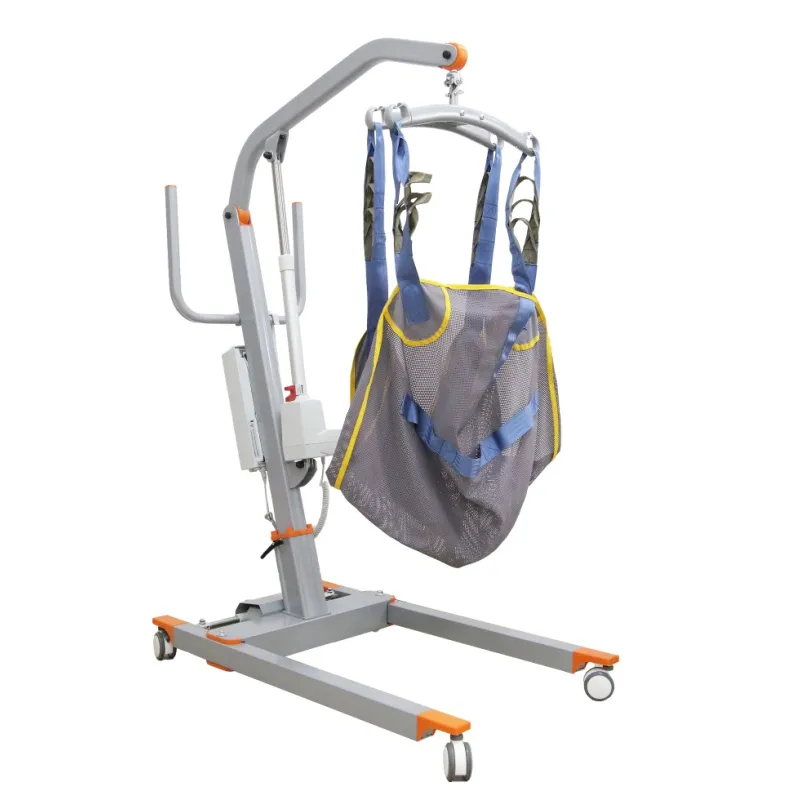
Can a patient be left suspended in the air for an extended period?
No.
The following behaviors should be avoided when using a patient lifter hoist:
• Leaving the patient suspended in the air for an extended period
• Unnecessarily waiting in mid-air after lifting
• Lifting the patient before preparing a receiving position
The patient lifter is designed to "complete transfer quickly and safely," not to leave the patient suspended in the air.
Can a patient be lifted on unstable ground?
The operating environment is equally critical.
Patient lifters should not be used to lift patients in the following situations:
• Slippery or uneven ground
• Narrow space or numerous obstacles
• The base cannot be fully extended
Patient lifter hoists require a stable operating environment to ensure safety. Forcing operation in an unsuitable environment is clearly prohibited.
Is overloading the patient lifter acceptable?
Absolutely unacceptable.
The following actions are serious violations:
• Failing to confirm the rated load capacity of the patient lifter
• Using the lifter knowing the patient's weight exceeds the limit
• Using a patient lifter that is not suitable for the patient's body type
The load capacity limit of the patient lifter is the safety baseline; any overloading may lead to uncontrollable consequences.
Is it permissible to be distracted or leave the patient unattended while lifting them?
No.
The following actions are prohibited during patient lifting:
• Distraction during operation
• Leaving the patient lifter unattended
• Leaving the patient unattended while suspended in the air
The patient lifter hoist must be under constant monitoring by nursing staff throughout its operation.
Can standard procedures be skipped when lifting a patient?
This is an extremely dangerous practice in nursing care.
When using a patient lifter, the following practices are unacceptable:
• Skipping pre-procedure checks
• Simplifying fixed steps
• Ignoring the order of procedures
Standard procedures exist precisely to reduce risk. Any skipping of procedures increases uncertainty.
Can collaboration and communication be ignored when lifting a patient?
No.
When multiple people are using a patient lifter, the following behaviors are incorrect:
• Lack of clear division of labor
• Failure to synchronize operational instructions
• Acting independently without coordination
Patient lift operation is a highly collaborative task; a lack of communication directly impacts safety.
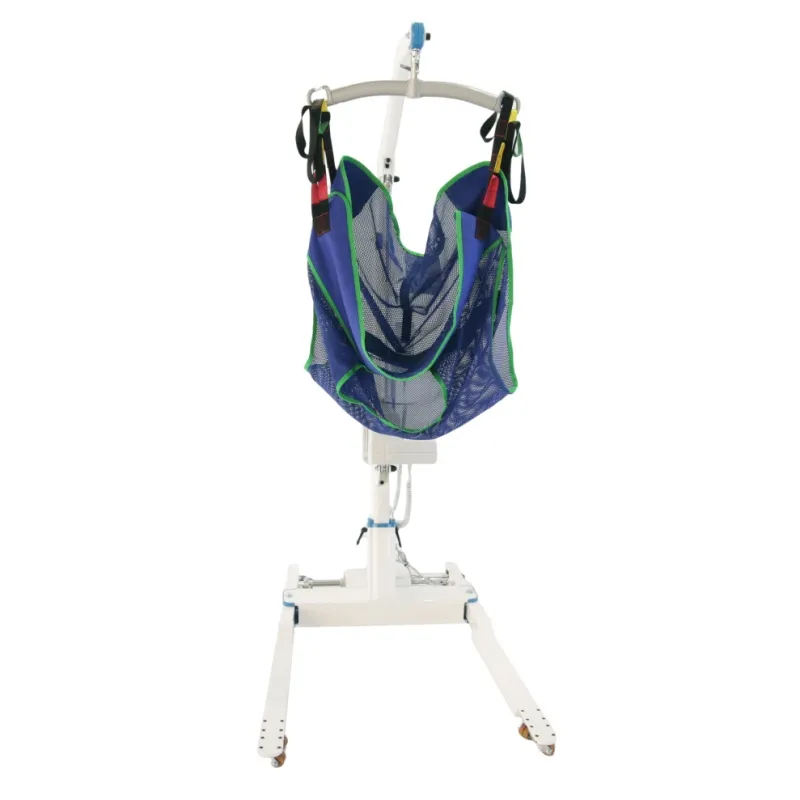
Should the procedure be stopped if the patient resists?
In the vast majority of cases, yes.
The following behaviors should not occur:
• Continuing to lift when the patient is clearly resisting
• Ignoring the patient's emotional reactions
• Forcing the transfer
The use of a patient lifter hoist should be based on patient safety and controllability, not on "forcing the completion of a task."
Where do the risks of patient lifters primarily come from?
From a nursing practice perspective, the risks associated with patient lifters primarily stem from:
• Improper operation
• Insufficient safety awareness
• Lack of understanding of contraindications
Therefore, clearly defining what cannot be done when lifting a patient is essentially establishing clear boundaries for safety.
How to correctly understand the safety baseline for lifting a patient?
It can be summarized in one sentence:
Any action that may reduce controllability, weaken monitoring, or increase uncertainty should not occur when lifting a patient.
What cannot be done when lifting a patient?
From a professional perspective, this can be summarized as follows:
• Do not operate without checking the patient lifter.
• Do not lift without assessing the patient's condition.
• Do not use slings incorrectly or arbitrarily.
• Do not operate suddenly, quickly, or roughly.
• Do not leave the patient suspended in the air for extended periods.
• Do not operate in unstable environments.
• Do not ignore weight-bearing limits.
• Do not be distracted or leave the operation midway.
• Do not skip standard procedures.
• Do not lack collaboration and communication.
A patient lifter hoist is a tool to ensure safety, not a substitute for safety awareness.
Only when patients clearly understand "what cannot be done" can a patient lift truly fulfill its intended value.
Can I purchase Dahao Medical products for personal use?
Yes, Dahao Medical's products, including Electric Wheelchairs and Transfer Chairs, are available for personal use. While we specialize in wholesale and bulk orders, we also cater to individual customers who need high-quality mobility and care products. Our products are designed to provide comfort and support, whether for home care or rehabilitation. If you're looking to buy for personal use, feel free to contact us for product recommendations and pricing information.