

In hospitals, nursing homes, rehabilitation centers, and increasingly in home care settings, caregivers often face a very real challenge: how to safely transfer a patient from their bed to a wheelchair, commode chair, sofa, or bathroom when they are bedridden long-term, unable to stand, or incapable of independent movement due to paralysis, post-operative recovery, or neurological conditions.
For families without professional caregiving experience, this task is often far more difficult than imagined. Many family members initially assume that simply "lifting" the patient is enough; however, when faced with a bedridden patient weighing 50 kg, 70 kg, or more, they realize that manual transfer is not only physically exhausting but also carries significant risk.
Against this backdrop, a piece of professional care equipment is gaining increasing attention: the sling-style patient lift. While the name might be unfamiliar to many at first, the concept is easy to grasp: it is a machine capable of "slinging" or hoisting a bedridden patient up and smoothly moving them to another location. Whether in medical institutions or home care environments, sling-style patient lifts are becoming essential tools for solving the challenges of transferring severely disabled patients.
As the global population ages and the number of long-term bedridden individuals grows, the market demand for sling-style patient lifts is rising rapidly. Research in the caregiving industry indicates that over 60% of caregivers suffer back injuries during their careers, with patient transfer tasks being a primary cause of such occupational injuries.
The situation is equally challenging for family caregivers. Many middle-aged or elderly spouses care for bedridden partners, yet due to limited physical strength, relying solely on manual lifting and supporting to perform transfers is often extremely difficult. Consequently, sling-style patient lifts are moving beyond professional hospital settings and into an increasing number of ordinary households.
So, why is this machine called a "sling-style patient lift"? How exactly does it work? Who is it suitable for? Why is there such a wide price range? And how should prospective buyers make a choice? These questions are worth exploring in depth.
What is a sling-style patient lift?
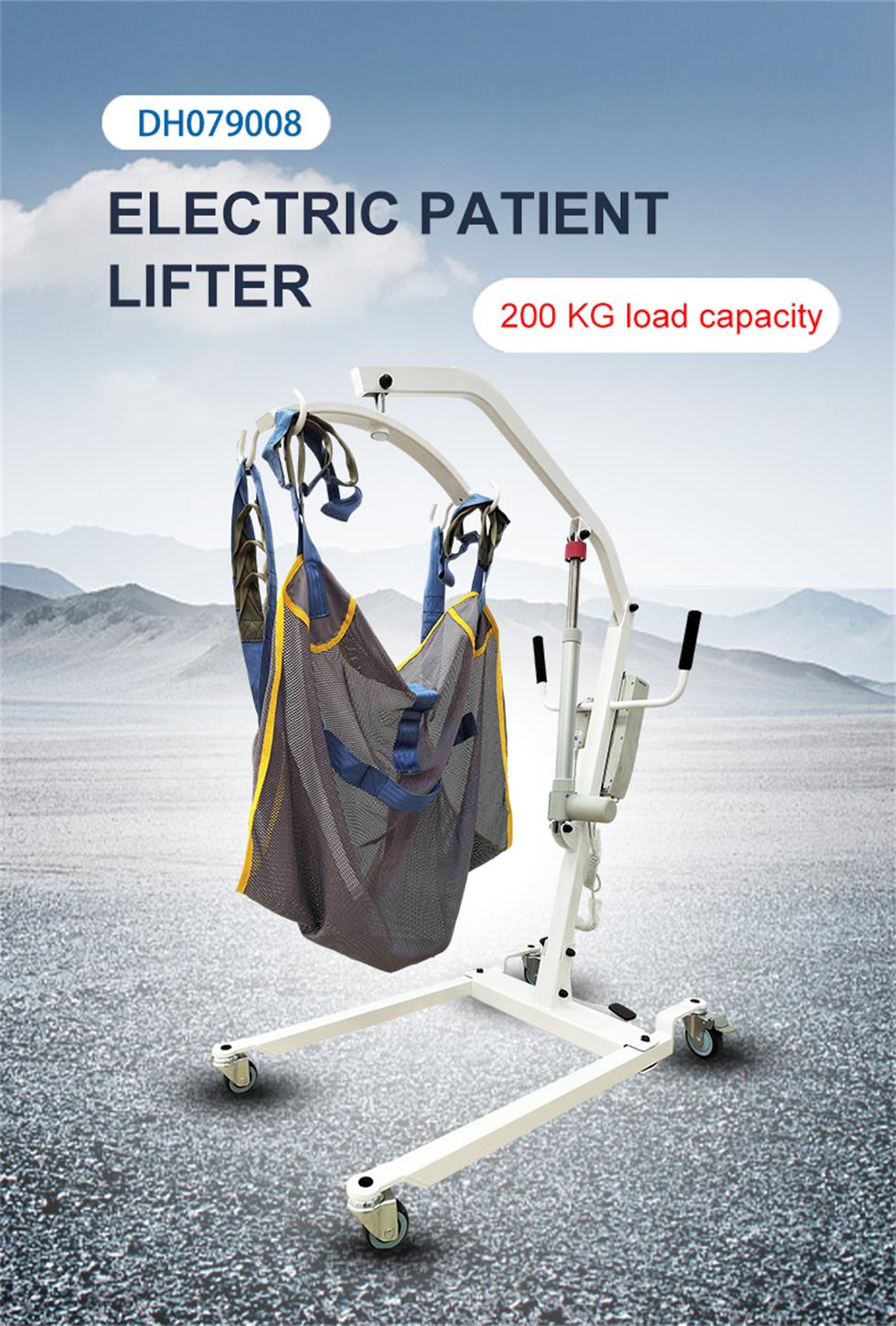
A sling-style patient hoist is an assistive device designed to safely transfer patients with limited mobility from one location to another using mechanical support, a sling for cradling the patient, and a lifting power system. Its primary function is not medical treatment, but rather solving the "transfer challenge" inherent in the caregiving process.
In traditional care settings, patient transfers—such as moving a patient from a bed to a wheelchair or from a wheelchair to a commode—are typically performed manually. While this method may be feasible for those with mild mobility issues, manual transfer often entails immense physical exertion when dealing with patients who are bedridden, paralyzed, severely hemiplegic, or overweight. More critically, improper handling poses risks not only of patient falls but also of muscle strains, lumbar injuries, or even falls for the caregiver.
The advent of the sling-style patient hoist essentially transforms "manual lifting" into "mechanical transfer." Once supported by a specialized sling, the patient is smoothly lifted by the hoist’s hydraulic, electric, or electro-hydraulic system, followed by lateral movement and lowering into position. Throughout the process, the patient’s body remains supported by the sling, preventing accidents caused by sudden loss of balance.
In short, the sling-style patient hoist safely replaces human effort in lifting and moving patients.
Why are sling-style patient hoists becoming increasingly important?
The global trend of an aging population continues to escalate the burden on caregiving. According to World Health Organization projections, one in six people worldwide will be aged 60 or older by 2030. Advancing age brings an increased risk of declining mobility, alongside a rising need for care related to long-term bed confinement, severe disability, and chronic illnesses.
This trend is equally evident in China. An increasing number of families face the need for home-based care, particularly for:
•Patients with stroke sequelae
•Patients with Parkinson's disease
•Patients with spinal cord injuries
•Patients with advanced Alzheimer's disease
•Patients recovering from hip surgery
•Long-term bedridden elderly individuals
These groups often require frequent transfers. In a single day, a patient may need to undergo multiple transfers, such as:
•Bed → Wheelchair
•Wheelchair → Toilet
•Bed → Shower chair
•Sofa → Bed
If performed entirely by hand, each transfer can pose a significant physical challenge and safety risk. Nursing research indicates that the risk of lower back injury increases significantly when manually handling loads exceeding 23 kg—a weight far surpassed by most adult patients. In other words, many households are effectively engaged in high-risk caregiving on a long-term basis.
The importance of a sling-style patient lift lies in its ability to transform high-risk physical labor into a controlled mechanical operation, thereby drastically reducing the strain on caregivers.
How does a sling-style patient lift work?
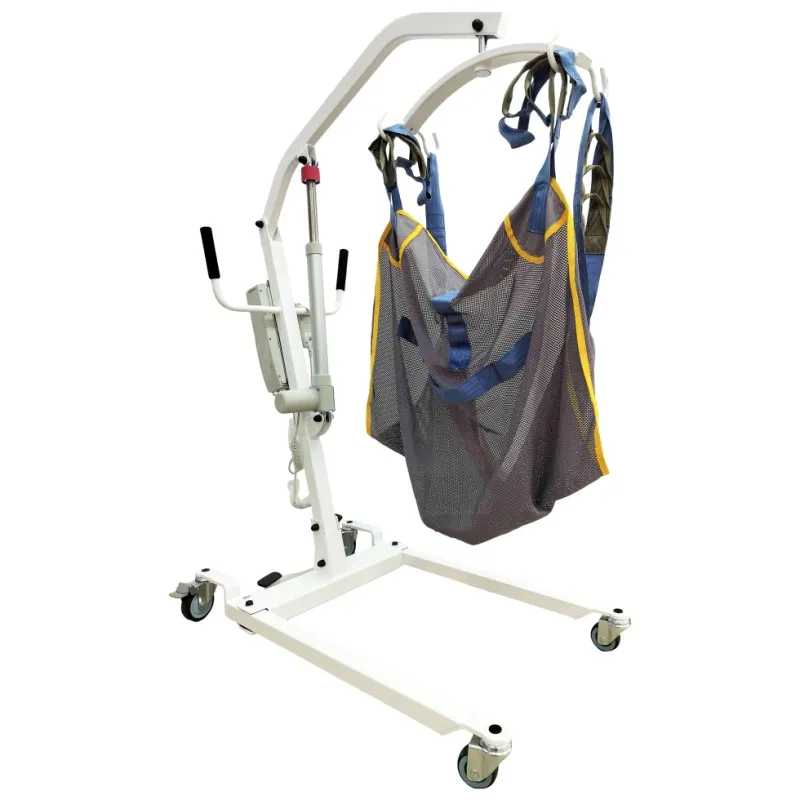
Upon first seeing a sling-style patient lift, many people think it resembles a small crane used in hospitals. Although it may look complex, the operating principle is straightforward.
A standard sling-style patient lift typically consists of the following components:
•Base support structure
•Upright frame
•Lifting arm (boom)
•Lifting system
•Sling attachment points
•Specialized sling
•Swivel casters
The sling is a crucial part of the system. The patient is not directly "clamped" or "scooped up" by the machine; instead, the sling is first positioned to support key areas of the body, such as the back, buttocks, and thighs. The sling is then attached to the lifting arm, and the lifting system slowly raises the patient off the bed.
What is the operating process for a sling-style patient lift?
The complete operation generally involves several steps. First, the sling is correctly positioned beneath the patient's body; second, the sling loops are connected to the attachment points on the lifting arm; third, the lifting system is activated to gradually raise the patient; and finally, the patient is smoothly moved to the target location and slowly lowered.
The key to the entire process is stability, not speed.
High-quality sling-style patient lifts typically emphasize:
•Smooth lifting and lowering
•Stable center of gravity
•Minimal swaying
•Ease of steering and maneuvering
These details directly determine the user experience and safety.
What types of sling-style patient lifts are available?
Sling-style patient lifts on the market generally fall into three categories, each suited to different caregiving scenarios.
1. Manual Hydraulic Sling Lifts
This is a more traditional type. Lifting is primarily achieved via a hydraulic cylinder operated by manually pumping a lever. Its advantages include a simple structure, a low failure rate, and a lower price point, making it suitable for households or care facilities with limited budgets.
However, the drawbacks are also evident. Since lifting requires manual effort, the operator expends physical energy—a task that becomes particularly strenuous when handling heavier patients.
2. Electric Sling Lifts
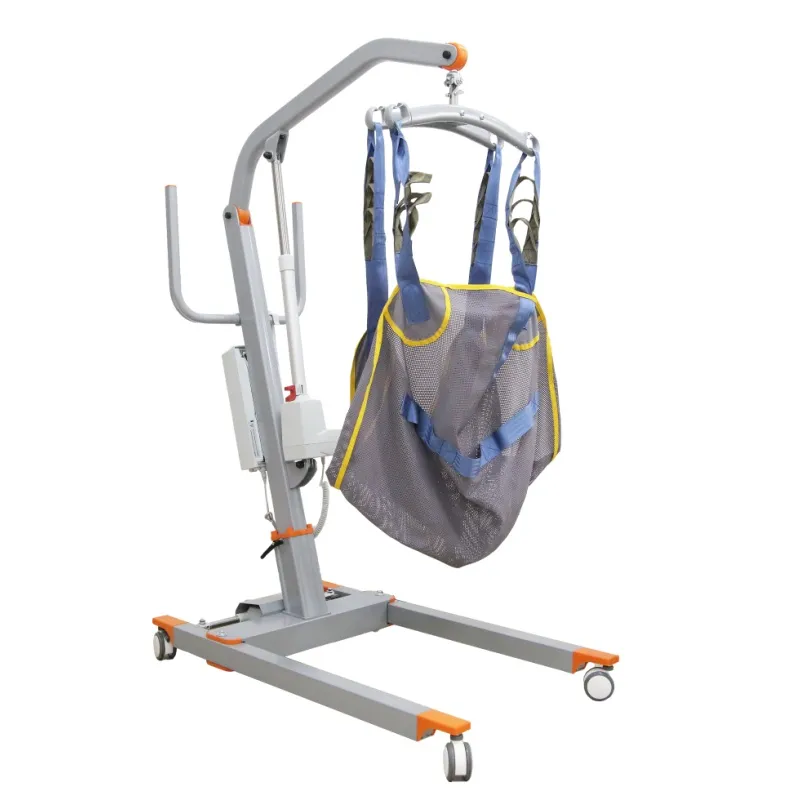
This is currently the fastest-growing category. Electric sling lifts use a motor to drive the lifting mechanism, allowing for raising and lowering at the touch of a button.
They offer significant advantages:
•Effortless operation
•Greater stability
•Suitability for frequent use
•Suitability for single-person caregiving
For home care settings, electric sling lifts are generally the ideal choice.
3. Ceiling-Mounted Track Sling Lifts
This solution is commonly found in high-end care environments. The equipment is installed on a ceiling track, allowing it to cover the bed, restroom, and bathing areas.
Advantages include:
•Fixed movement path
•Minimal floor space usage
•High transfer efficiency
The downsides are the high installation costs and specific requirements regarding the building's structure.
Who needs a sling-style patient lift the most?
Not everyone with limited mobility requires a sling-style patient lift; they are primarily suited for the following groups:
First are long-term bedridden patients. These individuals often have little to no ability to assist in their own transfer, making caregiving particularly challenging. Second are paralyzed patients, including those with severe paraplegia or hemiplegia. Because their lower limbs cannot bear weight, manual transfers carry a very high risk of injury. Third are heavier patients; even if they retain some mobility, caregivers may struggle to move them safely.
Additionally, patients who cannot bear weight for a short period following surgery—such as those recovering from hip replacement—can benefit from sling lifts. During the early stages of rehabilitation, using such equipment helps minimize the risk of accidents. It is important to emphasize that determining the need for a patient lift (sling-style) depends not only on the patient's mobility but also on the caregiver's ability to perform caregiving tasks safely.
What practical problems can a sling-style patient lift solve?
Many people underestimate the complexity of patient transfers. In fact, a significant number of caregiving challenges are related to "position changes."
For instance, if a bedridden patient cannot safely get out of bed, it can lead to:
•Increased risk of pressure ulcers
•Higher incidence of pulmonary complications
•Accelerated muscle atrophy
•Worsened emotional well-being
A sling-style patient lift facilitates easier transfers out of bed. Even a simple move—such as transferring from the bed to a wheelchair to enjoy the sun in the living room or participate in family interactions—can significantly improve quality of life.
For caregivers, the impact is even more direct. These lifts reduce:
•Physical strain from lifting and supporting
•Back and lumbar stress
•Risk of falls
•Caregiving-related anxiety
This transforms caregiving from purely manual labor into a repeatable, controllable process.
Why is there such a wide price range for sling-style patient lifts?
Prices vary significantly, ranging from a few thousand to tens of thousands of yuan.
This price variation stems from several factors.
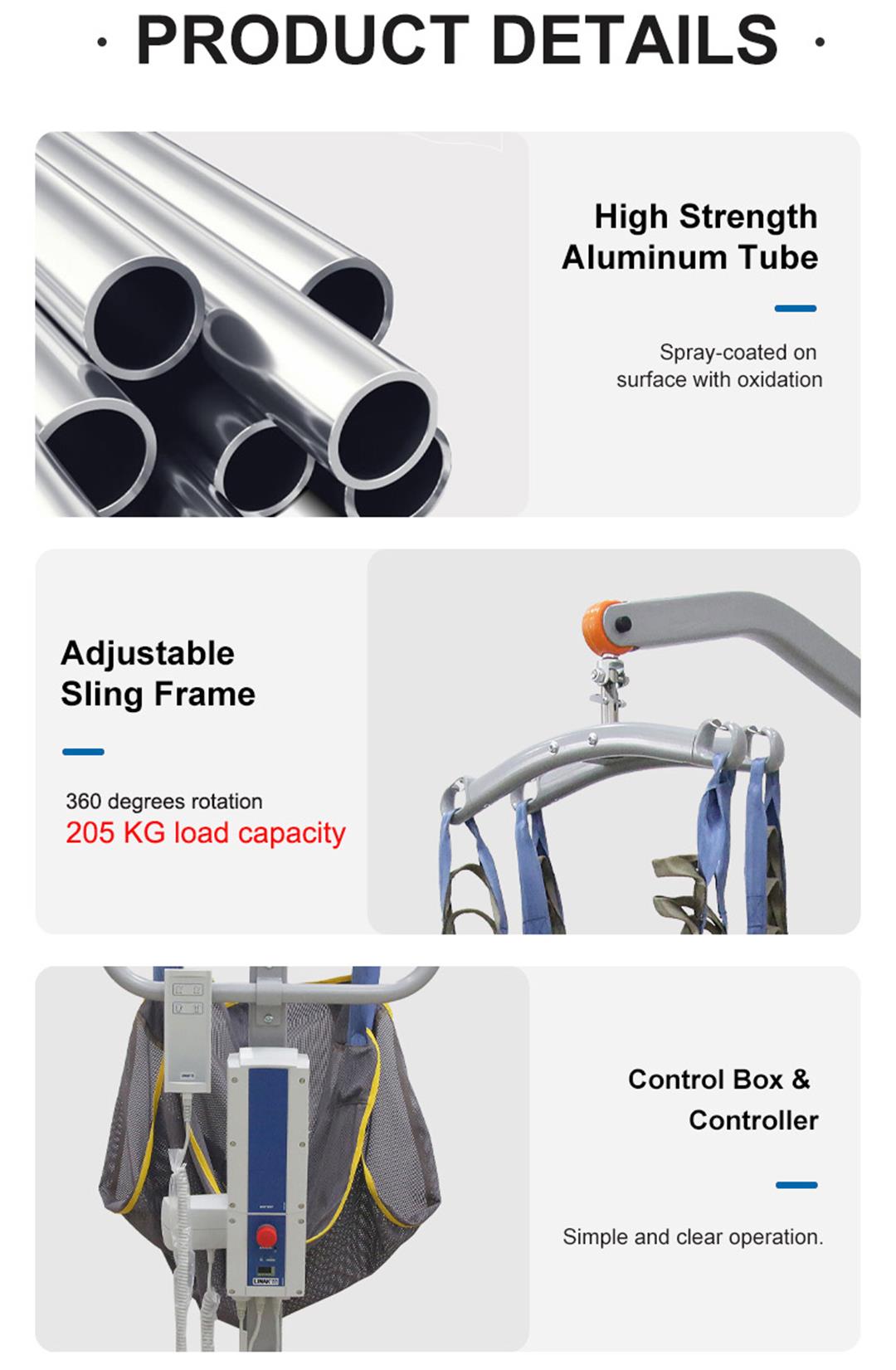
First is the drive mechanism; manual hydraulic models are generally cheaper than electric ones. Second is weight capacity; there are distinct structural differences between a lift rated for 150 kg and one rated for 250 kg. Third is materials and stability; high-strength steel frames, medical-grade casters, and high-quality slings all add to the cost.
Additionally, smart features influence the price. High-end models may include:
•Battery level display
•Emergency stop function
•Low-battery alarm
•Anti-pinch design
•Smart control panel
While these features enhance the user experience, they also drive up the retail price.
What should you look for when buying a sling-style patient lift?
Many consumers focus solely on price, which is insufficient.
One of the most critical factors is weight capacity. The device's capacity must exceed the patient's weight and include a safety margin. Another key factor is the base width, as this determines whether the device can fit underneath the bed or wheelchair. Consider sling compatibility as well.
Different patients require different sling designs, such as:
•Full-body slings
•Seated-position slings
•Toileting slings
•Bathing slings
The comfort provided by a patient hoist largely depends on how well the sling fits the patient.
FAQ
Q1: Are patient hoists suitable for home use?
Yes, they are particularly suitable for households caring for patients who are bedridden or have severe mobility impairments.
Q2: Can a patient hoist be operated by a single person?
Most electric patient hoists support single-person operation, though it is recommended to learn under professional guidance initially.
Q3: Will the patient hoist cause discomfort to the patient?
With the correct choice of sling and proper operation, comfort levels are generally high.
Q4: Can patient hoists be used for bathing?
Some models support this, provided a waterproof sling is used.
Q5: Is a more expensive patient hoist necessarily better?
Not necessarily; the key is matching the equipment to the patient's weight, the frequency of care, and the available space in the home.