

As the population ages and the demand for home care, rehabilitation, and long-term care grows, lift transfer chairs are increasingly being adopted by hospitals, nursing homes, rehabilitation facilities, and private households. For elderly individuals with limited mobility, post-operative patients, people with disabilities, and those who are bedridden, these chairs effectively solve the challenge of transferring between beds, wheelchairs, sofas, toilets, and care chairs. They reduce the physical strain on caregivers while lowering the risk of falls and secondary injuries to patients during transfers.
Research in the care industry indicates that over 40% of caregiving time for bedridden patients is spent on transfers and repositioning. Improper transfer techniques are a leading cause of patient falls, joint injuries, and lower back strain among caregivers. Consequently, patient lift and transfer chairs have recently come to be viewed as essential equipment for enhancing both care efficiency and safety.
However, despite their many advantages, lift transfer chairs are not suitable for every patient. When purchasing these devices, families often focus solely on convenience while overlooking the patient's specific medical conditions and physical status. In fact, under certain circumstances, using a patient lift transfer chair may not improve the quality of care; instead, it could increase the risk of the patient's condition worsening or accidents occurring.
So, which patients should not use a lift transfer chair? In what situations should caution be exercised? This article provides an in-depth analysis from the perspectives of medicine, safe caregiving, and rehabilitation management.
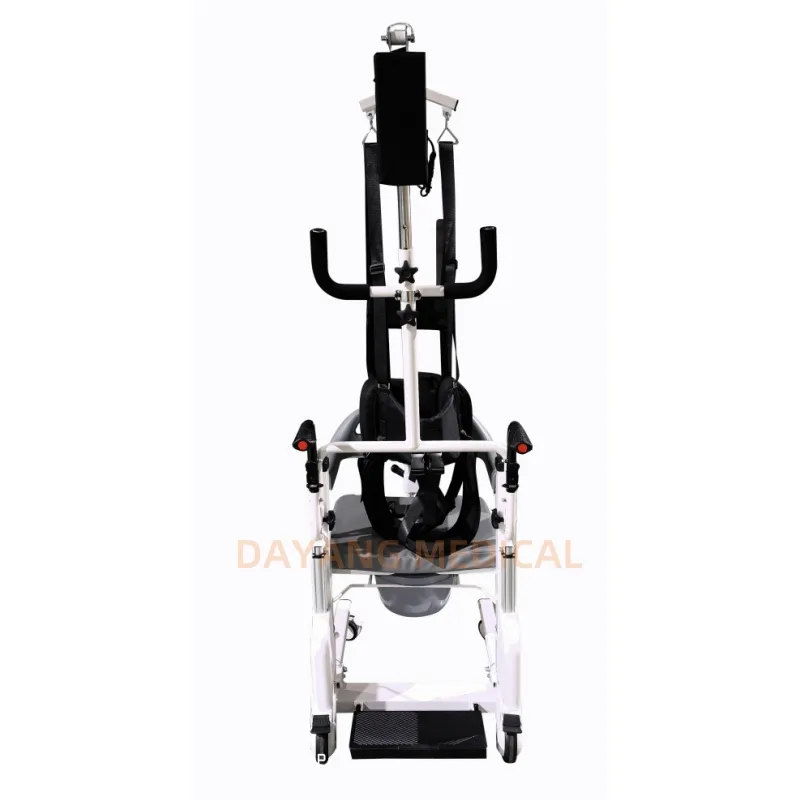
What is a lift transfer chair, and why is it becoming increasingly popular?
A lift transfer chair is an assistive device that integrates lifting, transferring, mobility, and caregiving functions. It utilizes mechanical, electric, or hydraulic systems to adjust the seat height, enabling smooth transfers for patients between surfaces of varying heights.
Common use cases include:
•Transferring between bed and wheelchair
•Transferring between bed and toilet
•Transferring between bed and sofa
•Short-distance movement within a patient's room
•Assistance with bathing
•Repositioning bedridden patients
Compared to traditional manual lifting and support methods, lift transfer chairs significantly reduce caregiving risks. Statistics from various elderly care facilities indicate that the introduction of lift transfer chairs can reduce the incidence of lower back injuries among caregivers by over 30% and lower the risk of patient falls during transfers by approximately 50%.
Consequently, lift transfer chairs have become essential equipment in modern care systems.
However, like any assistive device, lift transfer chairs have specific scopes of application and usage limitations.
Why are lift transfer chairs not suitable for every patient?
Many people assume that any patient with limited mobility can use a patient lift transfer chair. In reality, this assumption is incorrect.
A lift transfer chair is essentially an assistive transfer tool rather than a piece of medical treatment equipment. Its use relies on the fundamental premise that the patient can tolerate the physical strain associated with sitting, changes in body position, and short-duration movement.
For patients with complex medical conditions, unstable vital signs, or specific illnesses, the physical movement involved in using a patient lift and transfer chair could trigger serious consequences.
Examples include:
•Drastic fluctuations in blood pressure
•Fracture displacement
•Wound tearing
•Deterioration of respiratory function
•Increased cardiac load
•Exacerbation of neurological injuries
Therefore, before using a patient lift transfer chair, caregivers and family members must thoroughly assess the patient's physical condition; one cannot simply assume that "if a patient can sit, they can be transferred."
Patients with severe spinal injuries are generally unsuitable candidates for lift transfer chairs
The spine is one of the body's most critical structural supports and serves as a vital protective barrier for the spinal cord and nerves.
For patients with the following conditions, a lift transfer chair is often not the ideal choice:
•Cervical spine fractures
•Thoracic spine fractures
•Unstable lumbar spine fractures
•Acute-phase spinal cord injuries
The reason is that the use of a lift transfer chair inevitably causes shifts in the body's center of gravity.
Even with smooth operation, the following may occur:
•Slight torso twisting
•Altered spinal loading
•Localized vibration or jarring
While these effects are negligible for healthy individuals, they can cause fracture displacement or increased nerve compression in patients with spinal injuries.
Particularly during the initial weeks following an injury, when doctors typically require strict axial stabilization, the use of professional stretchers, spine boards, or specialized medical transport equipment is far more appropriate.
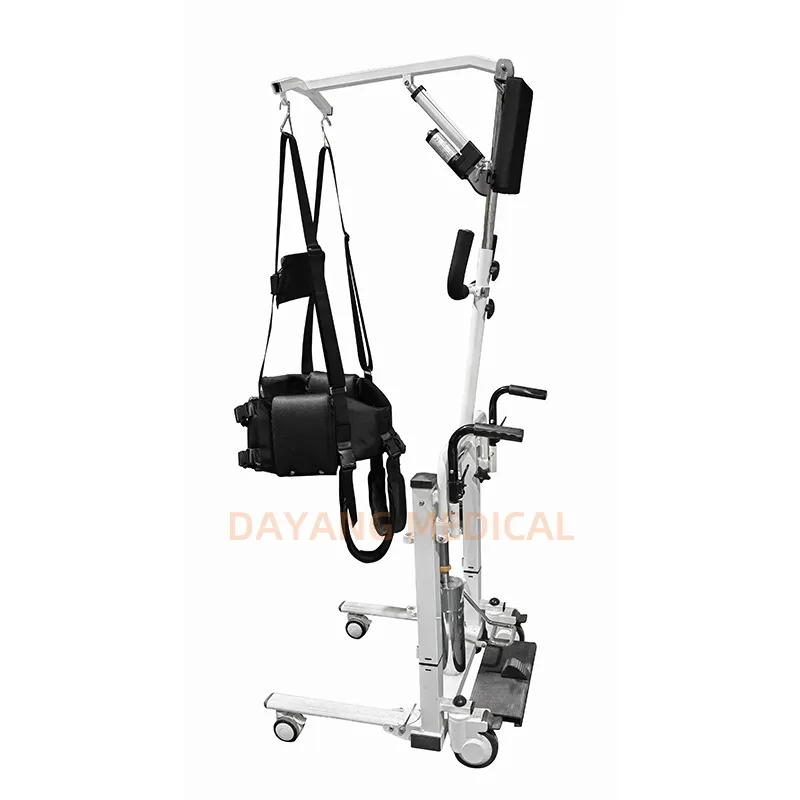
Caution is required for patients with fractures that have not yet stably healed
Many people mistakenly believe that patient lift transfer chairs are suitable for all fracture patients.
In reality, suitability depends on the fracture site and the stage of recovery.
Extra caution is necessary when using a patient lift transfer chair for patients with:
•Acute-phase femoral neck fractures
•Early-stage recovery from pelvic fractures
•Multiple fractures
•External fixation devices
This is because body weight is redistributed during the transfer process.
Even though a lift transfer chair reduces the impact associated with manual handling, it cannot entirely eliminate changes in localized stress.
If the fracture has not yet reached the stage of stable healing, the following complications may occur:
•Increased pain
•Fracture displacement
•Loosening of internal fixation
•Prolonged rehabilitation
Therefore, in orthopedics, the decision to use a patient lift and transfer chair is typically made by the attending physician based on imaging results.
Lift transfer chairs should not be used indiscriminately for patients with severe cardiovascular disease
Lift transfer chairs alter the patient's body position.
Changes in body position have a direct impact on the cardiovascular system.
For healthy individuals, transitioning from a lying position to a sitting position is a normal physiological process.
However, for patients with the following conditions:
•Severe heart failure
•Unstable angina
•Acute myocardial infarction (recovery phase)
•Severe arrhythmia
Changes in body position may trigger fluctuations in their condition.
Medical research indicates that some critically ill cardiovascular patients may experience hemodynamic changes while sitting up, leading to increased heart rate, blood pressure fluctuations, and increased cardiac load.
If a patient experiences the following while the patient lift transfer chair is in operation:
•Chest tightness
•Difficulty breathing (dyspnea)
•Palpitations
•Dizziness
The transfer should be stopped immediately, and the patient should be assessed.
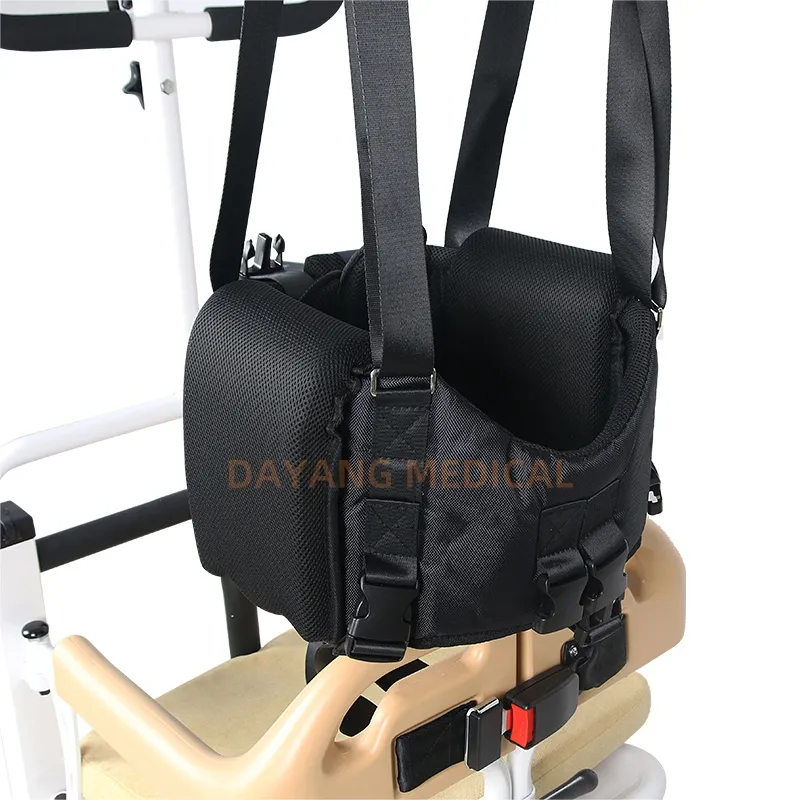
Lift transfer chairs are unsuitable for critically ill patients with unstable vital signs
This is a key principle in clinical care.
If a patient presents with the following conditions:
•Persistently unstable blood pressure
•Low blood oxygen saturation
•Persistent high fever
•Shock
•Multiple organ dysfunction
The use of a patient lift transfer chair for transfer is generally not recommended.
This is because such patients are in a highly vulnerable physical state.
Any change in body position may cause:
•Redistribution of blood flow
•Changes in respiratory status
•A drop in oxygenation levels
In intensive care settings, many patients rely on specialized beds and monitoring equipment to maintain stable vital signs; in such cases, a patient lift and transfer chair cannot replace professional medical transport systems.
Caution is advised when using the device for patients with severe cognitive impairment or psychiatric disorders
Use of a patient lift transfer chair requires a certain level of patient cooperation.
However, the following groups may be unable to cooperate effectively:
•Patients with severe Alzheimer's disease
•Patients with severe cognitive impairment
•Patients with acute delirium
•Patients experiencing an acute psychiatric episode
These patients are often unable to correctly understand instructions from caregivers.
During the transfer process, the following behaviors may occur:
•Suddenly standing up
•Struggling or resisting
•Leaning forward
•Attempting to leave the seat
All such behaviors increase the risk of falls.
Therefore, for patients with severely impaired cognitive function, professional caregivers should provide continuous supervision even when a lift transfer chair is used.
Patients with advanced osteoporosis require special assessment
Osteoporosis is a very common issue among the elderly.
According to data from the International Osteoporosis Foundation, approximately one-third of women over the age of 65 are at risk of osteoporosis to varying degrees.
For patients with mild to moderate osteoporosis, a lift transfer chair is generally safe.
However, patients with severe osteoporosis require special assessment,
as their bone fragility is significantly increased.
Even minor external force may result in:
•Compression fractures
•Rib fractures
•Pelvic fractures
If the patient also has spinal deformities or a history of prolonged bed rest, the decision to use a patient lift transfer chair should be made under medical guidance.
Patients with severe pressure ulcers may not be suitable candidates for a standard lift transfer chair
Pressure ulcers are a common complication in patients confined to bed for long periods.
When pressure ulcers reach Stage III or IV, the wound often extends deep into the muscle or even bone tissue.
Using a standard lift transfer chair in such cases may lead to:
•Increased localized pressure
•Friction against the wound
•Exacerbation of tissue damage
•Increased risk of infection
This is particularly true for patients with sacral or coccygeal pressure ulcers. Since this area bears the most pressure when seated, a standard patient lift and transfer chair may not fully meet caregiving needs.
In such cases, it is often necessary to use a pressure-relieving cushion or specialized care equipment.
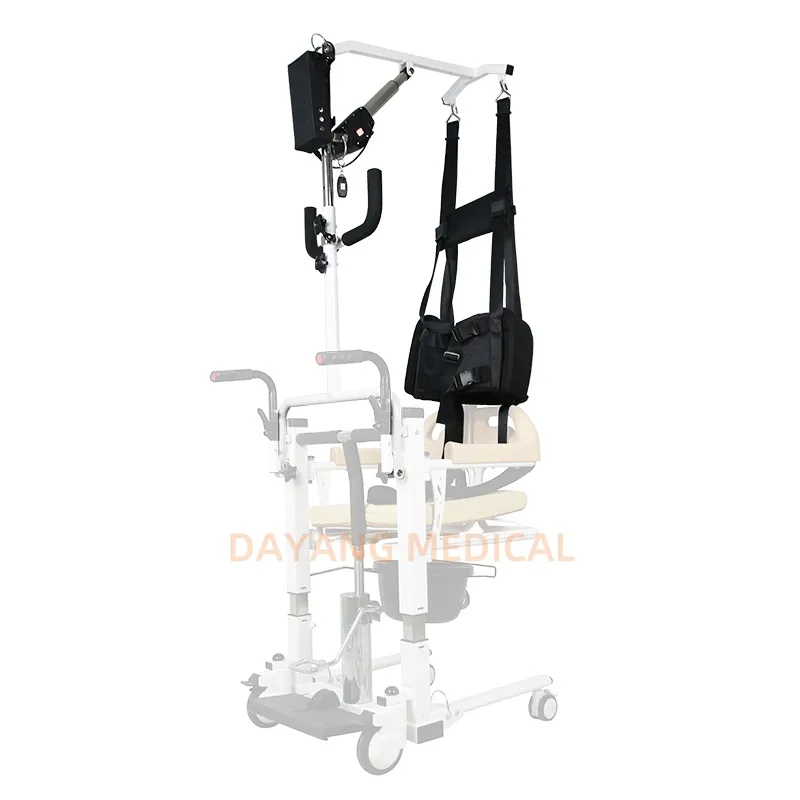
Verifying weight capacity for patients with extreme obesity
Obesity has become a growing area of concern in recent years.
Some standard lift transfer chairs have a weight capacity range of 100 kg to 150 kg.
However, some patients with severe obesity may exceed this limit.
Exceeding the weight limit of a patient lift transfer chair can lead to:
•Structural deformation
•Damage to the lifting system
•Brake failure
•Equipment tipping over
Therefore, for heavier patients, it is essential to verify the lift transfer chair's rated weight capacity beforehand.
Never use the equipment beyond its specified limits.
Which patients are suitable for a lift transfer chair?
In addition to understanding contraindications, it is also important to identify which patients are best suited for using a lift transfer chair.
Generally, the following groups can benefit significantly from a lift transfer chair:
•Patients recovering from a stroke
•Patients with hemiplegia
•Patients with Parkinson's disease
•Patients recovering from joint replacement surgery
•Long-term bedridden elderly individuals
•Patients with reduced muscle strength
•Patients with lower-limb functional impairments
For these individuals, a patient lift transfer chair can reduce the caregiving burden, improve transfer efficiency, and enhance the patient's ability to participate in daily activities.
How do you determine if a patient is suitable for a lift transfer chair?
Decisions should not be based solely on experience during actual caregiving.
A comprehensive assessment of the following factors is usually required:
Stability of vital signs; ability to maintain a seated position; presence of contraindications for movement; basic cognitive ability; tolerance for brief changes in body position; and the presence of severe pain or risk of fracture.
If these conditions are generally met, a patient lift transfer chair can usually be used safely.
Conversely, one should first consult a doctor, rehabilitation therapist, or professional caregiver.
FAQ
Is a lift transfer chair suitable for all bedridden elderly individuals?
Not necessarily. While most long-term bedridden elderly individuals can use a lift transfer chair, professional assessment is required before use if there are conditions such as severe fractures, unstable vital signs, or severe pressure ulcers.
Can patients with cerebral infarction use a patient lift and transfer chair?
Most patients recovering from cerebral infarction are suitable candidates for a lift transfer chair. This is particularly true for patients with hemiplegia, as the chair enables safer transfers between bed and seat and facilitates daily care.
Can patients with severe osteoporosis use a lift transfer chair?
Yes, but caution is required. For patients with severe osteoporosis, fracture risk should be assessed, and the chair's operation must be smooth; use under medical guidance is recommended when necessary.
Is a doctor's approval required before using a lift transfer chair?
While explicit medical permission may not be mandatory for general mobility-impaired patients, those with fractures, spinal injuries, severe heart disease, or other serious medical conditions should undergo a medical assessment before using the chair.
Can a lift transfer chair cause a patient to fall?
When used correctly, a lift transfer chair significantly reduces the risk of falls. However, falls can still occur if the patient has severe cognitive impairment, the safety belt is not properly secured, or care procedures are not followed correctly.
What is the difference between a home-use lift transfer chair and a hospital-grade one?
Hospital-grade lift transfer chairs typically feature higher weight capacities, more comprehensive safety systems, and greater durability for continuous use, whereas home-use models prioritize lightweight design, portability, and the specific needs of daily home care.