

As an assistive device that has rapidly gained popularity in the healthcare sector in recent years, the electric patient lifter is becoming an essential tool for the transfer and care of patients with limited mobility. For the elderly who are bedridden long-term, post-operative patients, those with hemiplegia or spinal cord injuries, and individuals with severe disabilities, moving between locations—such as from bed to wheelchair, wheelchair to toilet, or sofa to bed—is a frequent daily necessity. Yet, in practice, these seemingly simple actions often represent the most challenging and high-risk aspects of caregiving.
Data from international studies on nursing safety indicates that patient handling and transfer tasks account for over 30% of the physical workload for nursing staff and are a leading cause of occupational back injuries. According to the U.S. Occupational Safety and Health Administration (OSHA), more than 50% of musculoskeletal injuries in the healthcare industry are linked to patient handling, with lower back strain being the most common issue. This risk is often even higher in home care settings, where family members typically lack professional handling techniques and may inadvertently cause patient falls or sustain injuries themselves due to improper posture. It is against this backdrop that electric patient lifters have gained public attention and are increasingly viewed as vital equipment for enhancing safety and efficiency in caregiving.
However, despite their growing popularity, many people’s understanding of electric patient transfer lifts remains limited to the simple notion of a "machine that helps move people." Some users believe that purchasing one will solve every transfer-related challenge, while others worry about complexity and high costs, or even assume the devices are unsuitable for home use.
A crucial question remains: are electric patient transfer lifts truly suitable for all patients? Do they have limitations? What are their specific advantages and disadvantages? This article provides an in-depth analysis of these issues, offering a comprehensive overview that covers operating principles, core benefits, potential drawbacks, suitable and unsuitable user groups, and purchasing recommendations.
What is an electric patient lifter?
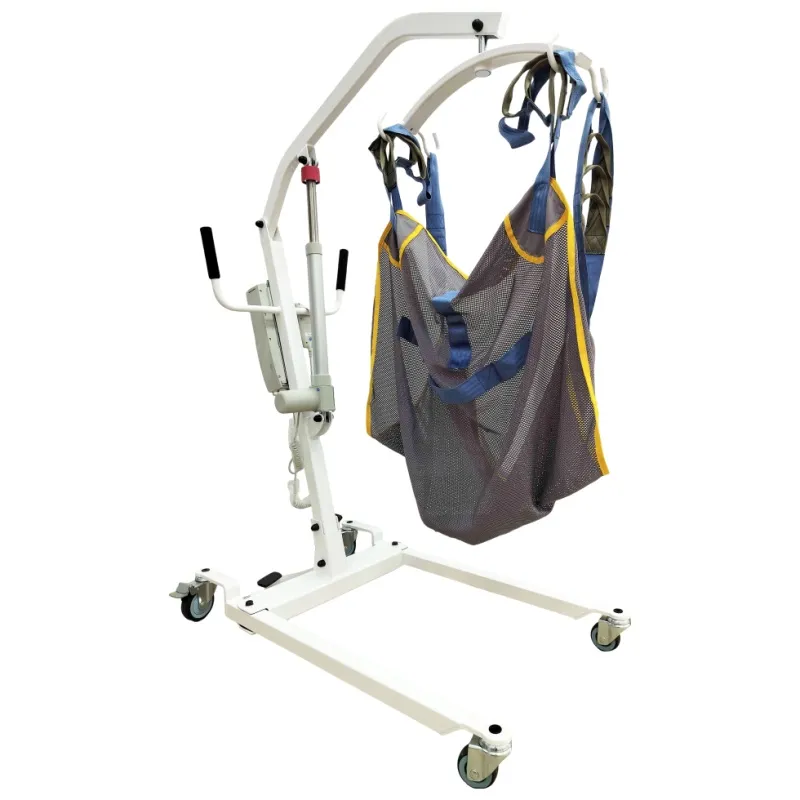
An electric patient lifter is a caregiving aid that uses a motor-driven system to lift, transfer, and reposition patients. It is primarily designed to assist patients with limited mobility or complete disability in moving safely between different locations. In simple terms, its core function is to replace manual lifting; by using a mechanical structure to bear the patient's weight, it reduces the physical strain on caregivers and enhances safety during transfers.
In traditional care settings, transferring a patient often requires the coordinated effort of one to three caregivers. For instance, moving a bedridden patient weighing over 70 kg from a hospital bed to a wheelchair typically demands teamwork. The difficulty of the transfer increases further if the patient is heavy, has weak muscle strength, or suffers from limb rigidity. An electric patient lifter, however, utilizes a boom, sling, base, and electric lifting system to perform these movements smoothly and steadily.
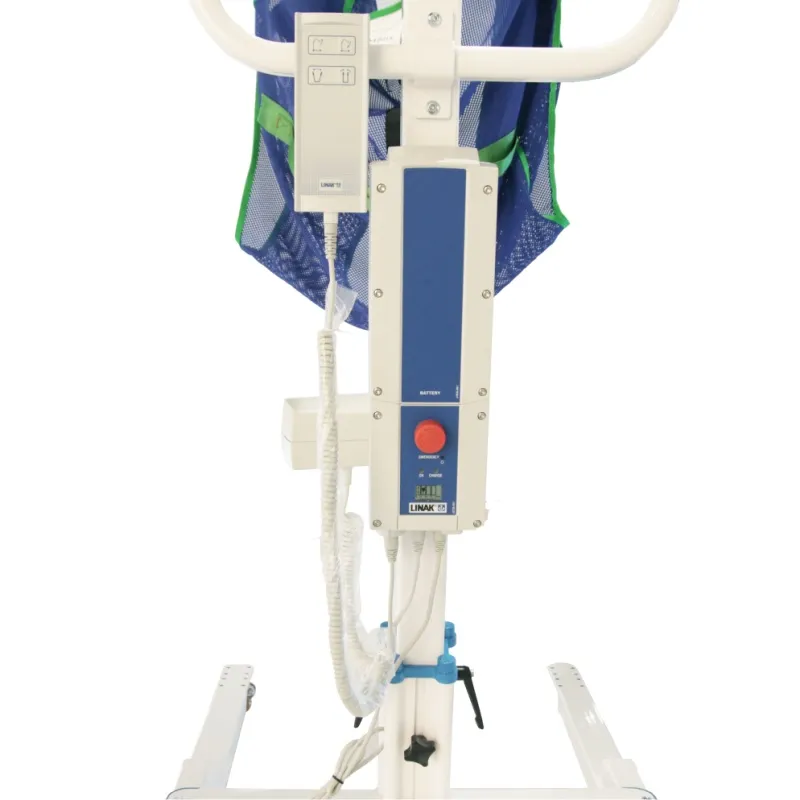
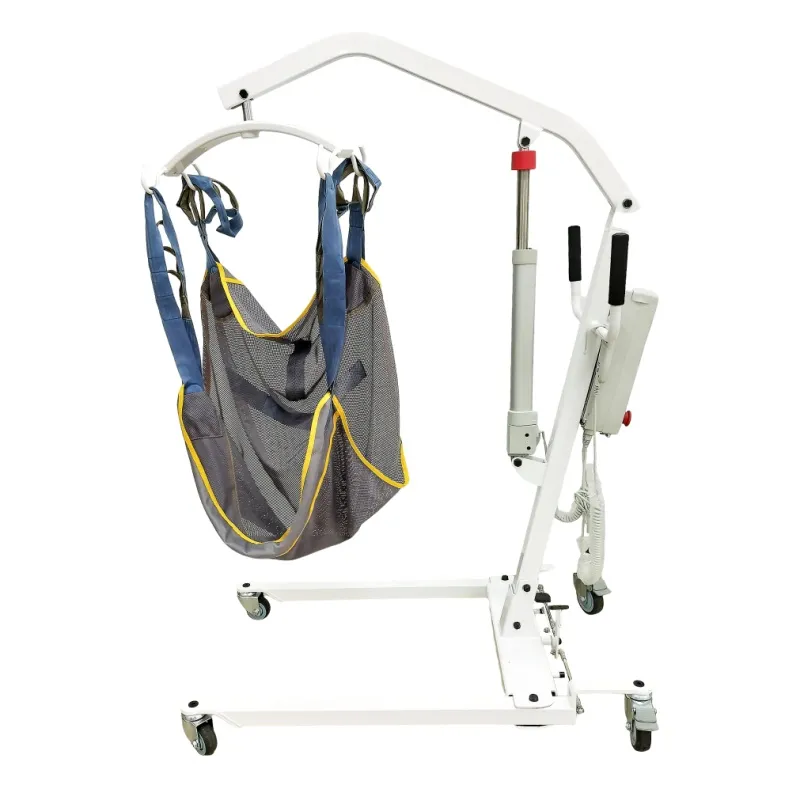
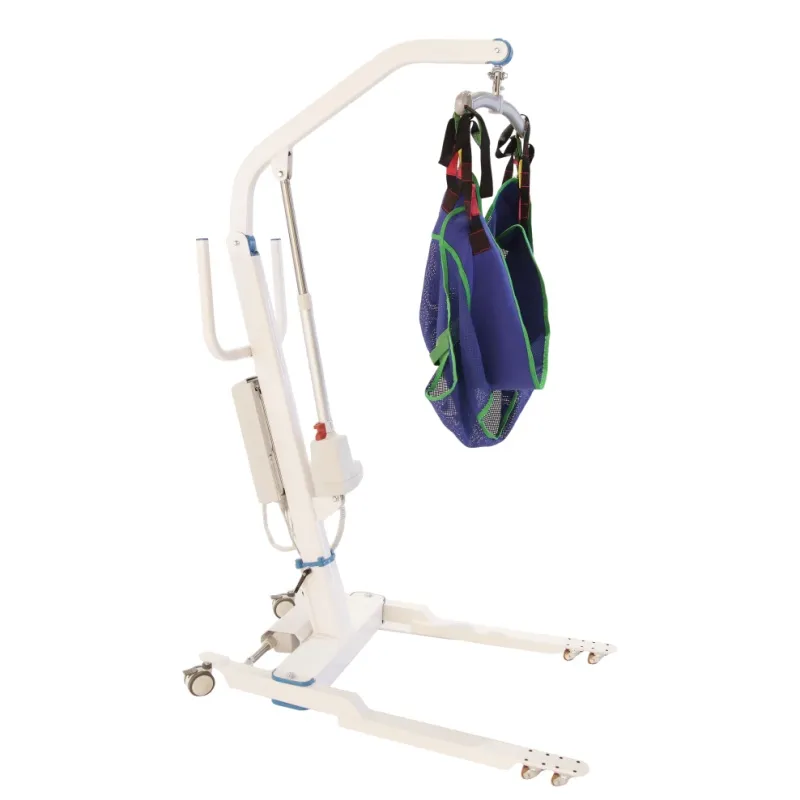
Modern electric patient lifters generally consist of the following components: a chassis (base), a support mast, a lifting boom, an electric lifting motor, a sling system, and a controller. Caregivers simply need to position the sling correctly beneath the patient; once the motor is activated, the boom slowly rises to lift the patient off the bed, allowing for relocation by pushing the base or moving the entire unit. High-end models may even feature electric leg-opening capabilities, electric propulsion, integrated weighing systems, and emergency stop functions, making them increasingly popular in hospitals and premium elderly care facilities.
What are the core advantages of an electric patient lifter?
The reason electric patient lifters are attracting growing interest from institutions and households alike is the significant improvement they offer in terms of care safety, efficiency, and comfort.
1. Significantly reduces the risk of injury to caregivers
This is one of the primary advantages of electric patient transfer lifts. Back injuries among caregivers have long been a major occupational health issue in the global care industry. Data indicates that nurses and care workers face a significantly higher risk of lower back injuries compared to many other professions, with patient handling being a leading cause.
When manually lifting or carrying patients, caregivers often have to bend, twist, and bear substantial weight, placing immense strain on the spine and lumbar region. For example, when a caregiver bends to lift an 80 kg patient, the instantaneous load on the lumbar spine can be several times their own body weight. Repeatedly performing such movements over the long term can easily lead to lumbar muscle strain, herniated discs, or chronic pain. Electric patient transfer lifts shift the primary load-bearing burden to a mechanical system, transforming caregivers from "manual lifters" into "system operators" and significantly reducing the risk of physical injury.
2. Enhanced safety during patient transfers
Patient falls represent another major risk during transfers. In scenarios such as moving from bed to wheelchair or wheelchair to toilet, a caregiver's physical fatigue or a lack of coordination can easily lead to the patient slipping or falling. For elderly individuals with osteoporosis, a fall can even result in severe fractures.
Electric patient lifters support the patient's body via a sling, distributing weight more evenly and minimizing the risk of falls caused by instability. High-quality units often feature anti-tip bases, emergency braking systems, and safety locks to further enhance security.
Studies indicate that the use of electric patient lifters can reduce fall incidents associated with patient transfers by more than 40%.
3. Reduced staffing requirements
Transferring patients with high dependency needs typically requires at least two caregivers working in tandem; however, with an electric patient lifter, a single trained caregiver can often handle the task alone. This is particularly significant for home care settings and elderly care facilities facing staffing shortages.
In an era of rising labor costs, electric patient lifters effectively boost caregiving efficiency.
4. Improved patient comfort and dignity
The psychological impact of the transfer process is often underestimated. For bedridden patients, being lifted or moved by multiple people can be uncomfortable, painful, or even embarrassing. This is especially true for obese or completely incapacitated patients, for whom manual lifting can trigger intense feelings of dependency and helplessness.
Electric patient lifters facilitate smoother, more controlled movements and minimize excessive pulling or tugging. For the patient, this steady motion not only alleviates pain but also helps preserve their sense of dignity.
What are the drawbacks of electric patient lifters?
Despite their clear advantages, electric patient lifters are not perfect and come with certain practical limitations.
1. Relatively high equipment cost
Price is often the primary concern for home users. Compared to traditional caregiving aids, electric patient transfer lifts entail significantly higher costs. A standard manual patient lift might cost a few thousand yuan, whereas a high-quality electric patient lift typically ranges from several thousand to tens of thousands of yuan. Prices increase further if features such as electric leg-opening mechanisms, weighing modules, or smart control functions are included.
For families on a limited budget, this represents a significant investment.
2. Requires considerable space
Most electric patient lifts require ample operating space. The device's base often needs to slide underneath a bed or wheelchair, so operation can be restricted if the room lacks sufficient space.
Maneuvering the lift can be particularly difficult in smaller homes—especially those with cramped bedrooms, excessive furniture, or narrow doorways.
Space constraints are a crucial factor that must be carefully evaluated before using the device at home.
3. Requires learning operational skills
Although electric patient lifts reduce physical exertion, they cannot be operated without some learning curve. Caregivers still need to master skills such as attaching the sling, managing the center of gravity, adjusting the patient's posture, and handling emergencies.
Incorrect sling attachment can lead to poor posture, localized pressure points, or even the risk of the patient slipping out.
Therefore, professional guidance is usually recommended for initial use.
4. Not all patients are suitable for sling-based transfers
This is one of the most critical limitations. Many people mistakenly believe that electric patient lifts are suitable for all patients with limited mobility, but this is not the case.
Due to specific medical conditions, body structure, or treatment requirements, some patients are not suitable candidates for standard electric patient lifts.
Are electric patient lifts truly suitable for every patient?
No, they are not suitable for everyone.
While electric patient lifts have a wide range of applications, they are not a universal solution. Suitability must be determined based on a comprehensive assessment of the patient's medical condition, weight, cognitive status, muscle strength, and the specific transfer scenario.
Which patients are suitable for electric patient lifts?
The following groups are generally well-suited for using electric patient lifts:
Elderly individuals who are bedridden for long periods are typical users. Because they struggle to rise, have reduced muscle strength, and face a high risk of falls, electric patient lifts can significantly ease the burden of care.
Patients with hemiplegia are also suitable candidates. Weakness on one side of the body can cause instability in the center of gravity during transfers, whereas an electric patient lift provides stable support. Patients with spinal cord injuries, paraplegia, or ALS (amyotrophic lateral sclerosis) often rely heavily on caregiving equipment; they frequently require multiple transfers per day, and an electric patient transfer lift can significantly improve their quality of life.
Obese patients with high body weight are another key group for whom these devices are suitable. Manually moving heavy patients carries significant risk, whereas a high-capacity electric patient transfer lift effectively addresses this issue.
Which patients might not be suitable candidates?
Special caution is required for certain patients when using an electric patient transfer lift.
Patients who have recently undergone spinal surgery may not be suitable for standard sling-based transfers, as the pressure exerted by the sling could compromise the stability of the surgical site.
Patients with severe osteoporosis also require extreme care during transfers, as even slight, improper pressure could pose a risk of fracture.
Patients experiencing severe agitation, impaired consciousness, or aggressive behavior may pose increased risks due to a lack of cooperation during use.
Additionally, patients with unstable fractures, acute severe pain, or complex catheter systems may not be suitable for standard transfer methods.
This is why a professional assessment is crucial.
Is it necessary to purchase an electric patient lifter for home care?
It depends on the specific care needs.
If there is a patient at home who is bedridden, unable to stand independently, and requires frequent transfers, an electric patient transfer lift is usually a worthwhile investment. It not only alleviates the physical burden on family caregivers but also reduces the risks associated with caregiving.
However, if the patient retains some ability to stand and only occasionally requires assistance, then standing aids, transfer boards, or walking aids may suffice.
In other words, an electric patient lifter is best suited for scenarios involving frequent or difficult transfers.
How do you choose the right electric patient lifter?
When purchasing, focus on the following factors:
First is weight capacity. The device's rated capacity must exceed the patient's weight and include a safety margin.
Second is sling compatibility. Different slings suit different body types and medical conditions; the choice must match the specific usage scenario.
Third is the base size and leg-opening width. This directly determines whether the lifter can easily fit under the bed or wheelchair.
Fourth is battery life. High-frequency usage requires reliable battery performance.
Finally, consider after-sales support and maintenance services. As an electric patient transfer lift is a piece of equipment used frequently in caregiving, reliable after-sales support is essential.
FAQ
Can an electric patient lifter be operated by a single person?
In most cases, yes—provided the operator has received proper training and the patient's condition allows for single-person operation.
Is an electric patient lifter suitable for home use?
Yes, provided there is sufficient space in the home and the patient requires frequent transfers.
Can an electric patient transfer lift handle bariatric (obese) patients?
Yes, but you must select a model with a high weight capacity and ensure the rated load meets the specific requirements.
Will an electric patient transfer lift cause discomfort to the patient?
When used correctly, it generally does not; in fact, it offers a smoother and more comfortable experience than manual lifting.
Is an electric patient transfer lift suitable for all patients with limited mobility?
Not necessarily. Patients recovering from surgery, those with fractures, or individuals with specific medical conditions require a professional assessment to determine suitability.