

Adjustable nursing beds are a type of professional care equipment widely used in home care, nursing homes, rehabilitation centers, and hospital environments. They use motor drives to achieve functions such as bed height adjustment, backrest elevation, and leg adjustment, significantly reducing the burden on caregivers and providing users with a more comfortable and safer lying experience.
When choosing a nursing bed, many people have a common question: Does an electric adjustable nursing bed need to be plugged in?
The answer is very clear and consistent—yes, it does.
This article will provide a comprehensive explanation from a professional perspective to help you make informed decisions during the selection and use process.
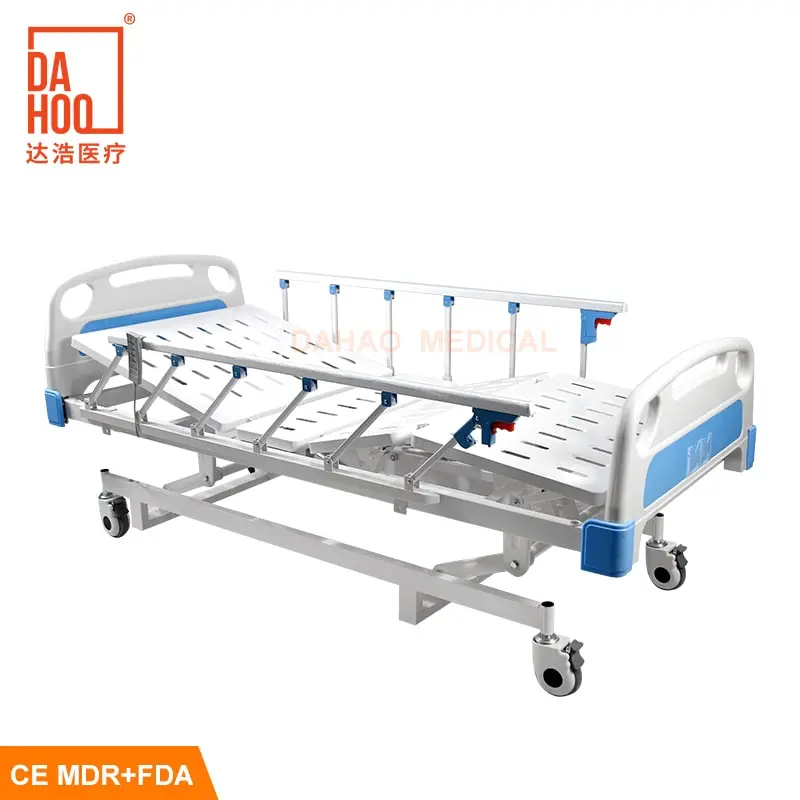
Why must an electric adjustable nursing bed be plugged in?
Adjustable nursing beds rely on multiple electric actuators, motor systems, control boxes, and remote control components working together to achieve posture adjustment. Whether it's the backrest rising, the leg rest elevating, the bed surface lifting, or changes in the overall tilt angle, all depend on the driving force of the motor. Therefore, its operating principle dictates that a continuous and stable power supply is necessary to achieve full functionality.
The following is an analysis from several professional technical perspectives:
1. Motor-driven actuators must rely on electricity
Adjustable nursing beds typically use DC motors to drive the actuators, which in turn move the bed structure to achieve lifting or angle adjustment.
DC motors can provide stable torque, but the premise is:
They must continuously receive external power supply.
Without continuous power input, the actuators will not operate, and the bed surface will not move. This is the core reason why nursing beds must rely on being plugged in.
2. The control system requires power to operate
The control system of an adjustable nursing bed includes:
• Remote control or wired hand control
• Control box
• Limit switch
• Overload protection
These systems must rely on electricity to maintain normal communication and response; otherwise, even if the bed is in a normal position, it cannot execute new commands.
3. Safety devices and limit systems also rely on power
Many adjustable nursing beds are equipped with safety features such as automatic limit switches, overload protection, and anti-pinch systems.
These safety functions usually rely on the electronic control system to operate; therefore, without power, the safety protection mechanisms will be limited, further illustrating the importance of being plugged in.
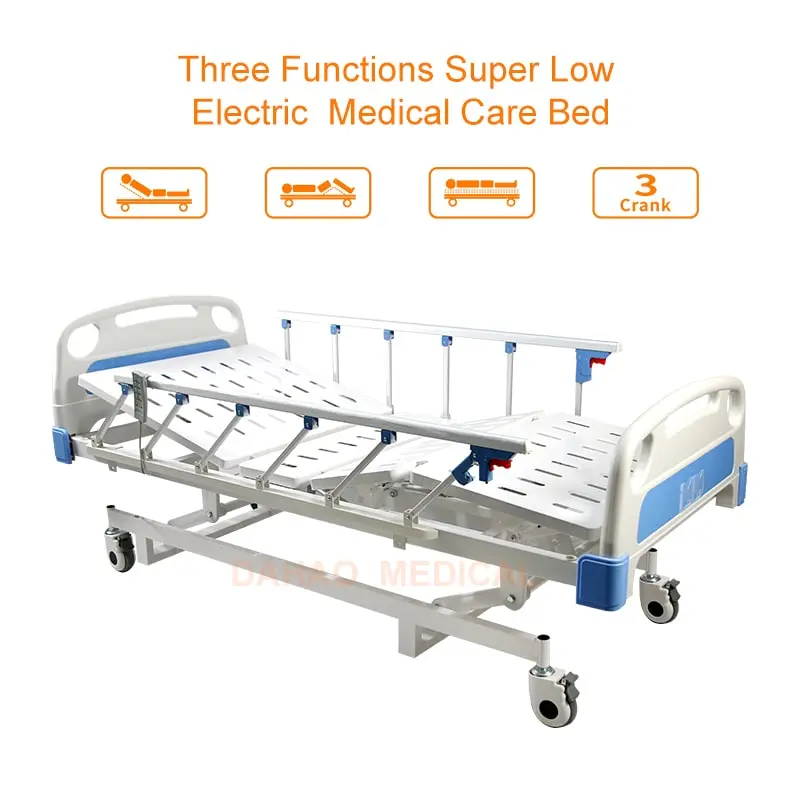
Why can't electric adjustable nursing beds be powered solely by batteries?
You might ask: Since nursing beds require electricity, can batteries be used instead of plugging them in?
Theoretically possible, but not practical in actual nursing equipment, mainly for the following reasons:
1. High power requirements of nursing beds
Adjustable nursing beds often have multiple motor sets, requiring a certain power output during operation. Batteries cannot meet the requirements for long-term, frequent use.
2. Batteries require frequent replacement or charging
If completely relying on battery power:
• High charging frequency
• Short service life
• High replacement costs
This is very inconvenient for bedridden individuals with high nursing needs.
3. Less stable than plugged-in power
Plugged-in adjustable nursing beds can ensure stable voltage output, thus achieving smooth movement. Battery power is prone to voltage instability, leading to problems such as actuator jamming and slow movement.
4. Medical and nursing industry standards require stable power supply
Most nursing beds comply with international or industry medical equipment standards, which require the equipment to have a stable and reliable power input. Plugged-in power supply better meets this requirement.
Therefore, although some nursing beds have backup battery functions, completely relying on batteries is not suitable for long-term home or institutional care.
Can adjustable nursing beds still be used during a power outage?
To ensure safety and basic nursing needs, many electric adjustable nursing beds are designed with backup mechanisms. However, it must be emphasized that the functions of the nursing bed will be affected during a power outage.
1. Basic lifting and adjustment functions will stop
Most movements such as:
• Backrest lifting
• Leg rest lifting
• Overall lifting
require electric power, so they will all stop after a power outage.
2. Some models are equipped with emergency batteries (with limitations)
Some high-end adjustable nursing beds are equipped with a small emergency battery, mainly used for:
• Emergency return to a flat position
• Maintaining a one-time return movement during a power outage
However, these batteries cannot support frequent nursing operations and are not used for regular adjustments.
3. Power outage will not change the current posture
If the bed is in:
• A raised state
• A sitting position
• A specific angle
Its posture will remain unchanged, but it cannot be adjusted further.
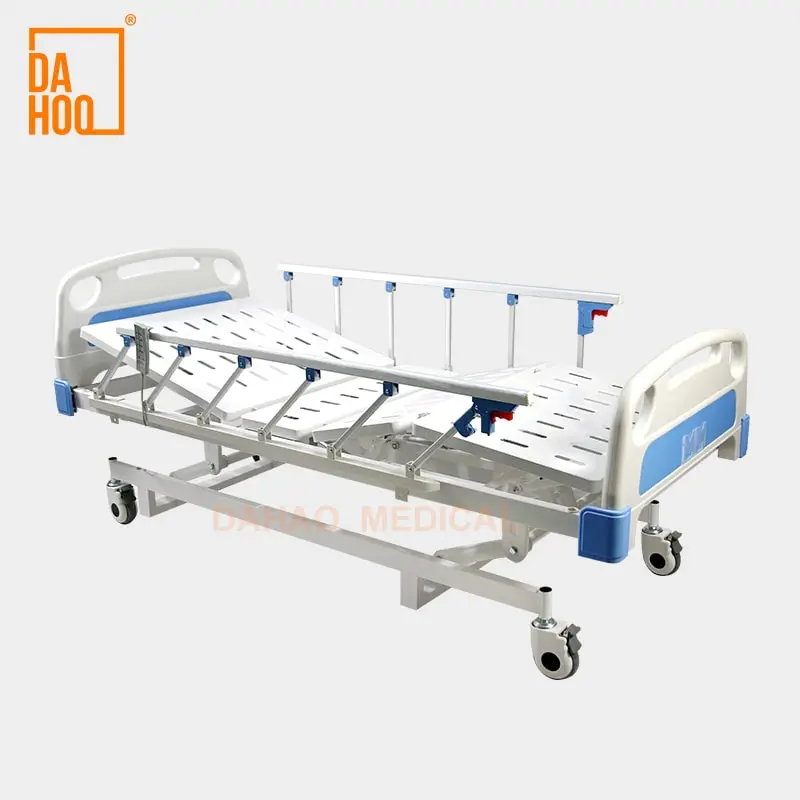
Under what circumstances must electric adjustable nursing beds remain plugged in?
To maintain functionality, safety, and the quality of care, adjustable nursing beds should always remain plugged in. Here are the main scenarios where keeping the bed plugged in is essential:
1. Patients requiring frequent position adjustments
For elderly individuals, post-operative patients, and those who are bedridden for extended periods, the position adjustment function of the nursing bed is crucial, therefore continuous power supply is necessary.
2. Assisting with care procedures using bed height adjustment
When caregivers need to assist with turning, washing, changing dressings, or moving patients, bed height adjustment is an indispensable auxiliary function, so it must be plugged in to ensure the function is always available.
3. Adjusting position as needed during the night
Many patients need to adjust their position at night due to pain, pressure, or respiratory discomfort. Keeping the bed plugged in ensures the remote control is always responsive.
4. Using safety protection systems
This includes features such as anti-pinch protection, limit protection, and overload detection, all of which rely on being plugged in to function.
Does not being plugged in affect the lifespan of the adjustable nursing bed?
Many users worry that keeping an adjustable nursing bed plugged in for extended periods will damage the motor or control system. In fact, this concern is unnecessary.
1. Long-term plugging in will not damage the nursing bed system
High-quality adjustable nursing bed motors and control boxes have built-in:
• Overheat protection
• Voltage stabilization modules
• Overload protection
• Current limiting system
Therefore, long-term plugging in will not cause excessive wear or damage to the motor.
2. Frequent unplugging and plugging in will actually shorten the lifespan
Frequent unplugging and plugging in can lead to:
• Repeated restarting of the control system
• Interference with the motor initialization process
• Connector wear
• Increased risk of loosening and poor contact
Therefore, it is more advisable to keep the bed plugged in 24/7.
Are there "manual adjustable nursing beds" that don't require plugging in?
Yes, manual nursing beds do exist, but they are a completely different type of equipment.
Manual nursing beds use a crank handle to drive a mechanical structure to adjust the backrest and leg rest. The main disadvantages include:
• Difficult adjustment
• Limited adjustment range
• Inability to precisely control the angle
• Users cannot operate it independently
Therefore, manual nursing beds are more suitable for those with limited budgets or for temporary use, and are not suitable for long-term care needs.
Electric adjustable nursing beds are the mainstream choice for modern families and medical institutions, which further emphasizes the importance of keeping them plugged in.
What precautions should be taken when plugging in an electric adjustable nursing bed?
To ensure the safety, stability, and extended lifespan of the equipment, the following principles should be followed when plugging it in:
1. Use the original power cord and controller
Non-original power cords may cause unstable voltage, damaging the control box or motor.
2. Avoid sharing the same power outlet with multiple high-power devices
Although the power consumption of a nursing bed is not particularly high, multiple devices sharing the same circuit can cause voltage fluctuations.
3. The power outlet should have a waterproof and moisture-proof design
Especially during nursing procedures that may involve cleaning and washing, the safety of the power outlet must be ensured.
4. Avoid the power cord being pressed under the bed
Long-term pressure on the power cord may damage the outer sheath, creating a risk of short circuits.
5. Keep away from heat sources and liquids
The electronic control box and motor should be protected from moisture and heat to ensure stable system operation.
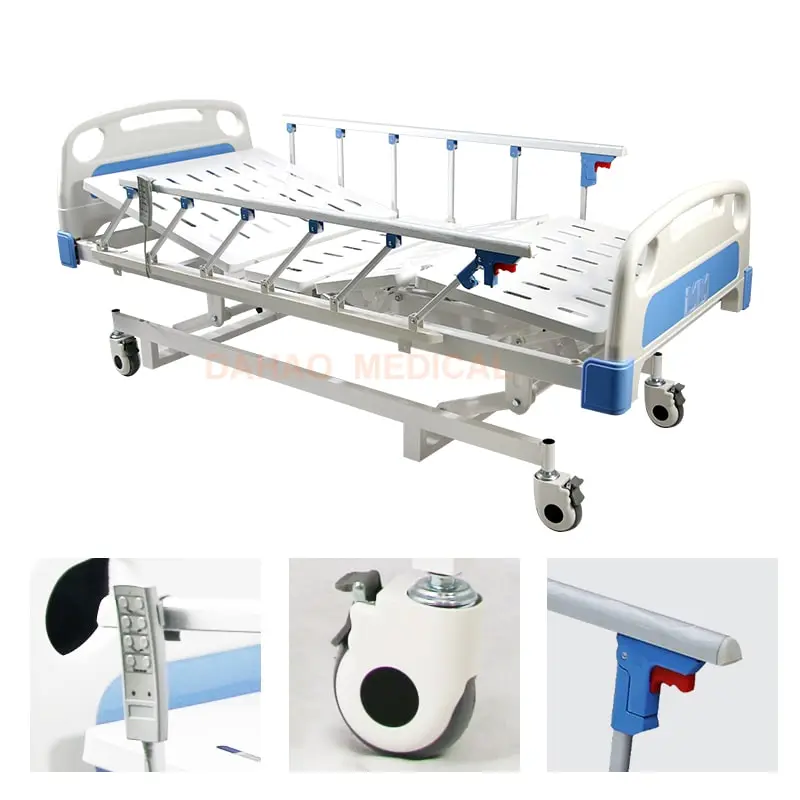
When choosing an adjustable nursing bed, should the power system be a key consideration?
The answer is yes, it must be considered.
For a high-quality electric adjustable nursing bed, the stability of the power system is more important than you might think, including:
• Motor quality
• Control box stability
• Overload protection design
• Current protection
• Power connector materials
• Backup power support capabilities
These directly affect whether the nursing bed can operate stably for a long time and also affect user safety.
Does an electric adjustable nursing bed need to be plugged in?
Yes, and it must be.
This is because:
• The motor and actuators require continuous power.
• The control system must remain powered.
• The safety protection system relies on power.
• Plugging in ensures smooth operation and quick response.
• Long-term plugging in is safer and more reliable than frequent power interruptions.
If you are purchasing an adjustable nursing bed, be sure to confirm that the power system is stable, safe, and reliable, as this will directly affect your future nursing experience.
Can Dahao Medical handle international orders?
Yes, Dahao Medical is a global supplier of medical equipment, and we handle international orders with ease. We have a strong logistics network that allows us to deliver our products, including Electric Wheelchairs and Hospital Care Beds, to over 100 countries. Whether you are located in North America, Europe, or Asia, we can manage your order and ensure fast, reliable delivery. Our team is experienced in navigating international shipping regulations and works closely with customs to ensure smooth and timely delivery.