

With the increasing demand for home care, home care beds have become essential equipment for many families caring for the elderly, those recovering from illness, and those who are bedridden for extended periods. A seemingly simple yet crucial question arises when using home care beds: can a regular mattress be used with one?
The answer is a resounding no – it is not recommended.
While many regular mattresses may appear to match the size of a home care bed, they do not meet the requirements for safety, functionality, breathability, equipment compatibility, bed structure, and the specific care conditions required.
Choosing the wrong mattress can not only affect the functionality of the care bed but may also endanger patient safety and even shorten the lifespan of the device.
Why are regular mattresses unsuitable for home care beds?
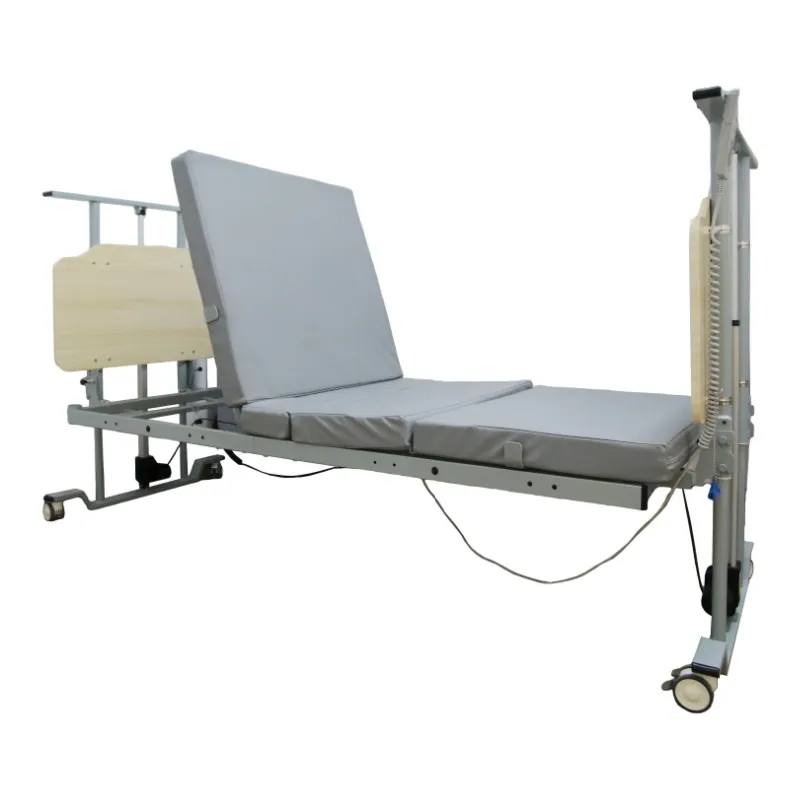
Although regular mattresses are widely used in homes, they are not designed for medical assistive devices like home care beds. Care beds are fundamentally different from regular beds; their core function is not just "sleeping," but rather providing care. Regular mattresses cannot accommodate the multi-angle adjustments, electric height adjustment, and anti-slip structures of care beds, and may even pose risks during use.
1. Standard mattresses are incompatible with the flexible structure of nursing beds
Home nursing beds typically feature electrically adjustable functions such as:
• Backrest lift
• Leg lift
• Surface folding
• Overall height adjustment
• Specific angle tilt
These functions rely on a multi-segment folding surface structure.
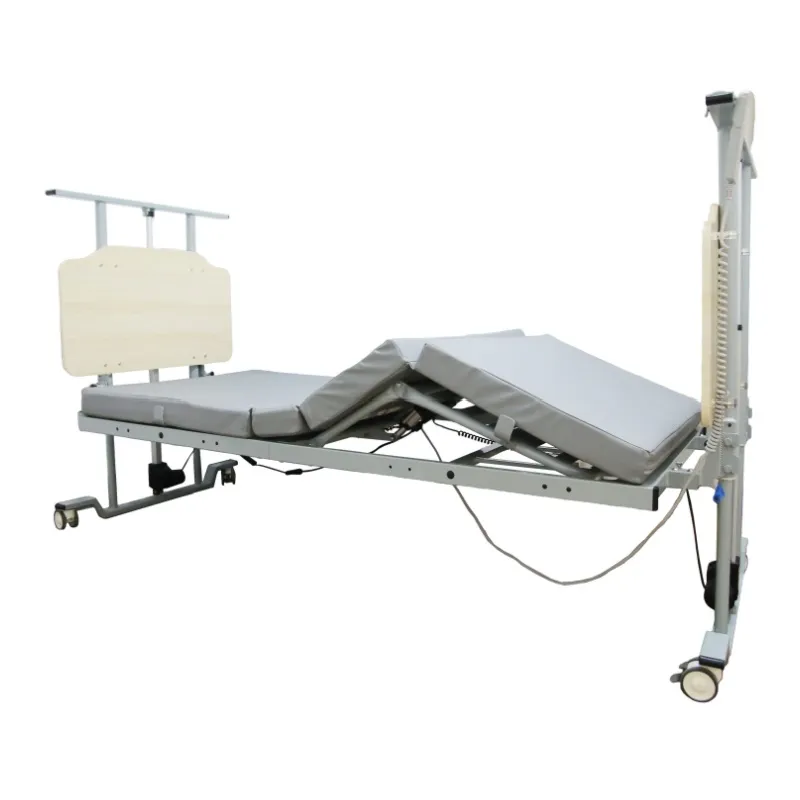
Standard mattresses, however, are mostly one-piece structures and lack a flexible design. Placing a standard mattress on a nursing bed may result in:
• Mattress being pushed up when the back is lifted
• Mattress piling up and wrinkling when the legs are lifted
• Mattress deformation and breakage of internal materials
• Abnormal motor load caused by the mattress
• Instability in patient posture
• Increased risk of mattress slippage
Therefore, standard mattresses are incompatible with the electrically adjustable structure of nursing beds.
2. The thickness of a regular mattress is unsuitable for nursing beds
Most regular mattresses are:
• 15cm–30cm or even thicker
The thickness of nursing pads or specialized nursing mattresses required for home nursing beds is generally:
• 6cm–12cm
Thick mattresses can cause the following problems:
• Insufficient guardrail height to prevent falls
• Adjustment angles are absorbed by the thick mattress, making effective back support impossible
• Affects patient's sitting stability
• Limits height adjustment function
• Makes daily care difficult for caregivers
• Patients are more likely to sink into the mattress and become difficult to move.
Inappropriate thickness significantly reduces the effectiveness and safety of care.
3. The firmness of a regular mattress does not meet care needs
People who are bedridden for extended periods or require care need a professional mattress firmness to meet the following needs:
• Prevent pressure sores
• Maintain body position stability
• Facilitate turning over
• Ensure good breathability
• Distribute pressure evenly
Regular mattresses may be too soft or too firm, neither of which is suitable for nursing use.
The problems with overly soft, standard mattresses are more pronounced:
• Patients sink into the mattress and find it difficult to move.
• Lack of support when sitting up.
• Difficulty for caregivers to operate.
• Affects turning and transferring.
• Increases pressure on the spine and joints.
The structure of standard mattresses conflicts with nursing needs.
4. Standard mattresses are prone to slipping and shifting
Because standard mattresses lack an anti-slip structure on the bottom, they are prone to:
• Shifting as a whole.
• Slipping towards the head or foot of the bed.
• Increasing the risk of patient falls.
• Affecting the operation of the bed mechanism.
This contradicts the safety design of nursing beds.
5. Standard mattresses are incompatible with the environment where medical equipment is used
Home care hospital beds are often used with:
• Air mattresses
• Anti-decubitus mattresses
• Suctioning equipment
• Bedside care appliances
• Bedpans, commode functions
Many standard mattresses are unsuitable for use with these devices, affecting the quality of care.
Why must home nursing beds use specialized nursing mattresses?
Home care hospital beds require specialized mattresses because their design is perfectly suited to the functions of the nursing bed.
Nursing mattresses avoid all functional conflicts that can occur with ordinary mattresses and have the following characteristics:
1. Flexible Design
Nursing mattresses are typically designed in sections to perfectly accommodate back and leg movements, ensuring:
• No breakage
• No stacking
• No obstruction of motor operation
2. Optimal Thickness and Firmness
Standard firmness and thickness of nursing mattresses effectively:
• Support the patient's body
• Stabilize sitting posture
• Facilitate turning over
• Prevent pressure sores
3. Anti-slip Structure on the Mattress Bottom
Reduces the risk of slipping and improves safety.
4. Better Breathability
During nursing care, patients need to be in contact with the bed surface for extended periods. Breathability directly affects:
• Skin condition
• Perspiration
• Bed comfort
Ordinary mattresses often have poor breathability, easily leading to skin problems.
5. Easy to Clean
Nursing mattresses typically feature:
• Waterproof surface
• Removable and washable cover
• Antibacterial material
This facilitates daily care.
These features dictate that a nursing bed must be paired with a dedicated nursing mattress.
What functions of a home nursing bed will a regular mattress affect?
Understanding the impact of a regular mattress helps to better understand why it is "not recommended."
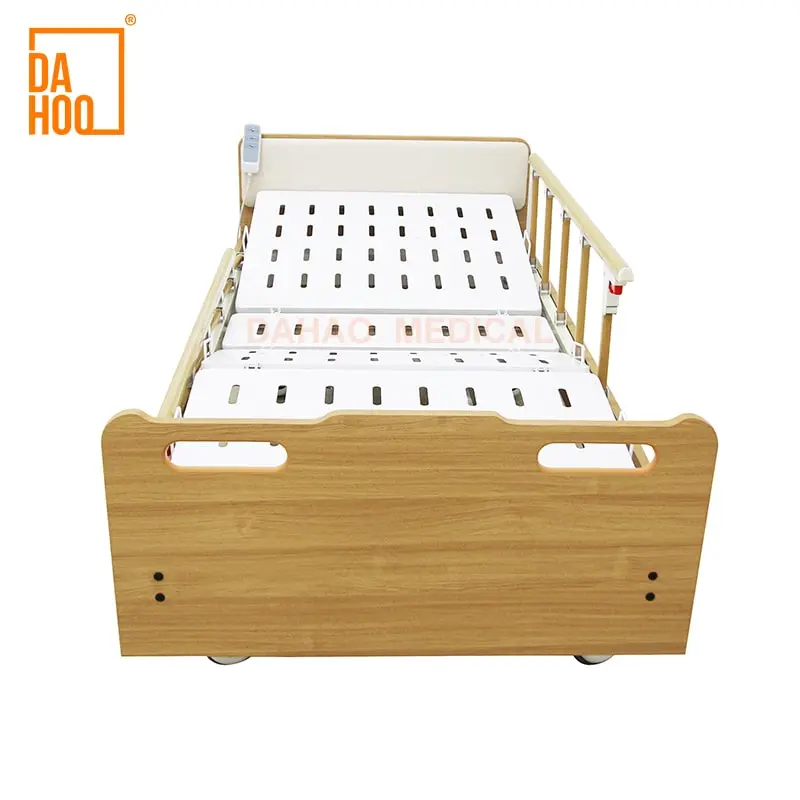
1. Significantly Limited Backrest Support
Regular mattresses lack bending capacity, resulting in:
• Reduced backrest angle
• Mattress deformation due to pressure build-up
• Instability in the patient's upper body
2. Leg Raising Function Failure
Thick (one-piece) mattresses can obstruct the bending structure of the lower section of the nursing bed.
3. Impaired Height Adjustment
An excessively heavy or thick mattress may:
• Increase the load on the motor
• Affect the height adjustment speed
• Increase the probability of damage
4. Ineffective Guardrails
A mattress that is too high will result in insufficient guardrail height, failing to effectively prevent falls.
5. Impaired Transfer Function
Soft mattresses can cause:
• Difficulty transferring wheelchairs
• Exhaustion when getting up
• Instability in posture
These all create difficulties for caregivers and patients.
What safety hazards might using a regular mattress pose?
Incorrect mattress use not only affects the quality of care but can also create real safety risks.
1. Increased risk of falls
A mattress that is too soft, too thick, or prone to slipping makes patients more likely to fall.
2. Increased risk of pressure sores
Regular mattresses do not distribute pressure evenly, increasing prolonged pressure on the skin.
3. Compression leading to breathing or circulatory problems
A mattress that is too soft may cause patients to sink into it, resulting in abnormal posture and restricted breathing.
4. Damage to the motor mechanism
Incompatible mattresses can cause:
• Excessive motor load
• Resonance problems
• Deformation of the bed board's mechanical structure
This can lead to equipment damage.
These safety hazards are not minor issues and must be carefully considered.
If a regular mattress is not recommended, what should be used?
Most Recommended
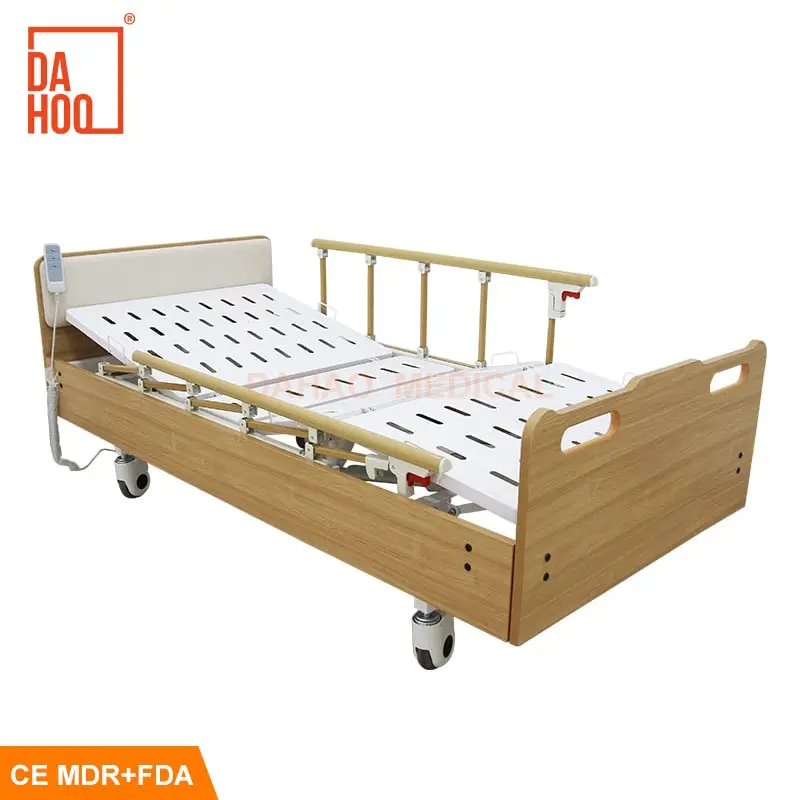
✔ Dedicated Nursing Bed Mattress (Perfectly Fits Nursing Bed Structure)
Other Suitable Options
✔ Anti-Decubitus Air Mattress
✔ Medical Foam Nursing Pad
✔ Bendable Nursing Mattress
These types can be perfectly integrated with home care hospital beds without causing functional impairment or safety issues.
How does Dahao Medical ensure product reliability?
At Dahao Medical, we prioritize product reliability and safety. All our products are manufactured under strict quality control systems, ensuring that they meet the highest standards. Our factory is ISO 13485:2016 certified, and we also have FDA 510K approval, CE certification, and TUV and BV endorsements.
These certifications guarantee that our Electric Wheelchairs, Home Care Beds, and other medical devices undergo rigorous testing.